Showing posts with label FIUV. Show all posts

Sunday, September 21, 2025

Hall of Honour (8): Rodolfo Vargas Rubio (1958 - 2025)


Rodolfo Vargas Rubio was born in Lima, Peru on 23rd November 1958 from Spanish parents. He had both Peruvian and Spanish nationality. His elementary and secondary schools were with the Jesuits in Lima. He studied Law at the Peruvian University of San Marcos, Philosophy at the Seminary of Cuenca (Spain), Theology at the Angelicum of Rome and History at the UNED (Spain). In 2005, Rodolfo Vargas Rubio wrote a biography of Pope Benedict XVI, published in Spain. He had the unique privilege of presenting a copy of this book ¿El último Papa? Benedicto XVI y su tiempo : perfil biográfico del Papa Ratzinger to His Holiness.

Vargas Rubio was a founder member and chairman of the Consociatio Culturalis Roma Aeterna, that joined the FIUV in 1997. He was also a founder member and chairman of the Sodalitium Internationalis Pastor Angelicus (SIPA), a lay association active from 1998 to contribute to the cause of beatification and canonization of the Venerable Pope Pius XII. Vargas Rubio spoke fluently Spanish, English, French, Italian and Catalan and knew Latin. He was also a knight of the Constantinian Order of Saint George and of the Royal Order of Saint Michael of the Wing (Portugal).

Rodolfo Vargas Rubio entered into the FIUV Council in 2007 and was elected Secretary of the Board in the same year and in 2009. During this time, he supported wholeheartedly Pro Tridentina (Malta)'s membership in the same organisation. He had to resign in 2011 for health reasons but stayed as councillor until 2017. 

As FIUV councillor FIUV he focused on two main areas: 

1) the promotion and diffusion of the FIUV in Spanish-speaking countries and strengthening the links between the associations of Spain, Portugal and Latin-America, and 

2) To fortify inner unity of the FIUV around its President in the challenge represented by the new circumstances that were being raised in Rome. 

In September 2025, Rodolfo Vargas Rubio passed away. He was a great Latinist and connoisseur of the liturgy and was also highly appreciated for his humility and generosity.

Requiescat in Pace

Thursday, May 15, 2025

Statement on the election of Pope Leo XIV by FIUV


Press Release of Una Voce International (FIUV) on the election of Pope Leo XIV

Una Voce International (Foederation Internationalis Una Voce) would like to welcome Pope Leo XIV and assure him of the prayer of our member associations, who represent Catholics attached to the Traditional Mass all over the world.

Pope Leo has the chance to make a new start with many matters in the Church, and if the Traditional Mass does not appear to him the most pressing one, we commend to him a policy of peaceful co-existence, in which our supporters in every continent may be encouraged to make the greatest possible contribution to the life of the Church, united to the Holy Father in charity and obedience.

We urge all our supporters and friends to pray for Pope Leo. The following prayer, from the ancient Roman Missal, is the Collect from the Votive Mass ‘On the day of the Coronation of a Pope’, and is suitable for a newly elected Pope.

Deus, ómnium fidélium pastor et rector, fámulum tuum Leonem, quem pastórem Ecclésiæ tuæ præésse voluísti, propítius réspice: da ei, quǽsumus, verbo et exémplo, quibus præest, profícere; ut ad vitam, una cum grege sibi crédito, pervéniat sempitérnam. Per Dominum nostrum.

O God the Pastor and Ruler of all the faithful, look favourably on Thy servant Leo whom Thou hast been pleased to appoint as shepherd of Thy Church: grant to him, we beseech Thee, that by word and example he may edify those over whom he is placed, so that, with the flock entrusted to him, he may attain unto life everlasting.

Contact: 

Joseph Shaw president@fiuv.org 

Andris Amolins secretary@fiuv.org

Thursday, January 11, 2024

FIUV's Reactions to Fiducia supplicans

Dr. Joseph Shaw, FIUV President


From the President: Pope Francis risks his authority over the blessing of irregular unions

In this second President’s Bulletin I wish to consider international reactions to Pope Francis’ recent document, issued by the Dicastery for the Doctrine of the Faith, on the blessing of irregular unions (same sex unions, illicit second marriages, and so on). I considered the meaning and intentions of the document in a message to supporters of the Latin Mass Society, here. Links to documents quoted below can be found here.

Positive reactions

The President of the German Bishops’ conference has welcomed the document, though his lay counterparts on the Catholic Central Committee see it only as a positive step. It is difficult to imagine what next step could be taken which is not explicitly ruled out by the document itself, but they tell us that 'to be Catholic in these times means to expect change.'

The celebrity American homosexual priest James Martin SJ reacted by posting a photo of him blessing a same-sex couple.

Neutral reactions

Some conservative bishops in Europe and America have issued statements that welcome the document but emphasise its limitations rather than any new possibilities.

Negative reactions from liberals

A homosexual lapsed Catholic writer in the left wing secular British newspaper The Guardian was in no way mollified by the document. 'That’s not a blessing, it’s an insult.'

Former Irish President Mary MacAleese said it was 'nowhere near enough', but nevertheless 'a massive climbdown by Pope Francis and the DDF.'

Negative Reactions from Bishops’ Conferences

What is most striking is the reaction of Bishops’ Conferences. A refusal to countenance the blessing of irregular unions has now been expressed by the bishops of Kazakhstan, Ukraine, Malawi, Zambia, Cameroon and Nigeria. I will try to keep my collection of their comments here up to date, as more statements are being published by the hour.

Similar is the statement of the English Confraternity of Catholic Clergy, a conservative grouping with sister organisations in Australia and the USA.

Comment

With Fidudia supplicans Pope Francis generated many positive headlines from the liberal Catholic and secular Western press, and reassured German liberals that he was still willing to advance their agenda, balancing recent statements which seemed to go against them. As the dust has settled, however, things have become more complicated.

Conservative Western bishops instinctively avoid making statements on homosexuality and divorce, because of the attitude of the secular press and so many among of their own flocks. It is no surprise, therefore, that they have reacted to this latest document as they have.

African bishops, by contrast, are very aware of the danger of public scandal on this issue. The bishops of Kazakhstan and Ukraine, again, are mindful of the attitude of Russian Orthodox believers, and of Vladimir Putin’s periodic attempts to present himself as the champion of authentic Christian values.

Pope Francis and his advisers may have thought that a concession to sexual libertinism that is more symbolic than real would be an easy victory, but this ignores the non-Western perspective.

The net result is that is that Pope Francis' authority being questioned as never before, with opposition coming from a new quarter: not Americans or liturgical traditionalists, but the 'peripheries', above all Africa.

We must ask the Christ Child, whose coming into the world we are soon to celebrate, to maintain in all our bishops His purity of heart, and to hold them steady to the injunction of St Paul: nolite conformari huic sæculo: ‘Be not conformed to this world’ (Romans 12:2).

Sunday, February 12, 2023

FIUV Appeal concerning the Traditional Mass


Appeal for prayers and penances for the Liberty of the Traditional Mass in Lent

From Una Voce International and others

Una Voce International and other organisations, groups and individuals concerned with the Traditional Latin Mass would like to appeal to all Catholics of good will to offer prayers and penances during the season of Lent, particularly for the intention: the liberty of the Traditional Mass.

We do not know how credible rumours of further documents from the Holy See on this subject may be, but the rumours themselves point to a situation of doubt, conflict, and apprehension, which is severely harmful to the mission of the Church. We appeal to our Lord, through His Blessed Mother, to restore to all Catholics the right and opportunity to worship according to the Church’s own venerable liturgical traditions, in perfect unity with the Holy Father and the bishops of the whole Church.

Wednesday, April 27, 2022

FIUV Heroes (1): Elisabeth de Saventhem


We intend to start a series of laypeople who contributed a lot to the aims of the Traditional Latin Mass. We start with an article about Elisabeth de Saventhem who died 22 years ago this month. She was the wife of the first President of FIUV. The article was written some time after her death by the second President of FIUV, the late Michael Davies.


(We are most grateful to all those who contributed to the completion and translation of this text)


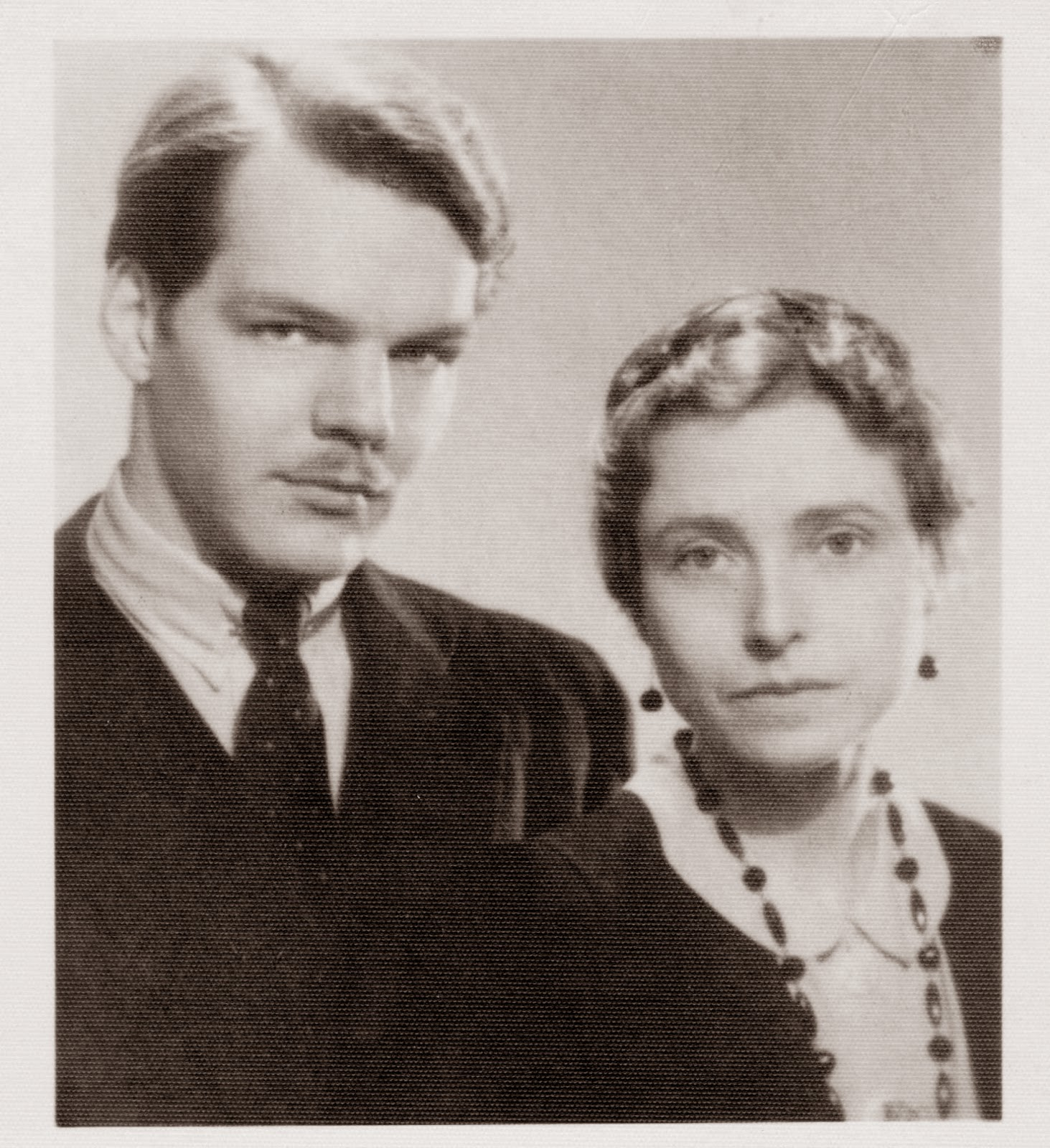
Elisabeth de Saventhem was born in Bremen in 1911 as the eldest of seven children, five daughters and two sons, to Walther Clemens, Reichsgraf von Plettenberg-Lenhausen and his wife, Carmen Guillermina.  Her spiritual formation was strongly influenced by an aunt, and her father's cousin was Blessèd Maria Droste zu Vischering of the Divine Heart, who had entered the Order of the Good Shepherd in Munster in 1885.


The economic crisis in Germany forced Elisabeth to give up her language studies (French and Russian) in Leipzig and she found work in an office in Berlin, quickly being promoted to senior secretary and purchasing manager (the company produced silk for parachutes).


The publication, in March 1937, of Pius XI's Encyclica Mit brennender Sorge saw the first public confrontations between the National-socialist regime and the Catholic Church.  Contrary to the concordat which had been signed four years before, the government forbade any distribution of the Pope's text.  Nevertheless it was copied and circulated by the Plettenberg family and Elisabeth's parents were arrested and imprisoned in Bremen, accused of "malicious gossip endangering the State".  Elisabeth, as eldest child, undertook successfully the defence of her parents before the minions of the Gestapo, so that they were released three weeks later.  The Gestapo in Berlin continued to keep an eye on this courageous daughter and shortly afterwards, following a series of anonymous letters accusing Elisabeth herself of spying, they tried to incriminate her - after more than 20 cross-examinations.  The efforts came to nothing of course, for the whole scandal had come from the unfounded, sickly jealousy of the wife of Elisabeth's employer.  The affair reached the highest levels of the Gestapo and came to a conclusion only in December 1938 with Elisabeth's brilliant rehabilitation by the regular courts.


During these years Elisabeth was much sought after in Berlin society.  She impressed those who met her not only by her beauty, her great intelligence, her natural charm and her "Catholic at its best" humour, but also because of her extraordinary ability to listen.  She understood especially how to recognise the problems lying deeper than the questions actually raised, and would then reply with great conceptual precision.  Behind this unusual ability lay a faith matured by interior struggles, paired with the fruit of superb religious teaching which Elisabeth had received at school from a gifted priest, Pastor Franz Moschner.  Later, at his request, she translated Moschner's most important book "Christliches Gebetsleben" into English.  The MS was published in 1962 as "Christian Prayer" by Herder Book Co in the USA.


Elisabeth's knowledge of doctrine and theology was so extensive and sound that her bishop authorised her to instruct and prepare converts for reception.  The time that she devoted to this instruction, and she had many pupils, was never less than a year.    She once remarked that although God had not blessed her with children of her own, she considered these converts to be her children.


The fact that Elisabeth  believed in God  as the "iustus iudex"  (the « just judge ») , to whom,  throughout her life, she would address the question of the meaning or unavoidability of suffering and death, lent to her own witness that convincing, many-layered depth which rendered silent every sceptic.


It was during the Berlin years that the momentous meeting with Isa Vermehren and her younger brother Eric took place, as they sought the Truth, which led to their conversions in 1938 and 1939 respectively.  Early in 1939 Elisabeth returned to Bremen to help look after her youngest brother and sister, and in March 1941 she became engaged to Eric Vermehren.  A few weeks later, Elisabeth's eldest brother was killed in Russia whilst carrying a badly-injured soldier from his company back to their trenches.  Elisabeth's parents persuaded the young couple not to wait until the year of mourning was over and so, in October 1941, they were married quietly in the presence of the closest family members, at Schloss Hovestadt, the Plettenberg family seat.


Because of a childhood injury, Eric was exempt from frontline service and served at first as a "Welfare Officer" in several camps for English and French prisoners of war.  In 1942 he was transferred to the Intelligence Service and sent to Istanbul as aide to the German military attaché there.  In this position he became aware, through freely available neutral reports, of the true extent of the dreadful deeds being done, especially in the occupied areas about which scarcely anything was known back in Germany.  This knowledge made him realise that, even as a subordinate,  his conscience would not allow him to serve the régime any longer.  During his first home leave in December 1943, Eric informed Elisabeth of his decision,  She was immediately ready to follow him into foreign exile.  In January 1944 they were "kidnapped" by the English Secret Services, in an action organised in the hope of protecting their families back in Germany.  English officers accompanied them via Izmir and Aleppo to Cairo and thence, via Gibraltar, to England.


The British Foreign Office had at that time adopted the Morgenthau-Plan.  Eric and Elisabeth tried, in many letters and interviews, to impress on the Foreign Office the advisability of allowing leading members of the inner German Opposition to help with the rebuilding of their ruined country, but to no avail.  They then asked that their status as "Guests of the Foreign Office" be annulled and they began to earn an independent living as assistant teachers in Worth Priory, a Benedictine preparatory school.  Elisabeth straightaway won the hearts of her pupils, despite, or perhaps precisely because of her original strictness in questions of discipline.   Among the anecdotes that she would relate of her time at Worth was that of finding one of her eight year old pupils crying bitterly one day.  She asked him the reason and he explained that it was because he liked her very much, so much in fact that he felt that she deserved to be English, and it was unfair that she was not.


For an "ex-enemy alien" it was well-nigh impossible to find a decent job in post-war England.  Eric founded a small export company  and Elisabeth helped in this effort despite her delicate health.  The early (unfortunately not long-lasting) success  of the company allowed them to leave Worth and move to the shadow of Brompton Oratory and a flat which was furnished with articles donated by friends.  Some five years passed before Eric found regular employment with a firm of Lloyds brokers.  He had by then adopted the surname Vermeeren de Saventhem, mainly for genealogical reasons.  In 1964 Eric became Director for Europe of the London firm.  The couple spent two years in Paris and in 1966 moved back to Switzerland, to settle in Clarens by Montreux.


From the moment that  Pope John XXIII's announced that he was con]vening a General Council of the Church,  all eyes were fixed upon that spectacular event - those of the de Saventhems with growing concern.  Elisabeth's religious life had always had its focus in Holy Mass which she attended daily with her husband.  In the accomplishment of the Sacrifice of the Mass she saw the definitive identity of the true Church of Christ and at the same time the reason for and the justification of the Catholic priesthood.  She knew - with all the Tradition of the Church - of the essential connexion between the Faith of the Church and its prayers:  as the Church prays, so it believes.  Thus it seemed to her presumptuous, nay dangerous, to question, even in Council, those forms of liturgy which have grown and proved themselves over the centuries.  The maintenance of the Mass as codified by St Pius V "with equal rights and equal honour" alongside any new forms became the main theme of her prayer, her thought and her actions, in close co-operation  with her husband, long-time President of the international Una Voce movement.


A first meeting with Monseigneur Lefebvre in Rome in 1962 sowed the seeds for over 25 years of cooperation, particularly vis-à-vis the Holy See.  This became intensified after the foundation of the Archbishop’s  International Seminary in Ecône, an hour's drive away from Clarens.  The Archbishop appreciated more than anything Elisabeth's ever acute sensus fidei et ecclesiae and her moral courage.  For over ten years the de Saventhems daily made the long drive from Clarens to Ecône to attend early Mass.  Later they were able to continue daily Mass attendance at a chapel in Lausanne and at the tiny Carmel of Marie Reine des Anges,  both served by priests from Ecône priests. The latter was situated on the slopes of the aptly-named Mont-Pèlerin just a short drive from home.


Elisabeth's life was filled with conscious and radiant gratitude towards the Church for the gift of faith.  It was however permanently overshadowed by a never-ending chain of physical suffering.  She accepted this with admirable discipline from her iron will which seemed to gain new strength at Mass each morning.


The end was not easy.  As the petals begin to curl inwards when a precious flower fades, so Elisabeth's mental elasticity, which had always been admired by all who met her, slowly diminished.  The interest was there, but ever more frequently the helpful replies did not  come.  Her physical frailty increased visibly, and for her  last journey from Switzerland to Bonn (the newly-chosen home, to be near the family again) a flying ambulance was necessary.  Elisabeth died a few weeks later in Cologne, in her sister's house, surrounded and comforted by the deep love of her husband and the devoted care of her sister and family. R.I.P.


Wednesday, July 7, 2021

FIUV Declaration published in Italian daily newspaper La Repubblica


The FIUV has taken out an advert in the mass-circulation Italian newspaper La Repubblica, that appeared on Sunday 4th July 2021. This newspaper is Pope Francis' favourite.

The English text is below:

Living the faith, living the future:
The Extraordinary Form of the Roman Rite
Declaration of the International Federation Una Voce

The International Federation Una Voce (FIUV), founded in 1965, brings together associations of the lay faithful attached to the Extraordinary Form of the Roman rite (the Traditional Latin Mass).

In 2007, the Apostolic Letter Summorum Pontificum recognised the vitality of the traditional liturgy, the freedom of priests to celebrate it, and of the faithful to request it. This has led to an ongoing increase in the number of celebrations of the ancient Latin Mass, and of its spiritual fruits.

During 2020 the FIUV conducted a worldwide survey of the faithful on the implementation of Summorum Pontificum. From this survey, which included results from 364 dioceses in 52 countries, we found:

•    The ancient Latin Mass is deeply appreciated by groups of faithful of all ages, especially families with children, young people and converts, found in all social and cultural environments, on all continents and in an ever increasing number of countries.

• In many areas the increased availability of this Mass has favoured the normalisation of relations between the faithful attached to it and their bishops, relations increasingly characterised by mutual understanding and respect.

Nevertheless, we have noticed that, contrary to the previous policy of the Holy See, there are still people within the Church, including some bishops, who would like to see the Extraordinary Form of the Roman rite explicitly suppressed, or subject to further restrictions. For this reason, the FIUV, in view of the faithful who adhere to the Latin Mass, feels the duty to express its opinion, encouraged by Pope Francis' exhortations to the members of the Church to use parrhesia with the necessary humility.

The growth of interest in the traditional liturgy is not due to nostalgia for a time we do not remember, or a desire for rigidity: it is rather a matter of opening ourselves to the value of something that for most of us is new, and inspires hope. Pope Francis has characterised the ancient liturgy in terms of a "sense of adoration" (Press conference of 28 July 2013), we can also apply his words to it: a "living history that welcomes us and pushes us forward" (Evangelii Gaudium 13).

Today we only wish to be part of that "great orchestra" of "unity in variety" which, as Pope Francis said (General Audience of 9 October 2013), reflects the true catholicity of the Church. The Apostolic Letter Summorum Pontificum continues to transform the conflicts of the past into harmony: long may it to continue to do so.

Felipe Alanis Suarez, President                                                                                      

www.fiuv.org

Ends


The worldwide survey referred to above was presented to the Congregation for the Doctrine of the Faith, to complement reports sent by bishops around the world on the same subject, which had been requested by the CDF at the request of Pope Francis. Gregorius Magnus 10 has an account of the motivation, methodology, results, and conclusions of the reports. Pro Tridentina (Malta)'s contribution is found on pp. 11 - 12.

Friday, May 1, 2020

Recent important developments concerning the traditional Latin Mass (2)

10 Things You May Not Know About the Vatican - HISTORY

Press Release: CDF Decrees on new Prefaces and Saints for the Extraordinary Form - From the President and Officers of the FIUV

26th March 2020

Yesterday the Congregation for the Doctrine of the Faith (CDF), now exercising the functions of the Pontifical Commission Ecclesia Dei, has issued two decrees, one on Prefaces to be added to the 1962 Missal (Quo Magis), and the other on the possibility of saints, canonised since 1962 to have Masses celebrated in their honour (Cum Sanctissima). (English summary here.)

The Federation was consulted on both issues, and we would like to thank the CDF for taking the views of our members into account in developing these decrees.

The Federation welcomes in particular the possibility of making a liturgical commemoration of saints canonised since 1962, without excessive disruption to the Sanctoral Calendar as it has come down to us. We wish, however, to issue some notes of caution.


On Prefaces, we note that the Note presenting the decree explains that while three of the seven newly permitted Prefaces are of the ‘Neo-Gallican’ tradition (of 18th century French origin), the other four are Prefaces used in the Ordinary Form, though not composed from scratch for the reformed Mass: ‘their central section(s), known as the “embolism”, appear in ancient liturgical sources’.

This implies that these ancient Prefaces have been adapted for use in the Ordinary Form, a process which makes them conform less, rather than more, with the spirit of the Extraordinary Form. If the value of these Prefaces lies in their antiquity, it is not clear what is to be gained by their being used in the Extraordinary Form in a redaction designed to make them conform to the themes and preferences of the Ordinary Form.

Further, we would like to appeal to priests celebrating the Extraordinary Form to bear in mind the great antiquity, theological importance, and centrality to the ancient Roman liturgical tradition, of the Preface of Trinity Sunday, and the Common Preface, whose use would become less frequent if the newly optional Prefaces were systematically employed. These two Prefaces have been of such centrality to the celebration of ancient Mass up to this point, that to downgrade them to mere options among others would be to make a fundamental change in the balance of texts and theological ideas which the Missal presents to the Faithful over the course of the year.

On the Saints, we note the list of saints celebrated as 3rd Class feasts, whose celebration remains obligatory. We recognise that in order to make possible the celebration of the new saints room must somehow be made for them, and we endorse the method proposed. We have reservations, however, about the composition of this list.

We note with particular dismay that the only male lay saints on the list are SS Cosmas and Damian: this seems an omission in need of correction, particularly as the excluded category include men central to the development of their countries: St Louis of France, St Stephen of Hungary, St Henry the Emperor of Germany, St Edward the Confessor of England, and St Wenceslas of Bohemia, outstanding examples of the vocation of the laity to ‘to penetrate and perfect the temporal order with the spirit of the Gospel’.[1]

Also completely absent are female founders of religious orders, such as St Angela Merici, St Juliana of Falconieri, and St Jane Francis de Chantal.

Although we are pleased to see two widows on the list—St Monica and St Francis of Rome— it would seem in general that non-clerical vocations, of the active or the religious life, which are richly represented in the ancient sanctoral calendar, have been set aside as of marginal importance.

Another category poorly represented on the list are Doctors of the Church. Some of the highest importance have been excluded: St Isidore, St John Damascene, St Bede, and St Irenaeus.

The imbalance represented by the list of obligatory saints appears to have been inherited from the list of non-optional Memorials found in the sanctoral cycle of the Ordinary Form, which it closely resembles. The lack of interest in the lay vocation and in the Doctors of the Church shown by the reformers of the 1960s should not be allowed to distort the presentation of the Church’s great patrimony of saints in celebrations of the Extraordinary Form today.

In choosing when to avail themselves of the option to celebrate newly canonised saints, we would like to appeal to priests celebrating the Extraordinary Form to consider carefully the balance of the categories of the saints, the importance of maintaining the connection to the distant past represented by the most ancient saints, and the value of the Marian devotional feasts also now rendered optional, such as Our Lady of Lourdes and the Presentation of Mary.

As an indication of feasts which we regard as particularly worthy of continued celebration, we give the following, non-exhaustive, list.

14/01   St Hilary
10/02   St Scholastica
11/02   Apparition of the Blessed Virgin Mary (of Lourdes)
17/03   St Patrick
18/03   St Cyril of Jerusalem
27/03   St John Damascene
4/04     St Isidore
27/05   St Bede
3/07     St Irenaeus
15/07   St Henry, Emperor
25/08   St Louis, King
30/08   St Rose of Lima
2/09     St Stephen, King
28/09   St Wenceslas, Duke and Martyr
8/10     St Bridget, Widow
13/10   St Edward, King
24/10   St Rafael the Archangel
15/11   St Albert the Great
21/11   Presentation of the Blessed Virgin Mary
25/11   St Catherine of Alexandria


[1] Second Vatican Council Decree on the Apostolate of the Laity Apostolicam actuositatem 5

Tuesday, November 12, 2019

New FIUV Council 2019-2021

Image result for fiuv

During the XXIV statutory General Assembly of the FIUV held in Rome on Saturday 26th October, the following were elected:

President: Felipe Alanís Suárez (Una Voce México)

Honorary President: Jacques Dhaussy (Una Voce France)

Vice Presidents: Patrick Banken (Una Voce France) and Jack Oostveen (Ecclesia Dei Delft, The Netherlands)

Secretary: Joseph Shaw (Latin Mass Society, England and Wales)

Treasurer: Monika Rheinschmitt (Pro Missa Tridentina, Germany)

Councillors: David Reid (Una Voce Canada), Oleg-Michael Martynov (Una Voce Russia), Jarosław Syrkiewicz (Una Voce Polonia), Jaime Alcalde (Una Voce Chile), Eduardo Colon (Una Voce Puerto Rico), Fabio Marino (Una Voce Italia), João Silveira (UV Portugal) and Prof Ricardo Turini (Una Voce Italy).


Pro Tridentina (Malta) wishes the new Council all the best for its work during the coming 2 years.

Wednesday, August 14, 2019

Addition to Open letter to the diocesan Bishops and Auxiliary Bishops of the Roman Catholic Church

See the source image
The author of this letter, Mr. Oostveen (first from left) in a FIUV activity some years ago. 

The stakes are too high to simply ignore this fact; a proposed solution

Addition to Open letter to the diocesan Bishops and Auxiliary Bishops of the Roman Catholic Church


This letter has been sent by e-mail to about 3100 Bishops (Diocesan and Auxiliary)

2 February, 2019 -- Presentation of the Lord - Purification of the Blessed Virgin Mary

Your Excellency,

For the good of the Holy Catholic Church, I respectfully ask once more a little of your valuable time to consider the following, and with an earnest request to present this to the Holy Father and to the President of your Bishop’s Conference.
 
I refer to my mail of last month [http://www.ecclesiadei.nl/docs/open_letter.html] which identified for you the source of the “confusion, bitterness in human relations and fratricidal wars” that is evident in the Church since the Second Vatican Council. As befits a good engineer, after presenting you with the results of the problem analysis and its root cause, I now present to you a solution for the problem. Because the problem started due to the lack of “a gracious collaboration concerning the inspiration of the Holy Spirit” and continued with the introduction of the vague “spirit of the Council” in place of the clear hermeneutic rule set by Pope John XXIII, this problem is in essence of a supernatural origin. It therefore needs a supernatural solution, which expresses the unity between begging for mercy, a true confession of Faith and doing penance. The stakes are too high to simply ignore this fact.
 
My proposed solution is threefold:
First: The Church must in a gracious and humble manner, publicly request Mercy from the Holy Spirit This needs to be done by taking into account that the lack of “a gracious collaboration concerning the inspiration of the Holy Spirit” and its consequent “confusion, bitterness in human relations and fratricidal wars”, has penetrated so deeply into the Church that it has left virtually no one unaffected. 

Second: A public confession of Faith shall be made by all the Clergy and Hierarchy. This can follow the model of an extended Creed, like that of Pope Paul VI (Motu Proprio Solemnia Hac Liturgia, June 1968). In accordance with the Council opening address of Pope John XXIII, this creed should explain the full Doctrine “pure and integral”, “without attenuations or distortion” and in an understandable way without any ambiguity. This is essential, because the Church should "never depart the sacred patrimony of truth received from the Father", and above all, it should always act “in unity and in accordance with the Doctrine taught by the Fathers” [Ref. 1], [Ref. 2].

Third: The Church must publicly do penance. This is fundamentally necessary due to the lack of “a gracious collaboration concerning the inspiration of the Holy Spirit” by the majority of Council Fathers, and because so many Bishops, priests and religious had and have rejected the hermeneutic as set by Pope John XXIII. Such penance could be done by obliging all priests to celebrate individually – not as concelebrants - a number of Holy Masses that shall include the reading (in whole or in parts) of the extended Creed as a homily. The intentions of those masses shall be for all victims of that lack of gracious collaboration, over the last five decades both inside and outside the Church, for the healing of the wounds caused, for the conversion of all those who are still attached to that revolutionary spirit, and for the repose of the souls of those who have already died. [Ref. 3 ].

With my heartfelt gratitude for your kind and generous consideration, I offer you the assurance of my filial support and prayers, I hope for a speedy reply, and I humbly ask for the grace of your blessing.

Faithfully in Christo

 
The lack of gracious collaboration and the rejection of the hermeneutic as defined by Pope John XXIII has been initiated by those who were attached to the New Theology that in its turn was strongly influenced by modern ideologies. Here, among other points, this Creed should include a clear explanation why, in the light of the Truth, all ideologies of the modern times are principally false. This is especially so regarding the subject of unrestricted evolutionism that implicitly denies the Truth of original sin.

Given the subject of the upcoming meeting of the presidents of the Bishops' Conferences in the Vatican, sexual abuse by clergy is necessarily very topical. To this end, and especially because of the influence of silencing and implicit denial of original sin, this Creed should unequivocally include the Doctrine of the Church on sexuality: 
      • Procreation must be stated (reiterated) as the first goal of sexuality.
      • Homosexual activity must be acknowledged as and considered to be the main source of sexual abuse by clergy, but indeed not the only one. This can be clearly deduced from the statistics of the situation, where about 80% (USA) and 85% (the Netherlands) of the victims of sexual abuse by the clergy are male. Like all other disordered forms of sexuality, homosexuality exists due to original sin and our consequent fallen nature. Homosexual activity is therefore objectively a sin against the natural order, and as such one of the sources of sexual abuse. Though the abuse of priestly power in general is a grave sin, and creating victims of sexual abuse by that power is even a very grave sin, yet it has to be distinguished from the sexual abuse itself. The abuse of power over their victims, as well as the covering-up of sexual abuse by clergy, would not exist here without the evident lack of self-control due to a weakness of will, and the loss of discipline over their sexual feelings by the abusers. Therefore, the sexual abuse by members of the clergy must be considered as a matter of very grave sinfulness generally, precisely because it is also a violence against the vows they solemnly made to God at ordination.
      • However, because, sexual abuse outside the Church is considerably more prevalent than that by the clergy, the very large numbers of those victims cannot count on any mea culpa’ by the worldly abusers. On the contrary, what can these victims expect from ideologist physicians, psychologists, politicians, jurists, public media and so on. They are the same people whom have strived for so many decades towards political acceptance and legalisation in favour of all kinds of disordered forms of sexuality, as if these would be normal forms of sexual behaviour. This makes the responsibility of the Church, not only towards the victims of the sexual abuse by clergy, but to all victims inside and outside the Church, all the more important and necessary.
      • A responsibility not only for explaining the full Doctrine on sexuality “pure and integral”, “without attenuations or distortion”, in an understandable way without any ambiguity, but also for restoring and maintaining the unity between Doctrine and discipline.

Reference 3

The rationale for proposing that “all priests shall celebrate individually – not as concelebrants - a number of Holy Masses”, is because only in this way one can be sure that all priests will be confronted individually with the text of the Creed as a penitential act.

One of the Holy Masses offered should focus on the part of the Creed that explains the full Doctrine on sexuality. The intention shall be for healing the wounds of all victims of sexual abuse, both inside and outside the Church, as well as for true repentance and conversion of the abusers, and all who covered up or made the abuses possible.

Thursday, June 27, 2019

Communiqué of the International UNA VOCE Federation on Order of Malta ban of the Traditional Latin Mass

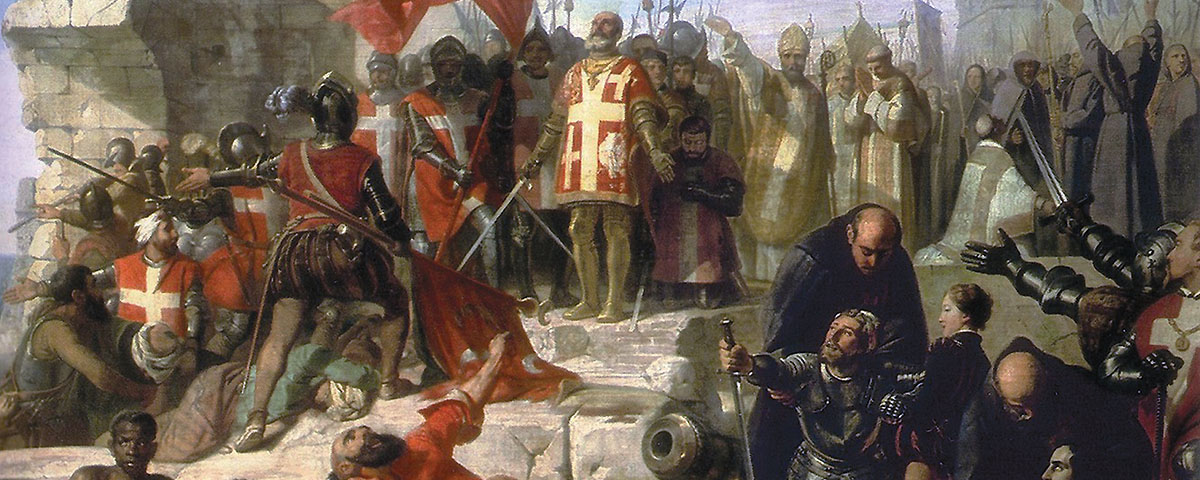
Image result for great siege of malta 1565


Rome, 13 June, 2019   

The FIUV notes with regret the letter, dated 10th June, from Fra’ Giacomo Dalla Torre, Grand Master of the      Sovereign Military and Hospitaler Order of St John of Jerusalem, of Rhodes, and of Malta (the ‘Order of      Malta’), forbidding the celebration of the Traditional Latin Mass (the Extraordinary Form) in the context of the Order’s liturgical life.


Since this letter has become public, we would like to observe that it does not accurately present the provisions of Pope Benedict XVI’s Apostolic Letter, given motu proprio, Summorum Pontificum. Article 3, cited in the Grand Master’s letter, explicitly allows religious communities to have not only private but conventual celebrations of Mass in the Extraordinary Form, without reference to the Major Superior (in the case of the Order of Malta, the Grand Master or the Prelate). His permission is required only in cases where the community ‘wishes to have such celebrations frequently, habitually or permanently’.

The Grand Master’s letter also neglects the right of the faithful, from which the religious and lay member of the Order of Malta are not excluded, from requesting celebrations of Mass in the Extraordinary Form (Article 4). Celebrations in the context of special occasions such as pilgrimages are explicitly anticipated (Article 5 §3). Pastors and rectors of churches are directed to accede to such requests Article 5, §1 and §5).

The Federation would like to emphasise that the Extraordinary Form is a part of the liturgical patrimony of the Church which represents ‘riches’ for the Church, which should not be neglected or excluded, and certainly not on the basis of a narrow conception of unity which excludes the variety of liturgical expressions permitted in the Church. As Pope Benedict expressed it:

‘These two expressions of the Church’s lex orandi will in no way lead to a division in the Church’s lex credendi (rule of faith); for they are two usages of the one Roman rite.’ (Summorum Pontificum, Preamble)

Foederatio Internationalis Una Voce

Tuesday, December 18, 2018

Count Neri Capponi, R.I.P.

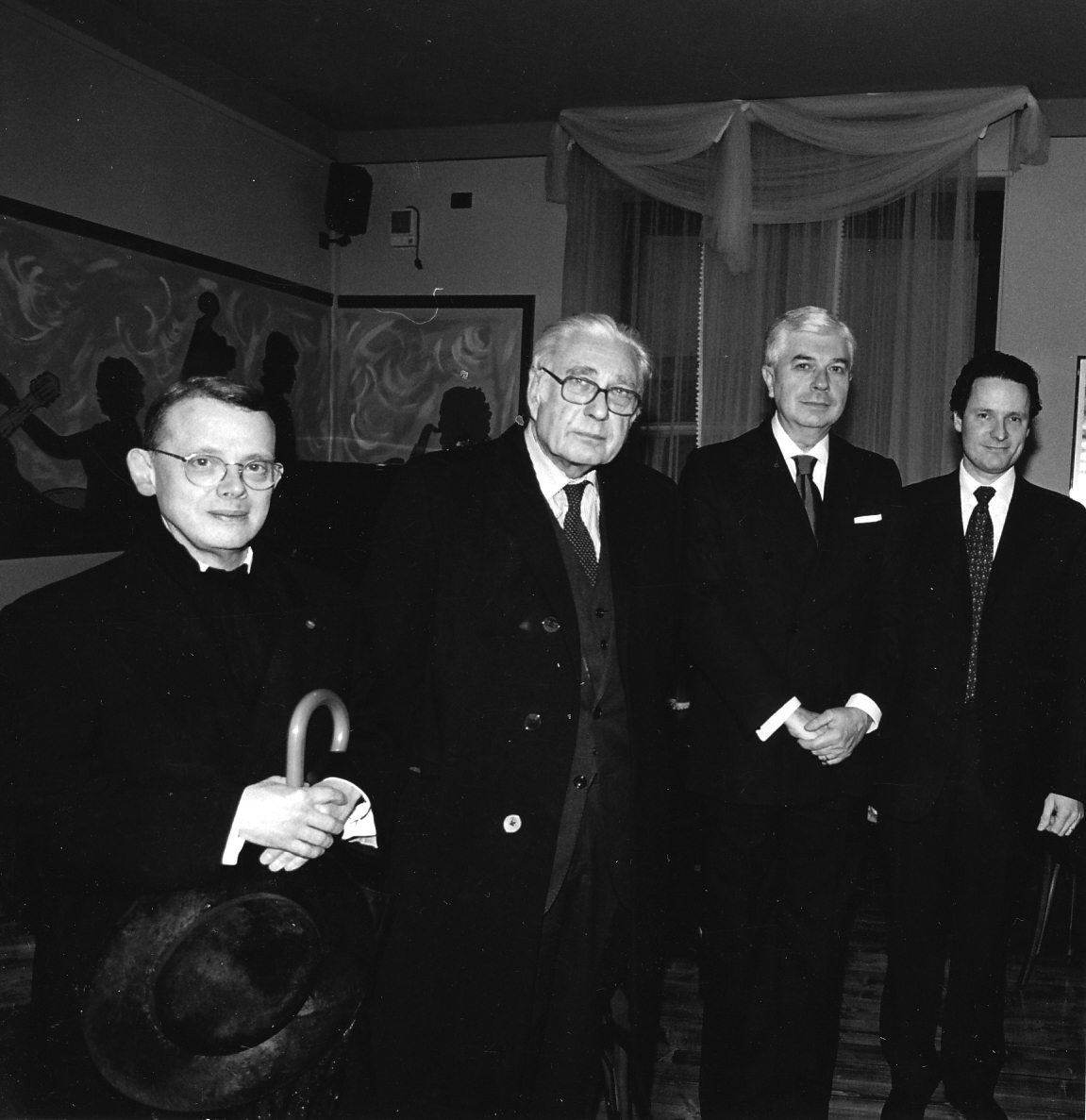
Count Neri Capponi, second from the left, photo dated 2001 (Source: Controrivoluzione)
Count Neri Capponi, a prominent Florentine legal scholar and canonist, and one of the great traditional Catholic personalities, died on 13 December 2018 in Florence, Italy. Count Capponi taught for many decades at the University of Florence. He also served on the marriage tribunal of the Archdiocese of the same city and was recognized as a canon lawyer with the credentials to speak before the Roman Rota. Neri Capponi was also a Vice-President of the FIUV and was also Honorary President of the same Federation for many years. He also corresponded with the former President of Pro Tridentina (Malta).
 
Capponi was known for having defended the right of Archbishop Marcel Lefebvre to continue his apostolate without being labelled schismatic.
 
“You cannot apply the standards of the new code of canon law and the mentality of the old code. According to the new code, Lefebvre could do what he did with a Catholic intention, and he did what he did in ‘sincerity’ and invoked the ‘state of emergency’ argument, which the new code permits. You might not like the new code, but it’s what governs the Church.” 
Neri Capponi was also very much in favour of Summorum Pontificum. He considered the post-Vatican II period as a time of crisis:
"When asked why I believe the crisis we now face is worse than Arianism, I give these reasons: (a) The principal vehicle of the faith, the liturgy, was untouched by the Arian crisis; (b) whereas the Arian crisis was precipitated and sustained by the intervention of secular power, the post Vatican II crisis comes from within the Church and is therefore more difficult to fight; (c) in the fourth century, Pope Liberius finally signed the excommunication of St. Athanasius under duress—in the twentieth century Pope Paul VI was admittedly taken in and hoodwinked by his misguided optimism, but there was no duress; (d) the present crisis is not only one of faith but of morals as well. In addition, today not only one dogma, albeit a very important one, is denied as with Arianism, but all dogmas, be it even the existence of a personal God!" Times of Crisis, Times for Faith, lecture delivered in 1995.

Monday, November 26, 2018

BREAKING NEWS: Summorum Pontificum will NOT be abrogated - NOT YET


In the past days, several traditional Catholic websites have stated that a number of Italian Bishops have attacked Summorum Pontificum, and want the Tridentine Mass abrogated. This Blog would like to state the following, thanks to our sources inside the Holy See:
 
  • It is true that this attack on the motu proprio has taken place, BUT;
  • Pope Francis, as was advised and posted here, will not dare to abrogate the Tridentine Mass, at least NOT YET;
  • The current upheaval inside the Vatican has postponed the massive liturgical changes that were to occur this year;
So, what is the real strategy? It is based on the following steps:
 
  • Start the liturgical changes as was envisaged initially, but only after the waters have calmed down;
  • Reach the agreement with the SSPX, i.e. creating a personal prelature so that the biggest traditional Catholic group is harnessed and silenced;
  • If Benedict XVI dies (let's pray this will be in the distant future), there will be no problem for the current Pope to abrogate the motu proprio. This seems to be taken from 2 perspectives - Francis genuinely has respect for Benedict XVI, whilst at the same time the accusation that Francis isn't Pope because Benedict XVI was forced to abdicate, will die a natural death. 
This Blog will continue to follow developments in this area. In the meantime, it is hoped that traditional Catholic groups, in particular the FIUV, start piling up pressure on the Pontifical Commission Ecclesia Dei.

Tuesday, August 14, 2018

Summorum Pontificum Pilgrimage 2018


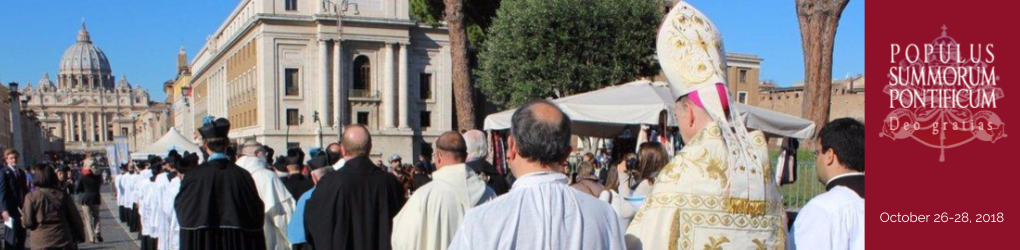
In 2018, the international pilgrimage of the Summorum Pontificum groups to Rome will be held from Friday 26 to Sunday 28 October, on the weekend of Christ the King. A delegation from Pro Tridentina (Malta) will be attending.
 
The pilgrimage will be led by Mgr. Czeslaw Kozon, Bishop of Copenhagen. The provisional progamme is as follows:
 
Friday 26 October  
 
11:00 - 17:00 - Meetings Populus Summorum Pontificum  at the invitation of Paix Liturgique, the FIUV and Juventutem at the Pontifical University of Saint Thomas Aquinas (Angelicum).
 
18:00 - Mass at the Church of the SS. Trinity of the Pilgrims.
 
Saturday 27 October
 
09:30 - Eucharistic Adoration (confessions).  
10:30 - Solemn procession to the Basilica of St. Peter, presided by Msr. Kozon.
12:00 - Solemn Pontifical Mass in St. Peter's Basilica (Altar of the Chair), celebrated by Mgr. Czeslaw Kozon, Bishop of Copenhagen, choir conducted by Maestro Aurelio Porfiri. 
14:00 - Buffet for the Clergy. 
18:00 - Vespers of Christ the King in the church of the SS. Trinity of the Pilgrims.
 
Sunday, 28 October
 
09:30 - Mass of Christ the King for pilgrims who wish to participate in the Angelus of the Holy Father, Church of Jesus and Mary (ICRSS)
11:00 - Pontifical Mass of Christ the King celebrated by Mgr. Kozon at the Church of the SS. Trinity of the Pilgrims (FSSP).