Showing posts with label Saint Paul. Show all posts

Tuesday, April 30, 2019

A sustained attack in Malta on those in favour of the Tridentine Mass - 5

Fr Joe Inguanez: “We are faced with a crisis of faith. Attendance at Sunday Mass, important though this is, is not the main issue”
 
The latest article of a series... extracts below:
Clericalism is one of our comfort zones. Clericalism was described by Pope Francis as one of the strongest challenges facing the Church. Even liturgical celebrations, holy though they may be, can become one of our clerical and lay comfort zones.
One falls into the trap of clericalism when one considers the priesthood as a privilege rather than a service, when priests become the ‘officers’ of the institution rather than the servants of the people, when they choose the front rows rather than at the back seat in the temple.
There is another trap: when the laity are considered or consider themselves as the ‘lunga manus’ of the clergy.
You write in your introduction to the census that in the same way that a clerical garb does not make one a priest, liturgical vestments do not make the liturgy religious. What does make it religious?
The Italian proverb that the religious garment doesn’t make the monk can hardly be contested.
Liturgical vestments can create an ambience which Rudolf Otto, in his analysis of religious, refers to as “numinous”, which he described as a fearful and fascinating mystery. Very often this is the way God has been presented.
However, as far as Christian religious experience is concerned, this is only partially true. The Church itself is a mystery. It is a mystery because it is the Body of the Incarnate Christ. Christ is the Immanuel – God-is-with-us. Jesus was never the object of fear but of love. How could children and sinners rush after a man who was fearsome?
The aspect of Immanuel should be the heart of the liturgical action. In its millennial history the Church made many mistakes on this point. And we have some in Malta who want to present this type of liturgical drama which literally created a distance between the actors and the audience, the priest and the congregation.
Let us take just one example. The Church has dropped the use of black liturgical vestments; yet there are still a few who doggedly ignore this and also cover the walls of their church with black drape. 
Religiosity entails several dimensions, and the liturgy is one of them. But essentially Christian religiosity entails the acceptance of the supernatural in all aspects of our life. The rest is consequential.
In terms of the liturgy then, what will make, in your words, “leavers or absentees return to Sunday Mass”?
Of it nature, the liturgy is divine and human. Its main characteristic lies in the fact that it is communitarian, and participatory, and Christological. In fact, the priest was prohibited from celebrating Mass without a community; then through the biggest stretch of imagination, we reduced that community to the presence of an altar server or one person in the pews!
The liturgy should never be the simple repetition of liturgical texts, as if it were a mantra, but an expression of the joy and sorrow of God’s people in union with Christ as their Head.
When immobilism taints the liturgy it will become ritualistic or worse rubricistic. It must celebrate the adoration of God ‘here and now’ in memory of Christ. Ritual in the liturgy should have a meaning to the congregation, otherwise it will be little more than the theatre of the absurd, thus rendering the liturgy irrelevant to human needs.
Is the local Church burying its head in the sand about the situation?
The way your question is worded already indicates the restrictive mentality inherited from liturgical texts. Why should we refer to the local Church and not to the Maltese Church? Did Paul ever say the local Church of Corinth? Does not Paul speak of the early Christian communities as Churches? Don’t you think that such expressions as ‘the local Church’ reflects a frame of mind that is still living in the fear of the Protestant Reformation?
I must be honest. There are several parishes, groups and communities in the Maltese Church who are open to new and in no way unorthodox liturgical innovations.
However, I am sorry to say that unfortunately, the Liturgical Commission, instead of becoming the motor for liturgical revival and keeping alive a post-Conciliar liturgical movement, has turned itself into an office. It would be more honest if we were to rename it as the Commission for the Official Translation of Liturgical Texts! And, from under the grapevine the translation I have at hand is not something to write home about!
This immobility might explain why in 2005, 35 per cent of the attendees went to Mass outside their territorial parish, and this percentage remained constant in 2017 when 35.2 per cent acted similarly. Are we aware that this will lead to the erosion of the territorial parish as community, if this exists, at all, thus undermining its main raison d’être?
These is still another category who want to turn the clock back. For them this has become an ideology in the Marxist sense of the concept.

Friday, December 14, 2018

Malta Discovery Pilgrimage

Pro Tridentina (Malta) looks forward to co-operate in this laudable initiative.
 
DAY 1 – Monday, September 2, 2019: Depart North America
Depart on overnight flight to Europe, connecting to Malta.  Please note: flights are additional cost.  (Meals on flights).
 
DAY 2 – Tuesday, September 3, 2019: Birkirkara
Arrival in Malta – Transfer to hotel and enjoy the afternoon relaxing by the pool in the Mediterranean sun or an optional bus tour which brings you straight to the heart of Malta, through a visit to one of our villages, boasting an imposing baroque basilica, followed by a welcome Mass together experiencing life in a local parish. Welcome dinner in a historic 17th century palazzo followed by a casual evening stroll through the old medieval capital city of Malta, Mdina, known as the Silent city, beautifully illuminated at night time.  Included: D
 
DAY 3 – Wednesday, September 4, 2019: Mdina, Rabat
We start our day in Mdina with Mass at the lovely Carmelite Church, followed by a visit to the baroque cathedral of Saint Paul. Having also visited the Diocesan Museum, we will pass to the adjacent archives of the Metropolitan Chapter, for an exclusive visit that will allow us to see the records of the intriguing Roman Inquisition in Malta. After lunch in an outdoor terrazza overlooking the bastions, we will walk through Mdina and Rabat’s winding streets, making a special visit to Saint Paul’s Grotto, the birthplace of Christianity in Malta, together with the Wignacourt Museum, named after the Grand Master who founded the conventual chaplains who originally cared for this place.  Next we visit Saint Paul’s catacombs, the largest catacomb complex in Malta. Leaving Rabat, we will transfer to Malta’s exceptional wine country to visit a winery estate for tasting local wines. Following dinner, an optional relaxing walk through Valletta, the city built by the Knights.  Included: B, D
 
DAY 4 – Thursday, September 5, 2019: Paola, Birgu
Our day will start with Mass in Paola, which bears the name of the Grand Master who founded it, in a church dedicated to one of the greatest saints of the Order of Malta. After Mass, we will move to the Grand Harbor area to enjoy the sea breeze.  We will visit the Three Cities, specifically Vittoriosa, the city which withstood victorious the onslaught of the Ottomans during the Great Siege of 1565. We start our visit, as is due, at the Collegiate church of Saint Lawrence, the original conventual church of the Order in Malta. In an adjacent oratory, we will venerate a medieval icon brought over from Rhodes, and we will see the sword and cap used by Grand Master La Vallette during the Great Siege. Following lunch at the Vittoriosa waterfront, we will visit Castel Sant’Angelo, originally the medieval Castrum Maris, and now the Maltese seat of the Order in Malta. This fortification allows for breath-taking views of the surrounding Grand Harbor. We end the tour in Vittoriosa, or Birgu, as it is locally known, by a visit to the Inquisitor’s Palace, unique among such palaces in Europe, for having withstood not only the ravages of time, but also spared from destruction by the Napoleonic forces. Following dinner, we end our night with a relaxing walk through Saint Julian’s and a drink by the sea. Included: B, D
 
DAY 5 – Friday, September 6, 2019: VallettaWe will start our day in one of Valletta’s oldest churches, Saint Augustine’s, followed by a short walk to the Monastery Church of Saint Ursula, home to a female branch of the Order of Malta. Here will venerate the relic of the head of Blessed Gerard, the founder of the Knights of Malta. From there we move to the Order’s Conventual Church, now Saint John’s Co-Cathedral. Hidden behind its austere facade, lies Malta’s most precious architectural gem, from the ornate marble tombstones of the Knights, hailed as being the most beautiful floor in Europe, to the rich vault decorated by the Knight-Artist, Mattia Preti.  At the adjacent museum, we will see Malta’s two very rare Caravaggio paintings, the Beheading of the Baptist, the only one to bear his signature, as well as his Saint Jerome.  After lunch, we will be able to visit the National Library, which holds the Order’s archives, followed by a tour of a 16th century palace, still home to a Maltese noble family. The Knight Don Pietro La Rocca built the palace. We will end our evening with a traditional dinner, where one can taste a selection of local cuisine.  Included: B, D
 
DAY 6 – Saturday, September 7, 2019: Gozo, Rabat
We move today to Gozo – the island of Calypso, mentioned in Homer’s Odyssey. Enjoy the boat ride, passing the picturesque St Paul’s Bay and the magnificent view of Saint Paul’s Islands, traditionally held to be the place of Paul’s shipwreck. After a short trip across the channel, we will start our day in Gozo by Mass at the famous Ta’ Pinu Basilica, Malta’s most venerated Marian shrine.  Saint John Paul II came here as a pilgrim during his pastoral visit to the Maltese islands in 1990. Mass will be followed by a walk through Gozo’s imposing Cittadella, a fortified city, as well as a visit to the nearby Saint George’s Basilica. A walk through Victoria, named in honor of the Empress, Queen Victoria, on the occasion of her Golden Jubilee, will allow us to see the famous lace-making craft in Gozo. Following a relaxing lunch in one of the most beautiful bays of the island, we will continue for the afternoon to Xagħra. Here will visit Ġgantija, a prehistoric complex which is said to be about 5,500 years old, making it the world’s second oldest standing religious structure. Xagħra will be celebrating its feast day, which will allow us to end the day by attending Solemn Vespers at the local basilica dedicated to the Nativity of the Virgin.  Included: B

 
DAY 7 – Sunday, September 8, 2019: Valletta Celebration Our Lady of Victories, SengleaWe will start this special day when Malta celebrates its annual il-Vitorja, the celebration of the victory over the Turks in 1565, with Mass at the Chapel of Fort Saint Elmo, a place made sacred by the blood of the martyrs of the Great Siege of 1565. This will be followed by time to visit this fort as well as the interesting War Museum. We will then walk up the hill to visit the Grand Master’s Palace and Armory. Following lunch, we will transfer for a relaxing afternoon at Malta’s most beautiful beach. We will end our day by immersing ourselves into a local festa street celebration in honor of the Nativity of the Blessed Virgin Mary, at Senglea, which bears the name of the Grand Master who built it.  Included: B
 
Day 8 – Monday, September 9, 2018: Marsaxlokk, Birkirkara
A relaxing Sunday morning, enjoying Malta’s coastline and the beauty of the Mediterranean Sea.  Visit a traditional fishing village in a rural area on a sleepy Sunday morning.  Experience life on the sea as you catch a rare glimpse of the locals, fisherman for centuries, amid palms, sun and surf.  Boat ride to the Blue Grotto.  Lunch on the seashore.  Visit St. Peter’s Pool, an enchanting bay on the sea with natural rock formations.  Sung Mass at St. Paul’s church in Birkirkara, home of the Extraordinary Form of the Roman Rite in Malta.  Included: B, D
 
Day 9 – Tuesday, September 10, 2019: Free Day
Free day for exploration, shopping, rest or leisure.  Morning Mass at St. Juliana’s old parish church.  Enjoy an afternoon at the hotel pool.  Or re-visit some favorite sites.  Final farewell dinner.  Included: B, D
 
Day 10 – Wednesday, September 11, 2019: Depart Malta
Return flights home to North America.  Included: B
 
N.B. Itinerary is tentative and subject to change.

Thursday, November 26, 2015

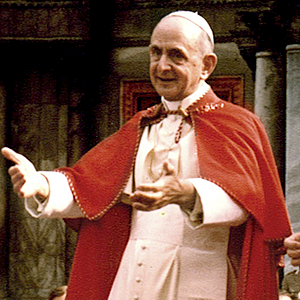
Blessed Paul VI's address on the Novus Ordo Missae


https://www.ccwatershed.org/media/photologue/photos/cache/463-liturgical-Paul-VI_preview.png


The below is an interesting address by Blessed Paul VI given 46 years ago. Given on the eve of the introduction of the Novus Ordo Missae, the concerns and arguments expressed by the Pope are still relevant half a century later (emphasis ours). And some of his words were not heeded, especially as far as Sacrosanctum Concilium is concerned.


Changes in Mass for Greater Apostolate
Address to a General Audience, 26 November 1969

Our Dear Sons and Daughters:

1. We ask you to turn your minds once more to the liturgical innovation of the new rite of the Mass. This new rite will be introduced into our celebration of the holy Sacrifice starting from Sunday next which is the first of Advent, 30 November [in Italy].

2. A new rite of the Mass: a change in a venerable tradition that has gone on for centuries. This is something that affects our hereditary religious patrimony, which seemed to enjoy the privilege of being untouchable and settled. It seemed to bring the prayer of our forefathers and our saints to our lips and to give us the comfort of feeling faithful to our spiritual past, which we kept alive to pass it on to the generations ahead.

3. It is at such a moment as this that we get a better understanding of the value of historical tradition and the communion of the saints. This change will affect the ceremonies of the Mass. We shall become aware, perhaps with some feeling of annoyance, that the ceremonies at the altar are no longer being carried out with the same words and gestures to which we were accustomed—perhaps so much accustomed that we no longer took any notice of them. This change also touches the faithful. It is intended to interest each one of those present, to draw them out of their customary personal devotions or their usual torpor.

4. We must prepare for this many-sided inconvenience. It is the kind of upset caused by every novelty that breaks in on our habits. We shall notice that pious persons are disturbed most, because they have their own respectable way of hearing Mass, and they will feel shaken out of their usual thoughts and obliged to follow those of others. Even priests may feel some annoyance in this respect. 

5. So what is to be done on this special and historical occasion? First of all, we must prepare ourselves. This novelty is no small thing. We should not let ourselves be surprised by the nature, or even the nuisance, of its exterior forms. As intelligent persons and conscientious faithful we should find out as much as we can about this innovation. It will not be hard to do so, because of the many fine efforts being made by the Church and by publishers. As We said on another occasion, we shall do well to take into account the motives for this grave change. The first is obedience to the Council. That obedience now implies obedience to the Bishops, who interpret the Council's prescription and put them into practice. 

6. This first reason is not simply canonical—relating to an external precept. It is connected with the charism of the liturgical act. In other words, it is linked with the power and efficacy of the Church's prayer, the most authoritative utterance of which comes from the Bishop. This is also true of priests, who help the Bishop in his ministry, and like him act in persona Christi (cf. St. Ign., ad Eph. I, V). It is Christ's will, it is the breath of the Holy Spirit which calls the Church to make this change. A prophetic moment is occurring in the mystical body of Christ, which is the Church. This moment is shaking the Church, arousing it, obliging it to renew the mysterious art of its prayer.

7. The other reason for the reform is this renewal of prayer. It is aimed at associating the assembly of the faithful more closely and more effectively with the official rite, that of the Word and that of the Eucharistic Sacrifice, that constitutes the Mass. For the faithful are also invested with the "royal priesthood"; that is, they are qualified to have supernatural conversation with God.

8. It is here that the greatest newness is going to be noticed, the newness of language. No longer Latin, but the spoken language will be the principal language of the Mass. The introduction of the vernacular will certainly be a great sacrifice for those who know the beauty, the power and the expressive sacrality of Latin. We are parting with the speech of the Christian centuries; we are becoming like profane intruders in the literary preserve of sacred utterance. We will lose a great part of that stupendous and incomparable artistic and spiritual thing, the Gregorian chant. 

9. We have reason indeed for regret, reason almost for bewilderment. What can we put in the place of that language of the angels? We are giving up something of priceless worth. But why? What is more precious than these loftiest of our Church's values?

10. The answer will seem banal, prosaic. Yet it is a good answer, because it is human, because it is apostolic.

11. Understanding of prayer is worth more than the silken garments in which it is royally dressed. Participation by the people is worth more—particularly participation by modern people, so fond of plain language which is easily understood and converted into everyday speech. 

12. If the divine Latin language kept us apart from the children, from youth, from the world of labor and of affairs, if it were a dark screen, not a clear window, would it be right for us fishers of souls to maintain it as the exclusive language of prayer and religious intercourse? What did St. Paul have to say about that? Read chapter 14 of the first letter to the Corinthians: "In Church I would rather speak five words with my mind, in order to instruct others, than ten thousand words in a tongue" (I Corinthians 14:19).

13. St. Augustine seems to be commenting on this when he says, "Have no fear of teachers, so long as all are instructed" (P.L. 38, 228, Serm. 37; cf. also Serm. 229, p. 1371). But, in any case, the new rite of the Mass provides that the faithful "should be able to sing together, in Latin, at least the parts of the Ordinary of the Mass, especially the Creed and the Lord's Prayer, the Our Father" (Sacrosanctum Concilium n. 19).

14. But, let us bear this well in mind, for our counsel and our comfort: the Latin language will not thereby disappear. It will continue to be the noble language of the Holy See's official acts; it will remain as the means of teaching in ecclesiastical studies and as the key to the patrimony of our religious, historical and human culture. If possible, it will reflourish in splendor. 

15. Finally, if we look at the matter properly we shall see that the fundamental outline of the Mass is still the traditional one, not only theologically but also spiritually. Indeed, if the rite is carried out as it ought to be, the spiritual aspect will be found to have greater richness. The greater simplicity of the ceremonies, the variety and abundance of scriptural texts, the joint acts of the ministers, the silences which will mark various deeper moments in the rite, will all help to bring this out. 

16. But two indispensable requirements above all will make that richness clear: a profound participation by every single one present, and an outpouring of spirit in community charity. These requirements will help to make the Mass more than ever a school of spiritual depth and a peaceful but demanding school of Christian sociology. The soul's relationship with Christ and with the brethren thus attains new and vital intensity. Christ, the victim and the priest, renews and offers up his redeeming sacrifice through the ministry of the Church in the symbolic rite of his last supper. He leaves us his body and blood under the appearances of bread and wine, for our personal and spiritual nourishment, for our fusion in the unity of his redeeming love and his immortal life.

17. But there is still a practical difficulty, which the excellence of the sacred renders not a little important. How can we celebrate this new rite when we have not yet got a complete missal, and there are still so many uncertainties about what to do?

18. To conclude, it will be helpful to read to you some directions from the competent office, namely the Sacred Congregation for Divine Worship. Here they are: "As regards the obligation of the rite:

1) For the Latin text: Priests who celebrate in Latin, in private or also in public, in cases provided for by the legislation, may use either the Roman Missal or the new rite until 28 November 1971. If they use the Roman Missal, they may nevertheless make use of the three new anaphoras and the Roman Canon, having regard to the provisions respecting the last text (omission of some saints, conclusions, etc.). They may moreover recite the readings and the prayer of the faithful in the vernacular. If they use the new rite, they must follow the official text, with the concessions as regards the vernacular indicated above.

2) For the vernacular text. In Italy, all those who celebrate in the presence of the people from 30 November next, must use the Rito della Messa published by the Italian Episcopal Conference or by another National Conference. On feast days readings shall be taken: either from the Lectionary published by the Italian Center for Liturgical Action, or from the Roman Missal for feast days, as in use heretofore. On ferial days the ferial Lectionary published three years ago shall continue to be used. No problem arises for those who celebrate in private, because they must celebrate in Latin. If a priest celebrates in the vernacular by special indult, as regards the texts, he shall follow what was said above for the Mass with the people; but for the rite he shall follow the Ordo published by the Italian Episcopal Conference.

19. In every case, and at all times, let us remember that "the Mass is a Mystery to be lived in a death of Love. Its divine reality surpasses all words. . . It is the Action par excellence, the very act of our Redemption, in the Memorial which makes it present" (Zundel).


With Our Apostolic Benediction. 
(L'Osservatore Romano, Weekly Edition in English 4 December 1969)

Wednesday, November 18, 2015

Pope St. John Paul II on Prayer


https://tomperna.files.wordpress.com/2012/05/jp-ii-praying-the-rosary.jpgnew page with prayers in Latin and English has been added on this website. It is interesting to read also the below piece by Pope Saint John Paul II:

What is prayer? It is commonly held to be a conversation. In a conversation there is always an “I” and a “thou” or “you”. In this case the Thou is with a capital T. if at first the “I” seems to be the most important element in prayer, prayer teaches that the situation is actually different. The “Thou” is more important because our prayer begins with God. In his letter to the Romans, St. Paul teaches precisely this. According to the Apostle, prayer reflects all created reality; it is in a certain sense a cosmic function.

Man is the priest of all creation; he speaks in its name, but only insofar as he is guided by the Spirit. In order to understand profoundly the meaning of prayers, one should meditate for a long time on the following passage from the Letter to the Romans:
For creation awaits with eager expectation the revelation of the children of God; for creation was made subject to futility, not of its own accord but because of the one who subjected it, in hope that creation itself would be set free from slavery to corruption and share in the glorious freedom of the children of God. We know that all creation is groaning in labor pains even until now; and not only that, but we ourselves, who have the first fruits of the Spirit, we also groan within ourselves as we wait for adoption, the redemption of our bodies. For in hope we were saved. (Romans 8:19-24)  
And here again we come across the Apostle’s words:
The Spirit too comes to the aid of our weakness; for we do not know how to pray as we ought, but the Spirit himself intercedes with inexpressible groanings. (Romans 8:26)
In prayer, then, the true protagonist is God. The protagonist is Christ, who constantly frees creation from slavery to corruption and leads it towards liberty, for the glory of the children of God. The protagonist is the Holy Spirit, who “comes to the aid of our weakness”. We begin to pray, believing that it is our own initiative that compels us to do so. Instead, we learn that it is always God’s initiative within us, just as Saint Paul has written.

Much as been written about prayer, and further, prayer has been widely experienced in the history of humankind, especially in the history of Israel and Christianity. Man achieves the fullness of prayer not when he expresses himself, but when he lets God be most fully present in prayer.

(Crossing the Threshold of Hope, pp 16-18)

Friday, July 3, 2015

An anticlerical and gay activist on the Tridentine Mass

 
The Maltese-Australian lawyer Joseph Carmel Chetcuti needs no introduction to the Maltese public. He himself admitted in a comment 10 months ago as follows: 

"I have been described as anticlerical and I have embraced that description with pride. Clericalism is not grounded in the New Testament. It is merely a fabrication of some men designed to benefit these very men. In recent years clericalism has benefited a closeted homosexual and pedophile hierarchy. They even proclaim their own 'saints'. And as a gay activist I am proud to have played a very minor role towards the devastation of clericalism. With the advent of modern gay liberation, the seminaries and friaries have virtually been obliterated. And I was one of those who left the friary for gay liberation. What the Catholic Church needs now is a reformation from within. But of course they will blame modernism and secularism and atheists and agnostics and what have you. A nice way to deflect attention from the miserable way these clerics have run the church."

In his book, Queer Mediterranean Memories,  Chetcuti speculates on the sexual orientation of various prominent people including Saint Paul and Saint George Preca among others.

It came therefore as a welcome surprise when, in a recent exchange of views with Pro Tridentina (Malta) he said the following (my emphasis) about the Tridentine Mass:

" Oh pleeease! Whom are you kidding? Try pulling the other leg. BTW, I was there and present at a mass when Marcel Lefebvre visited Australia many moons ago.
...
Well it is many years ago. I think it was in the 1980s as I moved to Melbourne in late 1982. There is no denying, however, that the Tridentine mass has a sense of magic (or better still, a sense of wonder) which is lacking today. He reminded me a bit of Gonzi!"


Thursday, July 4, 2013

Quotes to reflect upon (3)

A quote from the Preface of the St. Joseph Daily Missal, published in the USA, 1961. It clearly shows that lay participation is possible too in the Tridentine Mass.
http://img22.imageshack.us/img22/7287/piusxii02.jpgThe rapid growth of the modern liturgical movement  received a new and salutary impetus from His Holiness Pope Pius XII, in his encyclical letter Mediator Dei of November 29, 1947, on the Sacred Liturgy. He clearly indicates the importance of lay participation in the offering of the Holy Sacrifice of the Mass: "It is desirable that all the faithful should be aware that to participate in the Eucharistic Sacrifice is their chief duty and supreme dignity, and that, not in an inert and negligent fashion, giving way to distractions and day-dreaming, but with such earnestness and concentration that they may be united as closely as possible with the High Priest, according to the Apostle [Paul], 'Have this in mind in you which was also in Christ Jesus' (Philippians 2, 5). And together with Him and through Him let them make their oblation, and in union with Him let them offer up themselves."

Saturday, June 29, 2013

Dissent: Fr René Camilleri follows Archbishop Marcel Lefebvre

https://blogger.googleusercontent.com/img/b/R29vZ2xl/AVvXsEhQQz8096ZccsvLBEg5J6p62aqJ-7_CImmWnD9CWH6dIxvi21Lz-gsXBtHtuRk8U7Rc8yrPx7e0ylmHraVoSrJmAExUaDyMG32Jo_SuD-0Lzbd054yhHgQUd6NXPQrIQ0NzhQ-HRsYM845i/s320/StsPeterAndPaul.jpgOn behalf of the purity of faith Saint Paul resisted the first Pope, Saint Peter, to the face. This is to be found in Galatians 2:11 "But when Cephas was come to Antioch, I withstood him to the face, because he was to be blamed" (DRV). Here Saint Paul made the first public statement of Catholic resistance to the teachings of the Council and of the Popes that are objectively opposed to the Magisterium. The Epistle to the Galatians is a piece of passionate writing, and a note of indignation runs throughout. 

Today, being the Solemnity of Saints Peter and Paul, i.e. the liturgical feast in honour of their martyrdom in Rome, we think it is appropriate to show how a progressive Maltese priest (René Camilleri) follows the example of Archbishop Marcel Lefebvre, and traditional Catholics, as far as dissent in the Church is concerned.

Who is Fr René Camilleri

Rev. Dr Camilleri read Theology and Philosophy at the University of Malta between 1972 – 1978. In 1979 he furthered his studies at the Pontifical Gregorian University in Rome obtaining his Doctorate in Systematic Theology under the tutorship of Profs F. A. Sullivan SJ. In 1988 he took his teaching post in the Department of Fundamental & Dogmatic Theology in the Faculty of Theology at the University of Malta. He teaches Systematic Theology and his main areas of teaching and research are Ecclesiology, Anthropology, Faith and Culture. In 1994 he was Visiting Scholar at Heythrop College, University of London. He had various assignments on the Diocesan level and is a regular contributor in papers and on the media. He is currently the Archbishop’s Delegate for Catechesis. (Source: University of Malta)

In 2012 Camilleri was perceived as a ringleader in an apparent ‘priest’s revolt’, something that he denied, arguing that dissent is sometimes necessary. Fr Camilleri himself refused (along with other priests) to read out the pastoral letter on IVF during Mass. 

Fr Camilleri on crisis in the Church and dissent

In an interview around 10 years ago, Understanding Malta 2003: a church odyssey, Fr Camilleri had argued that the Church has to come to terms with today’s reality. He stated that:

Fr René Camilleri
"Institutionalised religion in Malta is also in a crisis as it is the rest of Europe. Less people attend mass, less will probably get married through the church, less will give importance to the church’s teachings.

... In the recent past the Maltese church has rested on its laurels just because the majority of people went to mass and participated in religious celebrations.

... I believe that the church has to come to terms with certain things. It needs to deeply reflect on certain issues. We cannot continue to believe that the church is a self-contained reality, as if it were a mother telling its flock what to do. That age has come to an end."

Interestingly enough, the Maltese theologian believed that the Church in its first millennium of existence was very up to date with spiritual and cultural pluralism: 

"The church’s mystics were not the yes-men we often portray them to be. There were mystics who were rebels. However, the age of secularisation and today’s culture has thrust into crisis spirituality imposed from above."

In a more recent article, A different Church, Fr Camilleri admitted that there was a rift opening up within the Church in Malta and spoke openly about it. Relevant quotes follow:

"There is and I am not surprised. As I see it, what is happening is that we have a traditionally monolithic Church being confronted with a fast-changing society. It is quite natural for there to be internal dissent under these circumstances. Hopefully, we will mature as a result.

... You should have internal dissent; it is not something to be afraid of. It is in fact healthy; apart from being in the nature of the Church as an institution. Many might not be aware of this, but without internal dissent there would be no Church at all. It would be dead. There was dissent among the original 12, who were chosen directly by Christ Himself. Look at the history of the Church, with its heresies and its persecutions... what was this, if not dissent?

... when obedience amounts to shunning personal responsibility, then it is no longer a virtue at all. I am a priest. I know I have a vow of obedience. But it does not mean we are puppets. Many people believe we should keep our mouths shut at all times. But that is not obedience...

... The irony is that the Church herself celebrates so many people who were disobedient... Christ was the first to be disobedient: he openly challenged the religious authorities of his time...

... the fact that the Church is not democratic does not mean it should be dictatorial. Vatican Council Two makes it clear that even bishops should listen...

... I've been struggling for over 30 years now to have a different Church. I still believe it will happen one day... though it's not around the corner. The bedrock of this Church are those who believe in spite of everything. Fortunately there are still people who retain their faith in spite of the Church, rather than because of her. I rejoice for these people. They are the Church's hope."

Whether one agrees or not with the Maltese priest, some of his words can easily be applied to the work done by Archbishop Lefebvre, albeit originating for opposite reasons.

Archbishop Lefebvre never argued that nothing in the Church is subject to change. He argued (as did Blessed John Henry Newman in his Essay on Development) that authentic developments must be consistent with what preceded them, and since the Second Vatican Council was not consistent with the pre-conciliar Magisterium on several points, it could not command the assent of Catholics. That is a very different argument. Traditionalism (even of the SSPX variety) is therefore not the same thing as integralism.
 
Archbishop Marcel Lefebvre
Another important point of difference is the fact that the dissent of Lefebvre is based on the teaching of several doctors of the Church (whose teachings on this subject were more recently gathered by Blessed Newman) which claim that it is a matter of obedience to God to oppose a pope whose actions tend to destroy the Church. 

Thus, if we are to believe the doctors of the Church rather than some self-appointed new 'doctors of apologetics', we really must ask if the dissent of Lefebvre, the SSPX or other traditional Catholics was legitimately trying to avoid the auto-demolition of the Church or if it was merely a desire to be one's own authority. 

In connection with this Archbishop Lefebvre said "I do not want to be the head of a movement. I merely want to do what every Catholic bishop is created to do: transmit the same faith that was transmitted to me."

Further, it's very hard to see what mainstream Catholics mean when they say that traditional Catholics deny Vatican II when so many non-dissenting traditionalists have likewise affirmed that the Council is pastoral rather than dogmatic. In fact several of the major seminaries in Rome have approved such conclusions being made as doctoral theses.

At this stage, it is worth repeating (ad nauseam perhaps) that there are traditionalists who accept the Council, are in union with the Church, and are not part of the SSPX. Criticism of the Council from a traditional perspective is valuable, even necessary, for the Church to remove itself from the post-conciliar disaster.

All disunity, whether canonical or ideological, is bad. But to present the existence of an extremely small minority who are in an irregular canonical situation as an equally grave threat as the ubiquitous presence of liberalism in almost every corner of the Church, even in the hierarchy, is just not accurate. 

Ironically, since the retirement of Benedict XVI many have implied that he was wasting his time in dealing with the SSPX. There are also those who want Summorum Pontificum to be consigned to the dustbin of history as if the Pope's motivation had nothing to do with wanting to restore liturgical sanity in the Church and was simply to appease some radical traditionalists. 

Liberalism and expressions of traditionalism that deny the validity of the Second Vatican Council are both errors. But they are not errors of an equal sort, nor does the Church stand with equal distance from each, nor are the threats from each equivalent.

The hope in Malta is that the more the Tridentine Mass expands, the more souls are exposed to the beauty, the elegance, the glory of more traditional Catholicism.

Wednesday, February 27, 2013

The Roman Pontiff is the Supreme Teacher

The New Testament passages we have seen several times in the preceding catecheses show that Jesus revealed his intention to give Peter the keys to the kingdom in response to a profession of faith. In it Peter spoke in the name of the Twelve and by virtue of a revelation coming from the Father. He expressed his faith in Jesus as "the Messiah, the Son of the living God." This assent of faith in the person of Jesus was not a simple attitude of trust, but clearly included the affirmation of a Christological doctrine. 

The role of foundation stone conferred on Peter by Jesus thus has a doctrinal aspect (cf. Mt 16:18-19). The mission of "strengthening his brothers" in faith, also entrusted to him by Jesus (cf. Lk 22:32), has the same meaning. Peter is the beneficiary of the Master's special prayer in carrying out this role and helping his brothers to believe. The words "Feed my lambs.... Tend my sheep" (Jn 21:15-17) do not express a doctrinal mission explicitly, but rather imply it. Tending the flock means providing it with the solid food of the spiritual life, and this food imparts revealed doctrine to nourish the faith.

The Gospel texts demonstrate that the universal pastoral mission of the Roman Pontiff, the Successor of Peter, entails a doctrinal mission. As universal pastor, the Pope has the mission to proclaim revealed doctrine and to promote true faith in Christ throughout the Church. This is the integral meaning of the Petrine ministry.

The value of the doctrinal mission entrusted to Peter stems from the fact that, according to the Gospel sources, he shares in Christ's pastoral mission. Peter is the first of those apostles to whom Jesus said: "As the Father has sent me, so I send you" (Jn 20:21; cf. 17:18). As universal pastor, Peter must act in Christ's name and in harmony with him throughout the broad human area in which Jesus wants his Gospel preached and the saving truth brought: the entire world. The Successor of Peter in the mission of universal pastor is thus the heir of a doctrinal munus in which he is closely related, with Peter, to Jesus' mission.

This relationship in no way detracts from the pastoral mission of the bishops, who have among their principal duties that of preaching the Gospel. According to the Second Vatican Council, they are "preachers of the faith...who preach to the people committed to them the faith they must believe and put into practice" (LG 25).

Nevertheless, the Bishop of Rome, as head of the episcopal college by the will of Christ, is the first herald of the faith. It is his task to teach revealed truth and to show how it should be applied in human conduct. He has primary responsibility for spreading the faith in the world. The Second Council of Lyons (1274) asserted this about the Bishop of Rome's primacy and fullness of power, when it stressed: "He has the duty to defend the truth of the faith, and it is his responsibility to resolve all disputed matters in the area of faith" (DS 861). Along the same lines the Council of Florence (1439) acknowledged the Roman Pontiff as the "father and teacher of all Christians" (DS 1307).

The Successor of Peter fulfills this doctrinal mission in a continual series of oral and written interventions that represent the ordinary exercise of the Magisterium as the teaching of truths to be believed and put into practice (fidem et mores). The acts expressing this Magisterium can be more or less frequent and take various forms according to the needs of the time, the requirements of concrete situations, the opportunities and means available, and the methods and systems of communication. However, given that they derive from an explicit or implicit intention to make pronouncements on matters of faith and morals, they are linked to the mandate received by Peter and enjoy the authority conferred on him by Christ.

The exercise of this Magisterium can also take place in an extraordinary way when the Successor of Peter (alone, or with the college of bishops as successors of the apostles) makes an ex cathedra pronouncement on a particular point of doctrine or Christian morals. However, we shall speak of this in future catecheses. Now we must concentrate on the usual, ordinary form of the papal Magisterium, which has a broader extent and an essential importance for the thought and life of the Christian community.

In this regard the first point to be stressed is the positive value of this mission to proclaim and spread the Christian message, to make the authentic teaching of the Gospel known, to respond to old and new human questions about the basic problems of life with the eternal words of revelation. To think that the papal Magisterium consists merely in condemning errors against the faith would be reductive and erroneous. This somewhat negative aspect is doubtless part of his responsibility for spreading the faith, since it is also necessary to defend it against error and deviation. However, the essential task of the papal Magisterium is to explain the doctrine of the faith, and to promote knowledge of the mystery of God and the work of salvation, bringing out all the aspects of the divine plan as it unfolds in human history under the action of the Holy Spirit.

This is the service to the truth that has been primarily entrusted to Peter's Successor, who in the ordinary exercise of his Magisterium is already acting not as a private person, but as the supreme teacher of the universal Church, according to the precise statement of Vatican II regarding definitions ex cathedra (cf. LG 25).

In carrying out this task, the Successor of Peter expresses in a personal way, but with institutional authority, the "rule of faith" which the members of the universal Church (the ordinary faithful, catechists, religion teachers, theologians) must adhere to in investigating the meaning of the permanent content of the Christian faith. This is true also in relation to the discussions arising within and outside the ecclesial community on various points or on the whole of doctrine. Everyone in the Church, especially the theologians, are called to perform this task of continually making it clear and explicit. However, the mission of Peter and his successors is to establish and authoritatively confirm what the Church has received and believed from the beginning, what the apostles taught, what Sacred Scripture and Christian Tradition have determined as the object of faith and the Christian norm of life. The Church's other pastors, the bishops as successors of the apostles, are "strengthened" by the Successor of Peter in their communion of faith with Christ and in properly fulfilling their mission. In this way the Bishop of Rome's Magisterium indicates to everyone the way of clarity and unity, which seems indispensable especially in times of great communication and discussion such as ours.

The mission of Peter's Successor is exercised in three basic ways: first of all, by word. As universal pastor, the Bishop of Rome addresses all Christians and the whole world, carrying out in a full and supreme way the mission Christ conferred on the apostles: "Make disciples of all nations" (Mt 28:19). Since today the communications media allow his words to reach all nations, he fulfills that divine mandate in a way never before possible. Because the means of transportation allow him personally to visit the most distant regions, he can bring Christ's message to the people of every country, thus carrying out the divine command to "go" in a new and previously unimagined way: "Go...and make disciples of all nations...."

The Successor of Peter also fulfills his mission by writing: beginning with his addresses that are published so that his teaching is known and documented, up to all the documents issued directly--and here the encyclicals, which formally have the value of universal teaching, should be mentioned first--or those issued indirectly by the departments of the Roman Curia which operate under his mandate.

Lastly, the Pope carries out his task as pastor with authoritative initiatives and institutions of a scholarly and pastoral nature: for example, by initiating or fostering activities of study, sanctification, evangelization, charity and assistance, etc., throughout the Church; by promoting authorized and accredited institutes for teaching the faith (seminaries, faculties of theology and religious studies, theological associations, academies, etc.). This is a broad range of initiatives for formation and action under the auspices of Peter's successor.

In conclusion, we can say that the teaching of Peter's successor (as that of the other bishops) contains, in its essence, a witness to Christ, to the event of the Incarnation and the redemption, to the Holy Spirit's presence and action in the Church and in history. In its form of expression it can vary according to the person who exercises it, his interpretation of the needs of the time, his style of thought and communication. However, its relationship to the living truth, Christ, has been, is and will always be its vital force.

This relationship to Christ definitively explains the difficulties and opposition that the Church's Magisterium has always encountered from Peter's day to our own. For all the bishops and pastors of the Church, and especially for the Successor of Peter, Jesus' words are valid: "No disciple is above his teacher" (Mt 10:24; Lk 6:40). Jesus himself exercised his Magisterium amid the struggle between darkness and light, which was the context for the Incarnation of the Word (cf. Jn 1:1-14). That struggle was intense during the apostolic period, as the Master had warned: "If they persecuted me, they will also persecute you" (Jn 15:20).

Unfortunately, it took place too in some Christian communities, so much so that St. Paul felt it necessary to urge Timothy, his disciple: "Proclaim the Word; be persistent whether it is convenient or inconvenient; convince, reprimand, encourage through all patience and teaching...[even] when people will not tolerate sound doctrine" (2 Tim 4:2-3).

What Paul recommended to Timothy also applies to bishops today, and especially to the Roman Pontiff, who has the mission of protecting the Christian people from errors in faith and morals, and the duty of guarding the deposit of faith (cf. 2 Tim 4:7). Woe to him if he should be frightened by criticism and misunderstanding. His charge is to give witness to Christ, to his word, his law, his love. However, in addition to being aware of his responsibility for doctrine and morals, the Roman Pontiff must, like Jesus, be committed to being "meek and humble of heart" (Mt 11:29). Pray that he may be so and will become ever more so.

John Paul II, General Audience, 10 March, 1993