Showing posts with label Roman Missal. Show all posts

Thursday, May 15, 2025

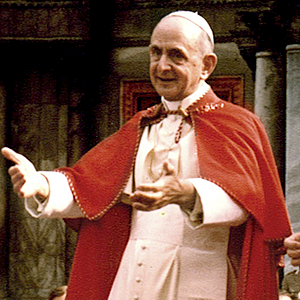
Statement on the election of Pope Leo XIV by FIUV


Press Release of Una Voce International (FIUV) on the election of Pope Leo XIV

Una Voce International (Foederation Internationalis Una Voce) would like to welcome Pope Leo XIV and assure him of the prayer of our member associations, who represent Catholics attached to the Traditional Mass all over the world.

Pope Leo has the chance to make a new start with many matters in the Church, and if the Traditional Mass does not appear to him the most pressing one, we commend to him a policy of peaceful co-existence, in which our supporters in every continent may be encouraged to make the greatest possible contribution to the life of the Church, united to the Holy Father in charity and obedience.

We urge all our supporters and friends to pray for Pope Leo. The following prayer, from the ancient Roman Missal, is the Collect from the Votive Mass ‘On the day of the Coronation of a Pope’, and is suitable for a newly elected Pope.

Deus, ómnium fidélium pastor et rector, fámulum tuum Leonem, quem pastórem Ecclésiæ tuæ præésse voluísti, propítius réspice: da ei, quǽsumus, verbo et exémplo, quibus præest, profícere; ut ad vitam, una cum grege sibi crédito, pervéniat sempitérnam. Per Dominum nostrum.

O God the Pastor and Ruler of all the faithful, look favourably on Thy servant Leo whom Thou hast been pleased to appoint as shepherd of Thy Church: grant to him, we beseech Thee, that by word and example he may edify those over whom he is placed, so that, with the flock entrusted to him, he may attain unto life everlasting.

Contact: 

Joseph Shaw president@fiuv.org 

Andris Amolins secretary@fiuv.org

Sunday, April 27, 2025

What happens to Traditionis custodes now in Malta and Gozo?


The regulations set out in Traditionis custodes and as applied in Malta and Gozo provide that (comments in bold by this Blog):

1. The bishop of the diocese is the sole authority to decide whether the celebration of Mass according to the 1962 Roman Missal may take place in his diocese. - only one Sunday Mass is allowed in Malta, none in Gozo.

2. The bishop must decide the locations and times when Mass according to the 1962 rubrics may take place. This cannot occur within parochial churches, nor can the bishop erect new personal parishes dedicated to the celebration of Mass according to the 1962 Missal. - in fact the Mass is only held in the Jesuits Church in Valletta. Other, few Tridentine Masses that are held from time to time are celebrated by so-called 'independent priests'.

3. The bishop must ensure that the existing communities that celebrate Mass according to the 1962 rubrics are effective for the spiritual growth of his people, and he has the option to revoke the permissions given to these communities. He may not authorize the establishment of new groups that gather for celebration according to the 1962 Roman Missal. - this has affected Pro Tridentina (Malta) directly, also because some persons had decided to spread lies about this organisation, for their personal ambitions.

4. The bishop should appoint a priest to act as a delegate for the pastoral care of the groups of the faithful attached to the 1962 liturgical rites. The priest must understand the Missal of 1962 well, must be well-versed in ecclesial Latin, and must exhibit pastoral charity and a desire for ecclesial communion. -  this has been done with the appointment of Canon Doublet.

5. Priests ordained before the publication of Traditionis custodes (16 July 2021) who celebrated Mass according to the 1962 Missal before the publication of Traditionis custodes should request permission from the bishop of the diocese to continue to celebrate Mass according to the 1962 rubrics. - it's unclear whether these priests, some of whom appear in the section Hall of Honour did this or not.

6. Priests ordained after the publication of Traditionis custodes must submit a formal request to the bishop of the diocese in order to gain permission to celebrate Mass according to the 1962 Roman Missal. The bishop must then consult the Holy See before the bishop grants permission to the priest. - as far as is known, no priest did this.

In December 2021, additional restrictions and guidelines (some of which are reproduced below) were issued by the Congregation for Divine Worship and the Discipline of the Sacraments in the form of a Responsa ad dubia:

1. if a non-parish church, oratory or chapel cannot be found for a group to gather to celebrate the Mass according to the 1962 Missal, the diocesan bishop can ask the Holy See for permission to use a parish church; however, the Mass should not be listed in the parish schedule and when a non-parish church, oratory or chapel becomes available, the permission to celebrate the Mass in the parish church will be withdrawn. - none was asked. If such a group grows in the number of attendees, permission to use the 1962 Missal may be withdrawn because it can be considered that the group is promoting the previous rite. 

2. The diocesan bishop is not authorized to grant permission for the use of the Pontificale Romanum (the Pontifical Missal) issued in 1962. This also means that the sacraments of Holy Orders and Confirmation may only be celebrated in the post-Vatican II form. The only exception is for personal parishes to use the Roman Ritual. But these very few exceptions must be monitored in order to ensure that the priests are accepting the liturgical reforms coming from the Council. - this eliminates all previous permissions to celebrate the Mass and the Sacraments according to the Roman Pontifical and the Roman Ritual which are the two main directories that regulated ceremonies in the Catholic Church for more than 1,000 years. 

3. In order for a priest to be granted permission to celebrate the Mass according to the Missal of 1962, he must recognize the validity and legitimacy of concelebration and is not to refuse to concelebrate at the diocesan Chrism Mass. - this is being applied in Malta.

4. The faculty to celebrate according to the 1962 missal, granted by a diocesan bishop to a priest, is restricted to the territory of that diocese. - therefore priests who celebrate in Malta cannot celebrate the Tridentine Mass in Gozo. The same would apply to any Maltese priest who was incardinated in another diocese. From testimonies gathered by some faithful who attend the different Tridentine Masses in Malta (whether authorised or not), this has been the case with at least 1 priest who attended a seminary abroad.

5. A priest who has been granted faculties to celebrate the 1962 missal is not permitted to celebrate both the Mass according to the 1962 missal and the post-Vatican II missal on the same day. - it is unclear whether an exemption was made in Malta, based on testimonies made by faithful who attend Mass in Valletta.

6. Not only the priest but the deacons and acolytes must also be authorized to serve at the Mass.- if one considers High Masses, the solemnities of the Holy Week, Easter and Christmas in which deacons and acolytes play a very precise role, we see that this demand for authorisation is intended to discourage their participation in such ceremonies. This necessarily leads to a diminishing of such ceremonies.

7. A priest who is authorised to say the Mass according to the1962 Missal cannot say two such Masses even if the group of faithful is approved by the Bishop. - this harms the faithful and puts pressure on them to attend the Novus Ordo Missae. Again, it is clear why groups such as the ASPM are not allowed to expand their attendance at Tridentine Mass while other groups, like Pro Tridentina (Malta), when possible, have to resort to independent priests. 

As if this was not enough, a Rescriptum ex audientia was issued in early 2023. The latest document clearly demands that permission for the groups who received parishes to say the 1962 Mass has to be confirmed by the Vatican. This is directly aimed at the Fraternity of St. Peter, the Institute of Christ the King, the Institute of the Good Shepherd, the Apostolic Administration of St. John Mary Vianney and other such priestly organizations. - but, what about those priests who do not belong to these organizations and say the Latin Mass in churches where both the Novus Ordo Mass and the Tridentine Mass are said once in a while?

The goal of these documents is to entirely abrogate the permissions given by both John Paul II and Benedict XVI to celebrate the Tridentine Mass according to the 1962 Missal. The documents pretend also to abolish the celebration of Mass according to the Missals prior to 1955. They affirm that from now on the only approved expression of the Latin Rite is the Novus Ordo Missae, in which the faithful must have an active participation. Using his "magisterial authority" Francis declared that "the Liturgical Reform is irreversible."

Now that the sede vacante period has begun, one can expect the current situation in Malta to remain the same, for the time being. After a new pope  is elected, one needs probably to wait for some time to see whether the current legislation continues, more restrictions are made or, perhaps, the Church reverts back to the motu proprio Summorum Pontificum.

Tuesday, July 20, 2021

Cardinal Mueller on the New TLM Restrictions

Pope Francis celebrates Mass ad orientem for the feast of the Baptism of the Lord in 2016

The pope’s intention with his motu proprio, Traditionis Custodes, is to secure or restore the unity of the Church. The proposed means for this is the total unification of the Roman Rite in the form of the Missal of Paul VI (including its subsequent variations). Therefore, the celebration of Mass in the Extraordinary Form of the Roman Rite, as introduced by Pope Benedict XVI with Summorum pontificum (2007) on the basis of the Missal that existed from Pius V (1570) to John XXIII (1962), has been drastically restricted. The clear intent is to condemn the Extraordinary Form to extinction in the long run. 

In his Letter to the Bishops of the Whole World, which accompanies the motu proprio, Pope Francis tries to explain the motives that have caused him, as the bearer of the supreme authority of the Church, to limit the liturgy in the extraordinary form. Beyond the presentation of his subjective reactions, however, a stringent and logically comprehensible theological argumentation would also have been appropriate. For papal authority does not consist in superficially demanding from the faithful mere obedience, i.e., a formal submission of the will, but, much more essentially, in enabling the faithful also to be convinced with consent of the mind. As St. Paul, courteous towards his often quite unruly Corinthians, said, “in the church I would rather speak five words with my mind, so as to instruct others also, than ten thousand words in tongues.” (1 Cor 14:19) This dichotomy between good intention and poor execution always arises where the objections of competent employees are perceived as an obstruction of their superiors’ intentions, and which are, therefore, not even offered. 

As welcome as the references to Vatican II may be, care must be taken to ensure that the Council’s statements are used precisely and in context. The quotation from St. Augustine about membership in the Church “according to the body” and “according to the heart” (Lumen Gentium 14) refers to the full Church membership of the Catholic faith. It consists in the visible incorporation into the body of Christ (creedal, sacramental, ecclesiastical-hierarchical communion) as well as in the union of the heart, i.e. in the Holy Spirit. What this means, however, is not obedience to the pope and the bishops in the discipline of the sacraments, but sanctifying grace, which fully involves us in the invisible Church as communion with the Triune God. 

For the unity in the confession of the revealed faith and the celebration of the mysteries of grace in the seven sacraments by no means require sterile uniformity in the external liturgical form, as if the Church were like one of the international hotel chains with their homogenous design. The unity of believers with one another is rooted in unity in God through faith, hope, and love and has nothing to do with uniformity in appearance, the lockstep of a military formation, or the groupthink of the big-tech age. Even after the Council of Trent, there always was a certain diversity (musical, celebratory, regional) in the liturgical organization of Masses. The intention of Pope Pius V was not to suppress the variety of rites, but rather to curb the abuses that had led to a devastating lack of understanding among the Protestant Reformers regarding the substance of the sacrifice of the Mass (its Sacrificial character and Real Presence). 

In the Missal of Paul VI, ritualistic (rubricist) homogenization is broken up, precisely in order to overcome a mechanical execution in favour of an inner and outer active participation of all believers in their respective languages and cultures. The unity of the Latin rite, however, should be preserved through the same basic liturgical structure and the precise orientation of the translations to the Latin original. The Roman Church must not pass on its responsibility for unity in cult to the Bishops’ Conferences. Rome must oversee translation of the normative texts of the Missal of Paul VI, and even of the biblical texts, that might obscure the contents of the faith. Presumptions that one may “improve” the verba domini (e.g. pro multis – “for many” – at the consecration, the et ne nos inducas in tentationem – “and lead us not into temptation” – in the Our Father), contradict the truth of the faith and the unity of the Church much more than celebrating Mass according to the Missal of John XXIII. 

The key to a Catholic understanding of the liturgy lies in the insight that the substance of the sacraments is given to the Church as a visible sign and means of the invisible grace by virtue of divine law, but that it is up to the Apostolic See and, in accordance with the law, to the bishops to order the external form of the liturgy (insofar as it has not already existed since apostolic times). (Sacrosanctum Concilium, 22 § 1) The provisions of Traditionis Custodes are of a disciplinary, not dogmatic nature and can be modified again by any future pope. Naturally, the pope, in his concern for the unity of the Church in the revealed faith, is to be fully supported when the celebration of Holy Mass according to the Missal of 1962 is an expression of resistance to the authority of Vatican II, which is to say, when the doctrine of the faith and the Church’s ethics are relativized or even denied in the liturgical and pastoral order. 

In Traditionis Custodes, the pope rightly insists on the unconditional recognition of Vatican II. Nobody can call himself a Catholic who either wants to go back behind Vatican II (or any other council recognized by the pope) as the time of the “true” Church or wants to leave that Church behind as an intermediate step towards a “new Church.” One may measure Pope Francis’ will to return to unity the deplored so-called “traditionalists” (i.e., those opposed to the Missal of Paul VI) against the degree of his determination to put an end to the innumerable “progressivist” abuses of the liturgy (renewed in accordance with Vatican II) that are tantamount to blasphemy. The paganization of the Catholic liturgy – which is in its essence nothing other than the worship of the One and Triune God – through the mythologization of nature, the idolatry of environment and climate, as well as the Pachamama spectacle, were rather counterproductive for the restoration and renewal of a dignified and orthodox liturgy reflective of the fulness of the Catholic faith. 

Nobody can turn a blind eye to the fact that even those priests and laypeople who celebrate Mass according to the order of the Missal of St. Paul VI are now being widely decried as traditionalist. The teachings of Vatican II on the uniqueness of redemption in Christ, the full realization of the Church of Christ in the Catholic Church, the inner essence of the Catholic liturgy as adoration of God and mediation of grace, Revelation and its presence in Scripture and Apostolic Tradition, the infallibility of the magisterium, the primacy of the pope, the sacramentality of the Church, the dignity of the priesthood, the holiness and indissolubility of marriage – all these are being heretically denied in open contradiction to Vatican II by a majority of German bishops and lay functionaries (even if disguised under pastoral phrases). And despite all the apparent enthusiasm they express for Pope Francis, they are flatly denying the authority conferred on him by Christ as the successor of Peter. 

The Congregation for the Doctrine of the Faith’s document about the impossibility of legitimizing same-sex and extramarital sexual contacts through a blessing is ridiculed by German (and not only German) bishops, priests, and theologians as merely the opinion of under-qualified curial officials. Here we have a threat to the unity of the Church in revealed faith, reminiscent of the size of the Protestant secession from Rome in the sixteenth century. Given the disproportion between the relatively modest response to the massive attacks on the unity of the church in the German “Synodal Way” (as well as in other pseudo-reforms) and the harsh disciplining of the old ritual minority, the image of the misguided fire brigade comes to mind, which – instead of saving the blazing house – instead first saves the small barn next to it. Without the slightest empathy, one ignores the religious feelings of the (often young) participants in the Masses according to the Missal John XXIII. (1962) Instead of appreciating the smell of the sheep, the shepherd here hits them hard with his crook. 

It also seems simply unjust to abolish celebrations of the “old” rite just because it attracts some problematic people: abusus non tollit usum. What deserves special attention in Traditionis Custodes is the use of the axiom lex orandi-lex credendi (“Rule of prayer – rule of faith”). This phrase appears first in the anti-Pelagian Indiculus (“Against superstitions and paganism”) which spoke about “the sacraments of priestly prayers, handed down by the apostles to be celebrated uniformly all over the world and in the entire Catholic Church, so that the rule of prayer is the rule of faith.” (Denzinger Hünermann, Enchiridion symbolorum 3) This refers to the substance of the sacraments (in signs and words) but not the liturgical rite, of which there were several (with different variants) in the patristic era. 

One cannot simply declare the latest missal to be the only valid norm of the Catholic faith without distinguishing between the “part that is unchangeable by virtue of divine institution and the parts that are subject to change.” (Sacrosanctum Concilium 21). The changing liturgical rites do not represent a different faith, but rather testify to the one and the same Apostolic Faith of the Church in its different expressions. The pope’s letter confirms that he allows the celebration according to the older form under certain conditions. He rightly points to the centrality of the Roman canon in the more recent Missal as the heart of the Roman rite. This guarantees the crucial continuity of the Roman liturgy in its essence, organic development, and inner unity. To be sure, one expects the lovers of the ancient liturgy to recognize the renewed liturgy; just as the followers of the Paul VI Missal also have to confess that the Mass according to the Missal of John XXIII is a true and valid Catholic liturgy, that is, it contains the substance of the Eucharist instituted by Christ and, therefore, there is and can only be “the one Mass of all times.” 

A little more knowledge of Catholic dogmatics and the history of the liturgy could counteract the unfortunate formation of opposing parties and also save the bishops from the temptation to act in an authoritarian, loveless, and narrow-minded manner against the supporters of the “old” Mass. The bishops are appointed as shepherds by the Holy Spirit: “Keep watch over yourselves and all the flock of which the Holy Spirit has made you overseers. Be shepherds of the church of God, which he bought with his own blood.” (Acts 20, 28) They are not merely representatives of a central office – with opportunities for advancement. The good shepherd can be recognized by the fact that he worries more about the salvation of souls than recommending himself to a higher authority by subservient “good behaviour.” (1 Peter 5, 1-4) 

If the law of non-contradiction still applies, one cannot logically castigate careerism in the Church and at the same time promote careerists. Let us hope that the Congregations for Religious and for Divine Worship, with their new authority, do not become inebriated by power and think they have to wage a campaign of destruction against the communities of the old rite – in the foolish belief that by doing so they are rendering a service to the Church and promoting Vatican II. If Traditionis Custodes is to serve the unity of the church, that can only mean a unity in faith, which enables us to “come to the perfect knowledge of the Son of God,” which is to say unity in truth and love. (cf. Eph 4, 12-15). 

Translated from the German by Robert Royal with Msgr. Hans Feichtinger. Original article appeared on "The Catholic Thing".

Friday, July 16, 2021

BREAKING NEWS : Pope Francis unleashes hatred for Benedict XVI

Pope Francis took a significant step toward putting the Roman Catholic Church’s liturgy solidly on the side of modernization on 16 July by cracking down on the use of the Tridentine Mass, essentially reversing a decision by his predecessor, Benedict XVI. This reverses Summorum Pontificum, which acknowledged the right of all priests to say Mass using the Roman Missal of 1962, which is in Latin. The move to restrict the use of the Tridentine rite dealt a blow to traditional Catholics, who have long complained that the current pope is diluting the traditions of the church. Francis placed new restrictions on where and by whom the traditional Latin Mass can be celebrated and required new permissions from local bishops for its use. In the motu proprio, the pope made sweeping changes to his predecessor Benedict XVI’s 2007 apostolic letter The new document is dedicated to “the use of the Roman Liturgy prior to the reform of 1970” and contains eight articles that go into immediate effect. Pro Tridentina (Malta) has asked the reaction of 2 priests: Canadian Fr N.E.D. Doublet and Fr Tony. The latter celebrates Tridentine Mass in Malta. Fr Doublet expects that restrictions will be applied to the Canadian priests that currently celebrate Tridentine Mass in his country. There are currently around 45 churches where the Tridentine Mass is held in Canada. Some bishops have already suspended the Latin Mass due on Sunday 18 July. So, worse can be expected. Fr Doublet added that the publication of the motu proprio so soon after Pope Francis left hospital can only be considered as being a vengeful act. One now has to see whether Benedict XVI will react, though it is unlikely. Fr Doublet concluded that the Church now has a suffering Pope - Benedict XVI, victim of hatred unleashed on him by Francis. On the other hand, Fr Tony said that the situation in Malta is likely to remain the same. The Diocese of Gozo will probably do nothing, after all no known Tridentine Masses have been celebrated there since 2007. This was due to the hardline policy adopted by then Bishop (now Cardinal) Mario Grech. There are rumours circulating in the Vatican that the Gozitan Cardinal showed his appreciation of the new mtou proprio Traditionis custodes, especially Articles 3 and 5. The situation in Malta is more complicated. According to Fr Tony, it is hoped that the structure of the Apostolate of St. Paul Malta will remain. Albeit the irony being having a Tridentine Mass held in a Jesuit Church during the Jesuit's Pope hardline attitude, added Fr Tony. Regarding himself personally, Fr Tony stressed that he will continue to celebrate Tridentine Mass regularly, as long as people want it. He concluded by reminding us that Benedict XVI had said:
What earlier generations held as sacred, remains sacred and great for us too, and it cannot be all of a sudden entirely forbidden or even considered harmful
As a service to its readers, Pro Tridentina (Malta)has added 2 pages on this topic: a) the text of Traditionis custodes https://pro-tridentina-malta.blogspot.com/p/traditionis-custodes.html and b) the letter written by Pope Francis to bishops about this motu proprio https://pro-tridentina-malta.blogspot.com/p/pope-francis-letter-accompamying.html

Wednesday, April 15, 2020

Traditional Catholicism and Covid-19


Guidelines on how to practice your faith during the coronavirus pandemic:

1. Practice the habit of trying to elicit Perfect Contrition and of partaking in Spiritual Communion until you have the opportunity to receive the true Sacrament of Penance.

2. Say the Rosary together with your family.

3. Read spiritual works.

4. Study the Propers of the Roman Missal.

Unless there are important notifications this Blog will remain inactive till daily life returns to normal.


Wednesday, September 18, 2019

Important Exorcisms - Part 2


Today we will continue this interesting series about exorcisms that took place on a woman in Switzerland between 1975‑1978. Speaking through the possessed woman, the demons were forced to tell the truth by Our Lady under the Solemn Church Exorcism. The first part can be found here.

The text is of the exorcisms that took place on 17 August and 31 October 1975. (E stands for exorcist, J stands for Judas Iscariot, a human demon). They deal about Ecône (i.e. the Fraternity of Saint Pius X - SSPX), Pope Paul VI, the Tridentine Mass and the Novus Ordo Mass.

J: Ecône will triumph.

E: What is that you said? Repeat that, Judas Iscariot! Who were you speaking about? In the name of Jesus, repeat, it, tell the truth and nothing but the truth!

J: After a long struggle, Ecône will triumph.

E: Speak in the name of Jesus!

J: Ecône is on the unique good road.

E: Is that the truth? Is it Heaven who said that? Speak, in the name of Jesus!

J: When I say: the good road I do not wish to say that there is nobody else on the good road; but the road which Ecône follows is singularly good. That is what we mean. There are not many roads which are good, but there are many people who are on the good road. Ecône is on the good road and many people do not recognize Ecône are searching for the truth, and so they also are on the good road.

E: Continue, in the name..., say what you must say!

J: Archbishop Mgr. Lefebvre will still have a great deal to suffer, but he is good.

E: Continue, in the name... say what you must say.

E: Is the liturgy he follows good? Tell the truth, in the name of Jesus!

J: The liturgy he follows is the only good one.

E: Is this the truth, in the name of Jesus?

J: It is the complete truth.

E: In the name of the Most Holy Trinity, have you lied?

J: No! It is the complete truth.

E: Where does it come from? Who ordered you to say that? Speak, in the name...!

J: It is She (he points upward) who says it; it is Those up there Who say it. The truth comes from on High. They, up there, do not like the new liturgy. In any case, the old Missal did not need to be modified... I am saying all of this against my will (he cries and sighs). In today's times, one should not obey all the bishops any longer.

E: There are still some good bishops. Speak, in the name of..., nothing but the truth!

J: There are still some who should be obeyed, but not all! Akabor has spoken about that previously (he sighs and has difficulty breathing)

...

J: You must pray for the Pope. He is in a worse plight than a martyr. He would rather be stoned like Stephen. He is a great Pope although he is forced to remain silent. He carries a cross. Few achieve his eminence, although he appears to be small and powerless. In the beginning, he made some mistakes, which he realised a long time ago, and now his hands and feet are tied, even his tongue. He cries out to Heaven that he would like to restore the old liturgy, the Tridentine Mass: he would like...but his hands and feet are tied. He can do nothing.

E: Speak only the truth, on behalf of the Blessed Virgin! Tell the truth, and nothing but the truth, about the Church and about Pope Paul VI!

J: You can be sure that Pope, Paul VI would like to re-introduce the Tridentine Mass. Whenever you see on television, or have to see or read any part of these novelties, you can be certain that this does not come from him.

E: Tell the truth, in the name...!

...

J: On 14 August, Akabor was forced to speak about the Mass and the Asperges Me which should be re-introduced at the beginning of Mass. That is true, that is true; then, we are obliged to flee from the church.

E: Tell the truth, Judas Iscariot, tell the truth, on behalf of the Blessed Virgin!

J: Without it, we are in the church. It would be better if the priest were to start again sprinkling the people with holy water from the top to the bottom of the church, as used to be the custom. It would also make us flee from within the people.

E: Tell the truth, on behalf of the Blessed Virgin, the whole truth and nothing but the truth! J: Another of our tasks is to distract the congregation. When the priest goes through the church with the holy water, the people are able to pray better. Moreover, this also removes the ideas and powers of black magic.

E: On behalf of the Blessed Virgin, tell the truth!

J: The Asperges Me, the thirty-three signs of the cross, the recitation of “Oh Lord I am not worthy” three times, and finally, at the end of the Mass, the prayer “St. Michael the Archangel”, the three “Hail Mary's” and the “Hail Holy Queen” should all definitely be brought back. Their suppression is our work, and, one way or another, that of the cardinals who are in our power.

E: Continue to tell the truth, on behalf of the Blessed Virgin!

...

J: Furthermore, Those up there (he points upward) prefer the Tridentine Mass to the Mass in  the vernacular and to the New Mass, because it cannot be translated exactly.

E: Do you mean the Tridentine Mass in Latin? Tell the truth, tell the truth. Judas Iscariot, nothing but the truth, on behalf of the Blessed Virgin!

J: The texts are difficult to translate into the vernacular. That is how those inexact words have come in - words which carry fewer blessings at Mass. Everything which is not said exactly as Christ wishes it, carries fewer blessings. This applies especially at the Consecration; the words of consecration must be pronounced in a perfectly correct way. Not one syllable should be changed. Everything must be done strictly correctly. Do you know how, in our place (Hell), everything is perfectly well-ordered? Even in the Catholic Church, things are no longer conducted in such an orderly fashion as they are where we come from.

E: Tell the truth, on behalf of the blessed Virgin, nothing but the truth!

...

J: If they had again the thirty-three signs of the cross, which, moreover, is in keeping with the Life of Christ and which was all worked out in advance - it was Jesus who organized that through the Holy Spirit; if they reestablished it (the Mass), from the Asperges Me right to the prayer “Saint Michael, Archangel”, and celebrated the Mass as Christ has wished, then...I don't want to say it.

E: Tell the truth, Judas Iscariot, by order of the Blessed Virgin. Lucifer, you have no right to disturb him! You must go away!

J: ...then, thousands of souls would be saved, who are not saved and who are going to their eternal destruction. The evil comes from the Mass, principally from the Mass. An endless flood of blessings used to flow from the Mass, when it was still celebrated properly. The Mass is the principal factor.

The Mass and Holy Communion are the two greatest things for you Catholics. All the mystics, all the apparitions of the Blessed Virgin must yield place to them. Holy Mass has an infinite value, an unimaginable value. Christ Himself goes up to the altar with all his plenitude of graces, which we hate so much. We must flee from a Mass that is still celebrated well. We have to flee at the very beginning, at the Asperges Me. Then, speaking figuratively, we can only watch, timidly, through a crack. Now, on the contrary, at the modern Mass, we can dance around, up to...I don't want to say it.


Friday, January 11, 2019

Concerning the Pontifical Commission Ecclesia Dei

Image result for pontifical commission ecclesia dei

Much has been written in the past weeks that the Pontifical Commission Ecclesia Dei (PCED), the Vatican body in charge of matters related to the Tridentine Mass and of negotiations with traditional Catholic groups (especially the SSPX), is set to be abolished shortly. Its functions would be completely amalgamated and absorbed by the Congregation for the Doctrine of the Faith. Notwithstanding its limitations, the PCED had proven extremely beneficial to the integrity of the Tridentine Mass, especially since 2007.

Last November, this Blog had hinted that the motu proprio Summorum Pontificum was not going to be abrogated for the time being, but changes were going to occur in that direction. This looks likely to be one of the steps being taken.
 
We also warned about the risks of an agreement between the SSPX and the Vatican. A personal prelature will be in due course subjected to Canon 297, under which the SPX would need the local Bishop's permission to add new apostolates.
 
In the meantime the Congregation for Divine Worship is planning to introduce the Novus Ordo Propers of 1970 in the Roman Missal of 1962.
 
Traditional Catholics should look carefully and fight back as these steps remind us of previous bad experiences, such as:
 
  • the partial suppression of the FSSP by Protocol 1411-99;
  • the total suppression of the Franciscans of the Immaculate, the Trappist Monks of Aachen, the Little Sisters of the Blessed Virgin Mary and the Transalpine Redemptorists.

Thursday, June 14, 2018

Quotes to reflect upon (16)


"The People of God need to see priests and deacons behave in a way that is full of reverence and dignity, in order to help them to penetrate invisible things without unnecessary words or explanations. In the Roman Missal of Saint Pius V, as in several Eastern liturgies, there are very beautiful prayers through which the priest expresses the most profound sense of humility and reverence before the Sacred Mysteries: they reveal the very substance of the Liturgy."
 
Saint Pope John Paul II, Address to the Plenary Session of the Congregation for Divine Worship and the Discipline of the Sacraments, 21 September, 2001

Friday, December 29, 2017

Recalling the liturgical changes of the 1960s

The changes in the liturgy began in the 1950s, with the revision of Holy Week and the first simplification of the rubrics in 1955. A further simplification occurred in 1961, leading to the publication of the 1962 Missal. Those changes set the stage for what was to follow, especially after Sacrosanctum Concilium.
 
The imprudence with Sacrosanctum Concilium which called for “noble simplicity” and for the rites to be “simplified”, without specifying what exactly that should entail, in my opinion, ensured that chaos was to follow. The transitional period before the implementation of the so-called Missa Normativa, which became the Novus Ordo Missae, had in fact many revisions.


Mass around 1965.
 
The 1962 Missal, still in use to this day by traditional Catholics, started being changed almost immediately. In 1963, changes eliminated the Prayers at the Foot of the Altar, and eliminated the Last Gospel.

Massive changes occurred on Advent Sunday of 1965 in several places around the globe, including:
 
  • portable altars were put up in front of high altars.
  • Introits, collects, the entire ordinary, and the Lord’s Prayer switched to the vernacular. From the Preface through the Canon, things remained in Latin.
  • the Offertory Procession was inserted into the Mass.
  • the Prayers of the Faithful were also.
  • Sacred music started being supplanted.
In 1967, the Canon, that most untranslatable prayer, which was expected to be retained in Latin was put in the vernacular.

Concurrent with the changes in liturgy came a lessening in discipline. Many priests in many churches told people not to worry if they missed Mass, supposedly because the Spirit of the Vatican Council II was throwing off the past rigidity.

The changes continued as more came into the liturgy. Communion in the hand, standing for Communion and the demolition of sanctuaries followed, along with anticipatory Masses on Saturday. A new set of variations to the order of Mass was issued in May 1967, following those implemented in March 1965. 

Although Sacrosanctum Concilium insisted to “let the use of the Latin language be preserved... Gregorian chant as specially suited to the Roman liturgy ... should be given pride of place in liturgical services” was now de facto almost entirely thrown off.
 
Pro Tridentina (Malta), on the eve of 2018, will anxiously be waiting for the changes aimed at the 1962 Roman Missal, which this Blog had exclusively brought to the attention of the traditional Catholics worldwide some months ago.

Wednesday, October 11, 2017

Mind your language Fr. Z!!

Image result for Father Zuhlsdorf

A reader informed us about a so-called Fr. Z (photo above) who used nice language as a way of convincing people (piffle = ****). So it seems that this Blog is causing interest, which is not our raison d’être. Our aim remains that of ensuring the celebration of the Extraordinary Form of the Roman Rite in Malta and Gozo.  Having just one Tridentine Mass every Sunday evening in a small chapel in a town - Birkirkara - prone to flooding in winter is not enough. There is a huge demand but the supply is not made available. Maltese Catholics deserve better.

Turning to "Fr. Z" (and why use a stage-name?), we reproduce his message below.

I have had some questions about a rumor going around that dramatic changes are going to be imposed on the older, traditional Form of Roman Rite.  Someone thinks that the new Lectionary and calendar will be imposed on the 1962 Missale sometime in 2018.
I respond: Piffle.   Even, bull piffle!
No.  Won’t happen.
In addition, I checked with my various peeps.  No.  Won’t happen.  Can’t happen.
So, you can relax and stop sending me mail about this.
The moderation queue is ON."
This is the same character who posted this very Catholic teaching some years ago. We leave to our readers any further comments.
 
Fr Z’s 2014 New Year Resolutions
1) Do even more to support the advancement of Summorum Pontificum.
2) Drink (sell) even more Mystic Monk Coffee.
3) Post even more on my blog.
4) Practice even more at the shooting range.
5) Offer even more of my services as a preacher and lecturer.
6) Read even more good books.
7) Travel even more to the UK and Rome.
8) Exercise even more.
9) Pray even more for my benefactors.
10) Cause even more “chaos” … as Pope Francis asked me to. ¡Vaya Lío!
As a corollary to #4 I am going to build an AR-15 from scratch.
(“Fr Z’s 2014 New Year’s Resolutions”Fr. Z’s Blog, Jan. 3, 2014)

Monday, December 7, 2015

Hall of Honour (6): Fr Martin Borg OCD

Fr Martin Borg has a very good and clear knowledge about the life and the person of St Theresa of Avila. He is also an accomplished artist and has restored several ecclesiastical works of art around Malta.
 
Fr Borg was also involved in acquiring a new bell for the St. Theresa's Church in Cospicua.

According to Article 3 of the motu proprio Summorum Pontificum:

Communities of Institutes of consecrated life and of Societies of apostolic life, of either pontifical or diocesan right, wishing to celebrate Mass in accordance with the edition of the Roman Missal promulgated in 1962, for conventual or "community" celebration in their oratories, may do so. If an individual community or an entire Institute or Society wishes to undertake such celebrations often, habitually or permanently, the decision must be taken by the Superiors Major, in accordance with the law and following their own specific decrees and statues.
Fr Martin is one of those who has implemented this Article. He regularly celebrates Mass in the Extraordinary Form of the Roman Rite and has also - on occasions - celebrated Mass for members of Pro Tridentina (Malta).

Thursday, November 26, 2015

Blessed Paul VI's address on the Novus Ordo Missae


https://www.ccwatershed.org/media/photologue/photos/cache/463-liturgical-Paul-VI_preview.png


The below is an interesting address by Blessed Paul VI given 46 years ago. Given on the eve of the introduction of the Novus Ordo Missae, the concerns and arguments expressed by the Pope are still relevant half a century later (emphasis ours). And some of his words were not heeded, especially as far as Sacrosanctum Concilium is concerned.


Changes in Mass for Greater Apostolate
Address to a General Audience, 26 November 1969

Our Dear Sons and Daughters:

1. We ask you to turn your minds once more to the liturgical innovation of the new rite of the Mass. This new rite will be introduced into our celebration of the holy Sacrifice starting from Sunday next which is the first of Advent, 30 November [in Italy].

2. A new rite of the Mass: a change in a venerable tradition that has gone on for centuries. This is something that affects our hereditary religious patrimony, which seemed to enjoy the privilege of being untouchable and settled. It seemed to bring the prayer of our forefathers and our saints to our lips and to give us the comfort of feeling faithful to our spiritual past, which we kept alive to pass it on to the generations ahead.

3. It is at such a moment as this that we get a better understanding of the value of historical tradition and the communion of the saints. This change will affect the ceremonies of the Mass. We shall become aware, perhaps with some feeling of annoyance, that the ceremonies at the altar are no longer being carried out with the same words and gestures to which we were accustomed—perhaps so much accustomed that we no longer took any notice of them. This change also touches the faithful. It is intended to interest each one of those present, to draw them out of their customary personal devotions or their usual torpor.

4. We must prepare for this many-sided inconvenience. It is the kind of upset caused by every novelty that breaks in on our habits. We shall notice that pious persons are disturbed most, because they have their own respectable way of hearing Mass, and they will feel shaken out of their usual thoughts and obliged to follow those of others. Even priests may feel some annoyance in this respect. 

5. So what is to be done on this special and historical occasion? First of all, we must prepare ourselves. This novelty is no small thing. We should not let ourselves be surprised by the nature, or even the nuisance, of its exterior forms. As intelligent persons and conscientious faithful we should find out as much as we can about this innovation. It will not be hard to do so, because of the many fine efforts being made by the Church and by publishers. As We said on another occasion, we shall do well to take into account the motives for this grave change. The first is obedience to the Council. That obedience now implies obedience to the Bishops, who interpret the Council's prescription and put them into practice. 

6. This first reason is not simply canonical—relating to an external precept. It is connected with the charism of the liturgical act. In other words, it is linked with the power and efficacy of the Church's prayer, the most authoritative utterance of which comes from the Bishop. This is also true of priests, who help the Bishop in his ministry, and like him act in persona Christi (cf. St. Ign., ad Eph. I, V). It is Christ's will, it is the breath of the Holy Spirit which calls the Church to make this change. A prophetic moment is occurring in the mystical body of Christ, which is the Church. This moment is shaking the Church, arousing it, obliging it to renew the mysterious art of its prayer.

7. The other reason for the reform is this renewal of prayer. It is aimed at associating the assembly of the faithful more closely and more effectively with the official rite, that of the Word and that of the Eucharistic Sacrifice, that constitutes the Mass. For the faithful are also invested with the "royal priesthood"; that is, they are qualified to have supernatural conversation with God.

8. It is here that the greatest newness is going to be noticed, the newness of language. No longer Latin, but the spoken language will be the principal language of the Mass. The introduction of the vernacular will certainly be a great sacrifice for those who know the beauty, the power and the expressive sacrality of Latin. We are parting with the speech of the Christian centuries; we are becoming like profane intruders in the literary preserve of sacred utterance. We will lose a great part of that stupendous and incomparable artistic and spiritual thing, the Gregorian chant. 

9. We have reason indeed for regret, reason almost for bewilderment. What can we put in the place of that language of the angels? We are giving up something of priceless worth. But why? What is more precious than these loftiest of our Church's values?

10. The answer will seem banal, prosaic. Yet it is a good answer, because it is human, because it is apostolic.

11. Understanding of prayer is worth more than the silken garments in which it is royally dressed. Participation by the people is worth more—particularly participation by modern people, so fond of plain language which is easily understood and converted into everyday speech. 

12. If the divine Latin language kept us apart from the children, from youth, from the world of labor and of affairs, if it were a dark screen, not a clear window, would it be right for us fishers of souls to maintain it as the exclusive language of prayer and religious intercourse? What did St. Paul have to say about that? Read chapter 14 of the first letter to the Corinthians: "In Church I would rather speak five words with my mind, in order to instruct others, than ten thousand words in a tongue" (I Corinthians 14:19).

13. St. Augustine seems to be commenting on this when he says, "Have no fear of teachers, so long as all are instructed" (P.L. 38, 228, Serm. 37; cf. also Serm. 229, p. 1371). But, in any case, the new rite of the Mass provides that the faithful "should be able to sing together, in Latin, at least the parts of the Ordinary of the Mass, especially the Creed and the Lord's Prayer, the Our Father" (Sacrosanctum Concilium n. 19).

14. But, let us bear this well in mind, for our counsel and our comfort: the Latin language will not thereby disappear. It will continue to be the noble language of the Holy See's official acts; it will remain as the means of teaching in ecclesiastical studies and as the key to the patrimony of our religious, historical and human culture. If possible, it will reflourish in splendor. 

15. Finally, if we look at the matter properly we shall see that the fundamental outline of the Mass is still the traditional one, not only theologically but also spiritually. Indeed, if the rite is carried out as it ought to be, the spiritual aspect will be found to have greater richness. The greater simplicity of the ceremonies, the variety and abundance of scriptural texts, the joint acts of the ministers, the silences which will mark various deeper moments in the rite, will all help to bring this out. 

16. But two indispensable requirements above all will make that richness clear: a profound participation by every single one present, and an outpouring of spirit in community charity. These requirements will help to make the Mass more than ever a school of spiritual depth and a peaceful but demanding school of Christian sociology. The soul's relationship with Christ and with the brethren thus attains new and vital intensity. Christ, the victim and the priest, renews and offers up his redeeming sacrifice through the ministry of the Church in the symbolic rite of his last supper. He leaves us his body and blood under the appearances of bread and wine, for our personal and spiritual nourishment, for our fusion in the unity of his redeeming love and his immortal life.

17. But there is still a practical difficulty, which the excellence of the sacred renders not a little important. How can we celebrate this new rite when we have not yet got a complete missal, and there are still so many uncertainties about what to do?

18. To conclude, it will be helpful to read to you some directions from the competent office, namely the Sacred Congregation for Divine Worship. Here they are: "As regards the obligation of the rite:

1) For the Latin text: Priests who celebrate in Latin, in private or also in public, in cases provided for by the legislation, may use either the Roman Missal or the new rite until 28 November 1971. If they use the Roman Missal, they may nevertheless make use of the three new anaphoras and the Roman Canon, having regard to the provisions respecting the last text (omission of some saints, conclusions, etc.). They may moreover recite the readings and the prayer of the faithful in the vernacular. If they use the new rite, they must follow the official text, with the concessions as regards the vernacular indicated above.

2) For the vernacular text. In Italy, all those who celebrate in the presence of the people from 30 November next, must use the Rito della Messa published by the Italian Episcopal Conference or by another National Conference. On feast days readings shall be taken: either from the Lectionary published by the Italian Center for Liturgical Action, or from the Roman Missal for feast days, as in use heretofore. On ferial days the ferial Lectionary published three years ago shall continue to be used. No problem arises for those who celebrate in private, because they must celebrate in Latin. If a priest celebrates in the vernacular by special indult, as regards the texts, he shall follow what was said above for the Mass with the people; but for the rite he shall follow the Ordo published by the Italian Episcopal Conference.

19. In every case, and at all times, let us remember that "the Mass is a Mystery to be lived in a death of Love. Its divine reality surpasses all words. . . It is the Action par excellence, the very act of our Redemption, in the Memorial which makes it present" (Zundel).


With Our Apostolic Benediction. 
(L'Osservatore Romano, Weekly Edition in English 4 December 1969)

Monday, February 9, 2015

Remembering St. Pius V's Quo Primum

Philip Agius, Pro Tridentina (Malta) member, next to St. Pius V monument in Valletta.


Quo Primum is a papal bull decreed by Pope St. Pius V on 14 July, 1570, which set in stone for all time the exactness of the holy sacrifice of the Mass to be said in the mother tongue of the Church, i.e. Latin.

A papal bull is a solemn instrument that popes use for various questions such as doctrinal decisions, canonizations, disciplinary questions, jubilees and the like. Only occasionally have they been used for the liturgy.

Quo Primum is above all a legal document although it also contains some doctrinal elements. As such it is not intended to be definitive in the same way as a doctrinal definition would be and would not bind St. Pius V himself or future popes if they decided to further fine-tune the missal.

The saintly Pope's concern was to ensure as much unity as possible for the liturgy in a time when such unity was sorely needed. Even so, the same bull contains a clause exempting any Church which had its own ordo more than 200 years old. Many local Churches could have availed of this concession but most preferred to adopt the new missal for practical reasons. Some religious orders and some dioceses such as Lyon in France and Milan in Italy did opt to legitimately maintain their own rite.
 
A couple of years after publishing Quo Primum, St. Pius V added the feast of Our Lady of the Rosary to the missal following the Battle of Lepanto in 1571. This slight change indicates that, except in matters of faith and morals, a pope's disciplinary decrees in matters such as the non-essential elements of liturgical rites are never "set in stone" and can be changed by a subsequent Supreme Pontiff whenever he believes that the duty of feeding Christ's flock requires it.

(Adapted from EWTN Q&A)