Showing posts with label Joseph Ratzinger. Show all posts

Monday, October 30, 2023

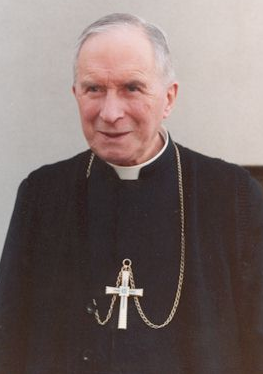
A life for Christ the King: Archbishop Lefebvre


First published in the October 2011 issue of The Angelus magazine.

Archbishop Lefebvre: A Life for Christ the King

Bishop Bernard Tissier de Mallerais

Archbishop Lefebvre always linked the priesthood to the social reign of our Lord Jesus Christ: the one is source of the other; the other spontaneously flows from the first.

I. At the French 
Seminary in Rome

On the Via Santa Chiara, where he trained for the priesthood from 1923 to 1929, Fr. Lefebvre learned from Fr. Henri Le Floch, the Father Superior of the house, not to separate what should be joined: the divinity of our Lord Jesus Christ and His social reign, a priest’s doctrine and his piety, and also the Holy Sacrifice of the Mass and the social reign of our Lord Jesus Christ. This is the teaching of the popes in their encyclicals.

Pius IX, Leo XIII, Pius X, and Pius XI are the masters, and also Cardinal Pie, Louis Veuillot, and so on. But the Fathers of the seminary were also well-beloved masters to whom they listened.

Fr. Le Floch

According to Archbishop Lefebvre:

Fr. Le Floch made us enter into and live the history of the Church, this fight that the perverse powers take to our Lord. We were mobilized against this dreadful liberalism, against the Revolution and the forces of evil which were trying to overcome the Church, the reign of our Lord, the Catholic States, and the whole of Christianity."[1]


This conflict imposed a personal choice on every seminarian: "We had to choose: we had to leave the seminary if we didn’t agree, or else join in the fight." But taking up the fight meant taking it up for one’s whole life: "I think that our whole life as priestsor as bishopshas been marked by this fight against liberalism."[2]

But how does the priesthood fit into this essentially political combat?

At the French Seminary, the seminarians had to read or had read to them the writings of Godefroid Kurth [The Origins of Modern Civilization, 1912] to make them consider how

the mystical Body of Christ transformed the pagan society of imperial Rome and prepared the growing movement that recognized the plans for society of Our Lord Jesus Christ, Priest and King";


the seminarians also learned through the writings of Fr. Deschamps [in his book Secret Societies and Society] that

revolutions caused the exclusion of Christ the King from government with the final goal of eliminating the Mass and the supernatural life of Christ the sovereign High Priest."[3]


Fr. (and later Cardinal) Billot’s De Ecclesia made them grasp “the sense of the royalty of Christ and the horror of liberalism.” Through the works of Cardinal Pie they learned

the full meaning of ‘thy kingdom come,’ namely, that Our Lord’s kingdom must come not only in individual souls and in heaven, but also on earth by the submission of States and nations to His rule. The dethroning of God on earth is a crime to which we must never resign ourselves" (Fr. Fahey).[4]


[Fr. Fahey was a seminarian in Rome 12 years before Marcel Lefebvre. He attended the same seminary, which was also under Fr. Le Floch’s direction.] “Pius IX’s Syllabus and the encyclicals of the last four popes,” said Fahey, “have been the principal object of my meditations on the royalty of Christ and its relation to the priesthood.”[5]

What a surprising meditation subject for a young seminarian: joining the highest spirituality with the submission of the temporal order to Christ. For Marcel Lefebvre’s teachers, there was no divorce between individual life and political action in the broadest sense. So-called “Catholic” liberalism separates what should remain united.

Fr. Voegtli

It was also at the French Seminary in Rome that Fr. Marc Voegtli, C.S.Sp., a professor at Santa Chiara, commented on Pius XI’s encyclical Quas Primas of December 11, 1925, on the social kingship of Jesus Christ. Before his enthusiastic young audience he set forth the political program of the Catholic Church by the action of the Catholic priest. We’ll explain at the end of this talk the political program in which the priest is engaged.

The testimony of Fr. Voegtli’s students is unanimous: His teaching was simple, he spoke only of Our Lord Jesus Christ the King…. He taught the integrity of the priesthood, the priesthood taken to its logical conclusion: the sacrifice of the priest [Keep that idea in mind] for the reign of Our Lord Jesus Christ. Everything was judged in that light. 'My dear friends,' the Father would say, 'you must preach Our Lord Jesus Christ with all your heart!'"


A collective testimony signed by twelve seminarians declares:

Through him [Fr. Voegtli] we learned to see our Lord Jesus Christ, the King, as the center of everything, the answer to all questions, our food, our thought, our life, everything…. That is what he wanted to impress upon us: that will remain!"[6]


And remain it did, as we shall see. Marcel Lefebvre was one of those who had an unforgettable memory of Fr. Voegtli’s conferences. You may be thinking, "Let’s get to his actions during the Council and after!" Yes, but it is essential to understand the mainspring of his action!

The mainspring of Archbishop Lefebvre’s fight for Christ the King: 
a testimony

He essentially gave his own testimony to the fact: 50 years [after the 12 seminarians’ testimony] one of Fr. Voegtli’s rare faithful disciples, Marcel Lefebvre, also bore witness to the indelible impression produced by Fr. Voegtli’s “talks, which were very simple, taking the words of Scripture, showing who Our Lord Jesus Christ was…. That remained with us for life!”[7]

It even became the subject of the seminarian’s meditation:

We shall never have sufficiently meditated on, or sought to understand, what Our Lord Jesus Christ is…. He should rule our thinking, He makes us holy. He is also our Creator since nothing whatsoever was made without the Word, and therefore without Our Lord Jesus Christ who is the Word. So we must only think about and contemplate Our Lord Jesus Christ. And that transforms one’s life!"[8]


What a striking remark. For Marcel Lefebvre, belief in the divinity of our Lord Jesus Christ and consequently His right alone to reign meant personally dedicating himself to the fight. This he did, like many of his confreres, at Rome before the Confession of St. Peter. There he made a private vow of doctrinal and militant “Romanity.” The account of the Fr. Berto suggests that making such a vow was normal and went without saying. The seminarian promised “to be constantly on crusade” (Archbishop Lefebvre).[9]

He didn’t know when or where or in what troubled, tragic circumstances of the Church it would be that he would have to enter the arena and himself write a page of that Church history that he was shown under the light of Christ the King, but he knew that he would have to join in the battle.

The Second Vatican Council was to be the providential moment for Archbishop Lefebvre, the moment when he felt himself pushed to intervene in fidelity to the promise he had made as a seminarian at Rome long before.

II. Herald of Christ the King

During the Council, Archbishop Marcel Lefebvre became the head of the resistance against false religious freedom in the name of Christ the King. During the presentation of two rival drafts on religious freedom, one by Cardinal Bea and one by Cardinal Ottaviani, at the last meeting of the Central Preparatory Commission in June 1962, he gave his opinion.

About the liberal schema of Cardinal Bea, he said:

On Religious Liberty: non placet… since it is based on false principles solemnly condemned by the sovereign pontiffs, for example Pius IX, who calls this error "delirium" (Denzinger 1690)…. The schema on religious liberty does not preach Christ and therefore seems false…."


About the Catholic schema of Cardinal Ottaviani, he said:

‘On the Church’: placet. However, the exposition of the fundamental principles could be done with more reference to Christ the King as in the encyclical Quas Primas…. Our Council could have as its aim to preach Christ to all men, and to state that it belongs to the Catholic Church alone to be the true preacher of Christ who is the salvation and life of individuals, families, professional associations, and of other civil bodies.


…The Theological Commission’s schema expounds the authentic doctrine but does so like a thesis; it does not sufficiently show the aim of this doctrine which is nothing other than the reign of Christ…. From the point of view of Christ as source of salvation and life, all the fundamental truths could be expounded as they say “pastorally,” and in this way the errors of secularism, naturalism, and materialism, etc., would be excluded."[10]


III. Theological adversary 
of the secular state

The Declaration on Religious Freedom promulgated by the Council on December 7, 1965, Dignitatis Humanae, seems to assert that the State must recognize the Catholic religion as the one true one (DH 1), but at the same time it teaches the “natural” freedom of the adherents of false cults to practice their beliefs publicly (DH 6). This contradiction became more problematic after the Council from the way the Holy See required its application by States that were still officially Catholic: the article in their constitutions professing the Catholic religion as the State religion had to be expunged.

So, while passing through Colombia, South America, soon after the suppression of the “Catholic religion” as “that of the nation,” Archbishop Lefebvre remarked that “the speech of the president of the Republic is more Catholic than the Nuncio’s.” The Archbishop was indignant that Ireland had agreed to replace the expression “the special position of the holy, Catholic, Apostolic, and Roman Church as guardian of the faith professed by the great majority of its citizens,” with “the homage of public worship” given by the State “to Almighty God.”

In Italy, Article 1 of the Lateran Accords of February 11, 1929, read:

Italy recognizes and reaffirms the principle expressed by Article 1 of the Statute of the Realm of March 4, 1848, by which the Catholic, Apostolic and Roman religion is the only religion of the State."[11]


In 1984, to the consternation of Archbishop Lefebvre, the new concordat between the Holy See and Italy only recognized that “the principles of Catholicism constitute part of the historical patrimony of the Italian people.” In 1977 [7 years before the 1984 concordat], Cardinal Giovanni Colombo, the Archbishop of Milan, had declared: "o stato non puo essere che laico.The State can only be secular. He explained:

The Church does not ask for privileges, but for genuine freedom…. In the current historical development of society, a confessional State is not possible: not only a confessional Christian State, but also a confessional Marxist atheistic State or a confessional radical bourgeois State. We are calling for a State that does not embrace any particular ideology, that does not impose the dogmas of any culture, and that does not identify with any party. Otherwise, very many of its citizens, because of their religious or ideological or partisan choices, would be compelled to feel like strangers in their own land."[12]


In terms that are insulting to the Church of Christ thus put on a par with ideologies, parties, and cultures, the Cardinal could not better express the current interpretation given to Dignitatis Humanae as propounding the agnostic and indifferentist State. The State’s pledge of allegiance to Jesus Christ, God Incarnate and the one true God, would amount to uncharitableness, contempt for human dignity, and unfair discrimination.

Archbishop Lefebvre spoke out against these liberal platitudes in an interview with the three cardinals who questioned him in 1975. “The goal of the secularization of the State,” he said, “is nothing other than the goal of the devil, who is behind Freemasonry: the destruction of the Catholic Church by affording all the false religions freedom of speech and by forbidding the State to work for the social kingship of our Lord Jesus Christ.”

The archbishop explained what he meant: First of all, the recognition of Christ by the State is not a privilege; it is the right of the Man-God and Redeemer of the human race. On the other hand, “How many Catholics are still able to recognize that the work of our Lord’s Redemption must also be accomplished through civil society?” And yet this is so, for “everything was made for our Lord Jesus Christ,” as St. Paul teaches (Col. 1:16).[13]

Man has but one ultimate goal: eternal salvation. The Church works directly toward this goal, but the State should also work towards it, although indirectly, for civil society is also a creature of our Lord Jesus Christ.[14] Consequently, as St. Pius X teaches, the State has as its “ultimate object …man’s eternal happiness after this short life shall have run its course.”[15]

This… is founded on the dogmatic reason and on the experience of the conversion of numerous nations subsequent to the conversion of their rulers: for example, Clovis, Ethelbert, and so on. This fact prompted St. Alphonsus Liguori to declare: “If I convert a king, I do more for the Catholic cause than hundreds of missionaries.”

Archbishop Lefebvre also held the supernatural and traditional position of the Church on Christ the King—namely, that the State should be an instrument in the work of Redemption. He is not far from taking as his own the program of his brother in religion and co-alumnus of Santa Chiara, Denis Fahey: since the reign of Christ must be established by the cross (“Regnavit a ligno Deus” we sing in the Vexilla Regis):

In order to favor union with Christ as Priest in Holy Mass, God wants the world organized under Christ as King."[16]


From this it follows that:

At Holy Mass all the members of Christ express their determination to work for the integral establishment of the rights of God and of Christ the King over the world."[17]


More briefly, Archbishop Lefebvre would often say: “The Holy Sacrifice of the Mass is the expression of the kingship of our Lord Jesus Christ.”

At the French Seminary in Rome, Fr. Marc Voegtli, following the teaching of Fr. Deschamps, taught the young Marcel Lefebvre the liberal, Freemasonic agenda in three points:

  1. The banishment of Christ the King from government by the secularization of the State;
  2. eliminating the Mass which would result from the persecution of the Church by legal means, and ultimately the secularization of the Church itself, the supreme plot of initiated Masons; in order
  3. finally to suppress the grace of Jesus Christ High Priest in souls—the very secularization of Catholic souls. All of this happened after the Second Vatican Council…

What Archbishop Lefebvre did is reverse this satanic program in order to come up with the Catholic program, which is that of the Society of St. Pius X, also in three points:

  1. Restore to the faithful the Mass—the true Mass, the Holy Sacrifice of the Mass—which is the source and expression of the reign of Jesus Christ.
  2. By the grace of the Mass, form an elite of faithful Catholics living in the state of grace; and
  3. through the work of this elite in public institutions—not just in ecclesiastical organizations, but also in openly Catholic civil organizations—re-crown our Lord Jesus Christ in society: “Omnia instaurare in ChristoEstablish all things in Christ,” according to the motto of St. Pius X.

This is the program Archbishop Lefebvre tried to explain to Cardinal Joseph Ratzinger, the future Benedict XVI, in a meeting they had in Rome on July 14, 1987:

Eminence… you are working to dechristianize society and the Church, and we are working to Christianize them. For us, our Lord Jesus Christ is everything, He is our life. The Church is our Lord Jesus Christ; the priest is another Christ; the Mass is the triumph of Jesus Christ on the cross; in our seminaries everything tends towards the reign of our Lord Jesus Christ. But You! You are doing the opposite: you have just wanted to prove to me that our Lord Jesus Christ cannot, and must not, reign over society.


For us, our Lord Jesus Christ is everything!"[18]


See also these related books:


Footnotes

1 Bernard Tissier de Mallerais, Marcel Lefebvre: The Biography, pp. 36-7.

Ibid.

3 Fr. Denis Fahey, C.S.Sp., “Apologia pro Vita Mea,” 1950 (reprinted in Catholic Family News, April & May 1997), quoted in Tissier, Marcel Lefebvre, p. 37.

Ibid.

Ibid., pp. 37-8.

6 Tissier, Marcel Lefebvre, pp. 43-4.

Ibid., p. 44.

Ibid.

9 Archbishop Lefebvre, The Little Story of My Long Life [ref. to French edition], p. 28.

10 Tissier de Mallerais, Marcel Lefebvre, p. 285.

11 A.A.S. 21 (1929), pp. 290 seq.

12 Quoted from L’Osservatore Romano, translated from the Italian and published by “Ya” on July 14, 1977, and reprinted in the bulletin of the CICES, No. 210, March 15, 1977, under the byline of Andre Laforge.

13 Spiritual Conference, Econe, September 23, 1977, relating the conference of Archbishop Lefebvre at Rome at Princess Palaviccini’s in June 1977. CfThey Have Uncrowned Him, p. 101 [ref. to French edition].

14 It is a creature of God because the social nature of man is God’s creation.

15 St. Pius X, encyclical Vehementer Nos condemning the Law of Separation of Church and State in France, February 11, 1906.

16 Rev. Fr. Denis Fahey, C.S.Sp., The Mystical Body of Christ and the Reorganization of Society, pp. 114-5.

17 Ibid.

18 Tissier de Mallerais, Marcel Lefebvre, p. 548.

Monday, February 1, 2016

Dr. Helmut Rückriegel R.I.P.


https://blogger.googleusercontent.com/img/b/R29vZ2xl/AVvXsEgs2fPC5OhTmk-de8nOzioNmLiF0sIKmom3yrKwVdnU6xZqH0K9jDm0ErEcsgTl0oI6JB5wtrhz1hoEmT_ge98Liik2O4S3fEuESx8UkkxZt0oJhsr_mfa5Q7r9w8Ws_RuUfxgxxgM6l2U/s1600/The+late+Fra+Frederik+Freddie+Crichton+Stuart+Knight+of+Malta+FIUV.jpg
 Dr. Helmut Rückriegel (right) during a meeting with Benedict XVI.


His Excellency Dr. Helmut Rückriegel, one of the elder statesmen of the International Federation Una Voce (FIUV), a personal friend of former Pro Tridentina (Malta) President Godwin Xuereb, and a great champion of tradition over many decades, died early on 25th of January, 2016.

Dr. Rückriegel has been actively involved in the Una Voce movement since 1967. He was head of Una Voce Deutschland in 1992–2005, member of the FIUV Council, and later one of the Federation’s Presidents d’honneur.

--------------------------

Obituary

Dr. Helmut Rückriegel, an important and highly meritorious upholder for the traditional Latin liturgy has left us.

Born on the 20th of November 1925 in Niedergründau, close to Hanau, he spent the days of his philological studies in Marburg, with whose university he remained in close contact for all his life. Having achieved a doctorate (Dr. Phil) he was a lecturer for ancient European languages in Manchester prior to being employed as from 1956 by Germany’s Foreign Service. His first assignment there was the post of an attaché at the German embassy in London. Following further postings as chargé d’affaires in Israel and with the German Information Center in New York between 1979 and 1984 he ran the personal office and worked as head of protocol of the German Federal President Dr. Karl Carstens. Following that he officiated as German ambassador to Thailand until 1988 and until his retirement in 1990 as German ambassador to Ireland.

In November 1980 he was a member of the diplomatic team which greeted Pope John Paul II on his first visit to Germany. As they waited for the Pope’s aeroplane to land he found himself standing next to Cardinal Joseph Ratzinger and they began conversing. This led to a friendship that endured until his death.

Already fascinated by the Catholic Church from an early age as a youth he converted to Catholicism. This association post the liturgical reforms brought about by the Second Vatican Council resulted in his exemplary and incessant engagement towards the preservation and restoration of the traditional Latin liturgy and Gregorian chant. Thus, from 1992 to 2006, he occupied the position of President of Una Voce Germany. During that period he led the association and its publication, the Una-Voce-Korrespondenz, to a renewed flourishing.

A further passion of his, besides his love of literature and poetry (he knew innumerable German poems by heart) was that for old English and Irish roses which he planted and cultivated at his 3,000 sqm property in Niedergründau. This rose garden was renowned amongst the friends of roses and every year was the destination of a great number of tourists. Following a long illness, during the night leading to the 25th of January 2016, Helmut Rückriegel passed away. His perseverance and his extraordinary merits for the traditional Catholic liturgy shall remain unforgotten.

Dr. Johann von Behr, deputy president Una Voce Deutschland e.V.

---------------------


In paradisum deducant te Angeli;
in tuo adventu suscipiant te martyres,
et perducant te in civitatem sanctam Jerusalem.
Chorus angelorum te suscipiat,
et cum Lazaro quondam paupere æternam habeas requiem.

Saturday, June 22, 2013

Benedict XVI vs Francis - the smear campaign continues

http://abcnews.go.com/images/International/gty_pope_benedict_xiv_pope_francis_lpl_130313_mn.jpg
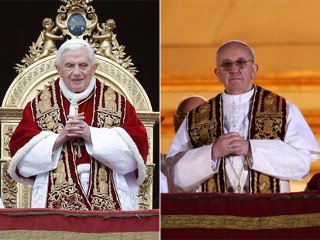
Benedict XVI and Francis: two pontificates with different priorities.

Soon after the election of Pope Francis, some notable Catholic journals started odious comparisons between the current Pontiff and the Pope Emeritus, aimed at putting into a bad light the ‘reform of the reform’ championed by Benedict XVI. One of the latest is the article Francis looks to the Future by The Tablet, a British Catholic weekly journal that stresses that: "It is committed to the teaching of the Second Vatican Council."

Although this journal prides itself as having had as contributor Cardinal Joseph Ratzinger, it nevertheless regularly attacks him, as the quote from the above-mentioned confirms:

"Benedict XVI’s ecumenical priorities were more to do with resolving issues from the Church’s own past. He put great store by the possibility of reconciliation with the Vatican II-denying Society of St Pius X, and encouraged long and tortuous conversations which seemed to be going nowhere from the start, given the non-negotiables on both sides. He reversed decades of church policy by re-authorising the celebration of the Tridentine Rite, which seemed not just a gesture towards the Lefebvrists but a reactionary move in liturgical policy generally, as did the imposition of a severely inadequate, if linguistically more accurate, translation of the Mass into English."

What The Tablet seems unable to understand is that:
  • the pontificates of Benedict XVI and Francis have different priorities but both are at the service of Our Lord Jesus Christ and His Church;
  • attempts at creating friction between the two will simply backfire, case in point being the first encyclical by Francis that will have a huge contribution from Benedict XVI himself.
Further comments at this stage are superfluous.


Monday, February 11, 2013

FLASH NEWS: Benedict XVI resigns!


A visibly tired Benedict XVI


Benedict XVI's announcement that he will resign on 28 February has surprised Catholics and the wider world. This is an entirely unexpected development, the Vatican has confirmed. The 85-year-old became Pope Benedict XVI in April 2005 following the death of John Paul II.

The reasons behind the head of the Catholic Church's surprise resignation have yet to emerge, although it is known that Vatileaks and the child sex abuse by many clerics have taken a heavy toll on the Pope's already frail health.

Resignations from the papacy are not unknown, but the last (similar) one was by Celestine V in 1294. The last Pope de facto to resign was Gregory XII on 4 July 1415, but his resignation was pronounced during the Council of Constance amid the Western Schism and was accepted by the Cardinals.

At 78, the former Cardinal Joseph Ratzinger was one of the oldest new popes in history when elected.

He will be remembered by traditional Catholics for Summorum Pontificum and for his tireless efforts for an agreement with the SSPX.

It is expected that Ratzinger will go to the Papal summer residence at Castel Gandolfo after resigning, and will then move to a cloistered residence in the Vatican, after the election of the new Pontiff.


Thursday, January 24, 2013

A critical analysis of the Tridentine Mass by Fr Ratzinger

Way back in 1967, theologian Fr Joseph Ratzinger wrote about the Tridentine Mass. This was soon after the closing of Vatican II. Below is an excerpt in which Ratzinger analyses the Tridentine Mass as established by the Council of Trent:
Joseph Ratzinger in a photo from 1971
Fr Joseph Ratzinger in 1971

The [liturgical] additions of the late Middle Ages were eliminated, and at the same time severe measures were adopted to prevent a rebirth. .... At that time, the fate of the Western liturgy was linked to a set authority, which worked in a strictly bureaucratic way, lacking any historic vision and considering the problem of the liturgy from the sole viewpoint of rubrics and ceremonies, like a problem of etiquette in a saint's court, so to speak.

As a consequence of this link, there was a complete archeologisation of the liturgy, which from the state of a living history was changed into that of pure conservation and, therefore, condemned to an internal death. Liturgy became once and forever a closed construction, firmly petrified. The more it was concerned about the integrity of pre-existent formulas, the more it lost its connection to concrete devotions ....

In this situation, the baroque carved it [the liturgy] superimposing a people's para-liturgy over its true and proper archeologized liturgy. The solemn baroque mass, through the splendor of the orchestra's performance, became a kind of sacred opera, in which the songs of the priest had their role as did the alternating recitals. .... On the ordinary days that did not allow such a performance, devotions that followed the people's mentality were often added to the mass.

(Source: Ratzinger J., Problemi e risultati del Concilio Vaticano II, Brescia: Queriniana, 1967, pp. 25-27)

Saturday, April 21, 2012

Benedict XVI's 85th Birthday

On 16 April 2012, Benedict XVI celebrated his eighty-fifth birthday.

Cardinal Angelo Sodano, dean of the College of Cardinals, addressed some words to the Holy Father.

"Today, on the occasion of your birthday, we wish to thank you for the solicitude with which you carry out this service of love."

"It is no coincidence that your first Encyclical was a hymn to the Love that is God, the love which must always animate pastors, who are called to bring the light of God, the warmth of His love, into the world."

"Holy Father, may the Lord continue to remain at your side, accomplishing the promise announced by God to the just man in Psalm 90: 'With long life I will satisfy them, and show them my salvation'".

Brief Biography

Joseph Aloisius Ratzinger was born on 16 April 1927,  in his parents' home in Marktl, Bavaria, Germany. He was baptised the same day. Ratzinger attended the elementary school in Aschau am Inn, which was renamed in his honour in 2009.


Following his 14th birthday in 1941, Ratzinger was conscripted into the Hitler Jugend —as membership was required by law for all 14-year-old German boys after December 1939 — but was an unenthusiastic member who refused to attend meetings, according to his brother. In 1941, one of Ratzinger's cousins, a 14-year-old boy with Down syndrome, was taken away by the Nazi regime and killed.  In 1943, while still in seminary, he was drafted into the German anti-aircraft corps. Ratzinger then trained in the German infantry.

As the Allied front drew closer to his post in 1945, he deserted back to his family's home in Traunstein after his unit had ceased to exist. As a German soldier, he was put in a POW camp but was released a few months later at the end of the war in the summer of 1945. He reentered the seminary, along with his brother Georg, in November of that year.

After a long career as an academic, serving as a professor of theology at various German universities—the last being the University of Regensburg—he was appointed Archbishop of Munich and Freising and cardinal by Pope Paul VI in 1977. In 1981, he settled in Rome when he became Prefect of the Congregation for the Doctrine of  Faith. From 2002 until his election as Pope, he was also Dean of the College of Cardinals.

In addition to his native German, Benedict speaks French and Italian fluently. He also has a very good command of Latin and speaks English and Spanish adequately. Furthermore, he has some knowledge of Portuguese. He can read Ancient Greek and biblical Hebrew. He plays the piano and has a preference for Mozart and Bach.

During his papacy, Benedict XVI has advocated a return to fundamental Christian values to counter the increased secularisation of many developed countries. He views relativism's denial of objective truth, and the denial of moral truths in particular, as the central problem of the 21st century. He teaches the importance of both the Catholic Church and an understanding of God's redemptive love.

Pope Benedict XVI has also revived a number of liturgical traditions including elevating the Tridentine Mass to a more prominent position.

Ad multos annos!


Wednesday, June 29, 2011

The most important moment of my life


Sixty years ago, 29 June 1951, Joseph Ratzinger was ordained a priest


The most important moment of my life - When the Archbishop laid his hands on me, a lark sang a joyful song


In his essential and limpid autobiographical account published in 1997 – the original German is entitled Aus meinem Leben. Erinnerungen 1927-1977 (Milestones: Memoirs 1927-1977) – Joseph Ratzinger remembers with vivid simplicity his ordination to the priesthood. The great German Catholic Cardinal, Michael von Faulhaber (1869-1952), distinguished biblicist and patrologist, Archbishop of Munich and Freising from 1917, who during the dark years of the Third Reich had become one of the most courageous critics of Hitler’s regime, laid his hands on the 24-year old deacon in June 1951 and on his older brother Georg and 42 other young men.


“We were more than forty candidates, who, at the solemn call on that radiant summer day, which I remember as the high point of my life, responded “Adsum”, Here I am. We should not be superstitious; but, at that moment when the elderly archbishop laid his hands on me, a little bird—perhaps a lark—flew up from the high altar in the cathedral and trilled a little joyful song. And I could not but see in this a reassurance from on high, as if I heard the words “This is good, you are on the right way.” There then followed four summer weeks that were like an unending feast. On the day of our first Holy Mass, our parish church of Saint Oswald gleamed in all its splendor, and the joy that almost palpably filled the whole place drew everyone there into the most living mode of “active participation” in the sacred event, but this did not require any external busyness. We were invited to bring the first blessing into people’s homes, and everywhere we were received even by total strangers with a warmth and affection I had not thought possible until that day. In this way I learned firsthand how earnestly people wait for a priest, how much they long for the blessing that flows from the power of the sacrament. The point was not my own or my brother’s person. What could we two young men represent all by ourselves to the many people we were now meeting? In us they saw persons who had been touched by Christ’s mission and had been empowered to bring his nearness to men. Precisely because we ourselves were not the point, a friendly human relationship could develop very quickly.”


A priest for sixty years, Joseph Ratzinger carries out daily, with humility and transparence, the work of making the one Lord of the world and of history present to women and men of our time. For this, the Osservatore Romano offers Benedict XVI its best wishes, sure that its sentiments are echoed not only by those in the Catholic Church but by many others throughout the world. And repeats for him the words of the ancient prayer for the Pope, invoking Christ’s protection and the only happiness that counts: Dominus conservet eum, vivificet eum, beatum faciat eum in terra et non tradat eum in animam inimicorum eius.


Godwin's comment: on this special occasion and being also the feast of Sts. Peter and Paul, to my mind comes also the hymn dedicated to these two apostles:


"O felix Roma, quae tantorum principum es purpurata pretioso sanguine, non laude tua, sed ipsorum meritis excellis omnem mundi pulchritudinem"

Saturday, September 19, 2009

Il Motu proprio Summorum Pontificum di Benedetto XVI – Parte II


Il Motu proprio Summorum Pontificum di Benedetto XVI – Parte II


di Cristina Siccardi


La riforma liturgica del 1970 rappresenta la massima realizzazione della montante marea del desiderio di rinnovamento all’interno della Chiesa, di cui il Concilio Vaticano II fu il vessillo, più che la base dottrinale. In contrasto con quanto stabilito dalla Costituzione Conciliare Sacrosantum Concilium, la quale prevedeva il mantenimento dell’idioma di Cicerone e di Sant’Agostino quale lingua liturgica per tutta la Chiesa latina, la riforma in parola decretò il passaggio alle lingue nazionali di tutta la Liturgia. La portata del mutamento fu enorme, anche in quanto, al di là delle differenze contenutistiche dei riti, l’abbandono della lingua dei Cesari decretò la morte del concetto stesso di lingua sacra all’interno della Chiesa cattolica, eliminando questo strumento che l’aveva accompagnata, almeno nella sua parte occidentale, fin dal suo sorgere, prima con il greco e, poi, con il latino.

Il «fenomeno generale delle lingue sacrali […], ampiamente diffuso, scaturisce dalla tensione che l’uomo avverte tra la vita di ogni giorno e ciò che per l’uomo religioso appartiene al mondo soprannaturale, divino. Tale tensione ha conseguenze per la lingua umana, strumento così profondamente umano e al contempo così delicato. […]

Questo carattere sacrale dell’antica liturgia latina, manifestantesi in una stilizzazione rigida, monumentale, che solleva letteralmente la preghiera al di sopra delle banalità della vita di ogni giorno, ha entusiasmato, ha infiammato i fedeli nel corso dei secoli. Si desidererebbe che nelle traduzioni dei testi liturgici nelle lingue nazionali si conservi qualcosa della loro grandezza sacrale. [Concetto che Benedetto XVI riprende nella Lettera inviata ai Vescovi in accompagnamento al motu proprio Summorum Pontificum]. Purtroppo ci si imbatte in grosse difficoltà; molti fedeli del nostro tempo hanno perso il senso del sacrale. Ma anche quando si cerca onestamente di conservare il carattere sacrale dei testi latini non è facile trovare una forma equivalente nelle lingue nazionali moderne. La maggior parte di esse è così “laicizzata” da non possedere più, o quasi più, i mezzi per una stilizzazione sacrale. Ciò che sono riusciti a realizzare i cristiani latini dei primi secoli soltanto in un periodo avanzato, attingendo alla pienezza dell’uso linguistico cristiano, potrà maturare soltanto lentamente nelle nostre lingue, se si vuol conservare il carattere sacrale dei testi liturgici. Richiederà molto sforzo ed una ricerca “amorosa” delle possibilità offerte dalla propria lingua il tentare la realizzazione di traduzioni corrispondenti al nostro tempo: traduzioni che non pregiudichino la ricchezza spirituale dei testi liturgici.

[…] La secolare tradizione letteraria di Roma, sia nella sua forma profana che cristiana, sopravviverà nel latino medievale. Con ciò inizia però una nuova fase della vita del latino, in cui si incontrano e si alimentano reciprocamente nel corso dei secoli le due suddette tradizioni. Questo latino medievale, lingua ufficiale della Chiesa, dell’insegnamento, all’inizio soprattutto nelle mani di ecclesiastici, e lingua universale di una cultura in lenta ascesa, costituirà per secoli il fermentum e il vinculum unitatis dei popoli dell’Europa occidentale. Più di ogni altro elemento esso ha favorito il sorgere di una cultura cristiana occidentale.» (Christine Mohrmann, Unità e continuità del latino cristiano antico nella Chiesa d’occidente, in Osservatore Romano, inserto speciale per l’ottantesimo compleanno di Sua Santità Papa Paolo VI f.r., 25 settembre 1977).

La perdita della lingua sacrale della Chiesa ha vieppiù acuito il senso di novità e la rottura con tutta la tradizione precedente, soprattutto perché alcuni settori del mondo cattolico e della stessa gerarchia vedevano in ogni cambiamento il presupposto e la premessa per un’ulteriore smantellamento dell’edificio ecclesiale. Essi si autodefinivano come gli interpreti dello «spirito del Concilio», termine assai vago, dietro il quale si nascondeva un desiderio di una sorta di «rivoluzione permanente», che non voleva l’applicazione dei testi conciliari, quanto la loro sublimazione: il Concilio non era visto come un evento, da cui scaturivano dei portati da applicare, ma come un momento rivoluzionario, il cui valore non stava tanto in ciò che affermava, quanto nel fatto che poteva essere inteso come il grimaldello, con cui scardinare la Chiesa della Tradizione, per sostituirla con una nuova, in cui non esistesse il concetto stesso di stabilità, ma tutto fosse in divenire. È l’applicazione alla Chiesa della sindrome rivoluzionaria, che condanna i regimi sedicenti completamente nuovi e negatori di ogni continuità con il passato ad una deriva estremistica indeterminata, fino al loro crollo o alla loro trasformazione violenta, entrambi necessitati dalla materiale impossibilità di proseguire su quella strada, impossibilità normalmente rappresentata dalla fame e dalla miseria che colpiscono la stragrande maggioranza della popolazione. Gli esempi più eclatanti sono rappresentati dalla Rivoluzione francese e da quella russa.

Nella Chiesa, però, questo meccanismo non si è innescato, in quanto, la riforma liturgica non è stata presupposto di ulteriori cambiamenti, ma ha segnato, di fatto, un argine invalicabile, oltre il quale, nonostante abusi, “sperimentazioni” e “tentativi di sfondamento”, non si è andati. Si è, così, venuta a creare una situazione di stallo, nella quale l’ondata degli “innovatori” è stata arginata, ma, allo stesso tempo, il senso di cesura tra la “Chiesa post-conciliare” e la “Chiesa tridentina”, come spregiativamente veniva chiamata dai suoi detrattori la chiesa precedente al Vaticano II rimaneva profondo, sia nel sentire dei fedeli, che nei documenti ufficiali. Si aveva quasi la sensazione che il Concilio Vaticano II avesse segnato la nascita di una nuova Chiesa, molto, se non del tutto, diversa dalla precedente, ma che, allo stesso tempo, questa Chiesa nuova non fosse più in grado di rinnovarsi e che, quindi, il cammino fosse interrotto. E tutto ciò nella cornice di una progressiva marginalizzazione della Fede cattolica dal contesto sociale.

Un primo grosso scossone a questo stato di cose è stato dato da Giovanni Paolo II, che ha segnato un primo passaggio dal contenimento dell’attacco modernista, caratteristica del Pontificato di Paolo VI, all’offensiva, con il rilancio della spiritualità popolare, così censurata ed insultata dagli “innovatori”. Ma è con Benedetto XVI che la cesura è annullata e che il Concilio è letto alla luce della Chiesa di sempre; che la storia della Sposa di Cristo viene letta come un flusso ininterrotto, sia pure contrassegnato da errori e peccati, di attuazione della parola portataci dalla Parola, cioè da Gesù. Si è cessato, in altre parole, di leggere la storia della Chiesa alla luce del Concilio, ma si è iniziato a leggere il Concilio alla luce di Cristo, attualizzato nella storia dalla Sua Chiesa, in ogni epoca, senza sterili contrapposizioni.

Non è un caso che il primo atto legislativo del nuovo Pontefice sia stato il motu proprio che ha, di fatto, liberalizzato e, senza dubbio, anche se indirettamente, incoraggiato l’uso della liturgia precedente alla riforma. Essa è, per limitarci alla Santa Messa, la Liturgia del Santo Sacrificio che, con lievi ritocchi nei secoli, ha caratterizzato la Chiesa latina a partire, almeno, dal IV-V secolo. Con la profondità teologica che lo contraddistingue, Benedetto XVI ha identificato nella Messa il cuore della vita della Chiesa e nella sua Liturgia la manifestazione esterna, quindi fruibile da parte dei fedeli, di tale cuore. E, già da Cardinale, Joseph Ratzginer preannunciava ciò che avrebbe fatto, poi, da Pontefice, dimostrando come questo atto, centrale nel suo pontificato, sia il frutto di anni di riflessione e di preghiera. «Personalmente ritengo che si dovrebbe essere più generosi nel consentire l'antico rito a coloro che lo desiderano. Non si vede proprio che cosa debba esserci di pericoloso o inaccettabile. Una comunità mette in questione se stessa, quando considera improvvisamente proibito quello che fino a poco tempo prima le appariva sacro e quando ne fa sentire riprovevole il desiderio. Perché le si dovrebbe credere ancora? Non vieterà forse domani, ciò che oggi prescrive? Ma un semplice ritorno all'antico non è una soluzione. La nostra cultura si è così trasformata negli ultimi trent'anni che una liturgia celebrata esclusivamente in latino comporterebbe un'esperienza di estraniamento, insuperabile per molte persone. Quello di cui abbiamo bisogno è una nuova educazione liturgica, soprattutto dei sacerdoti. Deve diventare nuovamente chiaro che la scienza liturgica non esiste per produrre continuamente nuovi modelli, come può valere per l'industria automobilistica. Esiste per introdurre l'uomo nelle feste e nella celebrazione, per disporre gli uomini ad accogliere il Mistero.» (cfr. Joseph Ratzginer, Il sale della terra. Cristianesimo e Chiesa Cattolica nella svolta del terzo millennio. Un colloquio con Peter Seewald, Cinisello Balsamo: Ed. S.Paolo, pp. 199-202).

Tuesday, August 25, 2009

Inedito di Benedetto XVI "La Messa del futuro? Ecco come deve essere"


Pubblichiamo in questa pagina una lettera di Joseph Ratzinger al Dott. Heinz-Lothar Barth e uno stralcio di un intervento sempre di Benedetto XVI, tratte da Davanti al Protagonista. Alle radici della liturgia (Cantagalli, pagg. 232, euro 15), volume in cui i due scritti sono stati raccolti insieme per la prima volta. Nel libro - che verrà presentato al Meeting di Rimini e sarà in libreria a settembre - il Papa (che all’epoca della lettera era ancora cardinale) si interroga sul significato e lo stato attuale della liturgia, esprimendo la speranza che essa non diventi «terreno di sperimentazione per ipotesi teologiche».


Caro dottor Barth, la ringrazio cordialmente per la sua lettera del 6 aprile cui trovo il tempo di rispondere solo ora. Lei mi chiede di attivarmi per una più ampia disponibilità del rito romano antico. In effetti, lei sa da sé che non sono sordo a tale richiesta. Nel contempo, il mio lavoro a favore di questa causa è ben noto. Al quesito se la Santa Sede «riammetterà l’antico rito ovunque e senza restrizioni», come lei desidera e ha udito mormorare, non si può rispondere semplicemente o fornire conferma senza qualche fatica. È ancora troppo grande l’avversione di molti cattolici, insinuata in essi per molti anni, contro la liturgia tradizionale che con sdegno chiamano «preconciliare». E si dovrebbero fare i conti con la considerevole resistenza da parte di molti vescovi contro una riammissione generale.


Diverso è tuttavia pensare a una riammissione limitata. La stessa domanda verso l’antica liturgia è limitata. So che il suo valore, naturalmente, non dipende dalla domanda nei suoi confronti, ma la questione del numero di sacerdoti e laici interessati, ciononostante, gioca un certo ruolo. Oltre a ciò, una tale misura, a soli 30 anni dalla riforma liturgica di Paolo VI, può essere attuata solo per gradi. Qualunque ulteriore fretta non sarebbe di sicuro buona cosa.


Credo tuttavia, che a lungo termine la Chiesa romana deve avere di nuovo un solo rito romano. L’esistenza di due riti ufficiali per i vescovi e per i preti è difficile da «gestire» in pratica. Il rito romano del futuro dovrebbe essere uno solo, celebrato in latino o in vernacolo, ma completamente nella tradizione del rito che è stato tramandato. Esso potrebbe assumere qualche elemento nuovo che si è sperimentato valido, come le nuove feste, alcuni nuovi prefazi della Messa, un lezionario esteso - più scelta di prima, ma non troppa -, una «oratio fidelium», cioè una litania fissa di intercessioni che segue gli Oremus prima dell’offertorio dove aveva prima la sua collocazione.


Caro dott. Barth, se lei si impegnerà a lavorare per la causa della liturgia in questa maniera, sicuramente non si troverà solo, e preparerà «l’opinione pubblica ecclesiale» a eventuali misure in favore di un uso esteso dei libri liturgici di prima. Tuttavia bisogna essere attenti a non risvegliare aspettative troppo alte o massimali tra i fedeli tradizionali.


Colgo l’occasione per ringraziarla del suo apprezzabile impegno per la liturgia della Chiesa romana nei suoi libri e nelle sue lezioni, anche se qua e là desidererei ancora più carità e comprensione verso il magistero del Papa e dei vescovi. Possa il seme da lei seminato germinare e portare molto frutto per la rinnovata vita della Chiesa la cui «sorgente e culmine», davvero il suo vero cuore, è e deve rimanere la liturgia. Con piacere le impartisco la benedizione che lei ha domandato.