Showing posts with label priests. Show all posts

Wednesday, December 11, 2024

Abuses in the Novus Ordo Mass - sacrifice needed?


A member of Pro Tridentina (Malta) wanted to share a correspondence he had with Bro. John-Paul Ignatius Mary, OMSM several years ago. Although Brother Ignatius passed away 5 years ago (this Friday), we thought fitting to publish said correspondence to honour his memory. Obviously some information is now outdated.

+++++++++++++++++++++++++++++++++++++++++++++++++++++++++++++++

Dear Bro. Ignatius Mary,

In Malta, in recent years, the Ordinary Rite of Mass is being abused in various ways, such as: priests behaving irreverently during Mass or cracking jokes, indecent attire (both males and females), no respect for Jesus in the Tabernacle, and awful music (a case in point is a parish that uses erotic music from the Eurovision Song Contest).


In the past, I've spoken to the Archbishop and other priests about this situation but the reaction was from lukewarm to outright derision.

I've stopped attending Mass since last year because it's so irreverent and I feel guilty if I attend as I would be an accomplice in all this. At least, that is how I feel.

What can I do to help in having reverent masses (whether Ordinary or eventually Extraordinary Rite if it will available). I feel at a loss and guilty.

Thank you for your patience.

Konrad (surname withheld for privacy)

Answer below

Dear Konrad,

No matter how irreverent the Mass may be said, there is no justification to stop going to Mass. You are risking your soul to hell by avoiding Mass like this.

You need to get to the Sacrament of Confession to confess your sin and return to the Mass this next weekend. There is no excuse.

These things do not invalidate the Mass. As long as the Mass is valid, Jesus is there. Why do you leave Jesus alone with the abusers?

You need to mortify your pride and instead accept the suffering of having to endure priests who abuse the liturgy and offer that suffering up to God for the conversion of those priests and for your Archbishop.

You are not an accomplice to the abuse for attending Mass. You are not the priest, you are not an altar server, you are a man sitting in the pew who has expressed his concern to the authorities. There is no complicity.

But, you disobey God to stop going to Mass over this and it is grave sin.

In terms of what to do about this situation, you need to offer up your suffering, pray, write a letter (not verbal communications) to the bishop, and if no response or inadequate response then you can write the Congregation on the Discipline of the Sacraments. In doing these things your responsibility is finished, There is nothing else you can do except to continue to offer up your suffering and to pray.

You do have a right under Canon Law to address these issues with them (Canon 212.2). In that regard Canon Law 214 says that you have a right to participate in the liturgy in accordance with legitimate norms.

When you write the bishop be business-like and factual. Detail the specific things that you believe are in violation of liturgical law and ask that these things be resolved.

If there is no resolution, if you wish, write (sending a copy of letters to and from the Bishop):

Antonio Cañizares Llovera, Cardinal, Prefect
Congregatio de Cultu Divino et Disciplina Sacramentorum
Palazzo delle Congregazioni
Piazza Pio XII, 10
00120 CITTÀ DEL VATICANO

(Vatican City)

  • Bro. John-Paul Ignatius Mary

Brief biography: Bro. Ignatius Mary, OMSM(r)+ DALC, LTh, DD, CDCP. was born  in October 1955. He was a writer, poet, Deliverance Counselor, Nouthetic Counselor, Catholic Apologist, Theologian, Professor, and Spiritual Director. He held the posts of:

  • Dean and Senior Professor, St. Michael Academy for Spiritual Warfare and Deliverance Counseling;
  • Provost and Superior, Oblates and Missioners of St. Michael;
  • Director, St. Padre Pio Center for Deliverance Counseling;
  • Lord Knight of the Cross, Military Fraternity of the Legionnaires of St. Michael.
He lived a monastic life in a hermitage. Brother Ignatius Mary passed peacefully from this life to his eternal reward on 13 December 2019.

Tuesday, May 7, 2024

Leave behind Tridentine model of priesthood, embrace synodality


As has been the trend during Pope Francis' pontificate, any occasion is good to attack the Catholic Church's pre-Vatican II's teachings. The latest occasion was the following. Original article here

CWN Editor's Note: On the last day of Parish Priests for the Synod—an international meeting of parish priests at the Vatican — Cardinal Jean-Claude Hollerich, SJ, encouraged participants “to become ambassadors of synodality, to be full participants in a synodal Church, to become with all the people of God, missionary disciples of Jesus.”

Many times their training and their reality have been oriented towards a Tridentine model of the priesthood,” Cardinal Hollerich, the relator-general of the synod on synodality, said of parish priests, in an address to Pope Francis in the presence of participants. “And now they see that the identity they had for centuries is crumbling, and sometimes this identity is lost ... and there is the danger of wanting to build a new identity based on the experience of the past.”

The identity of priests and parish priests (even bishops) is given to us by the Holy Spirit when we walk with the people,” he continued. “Then the sacraments are no longer the expression of a ritualism in search of identity, but become a true rite where God communicates himself to his people.”

Cardinal Hollerich’s reference to the “Tridentine model of the priesthood” appears to be a reference to the Council of Trent’s teaching on the priesthood, and not simply a reference to the traditional Latin Mass.

The archbishop of Luxembourg, now 65, gained notoriety in 2022 when he said that Catholic teaching on homosexuality is “false.” In 2023, Pope Francis appointed Cardinal Hollerich to his nine-member advisory Council of Cardinals.

Wednesday, January 15, 2020

Quotes to reflect upon (22)

Albert Drexel


“The future looks dark for you. Your interior struggle for true perception and the way to take in the confusion is known to me. And so I shall enlighten you. My faithful son Marcel (Archbishop Lefebvre), who suffers a great deal for the faith, is going on the right path. He is like a light and pillar of truth, which many ordained priests of mine are betraying. Faith is greater than obedience. Therefore it is my will that the work of theological education for priests continues in the spirit and will of my son Marcel, for the salvation and great help of my one and true Church.
 
“The spirit of the world has infiltrated the Church, and the Spirit of God has abandoned many hearts who were called to proclaim His Spirit. They talk about other things and lose themselves in the tricks and snares of Satan. And thus they corrupt the people and even the children ( . . . ) This spirit has penetrated the ecclesiastics and monasteries and convents, because the monks and nuns have lost and deserted the spirit of the Founders of their Orders. They have become a scandal for the people and the world. They have lost not only love towards My most holy Mother, but also reverence towards My sacramental presence. Instead the monks preach about things of the world, of luxury, of a life of pleasure, and the nuns do not talk about the holy angels, and many not even about the most holy Virgin and Mother Mary. Still, places do exist of quiet and of prayer, special shrines in which Mary, My Mother and the Mother of grace, is honoured.”
 
The quote above refers to the message of 5 March 1976, from Our Lord. From 1922, Jesus appeared with a message on every First Friday of the month to Fr. Albert Drexel (1889–1977), a prestigious professor of philology from the Vorarlberg in Austria and a devout Catholic priest. WARNING: No Catholic is obliged to believe that these are the words of Our Lord Himself.

Tuesday, April 30, 2019

A sustained attack in Malta on those in favour of the Tridentine Mass - 5

Fr Joe Inguanez: “We are faced with a crisis of faith. Attendance at Sunday Mass, important though this is, is not the main issue”
 
The latest article of a series... extracts below:
Clericalism is one of our comfort zones. Clericalism was described by Pope Francis as one of the strongest challenges facing the Church. Even liturgical celebrations, holy though they may be, can become one of our clerical and lay comfort zones.
One falls into the trap of clericalism when one considers the priesthood as a privilege rather than a service, when priests become the ‘officers’ of the institution rather than the servants of the people, when they choose the front rows rather than at the back seat in the temple.
There is another trap: when the laity are considered or consider themselves as the ‘lunga manus’ of the clergy.
You write in your introduction to the census that in the same way that a clerical garb does not make one a priest, liturgical vestments do not make the liturgy religious. What does make it religious?
The Italian proverb that the religious garment doesn’t make the monk can hardly be contested.
Liturgical vestments can create an ambience which Rudolf Otto, in his analysis of religious, refers to as “numinous”, which he described as a fearful and fascinating mystery. Very often this is the way God has been presented.
However, as far as Christian religious experience is concerned, this is only partially true. The Church itself is a mystery. It is a mystery because it is the Body of the Incarnate Christ. Christ is the Immanuel – God-is-with-us. Jesus was never the object of fear but of love. How could children and sinners rush after a man who was fearsome?
The aspect of Immanuel should be the heart of the liturgical action. In its millennial history the Church made many mistakes on this point. And we have some in Malta who want to present this type of liturgical drama which literally created a distance between the actors and the audience, the priest and the congregation.
Let us take just one example. The Church has dropped the use of black liturgical vestments; yet there are still a few who doggedly ignore this and also cover the walls of their church with black drape. 
Religiosity entails several dimensions, and the liturgy is one of them. But essentially Christian religiosity entails the acceptance of the supernatural in all aspects of our life. The rest is consequential.
In terms of the liturgy then, what will make, in your words, “leavers or absentees return to Sunday Mass”?
Of it nature, the liturgy is divine and human. Its main characteristic lies in the fact that it is communitarian, and participatory, and Christological. In fact, the priest was prohibited from celebrating Mass without a community; then through the biggest stretch of imagination, we reduced that community to the presence of an altar server or one person in the pews!
The liturgy should never be the simple repetition of liturgical texts, as if it were a mantra, but an expression of the joy and sorrow of God’s people in union with Christ as their Head.
When immobilism taints the liturgy it will become ritualistic or worse rubricistic. It must celebrate the adoration of God ‘here and now’ in memory of Christ. Ritual in the liturgy should have a meaning to the congregation, otherwise it will be little more than the theatre of the absurd, thus rendering the liturgy irrelevant to human needs.
Is the local Church burying its head in the sand about the situation?
The way your question is worded already indicates the restrictive mentality inherited from liturgical texts. Why should we refer to the local Church and not to the Maltese Church? Did Paul ever say the local Church of Corinth? Does not Paul speak of the early Christian communities as Churches? Don’t you think that such expressions as ‘the local Church’ reflects a frame of mind that is still living in the fear of the Protestant Reformation?
I must be honest. There are several parishes, groups and communities in the Maltese Church who are open to new and in no way unorthodox liturgical innovations.
However, I am sorry to say that unfortunately, the Liturgical Commission, instead of becoming the motor for liturgical revival and keeping alive a post-Conciliar liturgical movement, has turned itself into an office. It would be more honest if we were to rename it as the Commission for the Official Translation of Liturgical Texts! And, from under the grapevine the translation I have at hand is not something to write home about!
This immobility might explain why in 2005, 35 per cent of the attendees went to Mass outside their territorial parish, and this percentage remained constant in 2017 when 35.2 per cent acted similarly. Are we aware that this will lead to the erosion of the territorial parish as community, if this exists, at all, thus undermining its main raison d’être?
These is still another category who want to turn the clock back. For them this has become an ideology in the Marxist sense of the concept.

Wednesday, September 5, 2018

Solicitation for a priest

Image result for traditional catholic priest
 
Pro Tridentina (Malta) has a place available where Tridentine Mass can be celebrated on a regular basis. What is needed now is a priest who will be willing to celebrate TLM regularly. Our aim is that this priest is a resident of Malta.
 
If this is not possible (very few Maltese priests want to celebrate TLM in Malta) the organisation is in touch with an international network that would be able to find a priestly candidate for this service from outside the islands.
However, such a scenario, apart from the financial burden, would require other things, such as:
 
a) who could host the priest,
b) how many faithful will be attending TLM,
c) permanent housing for the priest,
d) a permanent chapel in the long term, ...etc.
 
Anyone who can reply to the above queries, be it a priest or a layperson, is kindly asked to contact us at: pro.tridentina.malta@gmail.com .
 
May God reward you for your efforts!

Thursday, June 14, 2018

Quotes to reflect upon (16)


"The People of God need to see priests and deacons behave in a way that is full of reverence and dignity, in order to help them to penetrate invisible things without unnecessary words or explanations. In the Roman Missal of Saint Pius V, as in several Eastern liturgies, there are very beautiful prayers through which the priest expresses the most profound sense of humility and reverence before the Sacred Mysteries: they reveal the very substance of the Liturgy."
 
Saint Pope John Paul II, Address to the Plenary Session of the Congregation for Divine Worship and the Discipline of the Sacraments, 21 September, 2001

Monday, June 4, 2018

Quotes to reflect upon (15)

Carlo Crivelli 007.jpg
 "…out of reverence towards this Sacrament, nothing touches it, but what is consecrated; hence the corporal and the chalice are consecrated, and likewise the priest’s hands, for touching this Sacrament. Hence, it is not lawful for anyone else to touch it except from necessity, for instance, if it were to fall upon the ground, or else in some other case of urgency."
St Thomas Aquinas Summa Theologiae, IIIa Q82 a3 c
 
This quote is cited in an official statement of the Office for the Liturgical Celebrations of the Supreme Pontiff.

Saturday, February 13, 2016

Limited offer: DVDs on the Tridentine Mass


Pro Tridentina (Malta) has obtained, thanks to a regular visitor to the island (based in Rome), some DVDs of the 'Easter Sunday 1940  Solemn Sung High Mass celebrated in Illinois and commented on by Archbishop Fulton Sheen'. It also includes the Rubrics of the Tridentine Mass - celebrated in Dublin (Eire) by Fr. Joseph Vallauri in 1991. Fr Vallauri himself and another traditional Catholic priest have blessed these DVDs.

These DVDs will be distributed FREE OF CHARGE to anyone who is seriously interested in the Tridentine Mass, on a first-come, first-served basis. Anyone who would like to order a copy is kindly requested to send an e-mail at pro.tridentina.malta@gmail.com .

Wednesday, January 13, 2016

Liturgical abuses in Valletta

St. Augustine Church, Valletta
In normal circumstances Bishops, priests and deacons distribute Holy Communion in virtue of their office as ordinary ministers of the Body and Blood of the Lord. 

The only exception should be when the size of the congregation or the incapacity of the bishop, priest, or deacon requires it, the celebrant may be assisted by other bishops, priests, or deacons. If such ordinary ministers of Holy Communion are not present:

 "the priest may call upon extraordinary ministers to assist him, i.e., duly instituted acolytes or even other faithful who have been deputed for this purpose. In case of necessity, the priest may also depute suitable faithful for this single occasion (General Instruction of the Roman Missal, GIRM 162)."

Alas, the parish of St. Augustine in Valletta is abusing this norm. It is happening quite often that during morning Mass, when the congregation is composed of a handful of people (20 at most), after the priest has concluded his own Communion, he distributes Communion to the extraordinary minister, and then hands the sacred vessels to him for distribution of Holy Communion to the people.

This is clearly an abuse - the priest is still relatively young and walks unaided.

Church authorities, kindly note. Perhaps such a practice has reduced attendance to this Mass which up to 3 years ago had a congregation of around 60.

Wednesday, December 30, 2015

Quotes to reflect upon (11)

http://vultus.stblogs.org/EF%2BPIUS%2BXII.JPG
Venerable Pope Pius XII celebrating Holy Mass


The liturgical movement is thus shown forth as a sign of the providential dispositions of God for the present time, of the movement of the Holy Ghost in the Church, to draw men more closely to the mysteries of the faith and the riches of grace which flow from the active participation of the faithful in the liturgical life.
 ...

As We have said in the encyclical Mediator Dei, the liturgy is a vital function of the Church as a whole, and not of a single group or “movement” only: “The sacred liturgy is the public worship of the Mystical Body of Jesus Christ in the entirety of its Head and members.” 
… 

Therefore everything is directed towards God, His service and His glory. The Church, filled with the gifts and the life of God, devotes itself with an interior and spontaneous movement to the adoration and praise of the infinite God, and through the liturgy, renders Him, as from a society, the worship that is due to Him.
… 


The solemn liturgical ceremonies are, besides, a profession of faith in action. They express the great truths of faith concerning the inscrutable designs of God’s generosity and His inexhaustible goodness to men, concerning the love and mercy of the heavenly Father for the world, to save which He sent His Son and delivered Him to death. Thus, the Church in the liturgy abundantly dispenses the treasures of the “deposit of faith,” the truth of Christ.

The care of the hierarchy extends still further to everything which contributes to the greater beauty and dignity of the liturgical ceremonies, whether in the matter of places of worship, of furnishings, of liturgical vestments, of sacred music or sacred art.

...

1) The Action of Christ

What is this principal action of the eucharistic sacrifice? We have spoken of it explicitly in the Allocution of November 2, 1954. We then quoted, first, the teaching of the Council of Trent:


In this divine sacrifice which takes place at Mass, the same Christ is present and is immolated in an unbloody manner who on the cross once and for all offered Himself in a bloody manner . . . . For the victim is one and the same, now offering Himself through the ministry of priests, who then offered Himself on the Cross; only the manner of offering is different.


We then continued in these terms:


Therefore it is the priest-celebrant, and he alone, who, putting on the person of Christ, sacrifices: not the people, nor clerics, nor even priests who reverently assist. All these, however, can and should take an active part in the sacrifice.

 ...

2) The Presence of Christ

Anyone who adheres sincerely to this doctrine does not think of the formulating objections against the presence of the tabernacle on the altar. In the Instruction of the Holy Office “On Sacred Art” of June 30, 1952, the Holy See insists, among other things, on this point:


This Supreme Sacred Congregation strictly commands that the prescriptions of Canons 1268, par. 2, and 1269, par. 1, be faithfully observed: “The Most Blessed Sacrament should be kept in the most distinguished and honorable place in the church, and hence as a rule at the main altar unless some other be considered more convenient and suitable for the veneration and worship due to so great a Sacrament. . . . The Most Blessed Sacrament must be kept in an immovable tabernacle set in the middle of the altar.”


It is not so much to the material presence of the tabernacle on the altar as to a tendency toward a lesser esteem for the presence and the action of Christ in the tabernacle that We would like to draw your attention. The sacrifice of the altar is considered sufficient, and the importance of Him who accomplished it is diminished. But the person of the Lord must occupy the centre of worship, for it is that which unifies the relations of the altar and the tabernacle and gives to them their meaning.

3) The Infinite and Divine Majesty of Christ

In conclusion we would like to add two observations on “the liturgy and the past” and “the liturgy and the present time.”

The liturgy and the past. In the matter of liturgy, as in many other spheres, one must avoid two extreme attitudes with regard to the past: a blind attachment and a complete contempt. There are found in the liturgy unchangeable elements, a sacred content which transcends time, but also elements which are variable and transitory, and sometimes even imperfect. The present-day attitude of liturgical milieux towards the past seems to Us in general to be entirely sound: there is investigation, serious study, attachment to that which truly deserves it, without, moreover, a falling into excess. Here and there, however, there appear ideas and erring tendencies, oppositions, enthusiasms or condemnations with whose concrete from you are well acquainted and of which We have said a word above.

The liturgy and the present time. the liturgy confers on the life of the Church, and even on the whole religious attitude of today, a characteristic mark. Above all, one notices an active and intelligent participation by the faithful in liturgical actions. On the part of the Church, the liturgy today admits of a preoccupation with progress, but also with conservation and defence. She returns to the past without slavishly copying it, and creates anew in the ceremonies themselves, in the use of the vernacular, in popular chant and in the building of churches. It would be, however, superfluous to recall once again that the Church has serious reasons for retaining steadfastly in the Latin rite the unconditional obligation of the celebrating priest to use the Latin language, and, likewise, for insisting that the Gregorian chant at the holy sacrifice shall be in the language of the Church. The faithful, on their part, are concerned with responding to the measures taken by the Church, but in so doing they adopt profoundly different attitudes. Some will show readiness, enthusiasm, occasionally even a too active desire, which demands interventions of authority. Others will show indifference and even opposition. Thus is manifested the diversity of temperaments, as also preferences for individual piety or for community worship.


Allocution by Pope Pius XII, taken from The Assisi Papers: Proceedings of the First International Congress of Pastoral Liturgy, Assisi-Rome, September 18-22, 1956. Published as a Supplement to Worship, by The Liturgical Press, Collegeville, Minn, 1957: pp. 223-236.


Thursday, November 26, 2015

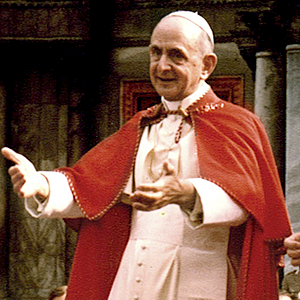
Blessed Paul VI's address on the Novus Ordo Missae


https://www.ccwatershed.org/media/photologue/photos/cache/463-liturgical-Paul-VI_preview.png


The below is an interesting address by Blessed Paul VI given 46 years ago. Given on the eve of the introduction of the Novus Ordo Missae, the concerns and arguments expressed by the Pope are still relevant half a century later (emphasis ours). And some of his words were not heeded, especially as far as Sacrosanctum Concilium is concerned.


Changes in Mass for Greater Apostolate
Address to a General Audience, 26 November 1969

Our Dear Sons and Daughters:

1. We ask you to turn your minds once more to the liturgical innovation of the new rite of the Mass. This new rite will be introduced into our celebration of the holy Sacrifice starting from Sunday next which is the first of Advent, 30 November [in Italy].

2. A new rite of the Mass: a change in a venerable tradition that has gone on for centuries. This is something that affects our hereditary religious patrimony, which seemed to enjoy the privilege of being untouchable and settled. It seemed to bring the prayer of our forefathers and our saints to our lips and to give us the comfort of feeling faithful to our spiritual past, which we kept alive to pass it on to the generations ahead.

3. It is at such a moment as this that we get a better understanding of the value of historical tradition and the communion of the saints. This change will affect the ceremonies of the Mass. We shall become aware, perhaps with some feeling of annoyance, that the ceremonies at the altar are no longer being carried out with the same words and gestures to which we were accustomed—perhaps so much accustomed that we no longer took any notice of them. This change also touches the faithful. It is intended to interest each one of those present, to draw them out of their customary personal devotions or their usual torpor.

4. We must prepare for this many-sided inconvenience. It is the kind of upset caused by every novelty that breaks in on our habits. We shall notice that pious persons are disturbed most, because they have their own respectable way of hearing Mass, and they will feel shaken out of their usual thoughts and obliged to follow those of others. Even priests may feel some annoyance in this respect. 

5. So what is to be done on this special and historical occasion? First of all, we must prepare ourselves. This novelty is no small thing. We should not let ourselves be surprised by the nature, or even the nuisance, of its exterior forms. As intelligent persons and conscientious faithful we should find out as much as we can about this innovation. It will not be hard to do so, because of the many fine efforts being made by the Church and by publishers. As We said on another occasion, we shall do well to take into account the motives for this grave change. The first is obedience to the Council. That obedience now implies obedience to the Bishops, who interpret the Council's prescription and put them into practice. 

6. This first reason is not simply canonical—relating to an external precept. It is connected with the charism of the liturgical act. In other words, it is linked with the power and efficacy of the Church's prayer, the most authoritative utterance of which comes from the Bishop. This is also true of priests, who help the Bishop in his ministry, and like him act in persona Christi (cf. St. Ign., ad Eph. I, V). It is Christ's will, it is the breath of the Holy Spirit which calls the Church to make this change. A prophetic moment is occurring in the mystical body of Christ, which is the Church. This moment is shaking the Church, arousing it, obliging it to renew the mysterious art of its prayer.

7. The other reason for the reform is this renewal of prayer. It is aimed at associating the assembly of the faithful more closely and more effectively with the official rite, that of the Word and that of the Eucharistic Sacrifice, that constitutes the Mass. For the faithful are also invested with the "royal priesthood"; that is, they are qualified to have supernatural conversation with God.

8. It is here that the greatest newness is going to be noticed, the newness of language. No longer Latin, but the spoken language will be the principal language of the Mass. The introduction of the vernacular will certainly be a great sacrifice for those who know the beauty, the power and the expressive sacrality of Latin. We are parting with the speech of the Christian centuries; we are becoming like profane intruders in the literary preserve of sacred utterance. We will lose a great part of that stupendous and incomparable artistic and spiritual thing, the Gregorian chant. 

9. We have reason indeed for regret, reason almost for bewilderment. What can we put in the place of that language of the angels? We are giving up something of priceless worth. But why? What is more precious than these loftiest of our Church's values?

10. The answer will seem banal, prosaic. Yet it is a good answer, because it is human, because it is apostolic.

11. Understanding of prayer is worth more than the silken garments in which it is royally dressed. Participation by the people is worth more—particularly participation by modern people, so fond of plain language which is easily understood and converted into everyday speech. 

12. If the divine Latin language kept us apart from the children, from youth, from the world of labor and of affairs, if it were a dark screen, not a clear window, would it be right for us fishers of souls to maintain it as the exclusive language of prayer and religious intercourse? What did St. Paul have to say about that? Read chapter 14 of the first letter to the Corinthians: "In Church I would rather speak five words with my mind, in order to instruct others, than ten thousand words in a tongue" (I Corinthians 14:19).

13. St. Augustine seems to be commenting on this when he says, "Have no fear of teachers, so long as all are instructed" (P.L. 38, 228, Serm. 37; cf. also Serm. 229, p. 1371). But, in any case, the new rite of the Mass provides that the faithful "should be able to sing together, in Latin, at least the parts of the Ordinary of the Mass, especially the Creed and the Lord's Prayer, the Our Father" (Sacrosanctum Concilium n. 19).

14. But, let us bear this well in mind, for our counsel and our comfort: the Latin language will not thereby disappear. It will continue to be the noble language of the Holy See's official acts; it will remain as the means of teaching in ecclesiastical studies and as the key to the patrimony of our religious, historical and human culture. If possible, it will reflourish in splendor. 

15. Finally, if we look at the matter properly we shall see that the fundamental outline of the Mass is still the traditional one, not only theologically but also spiritually. Indeed, if the rite is carried out as it ought to be, the spiritual aspect will be found to have greater richness. The greater simplicity of the ceremonies, the variety and abundance of scriptural texts, the joint acts of the ministers, the silences which will mark various deeper moments in the rite, will all help to bring this out. 

16. But two indispensable requirements above all will make that richness clear: a profound participation by every single one present, and an outpouring of spirit in community charity. These requirements will help to make the Mass more than ever a school of spiritual depth and a peaceful but demanding school of Christian sociology. The soul's relationship with Christ and with the brethren thus attains new and vital intensity. Christ, the victim and the priest, renews and offers up his redeeming sacrifice through the ministry of the Church in the symbolic rite of his last supper. He leaves us his body and blood under the appearances of bread and wine, for our personal and spiritual nourishment, for our fusion in the unity of his redeeming love and his immortal life.

17. But there is still a practical difficulty, which the excellence of the sacred renders not a little important. How can we celebrate this new rite when we have not yet got a complete missal, and there are still so many uncertainties about what to do?

18. To conclude, it will be helpful to read to you some directions from the competent office, namely the Sacred Congregation for Divine Worship. Here they are: "As regards the obligation of the rite:

1) For the Latin text: Priests who celebrate in Latin, in private or also in public, in cases provided for by the legislation, may use either the Roman Missal or the new rite until 28 November 1971. If they use the Roman Missal, they may nevertheless make use of the three new anaphoras and the Roman Canon, having regard to the provisions respecting the last text (omission of some saints, conclusions, etc.). They may moreover recite the readings and the prayer of the faithful in the vernacular. If they use the new rite, they must follow the official text, with the concessions as regards the vernacular indicated above.

2) For the vernacular text. In Italy, all those who celebrate in the presence of the people from 30 November next, must use the Rito della Messa published by the Italian Episcopal Conference or by another National Conference. On feast days readings shall be taken: either from the Lectionary published by the Italian Center for Liturgical Action, or from the Roman Missal for feast days, as in use heretofore. On ferial days the ferial Lectionary published three years ago shall continue to be used. No problem arises for those who celebrate in private, because they must celebrate in Latin. If a priest celebrates in the vernacular by special indult, as regards the texts, he shall follow what was said above for the Mass with the people; but for the rite he shall follow the Ordo published by the Italian Episcopal Conference.

19. In every case, and at all times, let us remember that "the Mass is a Mystery to be lived in a death of Love. Its divine reality surpasses all words. . . It is the Action par excellence, the very act of our Redemption, in the Memorial which makes it present" (Zundel).


With Our Apostolic Benediction. 
(L'Osservatore Romano, Weekly Edition in English 4 December 1969)

Friday, August 28, 2015

Hall of Honour (4): Zak Portelli

Seminarian Zak Portelli

Our fourth recipient of this virtual honour is a seminarian - Zak Portelli. A known apologist in Catholic circles in Malta, he was the main promoter of Tridentine Masses held in the parish of Ta' l-Ibraġ. Albeit not a member of Pro Tridentina (Malta) there was close co-operation because the aim was mutual, namely to ensure that the Tridentine Mass in Malta takes place on a regular basis, according to the provisions of Summorum Pontificum and Universae Ecclesiae. It was an experiment that was reasonably successful, although unfortunately it was hampered in recent years, due to various reasons, outside the control of Bro. Portelli.  


Portelli is also the author of a book  From Hell with Love. Below is a review of this book:

This book is an in depth study of the origins of the New World order. It focuses on the events which led to the French and Russian revolutions as well as the events which ousted and destroyed the Monarchies of Europe. The main focus of the book is on the Catholic Church with regards to its strict stand against the Freemasonry, and the war that has been going on silently between the Church and the Freemasonry. The book reveals stunning facts which are not found in modern day bias history books sponsored by the main stream medias which indoctrinate society into believing that we are at peace and that we have freedom. The book also goes on to describe how peace is not achieved by those men who sit around a table and discuss world peace but that true peace is found in defending morality and the cross of Christ which has been trampled on and put to shame by the liberal forces of this world.
One augurs that the Maltese Church in Malta will continue to benefit for the sterling service of this seminarian, once he is ordained to the sacred priesthood.

Thursday, August 20, 2015

Saint John Paul II on liturgical abuses

https://feathersproject.files.wordpress.com/2011/04/john-paul-ii-2.jpg?w=490
A suffering Saint John Paul II


"I would like to ask forgiveness — in my own name and in the name of all of you, venerable and dear brothers in the episcopate — for everything which, for whatever reason, through whatever human weakness, impatience or negligence, and also through the at times partial, one-sided and erroneous application of the directives of the Second Vatican Council, may have caused scandal and disturbance concerning the interpretation of the doctrine and the veneration due to this great sacrament. And I pray the Lord Jesus that in the future we may avoid in our manner of dealing with this sacred mystery anything which could weaken or disorient in any way the sense of reverence and love that exists in our faithful people."  Letter Dominicae Cenae, n. 12 (1980)

"But these encouraging and positive aspects cannot suppress concern at the varied and frequent abuses being reported from different parts of the Catholic world: the confusion of roles, especially regarding the priestly ministry and the role of the laity (indiscriminate shared recitation of the Eucharistic Prayer, homilies given by lay people, lay people distributing Communion while the priests refrain from doing so); an increasing loss of the sense of the sacred (abandonment of liturgical vestments, the Eucharist celebrated outside church without real need, lack of reverence and respect for the Blessed Sacrament, etc.); misunderstanding of the ecclesial character of the Liturgy (the use of private texts, the proliferation of unapproved Eucharistic Prayers, the manipulation of the liturgical texts for social and political ends). In these cases we are face to face with a real falsification of the Catholic Liturgy ...

None of these things can bring good results. The consequences are — and cannot fail to be — the impairing of the unity of Faith and worship in the Church, doctrinal uncertainty, scandal and bewilderment among the People of God, and the near inevitability of violent reactions." Instruction Inaestimabile Donum, Foreword (1980)

"On occasion there have been noted illicit omissions or additions, rites invented outside the framework of established norms; postures or songs which are not conducive to faith or to a sense of the sacred; abuses in the practice of general absolution; confusion between the ministerial priesthood, linked with Ordination, and the common priesthood of the faithful, which has its foundation in Baptism. It cannot be tolerated that certain priests should take upon themselves the right to compose Eucharistic Prayers or to substitute profane readings for texts from Sacred Scripture. Initiatives of this sort, far from being linked with the liturgical reform as such, or with the books which have issued from it, are in direct contradiction to it, disfigure it and deprive the Christian people of the genuine treasures of the Liturgy of the Church. It is for the bishops to root out such abuses." “Apostolic Letter” Vicesimus Quintus Annus, n. 13 (1988)

"The Bishop’s place in the Church’s sanctifying mission leads him to have special concern for the observance of liturgical law in his diocese… Unfortunately, excesses in one direction or another have led to a certain polarization within communities. ...The spiritual vitality of your communities depends greatly on the dignified and worthy celebration of the liturgy. In all of this you need the support and help of your priests and all the faithful, but the greatest responsibility lies with you who have received the fullness of the sacrament of the priesthood." Address to Episcopal Conference of Australia, n. 3 (1993)

"To look back over what has been done in the field of liturgical renewal in the years since the Council is, first, to see many reasons for giving heartfelt thanks and praise to the Most Holy Trinity for the marvelous awareness which has developed among the faithful of their role and responsibility in this priestly work of Christ and his Church. It is also to realize that not all changes have always and everywhere been accompanied by the necessary explanation and catechesis; as a result, in some cases there has been a misunderstanding of the very nature of the liturgy, leading to abuses, polarization, and sometimes even grave scandal." Address to Episcopal Conference of the United States, n. 1 (1998)


"Unfortunately, alongside these lights, there are also shadows. In some places the practice of Eucharistic adoration has been almost completely abandoned. In various parts of the Church abuses have occurred, leading to confusion with regard to sound faith and Catholic doctrine concerning this wonderful sacrament. At times one encounters an extremely reductive understanding of the Eucharistic mystery. Stripped of its sacrificial meaning, it is celebrated as if it were simply a fraternal banquet. Furthermore, the necessity of the ministerial priesthood, grounded in apostolic succession, is at times obscured and the sacramental nature of the Eucharist is reduced to its mere effectiveness as a form of proclamation. This has led here and there to ecumenical initiatives which, albeit well-intentioned, indulge in Eucharistic practices contrary to the discipline by which the Church expresses her faith. How can we not express profound grief at all this? The Eucharist is too great a gift to tolerate ambiguity and depreciation." “Encyclical” Ecclesia de Eucharistia, n. 10 (2003)

"In this regard it is not possible to be silent about the abuses, even quite grave ones, against the nature of the Liturgy and the Sacraments as well as the tradition and the authority of the Church, which in our day not infrequently plague liturgical celebrations in one ecclesial environment or another. In some places the perpetration of liturgical abuses has become almost habitual, a fact which obviously cannot be allowed and must cease." Instruction Redemptionis Sacramentum, n. 4 (2004)

Thursday, May 8, 2014

Profile of the Founder


The Founder is all about spirituality. Those on the IX Life path are destined to travel a humanitarian path. 


They are always sophisticated individuals, are very selfless souls and are often patient, trustworthy and honourable from the very beginning to the end of their life.

These individuals make great environmentalists, teachers, artists, priests and healers. Sometimes a IX's lofty ideals are presented in a manner that others find absurd. Part of a IX's life path is to express spiritual principles through actions, rather than through preaching or proselytizing.

As Saint George Preca once said: 

"Eh, eh ... all the Founders have suffered!"

Thursday, July 18, 2013

Quotes to reflect upon (5)


"The people of God have every right to experience the Mass the way it is intended by the Church, pure and unadulterated. They have every right to the fullness of faith and truth the Mass imparts without any manipulation, no matter how well-intentioned. They have every right to the purity of ritual, reverence, sacredness, and awe that will lift them heavenward and give them the strength, hope, and peace they so deeply need. The Mass should never be reduced to mere entertainment or amusement or to a place that emphasizes human accomplishment.

Now, perhaps more than ever, the people of our world are weary and need to drink deeply of what will refresh, nourish, and inspire them. They need the liturgy given to them by their Saviour and their Church for their salvation and the salvation of the world. The Mass celebrated well will accomplish what Christ intended: to transform the lives of its participants, who will in turn transform the life of the world. The result of the Mass not celebrated well we have already seen.

Posted in the sacristies of many churches are words that I have always held close to my heart: “Remember, priest of God, celebrate this Mass as if it were your first time, as if it were your last time, as if it were your only time.” Rev. William Dillard, pastor of St. John the Evangelist parish in San Diego.

Friday, June 21, 2013

Quotes to reflect upon (2)

https://upload.wikimedia.org/wikipedia/en/d/d8/Escriva_at_Mass_1971.JPG
Saint Josemaría Escrivá de Balaguer


"It is public knowledge that some ecclesiastics today seem to want to create a new Church. By doing so they betray Christ, for they change spiritual aims—the salvation of souls, one by one—into temporal aims. If they do not resist this temptation, they will leave their sacred ministry unfulfilled, lose the confidence and respect of the people, and create havoc in the Church. Moreover, by interfering intolerably with the political freedom of Christians and other men, they will sow confusion in civil society and make themselves dangerous. Holy Orders is the sacrament of supernatural service of one’s brothers in the faith; some seem to be trying to turn it into the earthly instrument of a new despotism." 

Saint Josemaría Escrivá de Balaguer, founder of Opus Dei, Christ is Passing By, no. 79.