Showing posts with label John XXIII. Show all posts

Sunday, February 18, 2024

Quotes to reflect upon (25)


We are conscious today that many, many centuries of blindness have cloaked our eyes so that we can no longer see the beauty of Your Chosen People nor recognize in their faces the features of our privileged brethren. 
We realize that the mark of Cain stands upon our foreheads. Across the centuries our brother Abel has lain in the blood we drew, or shed tears we caused by forgetting Your love. 
Forgive us the curse we falsely attached to their name as Jews. Forgive us for crucifying You a second time in the flesh. For we know not what we did.

These phrases are taken directly from the fake 'prayer' that former Jesuit priest Malachi Martin published in the American Jewish Committee publication, Commentary, in January 1965. Malachi alsot attributed this fake prayer to Pope John XXIII and claimed that Pope John XXIII intended for the 'prayer' to be recited in all of the churches of the world. It is worrying that this fake prayer has been recited in many churches throughout the world, even regularly in some areas such as in Poland and the USA.

Sunday, December 26, 2021

Responsia ad dubia on certain provisions of Traditionis Custodes


ONGREGATION FOR DIVINE WORSHIP AND THE DISCIPLINE OF THE SACRAMENTS


RESPONSA AD DUBIA

on certain provisions of the

Apostolic Letter

TRADITIONIS CUSTODES

issued “Motu Proprio” by the Supreme Pontiff

FRANCIS


TO THE PRESIDENTS
OF THE CONFERENCES OF BISHOPS


Your Eminence / Your Excellency,

Following the publication by Pope Francis of the Apostolic Letter “Motu Proprio data” Traditionis custodes on the use of the liturgical books from prior to the reform of the Second Vatican Council, the Congregation for Divine Worship and the Discipline of the Sacraments, which exercises the authority of the Apostolic See for material within its competence (cf. Traditionis custodes, n. 7), received several requests for clarification on its correct application. Some questions have been raised from several quarters and with greater frequency. Therefore, after having carefully considered them, having informed the Holy Father and having received his assent, the responses to the most recurrent questions are published herewith.

The text of the Motu Proprio and the accompanying Letter to the Bishops of the whole world clearly express the reasons for the decisions taken by Pope Francis. The first aim is to continue “in the constant search for ecclesial communion” (Traditionis custodes, Preamble) which is expressed by recognising in the liturgical books promulgated by the Popes Saint Paul VI and Saint John Paul II, in conformity with the decrees of the Second Vatican Council, the unique expression of the lex orandi of the Roman Rite (cf. Traditionis custodes, n. 1). This is the direction in which we wish to move, and this is the meaning of the responses we publish here. Every prescribed norm has always the sole purpose of preserving the gift of ecclesial communion by walking together, with conviction of mind and heart, in the direction indicated by the Holy Father.

It is sad to see how the deepest bond of unity, the sharing in the one Bread broken which is His Body offered so that all may be one (cf. Jhn 17:21), becomes a cause for division. It is the duty of the Bishops, cum Petro et sub Petro, to safeguard communion, which, as the Apostle Paul reminds us (cf. 1 Cor 11:17-34), is a necessary condition for being able to participate at the Eucharistic table.

One fact is undeniable: The Council Fathers perceived the urgent need for a reform so that the truth of the faith as celebrated might appear ever more in all its beauty, and the People of God might grow in full, active, conscious participation in the liturgical celebration (cf. Sacrosanctum Concilium n. 14), which is the present moment in the history of salvation, the memorial of the Lord’s Passover, our one and only hope.

As pastors we must not lend ourselves to sterile polemics, capable only of creating division, in which the ritual itself is often exploited by ideological viewpoints. Rather, we are all called to rediscover the value of the liturgical reform by preserving the truth and beauty of the Rite that it has given us. For this to happen, we are aware that a renewed and continuous liturgical formation is necessary both for Priests and for the lay faithful.

At the solemn closing of the second session of the Council (4 December 1963), St Paul VI said (n. 11):

“The difficult, complex debates have had rich results. They have brought one topic to a conclusion, the sacred liturgy. Treated before all others, in a sense it has priority over all others for its intrinsic dignity and importance to the life of the Church and today we will solemnly promulgate the document on the liturgy. Our spirit, therefore, exults with true joy, for in the way things have gone we note respect for a right scale of values and duties. God must hold first place; prayer to him is our first duty. The liturgy is the first source of the divine communion in which God shares his own life with us. It is also the first school of the spiritual life. The liturgy is the first gift we must make to the Christian people united to us by faith and the fervour of their prayers. It is also a primary invitation to the human race, so that all may lift their now mute voices in blessed and genuine prayer and thus may experience that indescribable, regenerative power to be found when they join us in proclaiming the praises of God and the hopes of the human heart through Christ and the Holy Spirit”.

When Pope Francis (Address to the participants in the 68th National Liturgical Week, Rome, 24 August 2017) reminds us that “after this magisterium, after this long journey, We can affirm with certainty and with magisterial authority that the liturgical reform is irreversible” he wants to point us to the only direction in which we are joyfully called to turn our commitment as pastors.

Let us entrust our service “to maintain the unity of the Spirit in the bond of peace” (Eph 4,3), to Mary, Mother of the Church.

From the offices of the Congregation for Divine Worship and the Discipline of the Sacraments, 4 December 2021, on the 58th anniversary of the promulgation of the Constitution on the Scared Liturgy Sacrosanctum Concilium.

✠ Arthur Roche
Prefect


The Supreme Pontiff Francis, in the course of an Audience granted to the Prefect of this Congregation on 18 November 2021, was informed of and gave his consent to the publication of these RESPONSA AD DUBIA with attached EXPLANATORY NOTES.


Traditionis custodes 

Art. 3.  Episcopus, in dioecesibus ubi adhuc unus vel plures coetus celebrant secundum Missale antecedens instaurationem anni 1970:

[…]

§ 2.      statuat unum vel plures locos ubi fideles, qui his coetibus adhaerent, convenire possint ad Eucharistiam celebrandam (nec autem in ecclesiis paroecialibus nec novas paroecias personales erigens);


To the proposed question:

When it is not possible to find a church, oratory or chapel which is available to accommodate the faithful who celebrate using the Missale Romanum (Editio typica 1962), can the diocesan Bishop ask the Congregation for Divine Worship and the Discipline of the Sacraments for a dispensation from the provision of the Motu Proprio Traditionis custodes (Art. 3 § 2), and thus allow such a celebration in the parish church?

The answer is:

Affirmative.

Explanatory note.

The Motu Proprio Traditionis custodes in art. 3 § 2 requests that the Bishop, in dioceses where up to now there has been the presence of one or more groups celebrating according to the Missal prior to the reform of 1970, “designate one or more locations where the faithful adherents of these groups may gather for the Eucharistic celebration (not however in the parochial churches and without the erection of new personal parishes)”. The exclusion of the parish church is intended to affirm that the celebration of the Eucharist according to the previous rite, being a concession limited to these groups, is not part of the ordinary life of the parish community.

This Congregation, exercising the authority of the Holy See in matters within its competence (cf. Traditionis custodes, n. 7), can grant, at the request of the diocesan Bishop, that the parish church be used to celebrate according to the Missale Romanum of 1962 only if it is established that it is impossible to use another church, oratory or chapel. The assessment of this impossibility must be made with the utmost care.

Moreover, such a celebration should not be included in the parish Mass schedule, since it is attended only by the faithful who are members of the said group. Finally, it should not be held at the same time as the pastoral activities of the parish community. It is to be understood that when another venue becomes available, this permission will be withdrawn.

There is no intention in these provisions to marginalise the faithful who are rooted in the previous form of celebration: they are only meant to remind them that this is a concession to provide for their good (in view of the common use of the one lex orandi of the Roman Rite) and not an opportunity to promote the previous rite.


Traditionis custodes

 Art. 1.  Libri liturgici a sanctis Pontificibus Paulo VI et Ioanne Paulo II promulgati, iuxta decreta Concilii Vaticani II, unica expressio “legis orandi” Ritus Romani sunt.

Art. 8.  Normae, dispositiones, concessiones et consuetudines antecedentes, quae conformes non sint cum harum Litterarum Apostolicarum Motu Proprio datarum praescriptis, abrogantur.


To the proposed question:

Is it possible, according to the provisions of the Motu Proprio Traditionis custodes, to celebrate the sacraments with the Rituale Romanum and the Pontificale Romanum which predate the liturgical reform of the Second Vatican Council?

The answer is:

Negative.

The diocesan Bishop is authorised to grant permission to use only the Rituale Romanum (last editio typica 1952) and not the Pontificale Romanum which predate the liturgical reform of the Second Vatican Council. He may grant this permission only to those canonically erected personal parishes which, according to the provisions of the Motu Proprio Traditionis custodes, celebrate using the Missale Romanum of 1962.

Explanatory note.

The Motu Proprio Traditionis custodes intends to re-establish in the whole Church of the Roman Rite a single and identical prayer expressing its unity, according to the liturgical books promulgated by the Popes Saint Paul VI and Saint John Paul II, in conformity with the decrees of the Second Vatican Council and in line with the tradition of the Church.

The diocesan Bishop, as the moderator, promoter and guardian of all liturgical life, must work to ensure that his diocese returns to a unitary form of celebration (cf. Pope Francis, Letter to the Bishops of the whole world that accompanies the Apostolic Letter Motu Proprio data Traditionis custodes).

This Congregation, exercising the authority of the Holy See in matters within its competence (cf. Traditionis custodes, n. 7), affirms that, in order to make progress in the direction indicated by the Motu Proprio, it should not grant permission to use the Rituale Romanum and the Pontificale Romanum which predate the liturgical reform, these are liturgical books which, like all previous norms, instructions, concessions and customs, have been abrogated (cf. Traditionis custodes, n. 8).

After discernment the diocesan Bishop is authorised to grant permission to use only the Rituale Romanum (last editio typica 1952) and not the Pontificale Romanum which predate the liturgical reform of the Second Vatican Council. This permission is to be granted only to canonically erected personal parishes which, according to the provisions of the Motu Proprio Traditionis custodes, celebrate with the Missale Romanum of 1962. It should be remembered that the formula for the Sacrament of Confirmation was changed for the entire Latin Church by Saint Paul VI with the Apostolic Constitution Divinæ consortium naturæ (15 August 1971).

This provision is intended to underline the need to clearly affirm the direction indicated by the Motu Proprio which sees in the liturgical books promulgated by the Saints Pope Paul VI and Pope John Paul II, in conformity with the decrees of the Second Vatican Council, the unique expression of the lex orandi of the Roman Rite (cf. Traditionis custodes, n. 1).

In implementing these provisions, care should be taken to accompany all those rooted in the previous form of celebration towards a full understanding of the value of the celebration in the ritual form given to us by the reform of the Second Vatican Council. This should take place through an appropriate formation that makes it possible to discover how the reformed liturgy is the witness to an unchanged faith, the expression of a renewed ecclesiology, and the primary source of spirituality for Christian life.


Traditionis custodes

Art. 3.  Episcopus, in dioecesibus ubi adhuc unus vel plures coetus celebrant secundum Missale antecedens instaurationem anni 1970:

§ 1.      certior fiat coetus illos auctoritatem ac legitimam naturam instaurationis liturgicae, normarum Concilii Vaticani II Magisteriique Summorum Pontificum non excludere;


To the proposed question:

If a Priest who has been granted the use of the Missale Romanum of 1962 does not recognise the validity and legitimacy of concelebration – refusing to concelebrate, in particular, at the Chrism Mass – can he continue to benefit from this concession?

The answer is:

Negative.

However, before revoking the concession to use the Missale Romanum of 1962, the Bishop should take care to establish a fraternal dialogue with the Priest, to ascertain that this attitude does not exclude the validity and legitimacy of the liturgical reform, the teaching of the Second Vatican Council and the Magisterium of the Supreme Pontiffs, and to accompany him towards an understanding of the value of concelebration, particularly at the Chrism Mass.

Explanatory note.

Art. 3 § 1 of the Motu Proprio Traditionis custodes requires the diocesan Bishop to ascertain that the groups requesting to celebrate with the Missale Romanum of 1962 “do not deny the validity and the legitimacy of the liturgical reform, dictated by Vatican Council II and the Magisterium of the Supreme Pontiffs”.

St Paul forcefully reminds the community of Corinth to live in unity as a necessary condition to be able to participate at the Eucharistic table (cf. 1 Cor 11,17-34).

In the Letter sent to the Bishops of the whole world to accompany the text of the Motu Proprio Traditionis custodes, the Holy Father says: “Because ‘liturgical celebrations are not private actions, but celebrations of the Church, which is the sacrament of unity’ (cf. Sacrosanctum Concilium, n. 26), they must be carried out in communion with the Church. Vatican Council II, while it reaffirmed the external bonds of incorporation in the Church — the profession of faith, the sacraments, of communion — affirmed with St. Augustine that to remain in the Church not only ‘with the body’ but also ‘with the heart’ is a condition for salvation (cf. Lumen Gentium, n. 14)”.

The explicit refusal not to take part in concelebration, particularly at the Chrism Mass, seems to express a lack of acceptance of the liturgical reform and a lack of ecclesial communion with the Bishop, both of which are necessary requirements in order to benefit from the concession to celebrate with the Missale Romanum of 1962.

However, before revoking the concession to use the Missale Romanum of 1962, the Bishop should offer the Priest the necessary time for a sincere discussion on the deeper motivations that lead him not to recognise the value of concelebration, in particular in the Mass presided over by the Bishop. He should invite him to express, in the eloquent gesture of concelebration, that ecclesial communion which is a necessary condition for being able to participate at the table of the Eucharistic sacrifice.

Traditionis custodes 

Art. 3.  Episcopus, in dioecesibus ubi adhuc unus vel plures coetus celebrant secundum Missale antecedens instaurationem anni 1970:

[…]

§ 3.      constituat, in loco statuto, dies quibus celebrationes eucharisticae secundum Missale Romanum a sancto Ioanne XXIII anno 1962 promulgatum permittuntur. His in celebrationibus, lectiones proclamentur lingua vernacula, adhibitis Sacrae Scripturae translationibus ad usum liturgicum ab unaquaque Conferentia Episcoporum approbatis;


To the proposed question:

In Eucharistic celebrations using the Missale Romanum of 1962, is it possible to use the full text of the Bible for the readings, choosing the pericopes indicated in the Missal??

The answer is:

Affirmative.

Explanatory note.

Art. 3 § 3 of the Motu Proprio Traditionis custodes states that the readings are to be proclaimed in the vernacular language, using translations of Sacred Scripture for liturgical use, approved by the respective Episcopal Conferences.

Since the texts of the readings are contained in the Missal itself, and therefore there is no separate Lectionary, and in order to observe the provisions of the Motu Proprio, one must necessarily resort to the translation of the Bible approved by the individual Bishops’ Conferences for liturgical use, choosing the pericopes indicated in the Missale Romanum of 1962.

No vernacular lectionaries may be published that reproduce the cycle of readings of the previous rite.

It should be remembered that the present Lectionary is one of the most precious fruits of the liturgical reform of the Second Vatican Council. The publication of the Lectionary, in addition to overcoming the “plenary” form of the Missale Romanum of 1962 and returning to the ancient tradition of individual books corresponding to individual ministries, fulfils the wish of Sacrosanctum Concilium, n. 51: “The treasures of the Bible are to be opened up more lavishly, so that richer fare may be provided for the faithful at the table of God’s word. In this way a more representative portion of the holy scriptures will be read to the people in the course of a prescribed number of years”.


Traditionis custodes

Art. 4.  Presbyteri ordinati post has Litteras Apostolicas Motu Proprio datas promulgatas, celebrare volentes iuxta Missale Romanum anno 1962 editum, petitionem formalem Episcopo dioecesano mittere debent, qui, ante concessionem, a Sede Apostolica licentiam rogabit.


To the proposed question:

Does the diocesan Bishop have to be authorised by the Apostolic See to allow priests ordained after the publication of the Motu Proprio Traditionis custodes to celebrate with the Missale Romanum of 1962 (cf. Traditionis custodes, n. 4)?

The answer is:

Affirmative.

Explanatory note.

Article 4 of the Latin text (which is the official text to be referenced) reads as follows: «Presbyteri ordinati post has Litteras Apostolicas Motu Proprio datas promulgatas, celebrare volentes iuxta Missale Romanum anno 1962 editum, petitionem formalem Episcopo dioecesano mittere debent, qui, ante concessionem, a Sede Apostolica licentiam rogabit».

This is not merely a consultative opinion, but a necessary authorisation given to the diocesan Bishop by the Congregation for Divine Worship and the Discipline of the Sacraments, which exercises the authority of the Holy See over matters within its competence. (cf. Traditionis custodes, n. 7).

Only after receiving this permission will the diocesan Bishop be able to authorise Priests ordained after the publication of the Motu Proprio (16 July 2021) to celebrate with the Missale Romanum of 1962.

This rule is intended to assist the diocesan Bishop in evaluating such a request: his discernment will be duly taken into account by the Congregation for Divine Worship and the Discipline of the Sacraments.

The Motu Proprio clearly expresses the desire that what is contained in the liturgical books promulgated by Popes Saint Paul VI and Saint John Paul II, in conformity with the decrees of the Second Vatican Council, be recognised as the unique expression of the lex orandi of the Roman Rite: it is therefore absolutely essential that Priests ordained after the publication of the Motu Proprio share this desire of the Holy Father.

All seminary formators, seeking to walk with solicitude in the direction indicated by Pope Francis, are encouraged to accompany future Deacons and Priests to an understanding and experience of the richness of the liturgical reform called for by the Second Vatican Council. This reform has enhanced every element of the Roman Rite and has fostered - as hoped for by the Council Fathers - the full, conscious and active participation of the entire People of God in the liturgy (cf. Sacrosanctum Concilium no. 14), the primary source of authentic Christian spirituality.


Traditionis custodes

Art. 5.  Presbyteri, qui iam secundum Missale Romanum anno 1962 editum celebrant, ab Episcopo dioecesano licentiam rogabunt ad hanc facultatem servandam.


To the proposed question:

Can the faculty to celebrate using the Missale Romanum of 1962 be granted ad tempus?

The answer is:

Affirmative.

Explanatory note.

The possibility of granting the use of the Missale Romanum of 1962 for a defined period of time - the duration of which the diocesan Bishop will consider appropriate - is not only possible but also recommended: the end of the defined period offers the possibility of ascertaining that everything is in harmony with the direction established by the Motu Proprio. The outcome of this assessment can provide grounds for prolonging or suspending the permission.


To the proposed question:

Does the faculty granted by the diocesan Bishop to celebrate using the Missale Romanum of 1962 only apply to the territory of his own diocese?

The answer is:

Affirmative.


To the proposed question:

If the authorised Priest is absent or unable to attend, must the person replacing him also have formal authorisation?

The answer is:

Affirmative.


To the proposed question:

Do Deacons and instituted ministers participating in celebrations using the Missale Romanum of 1962 have to be authorised by the diocesan Bishop?

The answer is:

Affermative.


To the proposed question:

Can a Priest who is authorised to celebrate with the Missale Romanum of 1962 and who, because of his office (Parish Priest, chaplain, etc.), also celebrates on weekdays with the Missale Romanum of the reform of the Second Vatican Council, binate using the Missale Romanum of 1962?

The answer is:

Negative.

Explanatory note.

The Parish Priest or chaplain who - in the fulfilment of his office - celebrates on weekdays with the current Missale Romanum, which is the unique expression of the lex orandi of the Roman Rite, cannot binate by celebrating with the Missale Romanum of 1962, either with a group or privately.

It is not possible to grant bination on the grounds that there is no “just cause” or “pastoral necessity” as required by canon 905 §2: the right of the faithful to the celebration of the Eucharist is in no way denied, since they are offered the possibility of participating in the Eucharist in its current ritual form.


To the proposed question:

Can a Priest who is authorised to celebrate using the Missale Romanum of 1962 celebrate on the same day with the same Missal for another group of faithful who have received authorisation?

The answer is:

Negative.

Explanatory note.

It is not possible to grant bination on the grounds that there is no “just cause” or “pastoral necessity” as required by canon 905 §2: the right of the faithful to the celebration of the Eucharist is in no way denied, since they are offered the possibility of participating in the Eucharist in its current ritual form.


Tuesday, July 20, 2021

Cardinal Mueller on the New TLM Restrictions

Pope Francis celebrates Mass ad orientem for the feast of the Baptism of the Lord in 2016

The pope’s intention with his motu proprio, Traditionis Custodes, is to secure or restore the unity of the Church. The proposed means for this is the total unification of the Roman Rite in the form of the Missal of Paul VI (including its subsequent variations). Therefore, the celebration of Mass in the Extraordinary Form of the Roman Rite, as introduced by Pope Benedict XVI with Summorum pontificum (2007) on the basis of the Missal that existed from Pius V (1570) to John XXIII (1962), has been drastically restricted. The clear intent is to condemn the Extraordinary Form to extinction in the long run. 

In his Letter to the Bishops of the Whole World, which accompanies the motu proprio, Pope Francis tries to explain the motives that have caused him, as the bearer of the supreme authority of the Church, to limit the liturgy in the extraordinary form. Beyond the presentation of his subjective reactions, however, a stringent and logically comprehensible theological argumentation would also have been appropriate. For papal authority does not consist in superficially demanding from the faithful mere obedience, i.e., a formal submission of the will, but, much more essentially, in enabling the faithful also to be convinced with consent of the mind. As St. Paul, courteous towards his often quite unruly Corinthians, said, “in the church I would rather speak five words with my mind, so as to instruct others also, than ten thousand words in tongues.” (1 Cor 14:19) This dichotomy between good intention and poor execution always arises where the objections of competent employees are perceived as an obstruction of their superiors’ intentions, and which are, therefore, not even offered. 

As welcome as the references to Vatican II may be, care must be taken to ensure that the Council’s statements are used precisely and in context. The quotation from St. Augustine about membership in the Church “according to the body” and “according to the heart” (Lumen Gentium 14) refers to the full Church membership of the Catholic faith. It consists in the visible incorporation into the body of Christ (creedal, sacramental, ecclesiastical-hierarchical communion) as well as in the union of the heart, i.e. in the Holy Spirit. What this means, however, is not obedience to the pope and the bishops in the discipline of the sacraments, but sanctifying grace, which fully involves us in the invisible Church as communion with the Triune God. 

For the unity in the confession of the revealed faith and the celebration of the mysteries of grace in the seven sacraments by no means require sterile uniformity in the external liturgical form, as if the Church were like one of the international hotel chains with their homogenous design. The unity of believers with one another is rooted in unity in God through faith, hope, and love and has nothing to do with uniformity in appearance, the lockstep of a military formation, or the groupthink of the big-tech age. Even after the Council of Trent, there always was a certain diversity (musical, celebratory, regional) in the liturgical organization of Masses. The intention of Pope Pius V was not to suppress the variety of rites, but rather to curb the abuses that had led to a devastating lack of understanding among the Protestant Reformers regarding the substance of the sacrifice of the Mass (its Sacrificial character and Real Presence). 

In the Missal of Paul VI, ritualistic (rubricist) homogenization is broken up, precisely in order to overcome a mechanical execution in favour of an inner and outer active participation of all believers in their respective languages and cultures. The unity of the Latin rite, however, should be preserved through the same basic liturgical structure and the precise orientation of the translations to the Latin original. The Roman Church must not pass on its responsibility for unity in cult to the Bishops’ Conferences. Rome must oversee translation of the normative texts of the Missal of Paul VI, and even of the biblical texts, that might obscure the contents of the faith. Presumptions that one may “improve” the verba domini (e.g. pro multis – “for many” – at the consecration, the et ne nos inducas in tentationem – “and lead us not into temptation” – in the Our Father), contradict the truth of the faith and the unity of the Church much more than celebrating Mass according to the Missal of John XXIII. 

The key to a Catholic understanding of the liturgy lies in the insight that the substance of the sacraments is given to the Church as a visible sign and means of the invisible grace by virtue of divine law, but that it is up to the Apostolic See and, in accordance with the law, to the bishops to order the external form of the liturgy (insofar as it has not already existed since apostolic times). (Sacrosanctum Concilium, 22 § 1) The provisions of Traditionis Custodes are of a disciplinary, not dogmatic nature and can be modified again by any future pope. Naturally, the pope, in his concern for the unity of the Church in the revealed faith, is to be fully supported when the celebration of Holy Mass according to the Missal of 1962 is an expression of resistance to the authority of Vatican II, which is to say, when the doctrine of the faith and the Church’s ethics are relativized or even denied in the liturgical and pastoral order. 

In Traditionis Custodes, the pope rightly insists on the unconditional recognition of Vatican II. Nobody can call himself a Catholic who either wants to go back behind Vatican II (or any other council recognized by the pope) as the time of the “true” Church or wants to leave that Church behind as an intermediate step towards a “new Church.” One may measure Pope Francis’ will to return to unity the deplored so-called “traditionalists” (i.e., those opposed to the Missal of Paul VI) against the degree of his determination to put an end to the innumerable “progressivist” abuses of the liturgy (renewed in accordance with Vatican II) that are tantamount to blasphemy. The paganization of the Catholic liturgy – which is in its essence nothing other than the worship of the One and Triune God – through the mythologization of nature, the idolatry of environment and climate, as well as the Pachamama spectacle, were rather counterproductive for the restoration and renewal of a dignified and orthodox liturgy reflective of the fulness of the Catholic faith. 

Nobody can turn a blind eye to the fact that even those priests and laypeople who celebrate Mass according to the order of the Missal of St. Paul VI are now being widely decried as traditionalist. The teachings of Vatican II on the uniqueness of redemption in Christ, the full realization of the Church of Christ in the Catholic Church, the inner essence of the Catholic liturgy as adoration of God and mediation of grace, Revelation and its presence in Scripture and Apostolic Tradition, the infallibility of the magisterium, the primacy of the pope, the sacramentality of the Church, the dignity of the priesthood, the holiness and indissolubility of marriage – all these are being heretically denied in open contradiction to Vatican II by a majority of German bishops and lay functionaries (even if disguised under pastoral phrases). And despite all the apparent enthusiasm they express for Pope Francis, they are flatly denying the authority conferred on him by Christ as the successor of Peter. 

The Congregation for the Doctrine of the Faith’s document about the impossibility of legitimizing same-sex and extramarital sexual contacts through a blessing is ridiculed by German (and not only German) bishops, priests, and theologians as merely the opinion of under-qualified curial officials. Here we have a threat to the unity of the Church in revealed faith, reminiscent of the size of the Protestant secession from Rome in the sixteenth century. Given the disproportion between the relatively modest response to the massive attacks on the unity of the church in the German “Synodal Way” (as well as in other pseudo-reforms) and the harsh disciplining of the old ritual minority, the image of the misguided fire brigade comes to mind, which – instead of saving the blazing house – instead first saves the small barn next to it. Without the slightest empathy, one ignores the religious feelings of the (often young) participants in the Masses according to the Missal John XXIII. (1962) Instead of appreciating the smell of the sheep, the shepherd here hits them hard with his crook. 

It also seems simply unjust to abolish celebrations of the “old” rite just because it attracts some problematic people: abusus non tollit usum. What deserves special attention in Traditionis Custodes is the use of the axiom lex orandi-lex credendi (“Rule of prayer – rule of faith”). This phrase appears first in the anti-Pelagian Indiculus (“Against superstitions and paganism”) which spoke about “the sacraments of priestly prayers, handed down by the apostles to be celebrated uniformly all over the world and in the entire Catholic Church, so that the rule of prayer is the rule of faith.” (Denzinger Hünermann, Enchiridion symbolorum 3) This refers to the substance of the sacraments (in signs and words) but not the liturgical rite, of which there were several (with different variants) in the patristic era. 

One cannot simply declare the latest missal to be the only valid norm of the Catholic faith without distinguishing between the “part that is unchangeable by virtue of divine institution and the parts that are subject to change.” (Sacrosanctum Concilium 21). The changing liturgical rites do not represent a different faith, but rather testify to the one and the same Apostolic Faith of the Church in its different expressions. The pope’s letter confirms that he allows the celebration according to the older form under certain conditions. He rightly points to the centrality of the Roman canon in the more recent Missal as the heart of the Roman rite. This guarantees the crucial continuity of the Roman liturgy in its essence, organic development, and inner unity. To be sure, one expects the lovers of the ancient liturgy to recognize the renewed liturgy; just as the followers of the Paul VI Missal also have to confess that the Mass according to the Missal of John XXIII is a true and valid Catholic liturgy, that is, it contains the substance of the Eucharist instituted by Christ and, therefore, there is and can only be “the one Mass of all times.” 

A little more knowledge of Catholic dogmatics and the history of the liturgy could counteract the unfortunate formation of opposing parties and also save the bishops from the temptation to act in an authoritarian, loveless, and narrow-minded manner against the supporters of the “old” Mass. The bishops are appointed as shepherds by the Holy Spirit: “Keep watch over yourselves and all the flock of which the Holy Spirit has made you overseers. Be shepherds of the church of God, which he bought with his own blood.” (Acts 20, 28) They are not merely representatives of a central office – with opportunities for advancement. The good shepherd can be recognized by the fact that he worries more about the salvation of souls than recommending himself to a higher authority by subservient “good behaviour.” (1 Peter 5, 1-4) 

If the law of non-contradiction still applies, one cannot logically castigate careerism in the Church and at the same time promote careerists. Let us hope that the Congregations for Religious and for Divine Worship, with their new authority, do not become inebriated by power and think they have to wage a campaign of destruction against the communities of the old rite – in the foolish belief that by doing so they are rendering a service to the Church and promoting Vatican II. If Traditionis Custodes is to serve the unity of the church, that can only mean a unity in faith, which enables us to “come to the perfect knowledge of the Son of God,” which is to say unity in truth and love. (cf. Eph 4, 12-15). 

Translated from the German by Robert Royal with Msgr. Hans Feichtinger. Original article appeared on "The Catholic Thing".

Wednesday, February 10, 2021

Vatican Council II Documents: a compass to guide the ship of the Church

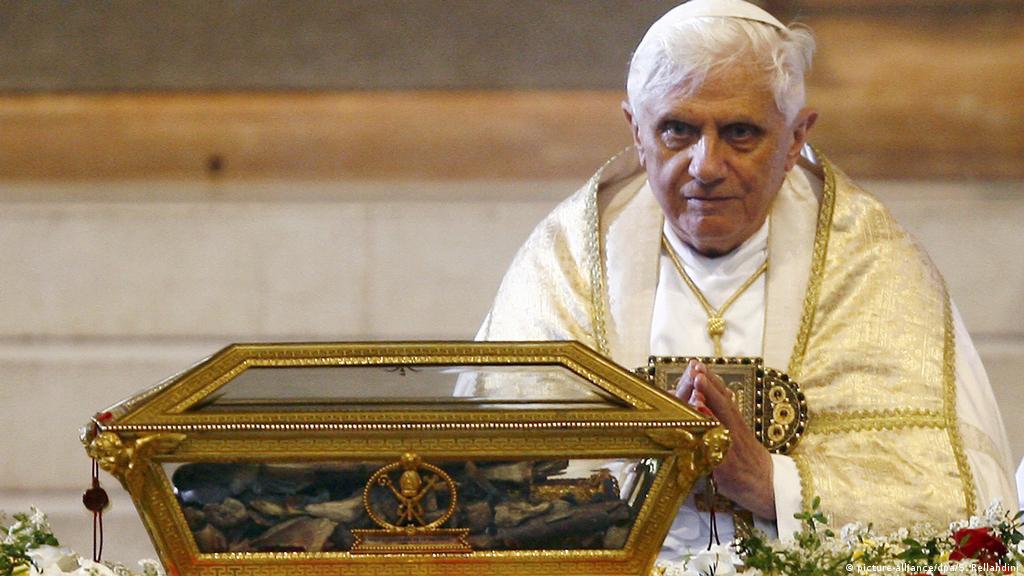
Image result for benedict xviWe are reproducing parts of the speech by then Pope Benedict XVI, during a general audience dated 10 October 2012. This is important in the context of the current quarrels between different traditional Catholics in Malta. They range from Novus Ordo conservatives, to SSPX symphatisers to sedevacantists and even outright Conclavists. The latter, in particular, are known to be very active lately.

 "We have reached the eve of the day on which we will celebrate the fiftieth anniversary of Vatican Council II and the beginning of the Year of Faith. And it is about the great ecclesial event of the Council that I wish to speak.


The documents of Vatican Council II are, even in our own time, a compass guiding the ship of the Church as she sails on the open seas, amidst tempests or peaceful waves, to reach her destination. ... I was able to witness the living Church ... which places herself at the school of the Holy Spirit, the true driving force behind the Council. Rarely in history has it been possible, as it was then, to touch almost physically the universality of the Church at a moment of peak fulfilment of her mission to carry the Gospel into all ages and unto the ends of the earth.


In Church history Vatican II was preceded by many other Councils such as Nicea, Ephesus, Chalcedon and Trent. In general though, they met to define fundamental elements of the faith, and particularly to the correct errors endangering that faith. This was not the case with Vatican Council II, because at that time there were no particular errors of the faith to correct and condemn, nor were there specific questions of doctrine and discipline to be clarified. ... The first question that arose during the preparation of this great event was how to begin, what task to give it. Blessed John XXIII in his opening address of 11 October fifty years ago gave some general guidelines: the faith had to speak with a 'renewed' and more incisive voice, because the world was changing rapidly, but it had to maintain its perennial message intact, without giving way or compromising.


The Pope wanted the Church to reflect upon her faith and upon the truths that guide her. But that serious and profound reflection ... had to be the starting point for a new relationship between the Church and the modern age, between Christianity and certain essential elements of modern thought, not in order to seek conformity, but to show our world, which tends to distance itself from God, the requirements of the Gospel in all its greatness and purity.


The age in which we live continues to be marked by forgetfulness and deafness towards God. I believe, then, that we must learn the simplest and most fundamental lesson of the Council: that the essence of Christianity consists in faith in God, ... and in the individual and community encounter with Christ Who guides our lives. ... The important thing today, as was the desire of the Council Fathers, is for us to see - clearly and anew - that God is present, that He concerns us and responds to us. And when faith in God is lacking our essential foundations give way because man loses his dignity. ... The Council reminds us that the Church ... has the mandate to transmit God's salvific word of love, so that the divine call which contains our eternal beatitude may be heard and accepted.


The four cardinal points of our guiding compass: Sacrosanctum Concilium on the sacred liturgy, which speaks of the centrality of the mystery of Christ's presence in the Church; Lumen Gentium which highlights the Church's fundamental duty to glorify God; Dei Verbum on divine Revelation, which speaks of the living Word of God that unites and animates the Church throughout history, and finally Gaudium et Spes which deals with the way the Church transmits to the world the light it received from God.


Vatican Council II is a powerful appeal to us to make a daily rediscovery of the beauty of our faith, to understand it deeply through a more intense relationship with the Lord, and to live out our Christian vocation to the full".


Thursday, August 22, 2019

Catholic Rites and Churches

Image result for saints peter and andrew
Christ, having been lifted up from the earth has drawn all men to Himself. Rising from the dead He sent His life–giving Spirit upon His disciples and through Him has established His Body which is the Church as the universal sacrament of salvation. Sitting at the right hand of the Father, He is continually active in the world that He might lead men to the Church and through it join them to Himself and that He might make them partakers of His glorious life by nourishing them with His own Body and Blood. [Vatican Council II, Dogmatic Constitution on the Church Lumen gentium 48]
 See the source image

RITES
 
A Rite represents an ecclesiastical, or church, tradition about how the sacraments are to be celebrated. Each of the sacraments has at its core an essential nature which must be satisfied for the sacrament to be confected or realized. This essence – of matter, form and intention – derives from the divinely revealed nature of the particular sacrament. It cannot be changed by the Church. Scripture and Sacred Tradition, as interpreted by the Magisterium, tells us what is essential in each of the sacraments (2 Thes. 2:15).
 
When the apostles brought the Gospel to the major cultural centers of their day the essential elements of religious practice were inculturated into those cultures. This means that the essential elements were clothed in the symbols and trappings of the particular people, so that the rituals conveyed the desired spiritual meaning to that culture. In this way the Church becomes all things to all men that some might be saved (1 Cor. 9:22).
 
There are three major groupings of Rites based on this initial transmission of the faith, the Roman, the Antiochian (Syria) and the Alexandrian (Egypt). Later on the Byzantine derived as a major Rite from the Antiochian, under the influence of St. Basil and St. John Chrysostom. From these four derive the over 20 liturgical Rites present in the Church today.
 

CHURCHES
 
A Church is an assembly of the faithful, hierarchically ordered, both in the entire world –  the Catholic Church, or in a certain  territory – a particular Church. To be a sacrament (a sign) of the Mystical Body of Christ in the world, a Church must have both a head and members (Col. 1:18).  The sacramental sign of Christ the Head is the sacred hierarchy – the bishops, priests and deacons (Eph. 2:19–22). More specifically, it is the local bishop, with his priests and deacons gathered around and assisting him in his office of teaching, sanctifying and governing (Mt. 28:19–20; Titus 1:4–9). The sacramental sign of the Mystical Body is the Christian faithful. Thus the Church of Christ is fully present sacramentally (by way of a sign) wherever there is a sign of Christ the Head, a bishop and those who assist him, and a sign of Christ's Body, Christian faithful. Each diocese is therefore a particular Church.
 
The Church of Christ is also present sacramentally in ritual Churches that represent an ecclesiastical tradition of celebrating the sacraments. They are generally organized under a Patriarch, who together with the bishops and other clergy of that ritual Church represent Christ the Head to the people of that tradition. In some cases a Rite is completely coincident with a Church. For example, the Maronite Church with its Patriarch has a Rite not found in any other Church. In other cases, such as the Byzantine Rite, several Churches use the same or a very similar liturgical Rite. For example, the Ukrainian Catholic Church uses the Byzantine Rite, but this Rite is also found in other Catholic Churches, as well as the Eastern Orthodox Churches not in union with Rome.
 
Finally, the Church of Christ is sacramentally present in the Universal or Catholic Church spread over the entire world. It is identified by the sign of Christ our Rock, the Bishop of Rome, Successor of St. Peter (Mt. 16:18). To be Catholic particular Churches and ritual Churches must be in communion with this Head, just as the other apostles, and the Churches they founded, were in communion with Peter (Gal. 1:18). Through this communion with Peter and his successors the Church becomes a universal sacrament of salvation in all times and places, even to the end of the age (Mt. 28:20).
 

Western Rites and Churches
 
Immediately subject to the Bishop of Rome, the Supreme Pontiff, who exercises his authority over the liturgy through the Congregation for Divine Worship and the Discipline of the Sacraments.

ROMAN/LATIN FAMILY OF LITURGICAL RITES


The Church of Rome is the Primatial See of the world and one of the five Patriarchal Sees of the early Church (Rome, Constantinople, Alexandria, Antioch and Jerusalem). Founded by St. Peter in 42 AD it was consecrated by the blood of Sts. Peter and Paul during the persecution of Nero (63–67 AD). It has maintained a continual existence since then and is the source of a family of Rites in the West. Considerable scholarship (such as that of Fr. Louis Boyer in Eucharist) suggests the close affinity of the Roman Rite proper with the Jewish prayers of the synagogue, which also accompanied the Temple sacrifices. While the origin of the current Rite, even in the reform of Vatican II, can be traced directly only to the 4th century, these connections point to an ancient apostolic tradition brought to that city that was decidedly Jewish in origin.
After the Council of Trent it was necessary to consolidate liturgical doctrine and practice in the face of the Reformation. Thus, Pope St. Pius V imposed the Rite of Rome on the Latin Church (that subject to him in his capacity as Patriarch of the West), allowing only smaller Western Rites with hundreds of years of history to remain. Younger Rites of particular dioceses or regions ceased to exist.

As a consequence of the Second Vatican Council's Dogmatic Constitution on the Sacred Liturgy, Pope Paul VI undertook a reform of the Mass of the Roman Rite, promulgating a revised rite with the Missal of 1970. This Missal has since been modified twice (1975 and 2002). Mass celebrated in accordance with this missal is the Ordinary Form of the Roman Rite.
 
At the time of the revised Missal's promulgation in 1970 almost all Catholics assumed that the previous rite, that of the Missal of 1962, had been abolished. By decision of the Supreme Pontiff Benedict XVI this general assumption has been declared false and the right of Latin Rite priests to celebrate Mass according to the former missal has been affirmed (Apostolic Letter Summorum Pontificum, 7 July 2007). Mass celebrated in accordance with the Missal of 1962 constitutes the Extraordinary Form of the Roman Rite.
 
• Roman – The overwhelming majority of Latin Catholics and of Catholics in general.

– Ordinary Form of the Roman Rite. Mass celebrated in accordance with the Missale Romanum of 1970, promulgated by Pope Paul VI, currently in its third edition (2002). The vernacular editions of this Missal, as well as the rites of the other sacraments, are translated from the Latin typical editions revised after the Second Vatican Council.

– Extraordinary Form of the Roman Rite. Mass celebrated in accordance with the Missale Romanum of 1962, promulgated by Blessed Pope John XXIII. The other sacraments are celebrated according to the Roman Ritual in force at the time of the Second Vatican Council. The Extraordinary Form is most notable for being almost entirely in Latin. In addition to institutes which have the faculty to celebrate the Extraordinary Form routinely, such as the Priestly Fraternity of St. Peter and the Institute of Christ the King Sovereign Priest, any Latin Rite priest may now offer the Mass and other sacraments in accordance with norms of Summorum Pontificum.

– Anglican Use. Since the 1980s the Holy See has granted some former Anglican and Episcopal clergy converting with their parishes the faculty of celebrating the sacramental rites according to Anglican forms, doctrinally corrected.

• Mozarabic – The Rite of the Iberian peninsula (Spain and Portugal) known from at least the 6th century, but probably with roots to the original evangelization. Beginning in the 11th century it was generally replaced by the Roman Rite, although it has remained the Rite of the Cathedral of the Archdiocese of Toledo, Spain, and six parishes which sought permission to adhere to it. Its celebration today is generally semi–private.

• Ambrosian – The Rite of the Archdiocese of Milan, Italy, thought to be of early origin and probably consolidated, but not originated, by St. Ambrose. Pope Paul VI was from this Roman Rite. It continues to be celebrated in Milan, though not by all parishes.

• Bragan – Rite of the Archdiocese of Braga, the Primatial See of Portugal, it derives from the 12th century or earlier. It continues to be of occasional use.

• Dominican – Rite of the Order of Friars Preacher (OP), founded by St. Dominic in 1215.

• Carmelite – Rite of the Order of Carmel, whose modern foundation was by St. Berthold c.1154.

• Carthusian – Rite of the Carthusian Order founded by St. Bruno in 1084.
 

Eastern Rites and Churches
The Eastern Catholic Churches have their own hierarchy, system of governance (synods) and general law, the Code of Canons for the Eastern Churches. The Supreme Pontiff exercises his primacy over them through the Congregation for the Eastern Churches.

ANTIOCHIAN FAMILY OF LITURGICAL RITES

The Church of Antioch in Syria (the ancient Roman Province of Syria) is considered an apostolic See by virtue of having been founded by St. Peter. It was one of the ancient centers of the Church, as the New Testament attests, and is the source of a family of similar Rites using the ancient Syriac language (the Semitic dialect used in Jesus' time and better known as Aramaic). Its Liturgy is attributed to St. James and the Church of Jerusalem.
 
1. WEST SYRIAC

• Maronite – Never separated from Rome. Maronite Patriarch of Antioch. The liturgical language  is Aramaic. The 3 million Maronites are found in Lebanon (origin), Cyprus, Egypt, Syria, Israel, Canada, US, Mexico, Brazil, Argentina and Australia.

• Syriac – Syriac Catholics who returned to Rome in 1781 from the monophysite heresy. Syriac Patriarch of Antioch. The 110,000 Syriac Catholics are found in Syria, Lebanon, Iraq, Egypt, Canada and the US.

• Malankarese – Catholics from the South of India evangelized by St. Thomas, uses the West Syriac liturgy. Reunited with Rome in 1930. Liturgical languages today are West Syriac and Malayalam. The 350,000 Malankarese Catholics are found in India and North America.
 
2. EAST SYRIAC

• Chaldean – Babylonian Catholics returned to Rome in 1692 from the Nestorian heresy. Patriarch of Babylon of the Chaldeans. Liturgical languages are Syriac and Arabic. The 310,000 Chaldean Catholics are found in Iraq, Iran, Syria, Lebanon, Egypt, Turkey and the US.

• Syro–Malabarese – Catholics from Southern India using the East Syriac liturgy. Returned to Rome in the 16th century from the Nestorian heresy. Liturgical languages are Syriac and Malayalam. Over 3 million Syro–Malabarese Catholics can be found in the state of Kerela, in SW India.

BYZANTINE FAMILY OF LITURGICAL RITES

The Church of Constantinople became the political and religious center of the eastern Roman Empire after the Emperor Constantine built a new capital there (324–330) on the site of the ancient town of Byzantium. Constantinople developed its own liturgical rite from the Liturgy of St. James, in one form as modified by St. Basil, and in a more commonly used form, as modified by St. John Chrysostom. After 1054, except for brief periods of reunion, most Byzantine Christians have not been in communion with Rome. They make up the Orthodox Churches of the East, whose titular head is the Patriarch of Constantinople. The Orthodox Churches are mostly autocephalous, meaning self–headed, united to each other by communion with Constantinople, which exercises no real authority over them. They are typically divided into Churches along nation lines. Those that have returned to communion with the Holy See are represented among the Eastern Churches and Rites of the Catholic Church.

1. ARMENIAN

Considered either its own Rite or an older version of the Byzantine. Its exact form is not used by any other Byzantine Rite. It is composed of Catholics from the first people to convert as a nation, the Armenians (N.E. of  Turkey), and who returned to Rome at the time of the Crusades. Patriarch of Cilicia of the Armenians. The liturgical language is classical Armenian. The 350,000 Armenian Catholics are found in Armenia, Syria, Iran, Iraq, Lebanon, Turkey, Egypt, Greece, Ukraine, France, Romania, United States and Argentina. Most Armenians are Orthodox, not in union with Rome.

2. BYZANTINE

• Albanian – Albanian Christians, numbering only 1400 today, who resumed communion with Rome in 1628. Liturgical language is Albanian. Most Albanian Christians are Albanian Orthodox.

• Belarussian/Byelorussian – Unknown number of Belarussians who returned to Rome in the 17th century. The liturgical language is Old Slavonic. The faithful can be found in Belarus, as well as Europe, the Americas and Australia.

• Bulgarian – Bulgarians who returned to Rome in 1861. Liturgical language is Old Slavonic. The 20,000 faithful can be found in Bulgaria. Most Bulgarian Christians are Bulgarian Orthodox.

• Czech – Czech Catholics of Byzantine Rite organized into a jurisdiction in 1996.

• Krizevci – Croatian Catholics of Byzantine Rite who resumed communion with Rome in 1611. The liturgical language is Old Slavonic.  The 50,000 faithful can be found in Croatia and the Americas. Most Croatians are Roman (Rite) Catholics.

• Greek – Greek Christians who returned to Rome in 1829. The liturgical language is Greek. Only 2500 faithful in Greece, Asia Minor (Turkey) and Europe. Greek Christians are almost all Orthodox, whose Patriarch is the Orthodox Patriarch of Constantinople.

• Hungarian – Descendants of Ruthenians who returned to Rome in 1646. The liturgical languages are Greek, Hungarian and English. The 300,000 faithful are found in Hungary, Europe and the Americas.

• Italo–Albanian – Never separated from Rome, these 60,000 Byzantine Rite Catholics are found in Italy, Sicily, Malta (added by this Blog) and the Americas. The liturgical languages are Greek and Italo–Albanian.

• Melkite – Catholics from among those separated from Rome in Syria and Egypt who resumed Communion with Rome at the time of the Crusades. However, definitive union only came in the 18th century. Melkite Greek Patriarch of Damascus. Liturgical languages are Greek, Arabic, English, Portuguese and Spanish. The over 1 million Melkite Catholics can be found in Syria, Lebanon, Jordan, Israel, Canada, US, Mexico, Brazil, Venezuela, Argentina and Australia.

• Romanian – Romanians who returned to Rome in 1697. The liturgical language is Romanian. There are over 1 million Romanian Catholics in Romania, Europe and the Americas. Most Romanian Christians are Romanian Orthodox.

• Russian – Russians who returned to communion with Rome in 1905. The liturgical language is Old Slavonic. An unknown number of the faithful in Russia, China, the Americas and Australia. Most Russian Christians are Russian Orthodox, whose Patriarch is the Orthodox Patriarch of Moscow.

• Ruthenian – Catholics from among those separated from Rome in Russia, Hungary and Croatia who reunited with Rome in 1596 (Brest–Litovsk) and 1646 (Uzhorod).

• Slovak – Byzantine Rite Catholics of Slovakian origin numbering 225,000 and found in Slovakia and Canada.

• Ukrainian – Catholics from among those separated from Rome by the Greek Schism and reunited about 1595. Patriarch or Metropolitan of Lviv. Liturgical languages are Old Slavonic and the vernacular. The 5.5 million Ukrainian Catholics can be found in Ukraine, Poland, England, Germany, France, Canada, US, Brazil, Argentina and Australia. During the Soviet era Ukrainian Catholics were violently forced to join the Ukrainian Orthodox Church. Their hierarchy, which continued to exist outside the homeland, has since been re–established in Ukraine.
 

ALEXANDRIAN FAMILY OF LITURGICAL RITES

The Church of Alexandria in Egypt was one of the original centers of Christianity, since like Rome and Antioch it had a large Jewish population which was the initial object of apostolic evangelization. Its Liturgy is attributed to St. Mark the Evangelist, and shows the later influence of the Byzantine Liturgy, in addition to its unique elements.
 
• Coptic – Egyptian Catholics who returned to communion with Rome in 1741. The Patriarch of Alexandria leads the 200,000 faithful of this ritual Church spread throughout Egypt and the Near East.  The liturgical languages are Coptic (Egyptian) and Arabic. Most Copts are not Catholics.
 
• Ethiopian/Abyssinian – Ethiopian Coptic Christians who returned to Rome in 1846. The liturgical language is Geez. The 200,000 faithful are found in Ethiopia, Eritrea,  Somalia, and Jerusalem.


Colin B. Donovan, STL (originally published on EWTN website)

Wednesday, August 14, 2019

Addition to Open letter to the diocesan Bishops and Auxiliary Bishops of the Roman Catholic Church

See the source image
The author of this letter, Mr. Oostveen (first from left) in a FIUV activity some years ago. 

The stakes are too high to simply ignore this fact; a proposed solution

Addition to Open letter to the diocesan Bishops and Auxiliary Bishops of the Roman Catholic Church


This letter has been sent by e-mail to about 3100 Bishops (Diocesan and Auxiliary)

2 February, 2019 -- Presentation of the Lord - Purification of the Blessed Virgin Mary

Your Excellency,

For the good of the Holy Catholic Church, I respectfully ask once more a little of your valuable time to consider the following, and with an earnest request to present this to the Holy Father and to the President of your Bishop’s Conference.
 
I refer to my mail of last month [http://www.ecclesiadei.nl/docs/open_letter.html] which identified for you the source of the “confusion, bitterness in human relations and fratricidal wars” that is evident in the Church since the Second Vatican Council. As befits a good engineer, after presenting you with the results of the problem analysis and its root cause, I now present to you a solution for the problem. Because the problem started due to the lack of “a gracious collaboration concerning the inspiration of the Holy Spirit” and continued with the introduction of the vague “spirit of the Council” in place of the clear hermeneutic rule set by Pope John XXIII, this problem is in essence of a supernatural origin. It therefore needs a supernatural solution, which expresses the unity between begging for mercy, a true confession of Faith and doing penance. The stakes are too high to simply ignore this fact.
 
My proposed solution is threefold:
First: The Church must in a gracious and humble manner, publicly request Mercy from the Holy Spirit This needs to be done by taking into account that the lack of “a gracious collaboration concerning the inspiration of the Holy Spirit” and its consequent “confusion, bitterness in human relations and fratricidal wars”, has penetrated so deeply into the Church that it has left virtually no one unaffected. 

Second: A public confession of Faith shall be made by all the Clergy and Hierarchy. This can follow the model of an extended Creed, like that of Pope Paul VI (Motu Proprio Solemnia Hac Liturgia, June 1968). In accordance with the Council opening address of Pope John XXIII, this creed should explain the full Doctrine “pure and integral”, “without attenuations or distortion” and in an understandable way without any ambiguity. This is essential, because the Church should "never depart the sacred patrimony of truth received from the Father", and above all, it should always act “in unity and in accordance with the Doctrine taught by the Fathers” [Ref. 1], [Ref. 2].

Third: The Church must publicly do penance. This is fundamentally necessary due to the lack of “a gracious collaboration concerning the inspiration of the Holy Spirit” by the majority of Council Fathers, and because so many Bishops, priests and religious had and have rejected the hermeneutic as set by Pope John XXIII. Such penance could be done by obliging all priests to celebrate individually – not as concelebrants - a number of Holy Masses that shall include the reading (in whole or in parts) of the extended Creed as a homily. The intentions of those masses shall be for all victims of that lack of gracious collaboration, over the last five decades both inside and outside the Church, for the healing of the wounds caused, for the conversion of all those who are still attached to that revolutionary spirit, and for the repose of the souls of those who have already died. [Ref. 3 ].

With my heartfelt gratitude for your kind and generous consideration, I offer you the assurance of my filial support and prayers, I hope for a speedy reply, and I humbly ask for the grace of your blessing.

Faithfully in Christo

 
The lack of gracious collaboration and the rejection of the hermeneutic as defined by Pope John XXIII has been initiated by those who were attached to the New Theology that in its turn was strongly influenced by modern ideologies. Here, among other points, this Creed should include a clear explanation why, in the light of the Truth, all ideologies of the modern times are principally false. This is especially so regarding the subject of unrestricted evolutionism that implicitly denies the Truth of original sin.

Given the subject of the upcoming meeting of the presidents of the Bishops' Conferences in the Vatican, sexual abuse by clergy is necessarily very topical. To this end, and especially because of the influence of silencing and implicit denial of original sin, this Creed should unequivocally include the Doctrine of the Church on sexuality: 
      • Procreation must be stated (reiterated) as the first goal of sexuality.
      • Homosexual activity must be acknowledged as and considered to be the main source of sexual abuse by clergy, but indeed not the only one. This can be clearly deduced from the statistics of the situation, where about 80% (USA) and 85% (the Netherlands) of the victims of sexual abuse by the clergy are male. Like all other disordered forms of sexuality, homosexuality exists due to original sin and our consequent fallen nature. Homosexual activity is therefore objectively a sin against the natural order, and as such one of the sources of sexual abuse. Though the abuse of priestly power in general is a grave sin, and creating victims of sexual abuse by that power is even a very grave sin, yet it has to be distinguished from the sexual abuse itself. The abuse of power over their victims, as well as the covering-up of sexual abuse by clergy, would not exist here without the evident lack of self-control due to a weakness of will, and the loss of discipline over their sexual feelings by the abusers. Therefore, the sexual abuse by members of the clergy must be considered as a matter of very grave sinfulness generally, precisely because it is also a violence against the vows they solemnly made to God at ordination.
      • However, because, sexual abuse outside the Church is considerably more prevalent than that by the clergy, the very large numbers of those victims cannot count on any mea culpa’ by the worldly abusers. On the contrary, what can these victims expect from ideologist physicians, psychologists, politicians, jurists, public media and so on. They are the same people whom have strived for so many decades towards political acceptance and legalisation in favour of all kinds of disordered forms of sexuality, as if these would be normal forms of sexual behaviour. This makes the responsibility of the Church, not only towards the victims of the sexual abuse by clergy, but to all victims inside and outside the Church, all the more important and necessary.
      • A responsibility not only for explaining the full Doctrine on sexuality “pure and integral”, “without attenuations or distortion”, in an understandable way without any ambiguity, but also for restoring and maintaining the unity between Doctrine and discipline.

Reference 3

The rationale for proposing that “all priests shall celebrate individually – not as concelebrants - a number of Holy Masses”, is because only in this way one can be sure that all priests will be confronted individually with the text of the Creed as a penitential act.

One of the Holy Masses offered should focus on the part of the Creed that explains the full Doctrine on sexuality. The intention shall be for healing the wounds of all victims of sexual abuse, both inside and outside the Church, as well as for true repentance and conversion of the abusers, and all who covered up or made the abuses possible.