Showing posts with label Valletta. Show all posts

Saturday, December 21, 2024

IMPORTANT ANNOUNCEMENT!

Due to the current health condition of Fr. Anthony, Pro Tridentina (Malta) regrets to inform its members and friends that, until further notice, Tridentine Mass at the Church of the Knights in Valletta, will not be held until further notice. Should anyone know of a priest who is willing to replace Fr Anthony, kindly get in touch with me. 

Damian Vella

President, Pro Tridentina (Malta)

pro.tridentina.malta@gmail.com 

Wednesday, December 20, 2023

Gozo - For everyone except for the Latin Mass


According to Fr David Wright (the new Anglican Chancellor at St. Paul’s Pro Cathedral in Valletta)

“Relationships between the Anglican and Catholic communities in the Maltese islands are strong and cordial, with both denominations joining other Christian groups in the ecumenical group known as Christians Together in Malta. Another example of this warm friendship is that the Gozo Anglican congregation worship in the chapel of the Sacred Heart Seminary in Rabat.”

The Gozo Diocese, then under Bishop (now Cardinal) Mario Grech, has also made available the chapel dedicated to Our Lady of Lourdes (that stands on a promontory overlooking Mġarr Harbour) to the Italian community for the past eight years. Here, Novus Ordo Mass in Italian is celebrated at the chapel on Sundays and feasts of obligation at 10:00, while catechism lessons for those receiving the First Holy Communion and Confirmation are also held at the chapel. In addition, the community organises social and cultural activities for Italian residents.

What a pity that the same is not applied by the Gozo Diocese to Tridentine Roman Catholics. Different requests for Mass in the Extraordinary Form of the Roman Rite since 2007 were met with silence or refusals. 

Sunday, July 3, 2022

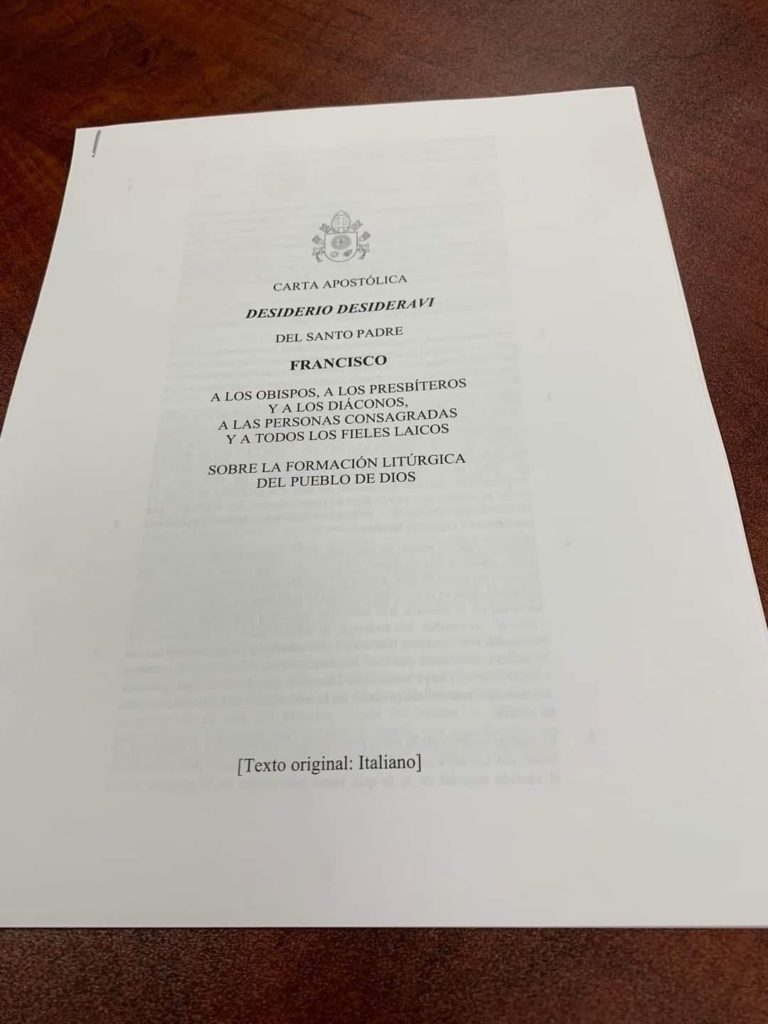
The end of Tridentine Mass in Malta? (Apostolic Letter Desiderio Desideravi)


An urgent meeting of the newly-elected Committee of Pro Tridentina (Malta) discussed the latest document issued by Pope Francis, namely Desiderio Desideravi. It is our understanding that based upon p. 61 of this document, the Tridentine Mass currently being celebrated at the Jesuit Church in Valletta  / St. Paul Church, Valletta might soon not be allowed anymore. The reason being that it is a Diocesan Mass. Thankfully, the previous Committee of Pro Tridentina (Malta) has ensured that Tridentine Mass can continue to be celebrated by Fr Anthony, outside diocesan restrictions. still, it is painful for us to read such a document, the latest in a series of attacks targeting Pope Emeritus Benedict XVI.

Following is the afore-mentioned p. 61 of Desiderio Desideravi:

61. In this letter I have wanted simply to share some reflections which most certainly do not exhaust the immense treasure of the celebration of the holy mysteries. I ask all the bishops, priests, and deacons, the formators in seminaries, the instructors in theological faculties and schools of theology, and all catechists to help the holy people of God to draw from what is the first wellspring of Christian spirituality. We are called continually to rediscover the richness of the general principles exposed in the first numbers of Sacrosanctum Conciliumgrasping the intimate bond between this first of the Council’s constitutions and all the others For this reason we cannot go back to that ritual form which the Council fathers, cum Petro et sub Petro, felt the need to reform, approving, under the guidance of the Holy Spirit and following their conscience as pastors, the principles from which was born the reform. The holy pontiffs St. Paul VI and St. John Paul II, approving the reformed liturgical books ex decreto Sacrosancti OEcumenici Concilii Vaticani II, have guaranteed the fidelity of the reform of the Council For this reason I wrote Traditionis custodes, so that the Church may lift up, in the variety of so many languages, one and the same prayer capable of expressing her unity.[23 Cf. Paulus VI, Constitutio apostolica Missale Romanum (3 Aprilis 1969) in AAS 61 (1969) 222.] 

Monday, November 2, 2020

New Executive Committee


After a number of years, we are pleased to announce that during an online conference held for members, a new Committee has been elected. More details on the page "Kumitat Eżekuttiv". Our first activity is a Tridentine Mass next Sunday in Valletta at 10:30.

Monday, June 17, 2019

Catholic Church in Valletta to be handed over to the Russian Orthodox Church?


A number of years ago, the previous Committee of Pro Tridentina (Malta) had circulated a petition for Tridentine Mass to be celebrated in Valletta. Although the church in question had not been mentioned, research into the organisation's correspondence showed that the petition was for the same church to be used.
 
Interestingly, Heritage Malta - under whose tutelage the church building falls -  was open and interested in providing the building for the celebration of Tridentine Mass in Valletta on a regular (weekly, probably on Sunday morning). However, the project never took off because - allegedly - the Curia did not allow any priest from celebrating Tridentine Mass there. 
 
But, in an interesting development, this church will likely be handed over to the Russian Orthodox Church! Here is a text of the petition being circulated within the Russian Community in Malta:
 
"Brothers and sisters,

As you know, we are trying to get construction permit to build our church in Kappara, San Gwann. Unfortunately, since January of this year, the Planning Authority has not responded to any of our requests. We do not know what is happening there or how long the process of reviewing of our application will last.

Our parishioners found a long-empty temple in Valletta, which belongs to the Government of Malta, and suggested to petition the Prime Minister of Malta to hand it over to our parish. 

For some administrative reasons, the petition must be submitted very quickly, literally, within a week. Please respond to those who are willing to collect signatures on a petition. We will send you a blank form and instructions on how to fill it in.

Let's start work together to get our church and a permanent priest.

Parish council"
 
Reliable information says that the Catholic Church authorities in Malta have agreed that the church building be used by the Russian Orthodox Church in Malta. One therefore wonders why the traditional Catholic community in Malta was hampered in the first place.

Tuesday, June 11, 2019

The Knights of Malta and the Tridentine Mass - Part 2


More than six years ago, the then President of Pro Tridentina (Malta) had indicated in this article that a one off Tridentine Mass in Valletta had been allowed with restrictions imposed on a delegation of the Knights of St. John.
 
A controversy had occurred several months after this event as was outlined here. Unfortunately, once again, this organisation was proven right.
 
A letter issued by the Grand Master of the S.M.O.M., Giacomo Dalla Torre, has decreed that the Tridentine Mass is being suppressed by the once-Catholic Order with immediate effect. Allegedly to "guarantee the cohesion and communion of the Order!" This goes in direct contravention of the spirit of Summorum Pontificum and surely Benedict XVI is not happy with this event.
 
What a betrayal by the once glorious Order that defended Christendom!  

Friday, December 14, 2018

Malta Discovery Pilgrimage

Pro Tridentina (Malta) looks forward to co-operate in this laudable initiative.
 
DAY 1 – Monday, September 2, 2019: Depart North America
Depart on overnight flight to Europe, connecting to Malta.  Please note: flights are additional cost.  (Meals on flights).
 
DAY 2 – Tuesday, September 3, 2019: Birkirkara
Arrival in Malta – Transfer to hotel and enjoy the afternoon relaxing by the pool in the Mediterranean sun or an optional bus tour which brings you straight to the heart of Malta, through a visit to one of our villages, boasting an imposing baroque basilica, followed by a welcome Mass together experiencing life in a local parish. Welcome dinner in a historic 17th century palazzo followed by a casual evening stroll through the old medieval capital city of Malta, Mdina, known as the Silent city, beautifully illuminated at night time.  Included: D
 
DAY 3 – Wednesday, September 4, 2019: Mdina, Rabat
We start our day in Mdina with Mass at the lovely Carmelite Church, followed by a visit to the baroque cathedral of Saint Paul. Having also visited the Diocesan Museum, we will pass to the adjacent archives of the Metropolitan Chapter, for an exclusive visit that will allow us to see the records of the intriguing Roman Inquisition in Malta. After lunch in an outdoor terrazza overlooking the bastions, we will walk through Mdina and Rabat’s winding streets, making a special visit to Saint Paul’s Grotto, the birthplace of Christianity in Malta, together with the Wignacourt Museum, named after the Grand Master who founded the conventual chaplains who originally cared for this place.  Next we visit Saint Paul’s catacombs, the largest catacomb complex in Malta. Leaving Rabat, we will transfer to Malta’s exceptional wine country to visit a winery estate for tasting local wines. Following dinner, an optional relaxing walk through Valletta, the city built by the Knights.  Included: B, D
 
DAY 4 – Thursday, September 5, 2019: Paola, Birgu
Our day will start with Mass in Paola, which bears the name of the Grand Master who founded it, in a church dedicated to one of the greatest saints of the Order of Malta. After Mass, we will move to the Grand Harbor area to enjoy the sea breeze.  We will visit the Three Cities, specifically Vittoriosa, the city which withstood victorious the onslaught of the Ottomans during the Great Siege of 1565. We start our visit, as is due, at the Collegiate church of Saint Lawrence, the original conventual church of the Order in Malta. In an adjacent oratory, we will venerate a medieval icon brought over from Rhodes, and we will see the sword and cap used by Grand Master La Vallette during the Great Siege. Following lunch at the Vittoriosa waterfront, we will visit Castel Sant’Angelo, originally the medieval Castrum Maris, and now the Maltese seat of the Order in Malta. This fortification allows for breath-taking views of the surrounding Grand Harbor. We end the tour in Vittoriosa, or Birgu, as it is locally known, by a visit to the Inquisitor’s Palace, unique among such palaces in Europe, for having withstood not only the ravages of time, but also spared from destruction by the Napoleonic forces. Following dinner, we end our night with a relaxing walk through Saint Julian’s and a drink by the sea. Included: B, D
 
DAY 5 – Friday, September 6, 2019: VallettaWe will start our day in one of Valletta’s oldest churches, Saint Augustine’s, followed by a short walk to the Monastery Church of Saint Ursula, home to a female branch of the Order of Malta. Here will venerate the relic of the head of Blessed Gerard, the founder of the Knights of Malta. From there we move to the Order’s Conventual Church, now Saint John’s Co-Cathedral. Hidden behind its austere facade, lies Malta’s most precious architectural gem, from the ornate marble tombstones of the Knights, hailed as being the most beautiful floor in Europe, to the rich vault decorated by the Knight-Artist, Mattia Preti.  At the adjacent museum, we will see Malta’s two very rare Caravaggio paintings, the Beheading of the Baptist, the only one to bear his signature, as well as his Saint Jerome.  After lunch, we will be able to visit the National Library, which holds the Order’s archives, followed by a tour of a 16th century palace, still home to a Maltese noble family. The Knight Don Pietro La Rocca built the palace. We will end our evening with a traditional dinner, where one can taste a selection of local cuisine.  Included: B, D
 
DAY 6 – Saturday, September 7, 2019: Gozo, Rabat
We move today to Gozo – the island of Calypso, mentioned in Homer’s Odyssey. Enjoy the boat ride, passing the picturesque St Paul’s Bay and the magnificent view of Saint Paul’s Islands, traditionally held to be the place of Paul’s shipwreck. After a short trip across the channel, we will start our day in Gozo by Mass at the famous Ta’ Pinu Basilica, Malta’s most venerated Marian shrine.  Saint John Paul II came here as a pilgrim during his pastoral visit to the Maltese islands in 1990. Mass will be followed by a walk through Gozo’s imposing Cittadella, a fortified city, as well as a visit to the nearby Saint George’s Basilica. A walk through Victoria, named in honor of the Empress, Queen Victoria, on the occasion of her Golden Jubilee, will allow us to see the famous lace-making craft in Gozo. Following a relaxing lunch in one of the most beautiful bays of the island, we will continue for the afternoon to Xagħra. Here will visit Ġgantija, a prehistoric complex which is said to be about 5,500 years old, making it the world’s second oldest standing religious structure. Xagħra will be celebrating its feast day, which will allow us to end the day by attending Solemn Vespers at the local basilica dedicated to the Nativity of the Virgin.  Included: B

 
DAY 7 – Sunday, September 8, 2019: Valletta Celebration Our Lady of Victories, SengleaWe will start this special day when Malta celebrates its annual il-Vitorja, the celebration of the victory over the Turks in 1565, with Mass at the Chapel of Fort Saint Elmo, a place made sacred by the blood of the martyrs of the Great Siege of 1565. This will be followed by time to visit this fort as well as the interesting War Museum. We will then walk up the hill to visit the Grand Master’s Palace and Armory. Following lunch, we will transfer for a relaxing afternoon at Malta’s most beautiful beach. We will end our day by immersing ourselves into a local festa street celebration in honor of the Nativity of the Blessed Virgin Mary, at Senglea, which bears the name of the Grand Master who built it.  Included: B
 
Day 8 – Monday, September 9, 2018: Marsaxlokk, Birkirkara
A relaxing Sunday morning, enjoying Malta’s coastline and the beauty of the Mediterranean Sea.  Visit a traditional fishing village in a rural area on a sleepy Sunday morning.  Experience life on the sea as you catch a rare glimpse of the locals, fisherman for centuries, amid palms, sun and surf.  Boat ride to the Blue Grotto.  Lunch on the seashore.  Visit St. Peter’s Pool, an enchanting bay on the sea with natural rock formations.  Sung Mass at St. Paul’s church in Birkirkara, home of the Extraordinary Form of the Roman Rite in Malta.  Included: B, D
 
Day 9 – Tuesday, September 10, 2019: Free Day
Free day for exploration, shopping, rest or leisure.  Morning Mass at St. Juliana’s old parish church.  Enjoy an afternoon at the hotel pool.  Or re-visit some favorite sites.  Final farewell dinner.  Included: B, D
 
Day 10 – Wednesday, September 11, 2019: Depart Malta
Return flights home to North America.  Included: B
 
N.B. Itinerary is tentative and subject to change.

Sunday, November 26, 2017

Another Augustinian blunder...


Following what was an apparent liturgical abuse by the Augustinians in Valletta (although this Blog received a clarification from the parish priest) we thought that - perhaps - the Augustinians in Malta were traditional when compared to other orders.

Alas, we were wrong. A reader sent us this blasphemous video which shows models dressed as "colourful nuns" dancing and messing inside a church and a convent.

It transpires that this video was shot in the Augustinian Church and convent in Rabat, Malta. The musical group itself thanked  "The Augustinan Cloister" (sic. - whoever they may be).

It seems therefore that the Church in Malta is indulging more and more in a consumeristic way of life, as we outlined earlier this year.
Pseudo-dancing nuns used in a Maltese musical video by the band The Travellers.

Thursday, October 5, 2017

What went wrong in the traditional Catholic movement in Malta (Part 5)


Immediately after Pro Tridentina (Malta) was founded, its archivist
Anthony Mangion, nearly secured the possibility to have the Oratory of the Congregation of the Onorati in Valletta available to the organisation for the regular celebration of the Tridentine Mass. At this stage, it is useful to give some information about this place.
 
The Oratory annexed to the Church of the Jesuits belongs to the Congregation of the Onorati founded in 1600 by the Knights of St John. The chapel is dedicated to the Blessed Virgin Mary and the relics of St. Onorata are kept under the Main Altar. This present oratory was built at the expense of the Congregation in 1658 and replaces a previous one.
 
The Servant of God Fr. Giuseppe De Piro (1877 - 1933), founder of the once traditional Catholic M.S.S.P. (to see how much it has deviated, refer to this and this article) was once a member of the Congregazione degli Onorati.
 
Back to present times, there was opposition to this idea from the local church authorities, although it never became clear whether the then Archbishop of Malta, Paul Cremona, was himself against this initiative.
 
Unfortunately, nowadays the oratory is being used most of the year as a warehouse, as can be seen in the photos above. The first test for the Catholic Church in Malta to show its filial obedience to Pope Benedict XVI's Summorum Pontificum failed miserably.

Thursday, July 13, 2017

What went wrong in the traditional Catholic movement in Malta (Part 3)


In order to better understand the problems being faced by the REAL traditional Catholics, it is pertinent to post the following article by a foreigner, S. Armaticus, who was in Malta some time ago.
 
"As I was taking in the sheer beauty of the mass while setting
during the Offertorium, my mind wandered to another mass which I attended a week and a half earlier, the High Mass (O.F. – TLM is still “banned” in Malta) offered at the Co-Cathedral of St. John in Valletta, Malta. That choir and organist were likewise spectacular. Yet the O.F. mass, even though it was partially in Latin was very disappointing. There were only about three of us who actually knelt during the Canon. How very sad. And excuse the digression.

The sadness was caused by the thought of how much has been lost through the senseless submission to the new springtime of that “spirit of Vatican II”. Yet the joy presented itself in the cognizance of the OBJECTIVE REALITY of the situation, a REALITY that as of this writing, a Catholic like yours truly can find himself in a two different venues, several thousand miles apart, and yet encounter the timeless phenomenon which is the Catholic mass (regardless of whether it is a proper mass or the OF) and offered in a proper Catholic musical setting.
 
Summa summarum, it would appear as if the worst just might be behind us.
 
Or, to use an old advertisement jingle from the 1960’s,…

we’ve come a long way baby!

And finally before I go to the re-post, please keep the Church in Malta in your prayers. The Maltese N.O. church is dying, but the hierarchy there continues to exist in a state of denial. Only with our prayers and fasting can we help turn that situation around. With the  help of our prayers, I have no doubt that the Holy Spirit will restore all things in Christ on Malta.
 
St. Michael Archangel, ora pro nobis!
 
Archbishop Lefebvre, ora pro nobis!
 
In te, Domine, speravi: non confundar in aeternum"
 
Below are some of the comments that were posted under the original article:
 
 
Is the TLM really banned in Malta? Is that even possible after Summorum Pontificum?

S. Armaticus said:    


Dear TS:
As you see, the word “banned” is in quotation marks.
There is a huge problem in Malta because the hierarchy refuses to allow the TLM to be offered on a regular basis, even though Summorum Pontificum is THE LAW OF THE UNIVERSAL CHURCH.
 
For more information on this matter, please follow Una Voce’s Malta site Pro Tridentina at the following link: http://pro-tridentina-malta.blogspot.com.mt/p/avvizi-dwar-quddies-tridentin.html.
 
If you go to the link, you will notice that there are no TLM’s scheduled. Supposedly a TLM was offered last year on the Feast of Our Lady of Mt. Carmel at St. Theresa Church in Cospicua. But I have not been able to confirm whether this is in fact the case. The last sighting of a TLM on the Pro Tridentina website was also on the same feast day, in 2011. But that TLM was canceled at the last minute.
 
There are credible reports that TLM’s have been offered on Malta since SP. Yet these are mostly a well kept secret.
 
So the long and short of the matter is that the TLM is “banned” on Malta.
 
B/t/w thanks for your question.
S.A.

Monday, January 18, 2016

Hall of Honour (7): Fr Marc Andrè Camilleri


The seventh recipient of this virtual award is Fr Marc Andrè Camilleri, who was appointed parish priest of Christ the King parish in Paola by Archbishop Paul Cremona in August 2014.

Fr Camilleri, from Lija, was born on 15 August 1984 and ordained priest on 23 June 2010. He served as deputy parish priest at St Sebastian parish in Qormi and - since 2010 - is a member of Missjoni ż-Żgħira. The latter was established in Malta in 1884 by Canon Francesco Bonnici. The Canon was inspired by the activities of the Mission founded by St. Gaspare del Bufalo in Rome. with the primary aim of instructing children through missionary preaching. Today, the Missjoni ż-Żgħira preaches missions not only to children but also to adults, and especially to youths.

Fr Camilleri has celebrated Mass in the Extraordinary Form of the Roman Rite in several localities, including Valletta, St. Paul's Bay, Bengħisa and Ta' l-Ibraġ. Some of these were celebrated with the aid of Pro Tridentina (Malta).

Fr Marc Andrè has also contributed to the debate on the so-called reform of the reform. Below is his article (when he was a deacon) published in the Sunday Times of Malta.

The reform of the reform

It seems very unfair to say that any discussion about the implementation of the post-Vatican II liturgical reform would lead to its deformation.

It was Pope Benedict himself, while still Cardinal, who pointed out that "the reform of the liturgy in its concrete realisation... resulted not in reanimation but in devastation. We have a liturgy that has degenerated into a show, in which attempts are made to make religion appear interesting with the help of idiotic fashions..." (Preface in Klaus Gamber: La reforme liturgique en question, 1992.)

He himself called for a reform of the reform many times, not, as others would have us believe, that this younger generation is "nostalgic for turning back the clock".

Would the Pope accuse the younger generations of "nostalgia" or "Lefebvrian fundamentalism"? I doubt it. When asked about this in 2001, Cardinal Joseph Ratzinger answered very clearly to those who wish "to make us believe that if we did not adhere to their schemas we will be nostalgically returning to the past. Such things do not go like that. It is an attitude of a past faction. It is important to reflect in an open manner and not to kill instantly all this reflection, we are accused of being partisans of St Pius V. We need to outride this way of thinking. I'm evidently for Vatican II, which has given us a lot of beautiful things. But declaring that it is impossible, and to judge unacceptable all the reflection on what we can elicit from the Church's history, for me is sectarianism which I don't accept any more."

While reflecting on the use of the 1962 Roman Missal, Pope Benedict pointed out that the fact "that young people too have discovered this liturgical form, felt its attraction and found in it a form of encounter with the mystery of the Most Holy Eucharist, particularly suited to them."

What a far cry from the accusation Fr Joe Inguanez levelled at the younger generations for "returning the practices and rituals that belong to another era are nothing less than a manifestation of wanderlust, of romantic utopia, symbolised in the sacred rather than the religious." (Excerpts from the '2005 Mass census report', Malta, p. 28)

In the words of the Pope, "what earlier generations held as sacred, remains sacred and great for us too, and it cannot be all of a sudden entirely forbidden or even considered harmful. It behooves all of us to preserve the riches which have developed in the Church's faith and prayer, and to give them their proper place." (July 7, 2007)

The Pope has made it clear that he is attempting even to reform the Papal liturgies according to the principles he so vociferously spoke about before his election. The first reform was the change of the master of ceremonies after which the Papal liturgies took on a different style; that of "a wise joining of the ancient with the new, to actuate in spirit and letter, as much as possible, the indications of the Second Vatican Council, and to do this in such a way that the pontifical celebrations are exemplary in all aspects."

Benedict has given us a direction to aim for; a Church which does not look for uniformity but for unity in diversity; a Church in which two forms of the same rite if celebrated well can exist together, a Church in which the Roman rite can exist together with different Eastern rites and now even with an Anglican rite. Not a Church that accuses these reformers of "Lefebvrian fundamentalism", or of trying to turn the clock back. Had this attitude of mistrust and hostility guided the Church's authorities during the centuries, no reform would have ever taken place.

Fr. Joe Inguanez, who holds a diametrically opposite view, replied a month later. The letter can be found below:

The Church: a reform or a counter-reform?

My attention has been drawn to a letter written by Rev. Deacon Marc Andre' Camilleri, published on February 28.

I read his letter with all the attention it merits. Ironically, I was both amused and amazed.

I was amused because the letter speaks more about its author than about my pastoral commentary which introduced the Malta Sunday Mass Attendance Census 2005.

I was amazed because Fr Camilleri is reaching the end of his degree course in theology and I could hardly find any theological argument in his missive.

This was also a disappointment, since I am aware of the effort of most of my colleagues, who are doing their best to teach theology and resisting turning their lectures into glorified Catechism lessons.

Not that I do not accept the Catechism, but its teachings alone do not constitute theology. The problem with Fr Camilleri - and with those of a similar mindset - is that he ignored the serious pastoral problems which I tried to tackle in my commentary.

The reason people are leaving the Church are not the "so-called" aberrations in the liturgy that followed Vatican II, but what Cardinal Ratzinger, on Good Friday 2005, referred to as the "filth [that] there is in the Church, and even among those who, in the priesthood, ought to belong entirely to Him!

How much pride, how much self-complacency!"

Fr Camilleri praised Mgr Guido Marini, the present Papal Master of Ceremonies, without letting readers know these words were uttered by a certain Father Gagliardi, a member of the staff of the same Mgr Marini. (see Zenit, January 8, 2010).

May I suggest he reads the book by Archbishop Piero Marini (the former Master of Ceremonies to His Holiness), Challenging Reform: Realizing the Vision of the Liturgical Renewal, 1963-1975 (2007).

He will learn that "with the change of the Consilium into a Congregation in 1969 and the transformation of the Congregation for Divine Worship to a subsection of another Congregation in 1975 (Congregation for Divine Worship and the Discipline of the Sacraments), the distinctive style of the Consilium was gradually absorbed into the more traditional style proper to the Roman Curia.

This was probably one of the first signs of a tendency to return to a pre-conciliar mindset that has for years now characterised the Curia's approach.

As more and more time passes since the Second Vatican Council, an event charged with such hope and desire for renewal, its distinctive contributions seem to be increasingly questioned."

Fr Camilleri does not seem perturbed by the fact that 49 per cent are not attending Sunday Mass.

Or perhaps he believes these can be brought back by the widening of clerical phylacteries and lengthening of tassels, a style definitely not promoted by Jesus (Matthew 23: 5).

He seems to be unaware of the Lord's pastoral injunction to leave the 51 per cent and go out in search of those who have left, or have never been in.

In line with people of ultra-conservative mindset, he takes critique to be an accusation. Ironically, he quotes Pope Benedict to make his point; ironically, I can use the same quote in support of my argument: "We need to outride this way of thinking. I'm evidently for Vatican II, which has given us a lot of beautiful things. But declaring that it is impossible, and to judge unacceptable all the reflection on what we can elicit from the Church's history, for me is sectarianism which I don't accept any more".

It is his lack of knowledge of the Church's history, history of theology and human thought that is Fr Camilleri's achilles' heel.

I am really sad he has really proved one of the points made in my commentary - that we are faced with a number of clerics who seem to be more interested in custom than tradition; in one's attire more than in the way one lives; in building and decorating the Temple of our Jerusalems rather than in nurturting the Body of Christ.

What our Church needs is not the reform of a reform, but constant reform on the lines started by Vatican II and perhaps, as Cardinal Martini and others have suggested, by means of a Vatican III.

Wednesday, January 13, 2016

Clarification from the parish priest of St. Augustine, Valletta


A reader sent us a clarification from Fr Deo Debono OSA, parish priest of Saint Augustine, Valletta regarding the previous article Liturgical abuses in Valletta.


Fr Debono stressed that what was stated is incorrect and that the only time that such a situation occurs is when Mass is celebrated by a 90 year old friar. For obvious reasons, this friar would need assistance. 

It is pertinent to note that in liturgical matters, this parish has implemented a number of measures, including that:

  • following a 20-year absence, on the occasion of Christmas, the main altar - as well as the lateral ones - were decorated according to the rubrics;
  • once a month, Holy Mass is celebrated ad orientem;
  • for festivities the Crucifix was placed in the centre, surrounded by the candlesticks.
Pro Tridentina (Malta) would like to commend Fr Debono for the above. They are definitely steps in the right direction. This Blog in the past commented on how the late Fr Alberto Borg OSA, a friar in the same parish had implemented the Second Vatican Council. This shows that what was posted earlier was because of genuine concerns.

Would Fr Debono be in favour of having Mass in the Extraordinary Form celebrated in his parish? If in the affirmative, he can contact us and we can discuss further.


Liturgical abuses in Valletta

St. Augustine Church, Valletta
In normal circumstances Bishops, priests and deacons distribute Holy Communion in virtue of their office as ordinary ministers of the Body and Blood of the Lord. 

The only exception should be when the size of the congregation or the incapacity of the bishop, priest, or deacon requires it, the celebrant may be assisted by other bishops, priests, or deacons. If such ordinary ministers of Holy Communion are not present:

 "the priest may call upon extraordinary ministers to assist him, i.e., duly instituted acolytes or even other faithful who have been deputed for this purpose. In case of necessity, the priest may also depute suitable faithful for this single occasion (General Instruction of the Roman Missal, GIRM 162)."

Alas, the parish of St. Augustine in Valletta is abusing this norm. It is happening quite often that during morning Mass, when the congregation is composed of a handful of people (20 at most), after the priest has concluded his own Communion, he distributes Communion to the extraordinary minister, and then hands the sacred vessels to him for distribution of Holy Communion to the people.

This is clearly an abuse - the priest is still relatively young and walks unaided.

Church authorities, kindly note. Perhaps such a practice has reduced attendance to this Mass which up to 3 years ago had a congregation of around 60.

Monday, September 21, 2015

EXCLUSIVE: Pope Francis to visit Malta in 2016!


This Blog is pleased to announce that His Holiness Pope Francis will visit Malta in the second half of 2016.

Sources inside the Vatican have confirmed that the visit will be spread over 3 days. It is the Pope's wish that during his visit, he will visit three Marian sanctuaries. 

Unlike the last visit of a Roman Pontiff, this time round the visit will include a stop in Gozo  - probably with Holy Mass at Ta' Pinu Sanctuary.

In Malta, the visit - apart from the usual courtesy visits - is expected to include a visit to the Sanctuary of Our Lady of Graces in Żabbar and the Basilica of Our Lady of Mount Carmel in Valletta. 

Still to be confirmed is a visit to the Church of Divine Mercy at San Pawl Tat-Tarġa, in Naxxar - the latter to coincide with the Jubilee year dedicated to Mercy.


Thursday, December 25, 2014

The Knights of Malta and the Tridentine Mass

  1. http://www.wseas.us/reports/malta_files/john.jpe
     
    In recent days, a controversy erupted online about this article.
     
    According to one of the Knights who attended:
     
    "The Mass was not "granted subject to a number of restrictions." The question I asked was whether or not there was a Tridentine Mass on Malta and if so who could we contact about our priest saying a Mass when we arrived. As there was not an existing Mass and for several logistical reasons we did not pursue trying to have a publicly celebrated EF Mass. When we came to visit we were kindly given permission to celebrate Mass at St. Catherine's and since it was a private Mass our priest celebrated the TLM for us."
     
    However, according to reliable sources from S.M.O.M. in Malta, a Tridentine Mass had been blocked by then Archbishop Cremona. The group had to petition again the Archbishop and finally, almost at the last minute, was allowed one. This notwithstanding that Pro Tridentina (Malta) had managed to put in place some arrangements, following a request by the group coming to Malta itself.
     
    So what is the real position of the S.M.O.M. as far as the Extraordinary Form of the Mass is concerned?
     
    The situation varies from country to country.
     
    The current Cardinal Patron, Raymond Leo Burke, is very much in favour of  the Tridentine Mass and regularly celebrates it. Cardinal Burke is likely therefore to support and encourage the Tridentine Mass within the Order but there are also a number of Cardinals - who are chaplains of the Order -  that oppose and / or barely tolerate the Tridentine Mass in their own Dioceses.
     
    Within the Grand Priory of England the Tridentine Mass has been prevalent and there are many strong supporters of the Mass there. Some of them were willing to help Pro Tridentina (Malta) but things were halted as described here.

    Two FIUV Presidents, the late Fra Freddy Crichton-Stuart and James Bogle are Knights of the Order of Saint John.

    In Malta, whereas the S.M.O.M. has never expressed (as far as is known) a position for or against the Tridentine Mass, one of its Knights, the Marquis Nicholas de Piro, is very much in favour.
     
    The Russian Grand Priory of Malta (not to be confused with S.M.O.M.) is faithful to the Order’s nearly 1000-year-old motto: Pro Fide, Pro Utilitate Hominum (For faith, for service to humanity) and is therefore open to having the Tridentine Mass celebrated in its headquarters in Valletta.

Friday, March 21, 2014

Important Statement from Pro Tridentina (Malta)

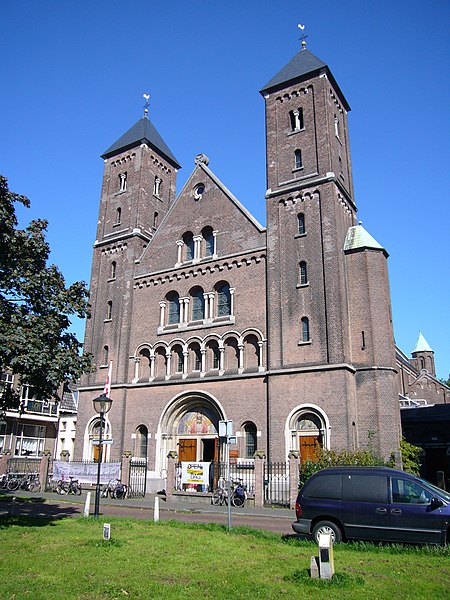
File:Sint-Gertrudiskathedraal.JPG
Mother church of the Old Catholic Church in Utrecht
A new organisation, calling itself the St. Athanasius ICC (SAICC), has recently organised a Tridentine Mass in Valletta.  Pro Tridentina (Malta) would like to clarify the following:

  • SAICC and Pro Tridentina (Malta) are two distinct organisations;
  • SAICC follows the Old Catholic Church of the Union of Utrecht and therefore is not in communion with Rome and the Pope. 
  • It is however unclear whether SAICC is in fact part of the federation of the Old Catholic Churches.
In view of the above, Pro Tridentina (Malta) cannot co-operate with SAICC because Pro Tridentina (Malta) can only support Tridentine Masses that are celebrated by priests in good standing with the Roman Catholic Church.

Friday, February 15, 2013

A great priest who interpreted correctly Vatican II


In this historical week, Pope Benedict XVI argued that, after the Second Vatican Council, the liturgy was trivialised and sacredness was understood as a purely pagan thing and these outlooks became fixed ideas. “The translation and trivialisation of the idea of the Council – he went on to explain – led to the event being read outside the context of faith.” (meeting with parish priests in Rome, 14 February 2013).
 
Fifty years after the Council, this false vision is now melting away, letting the “real Council” shine through. The Pope therefore urged clerics to ensure that the Council finds full expression in today’s world as well.

Unlike what some people might think, Pro Tridentina (Malta), albeit in favour of the Tridentine Mass, is not against the Novus Ordo Missae. It is against the abuses that a number of priests indulge into during its celebration (be it lack of reverence, hastily celebrated Mass, etc.).

The following extracts are from an article on the Sunday Times about the late Fr Alberto Borg OSA on the first anniversary of his death. May others follow the example of this generous priest, (who I remember in his last years at St. Augustine's Church, Valletta). This article clearly shows that Fr Borg interpreted correctly the spirit of the Second Vatican Council, by not neglecting Latin as well as enhancing the Novus Ordo Missae in Maltese.

********

Musicians have an important and necessary function in the liturgy. Whether fully trained professionals or enthusiastic amateurs, all must remember that the purpose of the music is to implement the liturgy, and not to entertain the faithful or glorify themselves. The motto of all ought to be: Non nobis Domine, sed nomini tuo da gloriam! (Not to us, Lord, but to your name be all glory!).

... With his death a year ago, on February 11, 2012, at the age of 92, Malta lost a true example of a great priest and a dedicated musician.

... In January 1945, after obtaining his A.Mus.LCM diploma, Archbishop Michael Gonzi nominated Fr Borg maestro di cappella of both the Mdina and Valletta Cathedrals and as music teacher at the Archbishop’s Seminary (a post he held until 1992).

In 1946, Fr Borg was sent to Rome to complete his musical studies at the Pontificio Istituto di Musica Sacra, founded by Pope Pius X, graduating as Master in Gregorian chant and in composition in 1949. He always considered himself lucky to have had teachers such as Licinio Refice, Ferruccio Vignanelli, Luigi Ronga, Hubert Descrocquettes, Joseph Gajard and Igino Angles, all well known in the musical world.

... In 1979, Fr Borg was appointed part-time lecturer at the University of Malta, and in 1985, at the Augustinian Institute, Valletta. He also directed the Sacred School of Music. As teacher, composer and director, reviving old music from the Maltese music archives was a matter very close to his heart.

... Fr Borg was deeply convinced that Gregorian chant was the music that most befitted the Roman Catholic Church, and thus went all out to teach it to seminarians and religious. In this he had the enthusiastic support of the late Mgr Albert Pantalleresco, who served as rector of the Major Seminary between 1951 and 1963. In fact, in the 1950s and 1960s, when many were taking up the vocation to the priesthood, the Seminary choir was renowned for its interpretation of Gregorian music.

Apart from his love for Gregorian chant, Fr Borg also taught and conducted music by 20th- century composers like Refice and Lorenzo Perosi. His main contribution, however, was his ability to instil in seminarians and religious a love for sacred music. In fact, after their ordination, many of these went on to set up reputable choirs in their parishes. The most noteworthy choirs were those of Żurrieq, St Julian’s, and Ħamrun (St Cajetan), led by Fr Michael Damato, Fr Guido Calleja and Fr Joseph Cachia, respectively.

As maestro di cappella he was greatly admired and esteemed by both Archbishop Gonzi and Archbishop Joseph Mercieca. Besides, in 2006, Pope Benedict XVI awarded him the cross Pro Ecclesia et Pontifice for promoting sacred music in Malta.

Fr Borg also composed different Masses in Latin and Maltese, including Quddiesa tal-Mejtin and Quddiesa tal-Poplu t’Alla.

A member of the Metropolitan Commission for Music for several years, Fr Borg composed all the liturgical hymns of the missal, including the Exultet. In response to the liturgical reform designed by Vatican Council II, he joined up with Oliver Friggieri, a student of his, to produce hymns in Maltese, such as Ħenn Għalina and B’Qalbna Safja, which soon became staples in Maltese churches.

He also composed antiphons, introits, graduals, motets, psalms and polyphonic compositions for Holy Week and the Easter triduum such as the Turba dei Giudei, Amicus Meus and Velum Templi. Most of these were presented in an evening of Polyphonic Chant for Holy Week at St John’s Co-Cathedral on March 12, 1986, directed by Mro Borg himself.

It is due to Mro Alberto Borg, OSA, that to this day we can benefit from the sacred music which adorns the whole liturgical year with popular hymns which Maltese and Gozitans alike still sing and know from memory.


Wednesday, February 13, 2013

Tridentine Mass in Valletta - with restrictions

The Church of Saint Catherine of Italy, Valletta

A friend involved with the S.M.O.M. in Malta informed Pro Tridentina (Malta) that a Tridentine Mass was held at the Church of Saint Catherine of Italy in Valletta by a group of Knights of Malta who were on their way to Rome for their 900th anniversary celebrations. Part of the celebrations in Rome included an audience with Pope Benedict XVI.

Apparently, concession for this Mass (celebrated on 3 February 2013) was "granted subject to a number of restrictions". 

Between November and December 2012, the President of Pro Tridentina (Malta) was contacted by some Knights of Malta from the USA who asked for information about the possibility of celebrating Tridentine Mass in Malta. However, contacts stopped abruptly. Could be that both events are somewhat related.


Sunday, July 22, 2012

A blocked agreement?


http://www.sanandrea.edu.mt/senior/cyberfair/knights/scans/53.jpg
A Great Siege mentality?
I was informed today that the agreement about the celebration of the Tridentine Mass, described in a post earlier this year, Towards an agreement in Malta? was in the final stages of being agreed. However, out of the blues, two stumbling blocks have surfaced:

1) financial (seems that the parish is requesting more funds); and

2) authorisation by a superior authority is being delayed.

This reminds me of an initiative by Pro Tridentina (Malta) last year, Petition for Mass in Valletta which had some success as far as the amount of signatures collected. Unfortunately, the entity with whom discussions were being held somehow backed off.

It also reminds me of the alleged Visit by a SSPX delegation in Malta (actually two) also last year, which also seem to have led to nowhere.

Let's hope that this time round common sense prevails.


Friday, June 22, 2012

Avviżi dwar Quddies Tridentin f'Malta

Nhar l-Erbgħa 6 ta' Novembru 2011 ġiet organizzata Quddiesa Tridentina għal ruħ il-membri mejtin tal-Għaqda Dilettanti Mudelli ta' Knejjes ġewwa l-Knisja tal-Monasteru ta' Santa Katarina V.M. fil-Belt Valletta.  Ċelebrant: il-W.R. Dun Marc Andre' Camilleri. Ħajr: Għaqda Dilettanti Mudelli ta' Knejjes.
Minn żmien għal żmien, għadd ta' persuni - fosthom barranin li jkunu se jżuru Malta - isaqsuni dwar fejn u meta tkun se tiġi ċċelebrata Quddiesa bir-Rit Tridentin. Peress li sa issa quddies b'dan ir-rit mhux qed isir b'mod regolari, ma jkunx dejjem faċli li wieħed jagħti tweġiba korretta.

Sfortunatament riċentament kien hawn saċerdot Ingliż li ma tħallix iqaddes b'dan ir-rit, f'għadd ta' knejjes hawn Malta. Dan huwa saċerdot f'komunjoni ma' Ruma.

Min ikun jaf b'xi quddies li jkun se jsir, jista' jinfurmani permezz ta' email. Min ikun irid li tiġi mħabbra quddiesa f'dan il-Blog jista' jkellem lili jew lill-membri ta' Pro Tridentina (Malta).