Showing posts with label FSSP. Show all posts

Wednesday, June 19, 2024

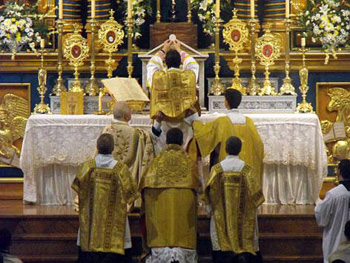
BREAKING NEWS: Suppression of the Extraordinary Form of the Roman Rite expected soon!

Sources in Rome have told this Blog that next month Pope Francis will issue an Apostolic Exhoration to suppress the Extraordinary Form of the Roman Rite.  The only Mass in Latin allowed would be the Novus Ordo Missae

At this stage it is still unclear what would become of priestly societies, like the Fraternity of St. Peter (FSSP) and the Institute of Christ the King. They might be given some leeway, although since Traditionis custodes pressure has been building up to curtail the Tridentine Mass. 

It is pertinent to note that the Secretary of the Congregation for Divine Worship, Bishop Vittorio Francesco Viola OFM, has recently written to the Archbishop of Melbourne, Australia, forbidding him from celebrating the Tridentine Mass in his cathedral and instead allowed him to celebrate the Novus Ordo Missae but in Latin.

Friday, July 12, 2019

Another traditional Catholic group - with links to Malta - suppressed!

Tridentine Mass


More bad news concerning traditional Catholic groups. In recent years, traditional Catholic groups such as the Little Sisters of the Redeemer, the Trappists of Aachen and the Franciscans of the Immaculate, have been de facto annihilated. On 30 June 2019, Pope Francis suppressed another group of priests in Italy known as Opera Familia Christi, from the Archdiocese of Ferrara-Comacchio. No reasons have been given for this latest suppression. 

Opera Familia Christi is remembered with affection in Malta because, on 24 June 2016, it celebrated the first Tridentine Mass since the introduction of the Novus Ordo in 1970, at St. Paul's Chapel in Birkirkara. One sincerely hopes that similar drastic measures will not be imposed on the only traditional Catholic chaplaincy in Malta - the Apostolate of Saint Paul Malta.

This Blog will continue to update its readers with any relevant information concerning the Fraternity of St. Peter, the Institute of Christ the King Sovereign Priest, and other traditional priestly groups.


Thursday, February 7, 2019

Aftermath of the Suppression of Ecclesia Dei


As had been stated in previous posts and by several traditional Catholic websites, Pope Francis decreed that the Pontifical Commission Ecclesia Dei - founded by Pope St. John Paul II - is to be abolished. Its work will now continue in a “special section” of the Congregation for the Doctrine of the Faith. The Vatican has said that this decision has been taken because ‘conditions and circumstances change,’ but insisted that dialogue towards regularization of the SSPX ‘continues.’

Friday, January 11, 2019

Concerning the Pontifical Commission Ecclesia Dei

Image result for pontifical commission ecclesia dei

Much has been written in the past weeks that the Pontifical Commission Ecclesia Dei (PCED), the Vatican body in charge of matters related to the Tridentine Mass and of negotiations with traditional Catholic groups (especially the SSPX), is set to be abolished shortly. Its functions would be completely amalgamated and absorbed by the Congregation for the Doctrine of the Faith. Notwithstanding its limitations, the PCED had proven extremely beneficial to the integrity of the Tridentine Mass, especially since 2007.

Last November, this Blog had hinted that the motu proprio Summorum Pontificum was not going to be abrogated for the time being, but changes were going to occur in that direction. This looks likely to be one of the steps being taken.
 
We also warned about the risks of an agreement between the SSPX and the Vatican. A personal prelature will be in due course subjected to Canon 297, under which the SPX would need the local Bishop's permission to add new apostolates.
 
In the meantime the Congregation for Divine Worship is planning to introduce the Novus Ordo Propers of 1970 in the Roman Missal of 1962.
 
Traditional Catholics should look carefully and fight back as these steps remind us of previous bad experiences, such as:
 
  • the partial suppression of the FSSP by Protocol 1411-99;
  • the total suppression of the Franciscans of the Immaculate, the Trappist Monks of Aachen, the Little Sisters of the Blessed Virgin Mary and the Transalpine Redemptorists.

Friday, December 14, 2018

Malta Discovery Pilgrimage

Pro Tridentina (Malta) looks forward to co-operate in this laudable initiative.
 
DAY 1 – Monday, September 2, 2019: Depart North America
Depart on overnight flight to Europe, connecting to Malta.  Please note: flights are additional cost.  (Meals on flights).
 
DAY 2 – Tuesday, September 3, 2019: Birkirkara
Arrival in Malta – Transfer to hotel and enjoy the afternoon relaxing by the pool in the Mediterranean sun or an optional bus tour which brings you straight to the heart of Malta, through a visit to one of our villages, boasting an imposing baroque basilica, followed by a welcome Mass together experiencing life in a local parish. Welcome dinner in a historic 17th century palazzo followed by a casual evening stroll through the old medieval capital city of Malta, Mdina, known as the Silent city, beautifully illuminated at night time.  Included: D
 
DAY 3 – Wednesday, September 4, 2019: Mdina, Rabat
We start our day in Mdina with Mass at the lovely Carmelite Church, followed by a visit to the baroque cathedral of Saint Paul. Having also visited the Diocesan Museum, we will pass to the adjacent archives of the Metropolitan Chapter, for an exclusive visit that will allow us to see the records of the intriguing Roman Inquisition in Malta. After lunch in an outdoor terrazza overlooking the bastions, we will walk through Mdina and Rabat’s winding streets, making a special visit to Saint Paul’s Grotto, the birthplace of Christianity in Malta, together with the Wignacourt Museum, named after the Grand Master who founded the conventual chaplains who originally cared for this place.  Next we visit Saint Paul’s catacombs, the largest catacomb complex in Malta. Leaving Rabat, we will transfer to Malta’s exceptional wine country to visit a winery estate for tasting local wines. Following dinner, an optional relaxing walk through Valletta, the city built by the Knights.  Included: B, D
 
DAY 4 – Thursday, September 5, 2019: Paola, Birgu
Our day will start with Mass in Paola, which bears the name of the Grand Master who founded it, in a church dedicated to one of the greatest saints of the Order of Malta. After Mass, we will move to the Grand Harbor area to enjoy the sea breeze.  We will visit the Three Cities, specifically Vittoriosa, the city which withstood victorious the onslaught of the Ottomans during the Great Siege of 1565. We start our visit, as is due, at the Collegiate church of Saint Lawrence, the original conventual church of the Order in Malta. In an adjacent oratory, we will venerate a medieval icon brought over from Rhodes, and we will see the sword and cap used by Grand Master La Vallette during the Great Siege. Following lunch at the Vittoriosa waterfront, we will visit Castel Sant’Angelo, originally the medieval Castrum Maris, and now the Maltese seat of the Order in Malta. This fortification allows for breath-taking views of the surrounding Grand Harbor. We end the tour in Vittoriosa, or Birgu, as it is locally known, by a visit to the Inquisitor’s Palace, unique among such palaces in Europe, for having withstood not only the ravages of time, but also spared from destruction by the Napoleonic forces. Following dinner, we end our night with a relaxing walk through Saint Julian’s and a drink by the sea. Included: B, D
 
DAY 5 – Friday, September 6, 2019: VallettaWe will start our day in one of Valletta’s oldest churches, Saint Augustine’s, followed by a short walk to the Monastery Church of Saint Ursula, home to a female branch of the Order of Malta. Here will venerate the relic of the head of Blessed Gerard, the founder of the Knights of Malta. From there we move to the Order’s Conventual Church, now Saint John’s Co-Cathedral. Hidden behind its austere facade, lies Malta’s most precious architectural gem, from the ornate marble tombstones of the Knights, hailed as being the most beautiful floor in Europe, to the rich vault decorated by the Knight-Artist, Mattia Preti.  At the adjacent museum, we will see Malta’s two very rare Caravaggio paintings, the Beheading of the Baptist, the only one to bear his signature, as well as his Saint Jerome.  After lunch, we will be able to visit the National Library, which holds the Order’s archives, followed by a tour of a 16th century palace, still home to a Maltese noble family. The Knight Don Pietro La Rocca built the palace. We will end our evening with a traditional dinner, where one can taste a selection of local cuisine.  Included: B, D
 
DAY 6 – Saturday, September 7, 2019: Gozo, Rabat
We move today to Gozo – the island of Calypso, mentioned in Homer’s Odyssey. Enjoy the boat ride, passing the picturesque St Paul’s Bay and the magnificent view of Saint Paul’s Islands, traditionally held to be the place of Paul’s shipwreck. After a short trip across the channel, we will start our day in Gozo by Mass at the famous Ta’ Pinu Basilica, Malta’s most venerated Marian shrine.  Saint John Paul II came here as a pilgrim during his pastoral visit to the Maltese islands in 1990. Mass will be followed by a walk through Gozo’s imposing Cittadella, a fortified city, as well as a visit to the nearby Saint George’s Basilica. A walk through Victoria, named in honor of the Empress, Queen Victoria, on the occasion of her Golden Jubilee, will allow us to see the famous lace-making craft in Gozo. Following a relaxing lunch in one of the most beautiful bays of the island, we will continue for the afternoon to Xagħra. Here will visit Ġgantija, a prehistoric complex which is said to be about 5,500 years old, making it the world’s second oldest standing religious structure. Xagħra will be celebrating its feast day, which will allow us to end the day by attending Solemn Vespers at the local basilica dedicated to the Nativity of the Virgin.  Included: B

 
DAY 7 – Sunday, September 8, 2019: Valletta Celebration Our Lady of Victories, SengleaWe will start this special day when Malta celebrates its annual il-Vitorja, the celebration of the victory over the Turks in 1565, with Mass at the Chapel of Fort Saint Elmo, a place made sacred by the blood of the martyrs of the Great Siege of 1565. This will be followed by time to visit this fort as well as the interesting War Museum. We will then walk up the hill to visit the Grand Master’s Palace and Armory. Following lunch, we will transfer for a relaxing afternoon at Malta’s most beautiful beach. We will end our day by immersing ourselves into a local festa street celebration in honor of the Nativity of the Blessed Virgin Mary, at Senglea, which bears the name of the Grand Master who built it.  Included: B
 
Day 8 – Monday, September 9, 2018: Marsaxlokk, Birkirkara
A relaxing Sunday morning, enjoying Malta’s coastline and the beauty of the Mediterranean Sea.  Visit a traditional fishing village in a rural area on a sleepy Sunday morning.  Experience life on the sea as you catch a rare glimpse of the locals, fisherman for centuries, amid palms, sun and surf.  Boat ride to the Blue Grotto.  Lunch on the seashore.  Visit St. Peter’s Pool, an enchanting bay on the sea with natural rock formations.  Sung Mass at St. Paul’s church in Birkirkara, home of the Extraordinary Form of the Roman Rite in Malta.  Included: B, D
 
Day 9 – Tuesday, September 10, 2019: Free Day
Free day for exploration, shopping, rest or leisure.  Morning Mass at St. Juliana’s old parish church.  Enjoy an afternoon at the hotel pool.  Or re-visit some favorite sites.  Final farewell dinner.  Included: B, D
 
Day 10 – Wednesday, September 11, 2019: Depart Malta
Return flights home to North America.  Included: B
 
N.B. Itinerary is tentative and subject to change.

Sunday, October 8, 2017

Breaking News: Massive liturgical changes expected in 2018!


Reliable sources close to the Holy See have indicated that sometime in the second half of 2018, the Novus Ordo Lectionary and Calendar are to be imposed upon the Extraordinary Form of the Roman Mass. 

The new Roman Missal will become available on the First Sunday of Advent 2018 but the Vatican will allow a two-year period to phase it in. These changes are expected to be much more drastic than what was envisaged in Universae Ecclesiae that states:
25. New saints and certain of the new prefaces can and ought to be inserted into the 1962 Missal, according to provisions which will be indicated subsequently. (emphasis ours)
The Vatican approved societies and institutes, such as the Fraternity of Saint Peter and the Institute of Christ the King, will likely apply for exemptions, but all requests are expected to be turned down. The only exception seems to be the SSPX, which might be granted a temporary exemption, to ensure that an agreement is reached between the SSPX and Rome.  However, if the exemption granted will be of a temporary nature, more SSPX priests are expected to join the so-called Resistance (formerly known as SSPX-SO) under Bishop Richard Williamson and more will go independent. This would make the traditional Catholic movement more fragmented than ever before.


Sunday, April 16, 2017

What went wrong in the traditional Catholic movement in Malta (Part 1)


Today, Easter Sunday, we start with a series aimed to show what went wrong in the traditional Catholic movement in Malta. Ten years ago there was much hope when a group in favour of the traditional liturgy in Malta was created. The results have however been very limited. 

We will see what type of divisions there were, the situation under Archbishop Cremona, Bishop Grech and Archbishop Scicluna. We will then see the current situation and finally what the outlook for the traditional Catholic movement in Malta is.

Pro Tridentina (Malta) was officially founded in August 2007, less than a month after the promulgation of the motu proprio Summorum Pontificum. Prior to this event, there was no lay movement in favour of the Tridentine Mass in Malta or Gozo. 

The developments that led to the founding can be traced back to November 2006. At the time, the FSSP, contacted a number of Maltese aiming to develop something concretely in this country. 

A first informal meeting was held on 21 April 2007 to determine the way forward. This was followed by another informal one on 20 July 2007 i.e. a week after the publication of Summorum Pontificum. Pro Tridentina (Malta) was accepted as a member of the FIUV in 2009. Its first President was elected to the FIUV Council in 2009 and served until 2015.

Since then, the Tridentine Mass became, albeit slowly, a reality in Malta. On the other hand, attempts in Gozo were met by obstacles by Bishop Grech, in defiance of Pope Benedict XVI.

Still, the Catholic Church in Malta is not favourably inclined to a wider, regular celebration of the Extraordinary Form. The media also presents a different picture than the reality is, namely that young people in Malta are among the most fervent followers of this form of the Mass. However, Tridentine Masses are known to have been held in Valletta, Cospicua, Birkirkara and other towns around the island.

In today's interview on Malta Today, Fr Mark Montebello, referring to the situation in the Catholic Church said:
    
"No, I don’t think we’re anywhere close to a schism. What I think is at present causing some turmoil is the changed official political standpoint of the papacy. From a far-right stance taken by the anti-Communist John Paul II and the anti-liberalist Benedict XVI over more than three decades, now, with Pope Francis, we have had four years of a third-positionist Peronista who seeks to mediate tensions caused by conflicting extreme poles."

We beg to differ. A schism, albeit a minor one, has already occurred in the Church in Malta. And once schisms appear they are hard to conceal.They lead to the division of a group into opposing factions. We will see in another post how this has taken place in Malta.

Wednesday, November 11, 2015

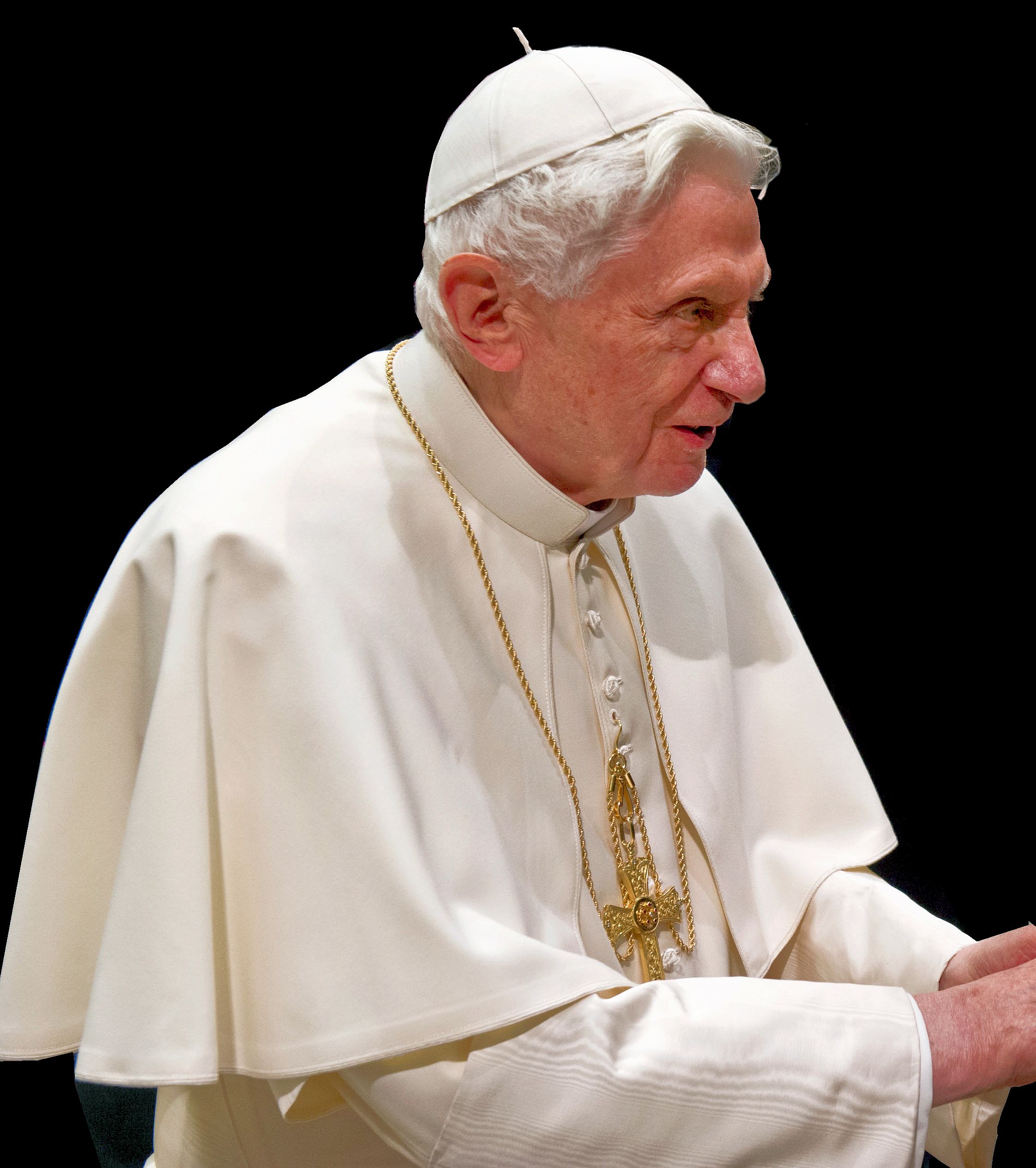
EXCLUSIVE: Benedict XVI to celebrate Tridentine Mass?

https://upload.wikimedia.org/wikipedia/commons/8/8d/Benedictus_XVI_-_General_audience_-_Vatican_-_Jan_16,_2013.jpg

He may do so during this Holy Year of Mercy. One has to admit that if a celebration of the Tridentine Mass by Pope Emeritus Benedict XVI indeed takes place, this would raise the question, once again, of what is Pope Benedict's true position on the Tridentine Mass.

A number of distinct personalities (including Dr Alice von Hildebrand) have asked him, over the years, his opinion on this Mass, but Benedict XVI never gave a full, unambiguous answer. 

Prior to his election as Pope, Cardinal Ratzinger celebrated at 07:00 each Thursday in the Teutonic College church inside the Vatican walls, and those Masses were always of the Novus Ordo, celebrated in a very simple, solemn way.

Cardinal Ratzinger repeatedly expressed a certain sorrow, even indignation, over the way the conciliar liturgical reform took place, saying that the liturgy was developed in a non-organic way by professors sitting around a table and that, as the new liturgy was introduced, without sufficient explanation, the ordinary faithful were often confused, and sometimes scandalized. This is the position that Ratzinger took quite explicitly in his book The Spirit of the Liturgy.

At the same time, Benedict XVI personally does in some ways favor at least certain aspects of the conciliar liturgical reform as an improvement over the traditional liturgy.

The German writer Martin Mosebach once stated that Pope Saint John Paul II celebrated the Tridentine Mass on several occasions privately. Bishop Bernard Fellay of the Society of St. Pius X (SSPX) also had said that someone in the Roman Curia told him that Pope Benedict, too, has celebrated the Tridentine Mass on several occasions privately. It is, in any case, a known secret that when he was a Cardinal, Benedict XVI celebrated on a number of occasions the Tridentine Mass, including for the Fraternity of Saint Peter (FSSP).

But why would Benedict XVI celebrate Mass in the Extraordinary Form of the Roman Rite? 

One can here attempt a number of reasons:
  • The traditional Latin Mass was, and is, the organic expression of the faith of Catholics in the Risen Lord, from the first generation to the present time. 
  • This Mass was never intended to be the Mass of any political or cultural regime. And that it came to be seen as the expression of a certain political or social culture is one of the unfortunate reasons that the Council Fathers felt they had to approve a reform of the liturgy. 
  • However the reform that was produced was not the reform that the Council Fathers called for.
  • This has meant almost two generations of liturgical confusion, and the consequent crisis of belief which inevitable follows liturgical confusion, for it is true that lex credendi lex orandi
  • Worse still, some overzealous people stripped our churches of statues, broke stained-glass windows, and turned against our heritage.

Saturday, August 6, 2011

Fourth Anniversary of Pro Tridentina (Malta)

Below: One of the first designs for the badge of Pro Tridentina (Malta) by Ivan Vassallo. Today is the fourth anniversary of the official founding of Pro Tridentina (Malta). Prior to this event, there was no lay movement in favour of the Tridentine Mass in Malta or Gozo.


The developments that led to the founding can be traced back to November 2006. At the time, Abbé Armand de Malleray, from the FSSP, contacted a number of Maltese aiming to develop something concretely in this country. I am eternally greatful to Fr. de Malleray for the help he gave me and others at the time.


A first informal meeting was held on 21 April 2007 to determine the way forward. This was followed by another informal one on 20 July 2007 i.e. a week after the publication of the motu proprio Summorum Pontificum. Four years ago, the first official meeting was held.


Since then, we can say that the Tridentine Mass is becoming, albeit slowly, a reality in Malta. Pro Tridentina (Malta) was accepted as a member of the International Federation Una Voce (FIUV) in 2009.


Not everything has been positive. Some members have since left, the Catholic Church in Malta is still not favourably inclined to a wider, regular celebration of the Extraordinary Form. The media still presents a different picture than the reality is, namely that young people in Malta are among the most fervent followers of this form of the Mass.


But today, looking back at the past four years, one can be filled with hope that more progress will be achieved.


Ad multos annos Pro Tridentina (Malta)!


Thursday, April 14, 2011

Third Conference on Summorum Pontificum


The Association Youth and Tradition And the Sodality Priestly Friends of Summorum Pontificum


Rome, 13-15 May 2011


The Third Conference on the Motu Proprio Summorum Pontificum of the Holy Father, Pope Benedict XVI


“Hope for the entire Church”


Programme: Friday, 13 May 2011 (Pre-Conference)

Parish of SS. Trinità dei Pellegrini


17,00: Introduction and Welcome Rev. Father Vincenzo M. Nuara O.P. (Moderator of the Sodality Priest Friends of Summorum Pontificum) Rev. Father Joseph Kramer F.S.S.P (Pastor of the Personal Parish of SS. Trinità dei Pellegrini)


17,15: Holy Rosary and the chanting of the Litany of Loreto


18,00: Spiritual Conference: “Liturgy and Priestly Life” Rev. Father Cassian Folsom OSB (Prior of the Monastery of St. Benedict at Norcia)


19,00: Pontifical Vespers Priests’ Consecration to the Immaculate Heart of Mary Benediction of the Blessed Sacrament (Officiating: His Excellency Most Rev. Athanasius Schneider, Auxiliary Bishop of Astana) (Service at the altar and music: The Priestly Fraternity of St. Peter)


Saturday, 14 May 2011 (Conference) Pontifical University of St. Thomas Aquinas (Angelicum), Aula Minor


8,00: Holy Mass in the Church of Sts. Domenic and Sisto at the Angelicum


9,00: Chanting of the Veni Creator Welcome and Introduction Dr. Angelo Pulvirenti (President of the Association Youth and Tradition) Rev. Father Vincenzo M. Nuara O.P. (Honorary President of the Association Youth and Tradition) Commemorative Video Presentation (Dr. Emanuele Pressacco)


9,30 1st Paper: The Sacred Liturgy, Life of the Church His Eminence Antonio Cardinal Cañizares Llovera (Prefect of the Congregation for Divine Worship and the Discipline of the Sacraments)


10,15 2nd Paper: Spirit of the Liturgy, Liturgy of the Spirit His Excellency Most Rev. Marc Aillet (Bishop of Bayonne, France)


11,00 Break


11,30 3rd Paper: The Ancient Liturgy of the Church: Ecumenical Bridge His Eminence Kurt Cardinal Koch (President of the Pontifical Council for the Promotion of Christian Unity)


12,15 4th Paper: The Minor Orders and holy service at the Altar His Excellency Most Rev. Athanasius Schneider (Auxiliary Bishop of Astana)


15,00 Recitation of the Holy Rosary


15,30 A perspective: The Motu Proprio Summorum Pontificum, assessment and possibilities (Mons. Guido Pozzo, Secretary, Pontifical Commission “Ecclesia Dei”


16,00 5th Paper: The Episcopate in the Roman Pontifical (from the editio princeps 1595-96 until the editio typica of 1961-62). A theological liturgical reflection. (Mons. Nicola Bux, Teological Institute of Bari)


17,00 Break


17,30 6th Paper: The apostolic-patristic origins of the “Tridentine Mass” (Sr. M. Francesca of the Immaculate, F.I. of Città di Castello)


18,15 7th Paper: Latin, liturgical language of the Church and of Catholicity (Prof. Roberto de Mattei, European University of Rome) Concluding Remarks: Rev. Father Vincenzo M. Nuara, O.P.


19,00 Chanting of the Te Deum and Benediction of the Blessed Sacrament (Officiating: His Eminence Dario Cardinal Castrillon Hoyos, President Emeritus of the Pontifical Commission “Ecclesia Dei”) (Service at the altar and music: Franciscans of the Immaculate)


Sunday, 15 May 2011 The Papal Basilica of St. Peter at the Vatican Altar of the Chair


8,00 Pontifical Mass at the Faldstool in the Ancient Roman Rite (Celebrant: His Eminence Antonio Cardinal Cañizares Llovera, Prefect of the Congregation for Divine Worship and the Discipline of the Sacraments) Assistant Priest: Rev. Father Almir De Andrade, F.S.S.P Diacono: Rev. Father Mark Withoos Subdeacon: Rev. Mons. Patrick Descourtieux (Officials of the Pontifical Commission Ecclesia Dei) Familiari: Mons. Nicholas Thevenin – Mons. Marco Agostini Master of Ceremony: Rev. Father Gilles Guitard, I.C.R.S.S. Liturgical Functions: Institute of Christ the King, Sovereign Priest Musical Services: Gregorian Choir: Pontifical Institute of Sacred Music in Rome Directed by Maestro Mons. Renzo Cilia Polifonia: Domenico Bartolucci Foundation Choir Directed by His Eminence Maestro Domenico Cardinale Bartolucci Organist: Maestro Andrea Buccarella


12,00 Regina Coeli of the Sovereign Pontiff His Holiness Pope Benedict XVI in Piazza San Pietro


TE DEUM LAUDAMUS

Friday, September 3, 2010

FSSP Priestly Vocations DVD Arrives!


Press Release

FSSP Priestly Vocations DVD Arrives!

 
DENTON , Nebraska – 30 August 2010 – The Priestly Fraternity of Saint Peter is pleased to announce the completion of a 28 minute DVD entitled “To God Who Giveth Joy To My Youth.”

The title, taken from the opening words of Mass in the Extraordinary Form, embodies the essential goal of priestly formation in the Fraternity of Saint Peter. This new video explores in particular the work of priestly formation in the Fraternity's English-speaking seminary in Denton , Nebraska .


The Priestly Fraternity of Saint Peter presents through this DVD an introduction helpful for generous young men discerning a priestly vocation. At the same time, the film will provide everyone with a thorough portrait of daily life at the seminary.

In the Church, the members of the Priestly Fraternity of Saint Peter have the fundamental charism of sanctifying themselves through the faithful celebration of Holy Mass and the Sacraments in the Extraordinary Form of the Roman Rite. At the same time, they offer to souls the fruits of the graces of their vocation by making the liturgy in the Extraordinary Form available to all Catholics. Throughout the seminary's intensive seven year program, each of the various elements and stages of formation has as its purpose the formation of priests whose union with God is pursued through the traditional liturgy.

Viewers are invited to see how the Fraternity seminary, drawing on the Church's rich tradition of priestly formation, forms zealous priests through the study of Thomistic philosophy and theology, Latin, Gregorian Chant and also through the elements of community life including spiritual direction, manual labor and recreation.

Discover how one seminary receives a man and prepares him for his transformation into an Alter Christus, “Another Christ” for the glory of God and needs of souls.

The video -- in three parts -- may be viewed via YouTube.

For DVD copies or for more information, please contact

Our Lady of Guadalupe Seminary
7880 West Denton Road
Denton , Nebraska 68339
phone (402) 797-7700

About the Priestly Fraternity of St. Peter

Established in 1988 by Pope John Paul II, the Priestly Fraternity of Saint Peter is a Society of Apostolic Life of Pontifical Right. The Priestly Fraternity of Saint Peter strives to serve the Catholic Church by means of its own particular and specific role or objective, i.e. the sanctification of priests through the faithful celebration of the Extraordinary Form of the Roman Rite. Through the spiritual riches of the Church’s ancient Roman liturgy, the priests of the Fraternity seek to sanctify those entrusted to their care. The Priestly Fraternity instructs and trains its priests to preserve, promote, and protect the Catholic Church's authentic liturgical and spiritual traditions in over 16 countries worldwide. The Fraternity has over 200 priests and 125 seminarians studying in its two international seminaries in Bavaria , Germany and Denton , Nebraska. For information.

About Our Lady of Guadalupe Seminary

Located in rural Denton , Nebraska , is the English-speaking seminary for the Priestly Fraternity of Saint Peter. Men from all over the world, come to study for the priesthood in the seminary’s seven year program. A few represented countries include Australia , Hong Kong, the French West Indies and England. For information.

Sunday, February 28, 2010

Bad news from Canada


TORONTO--Only three weeks after a Solemn High Mass was held on Candlemas assisted by transitional Deacons and Seminarians of St. Augustine's Seminary in Toronto; and less than a week after a column appeared on Rorate Caeli Blog extolling the provisioning of the Traditional Latin Mass in Ontario, it was announced today after the Mass for Quadragesima Sunday that effective next Sunday, February 28, 2009, the Toronto Apostolate of the Priestly Fraternity of St. Peter will come to an end.


Apostolate Chaplain, Father Howard Venette, FSSP addressed the nearly 100 congregants following the Mass advising the shocked congregation that the departure was due to "internal personnel" matters. Father Venette will be reassigned to Orlando, Florida following his 19 month stay in Toronto.


The FSSP was invited to Toronto by Archbishop Thomas Collins with the hopes of establishing a personal parish for the Extraordinary Form of the Roman Rite. In September 2009, a public announcement was made by the Fraternity and on the Archdiocese of Toronto web page that Canadian Martyrs parish would be the location over a six-month transitional period. Within days of this announcement and without public explanation, the situation changed and the parish plan did not materialise.

Recently, the Fraternity was advised that while a parish was not currently available, its provision would depend on the continued growth and financial viability of the community. In the last 19 months, attendance at the Sunday Mass at St. Theresa Shrine Church increased over 60% from the attendance under the former indult at the Missa Lecta to the Missa Cantata.


It was also announced that Father Liam Gavigan will resume the celebration of the Mass as of Sunday March 7. Father Gavigan is a retired priest living two hours east of Toronto and already celebrates the Mass Sunday at 9:00AM at Schomberg before travelling 49 kilometers to the Carmelite Monastery at Zephyr, Ontario for Mass at 11:30AM. Zephyr is 54 kilometers from the scheduled 1:00PM Mass at St. Theresa Shrine Church in Scarborough through the southern Ontario snow-belt.


Upon arrival in Toronto, Father Venette was in residence at Holy Cross parish where the Mass was celebrated daily and on High Holy Days. Following the situation in September over Canadian Martyrs, Father was moved to St. Brigid's where the daily Mass schedule changed from week to week and the High Holy Day liturgies were split between St. Brigid's and St. Theresa's Parish. That Father was, "in residence" at St. Brigid's parish, was noticeably absent from the parish bulletin and a phone number, separate from the parish was recently necessary.


According to officials from Una Voce Toronto, Archbishop Collins had indicated that he desired no less than "five" Extraordinary Form Masses throughout the Archdiocese of Toronto every Sunday. As for daily Mass, it is unknown how those in the east end, many of them seniors, will fare now that the Fraternity is leaving and not providing daily Mass.

A Solemn High Mass was being planned for St. Theresa's for March 19, the Feast of St. Joseph, Patron Saint of Canada and has now been cancelled. After the departure of Father Venette, the only daily Mass in the Extraordinary Form in the Archdiocese of Toronto will be at The Toronto Oratory Church of the Holy Family. The Society of St. Pius X also operates a "Mass Centre" in Toronto.


The recessional hymn at Mass was appropriately, Take Up Your Cross.

Thursday, August 27, 2009

Latin Liturgy: A Natural And Beautiful Thing

http://stlouisreview.com/sites/default/files/article-images/137252/LatinMass0312.jpg 

http://www.latinliturgy.com/


By Thom Nickels
15.JUL.09

There's something "new" and exciting on the (Roman Rite) Catholic Philadelphia landscape, and that's the return of the Traditional Latin Mass (TLM).

After 40 years of buried obscurity, the traditional rite or the so-called Mass of the Ages (Pope Urban VII in 1634 said that the Roman Mass was the envy of souls in Heaven) is being made more available in parishes throughout the Archdiocese. Although there have been random TLM's at various parishes in and outside the City for years, momentum kicked in after Pope Benedict XVI's Motu Proprio in July of 2007. At that time the Pontiff urged easy accessibility to the ancient rite. For the first time since the close of the Second Vatican Council in the 1960s, Catholics in parishes throughout the world were told that if they wanted a TLM in their parish, all they had to do was form a small group and request it from their church pastor.

In the Philadelphia-Lancaster-New Jersey area, the number of parishes hosting TLM's are growing. Every month seems to bring in a new parish, a new inquiry. The traditional Masses are attracting people of all ages, from the middle aged to the very young.

Traditional Catholic seminaries like the Fraternity of Saint Peter, as well as traditional convents and monasteries are also reporting a boom in religious vocations.

Beginning on October, 25, 2009, there will be a weekly TLM at St. Paul's church in South Philadelphia. This is good news to St. Paul's pastor, Father Gerald Carey, who calls the October change, "A very natural and beautiful thing." Fr. Carey, who was ordained in 1998, says he first offered the TLM last year during the Year of Saint Paul. "Out of it came requests from the faithful. That's what Motu Proprio is all about. I did get requests from parishioners and outside parishioners, so I asked the Archdiocese how I might accommodate them," Fr. Carey said.

Over 400 people attended the Year of Saint Paul TLM at Fr. Carey's church. The event was so successful a woman came up to Fr. Carey after the Mass and said that after years of being away from the Church, she was coming back.

Years ago, Center City's St. John Evangelist church held regular TLM's but those Masses were eventually moved to Holy Saviour Parish in Norristown. St. Patrick's church on Rittenhouse Square once held Latin Novus Ordo Masses (or the Mass of Pope Paul VI) twice a month until the death of its pastor, Father Fitzpatrick.

TLM's have also been a regular staple of the Carmelite Monastery at 66th Avenue and Old York Road. On Thursday, July 16th, on the feast of Our Lady of Mount Carmel, a Traditional Latin Solemn High Mass will be held at 7:30 p.m., complete with monastery choir and guest soprano, Dolores Ferraro. The nuns will sing the traditional Carmelite chant, the Flos Carmeli.

Fr. Carey says that shortly after the Motu Proprio was issued, he availed himself of an official TLM training session the Archdiocese was offering to priests.

He explains that the process of instituting a TLM is more than just a language thing. Planning a TLM means that the church in question must have altar rails (for traditional kneeling at communion), and altar boys trained in the Latin responses. (If an altar rail has been removed from a church, it's possible to improvise a "substitute") In a TLM, the priest as well as the congregation will face east, and the tabernacle must be on the main altar.

Facing East is considered a symbol of the rising Son of God.

"The Motu Proprio is a major step, but to approbate it takes time," Fr. Carey said. "You have to make sure if priests want to do this, are you going to ensure that they're going to do it well? And thank God the Cardinal was on our side and really worked hard and provided these workshops. Priests need to know the rubrics. Years ago people grew up with this Mass, they saw it all the time so when you became a priest you sequayed into it. But now you have to study it."

Since the early 1970s The Latin Liturgy Association, Inc. has worked hard to keep the old rite alive.

"When Motu Proprio was first issued," says Philadelphia Latin Liturgy Association Chairman Dr. Rudolph Masciantonio, "the Association sent the Cardinal a proposal asking that the TLM initially be made available in each of the vicariates of the Archdiocese-North and South Philadelphia, and each of the suburban counties. We thought this would be a start to have a TLM in each of the vicariates.We also pitched for a traditional parish in Center City, much like Mater Ecclesiae Roman Catholic Church in Berlin, New Jersey, where all the Masses and rites are traditional."

Dr. Masciantonio says that while the Association didn't receive a written response from the Cardinal, it got something better.

"The Cardinal acted on it. He appointed a priest to be the facilitator of the TLM in the Archdiocese, Msgr. Charles L. Sangermano in Norristown, and he made it a rule that all seminarians train in the traditional rite, as well as the new rite. And he specifically authorized a weekly TLM at St. Paul's beginning October 25th."

"We're very grateful for that," Dr. Masciantonio says, "and the future looks good."

While there are still no traditional Catholic parishes in Center City, Dr. Masciantonio believes that this will change. "More and more people are interested in the traditional Latin Mass. The TLM is one of the best things that the Church has going for it," he said.

The Latin Liturgy Association advocates the preservation of Latin in the Church, even in the "new" Mass of Pope Paul VI. The Constitution on the Sacred Liturgy at Vatican II decreed that, "The use of Latin is to be preserved in the Latin rite." As to the question, "Why Latin?" the Association's website answers that question by reminding readers that "Latin helps us overcome limitations of time and place, and helps us participate in the universal reality of the Catholic Church, linking us with the generations who have worshipped before us."

"Once people get used to these Masses again, and understand how valuable they are spiritually and aesthetically there will be a real reluctance to give them up," Dr. Masciantonio says.

Father Adrian Fortescue, an English liturgical historian and author of the book, "The Mass: A Study of the Roman Liturgy," believed that "the Mass of the Roman Rite is the most venerable in Christendom."

Like historic architecture, how can this venerable rite not be preserved?

"I can assure you that all the priests I know, even if they don't have a familiarity with the Latin language, are very supportive of the TLM," Fr. Carey says. "Most of them say the Mass as the Church directs them, and if they make a mistake it is unintentional. These younger guys really aren't about innovation; they just want to say the Mass."