Showing posts with label Michael Davies. Show all posts

Wednesday, April 27, 2022

FIUV Heroes (1): Elisabeth de Saventhem


We intend to start a series of laypeople who contributed a lot to the aims of the Traditional Latin Mass. We start with an article about Elisabeth de Saventhem who died 22 years ago this month. She was the wife of the first President of FIUV. The article was written some time after her death by the second President of FIUV, the late Michael Davies.


(We are most grateful to all those who contributed to the completion and translation of this text)


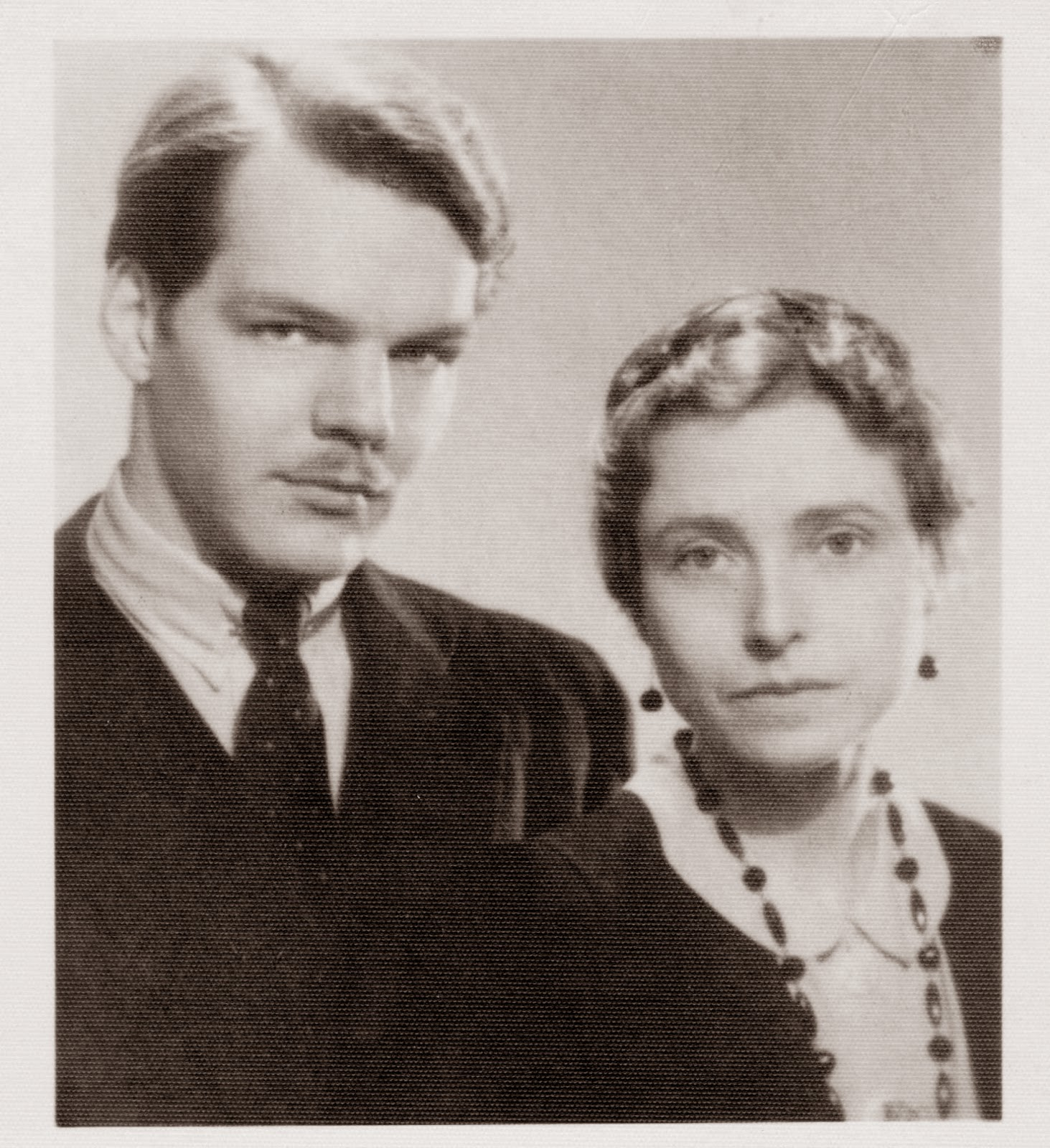
Elisabeth de Saventhem was born in Bremen in 1911 as the eldest of seven children, five daughters and two sons, to Walther Clemens, Reichsgraf von Plettenberg-Lenhausen and his wife, Carmen Guillermina.  Her spiritual formation was strongly influenced by an aunt, and her father's cousin was Blessèd Maria Droste zu Vischering of the Divine Heart, who had entered the Order of the Good Shepherd in Munster in 1885.


The economic crisis in Germany forced Elisabeth to give up her language studies (French and Russian) in Leipzig and she found work in an office in Berlin, quickly being promoted to senior secretary and purchasing manager (the company produced silk for parachutes).


The publication, in March 1937, of Pius XI's Encyclica Mit brennender Sorge saw the first public confrontations between the National-socialist regime and the Catholic Church.  Contrary to the concordat which had been signed four years before, the government forbade any distribution of the Pope's text.  Nevertheless it was copied and circulated by the Plettenberg family and Elisabeth's parents were arrested and imprisoned in Bremen, accused of "malicious gossip endangering the State".  Elisabeth, as eldest child, undertook successfully the defence of her parents before the minions of the Gestapo, so that they were released three weeks later.  The Gestapo in Berlin continued to keep an eye on this courageous daughter and shortly afterwards, following a series of anonymous letters accusing Elisabeth herself of spying, they tried to incriminate her - after more than 20 cross-examinations.  The efforts came to nothing of course, for the whole scandal had come from the unfounded, sickly jealousy of the wife of Elisabeth's employer.  The affair reached the highest levels of the Gestapo and came to a conclusion only in December 1938 with Elisabeth's brilliant rehabilitation by the regular courts.


During these years Elisabeth was much sought after in Berlin society.  She impressed those who met her not only by her beauty, her great intelligence, her natural charm and her "Catholic at its best" humour, but also because of her extraordinary ability to listen.  She understood especially how to recognise the problems lying deeper than the questions actually raised, and would then reply with great conceptual precision.  Behind this unusual ability lay a faith matured by interior struggles, paired with the fruit of superb religious teaching which Elisabeth had received at school from a gifted priest, Pastor Franz Moschner.  Later, at his request, she translated Moschner's most important book "Christliches Gebetsleben" into English.  The MS was published in 1962 as "Christian Prayer" by Herder Book Co in the USA.


Elisabeth's knowledge of doctrine and theology was so extensive and sound that her bishop authorised her to instruct and prepare converts for reception.  The time that she devoted to this instruction, and she had many pupils, was never less than a year.    She once remarked that although God had not blessed her with children of her own, she considered these converts to be her children.


The fact that Elisabeth  believed in God  as the "iustus iudex"  (the « just judge ») , to whom,  throughout her life, she would address the question of the meaning or unavoidability of suffering and death, lent to her own witness that convincing, many-layered depth which rendered silent every sceptic.


It was during the Berlin years that the momentous meeting with Isa Vermehren and her younger brother Eric took place, as they sought the Truth, which led to their conversions in 1938 and 1939 respectively.  Early in 1939 Elisabeth returned to Bremen to help look after her youngest brother and sister, and in March 1941 she became engaged to Eric Vermehren.  A few weeks later, Elisabeth's eldest brother was killed in Russia whilst carrying a badly-injured soldier from his company back to their trenches.  Elisabeth's parents persuaded the young couple not to wait until the year of mourning was over and so, in October 1941, they were married quietly in the presence of the closest family members, at Schloss Hovestadt, the Plettenberg family seat.


Because of a childhood injury, Eric was exempt from frontline service and served at first as a "Welfare Officer" in several camps for English and French prisoners of war.  In 1942 he was transferred to the Intelligence Service and sent to Istanbul as aide to the German military attaché there.  In this position he became aware, through freely available neutral reports, of the true extent of the dreadful deeds being done, especially in the occupied areas about which scarcely anything was known back in Germany.  This knowledge made him realise that, even as a subordinate,  his conscience would not allow him to serve the régime any longer.  During his first home leave in December 1943, Eric informed Elisabeth of his decision,  She was immediately ready to follow him into foreign exile.  In January 1944 they were "kidnapped" by the English Secret Services, in an action organised in the hope of protecting their families back in Germany.  English officers accompanied them via Izmir and Aleppo to Cairo and thence, via Gibraltar, to England.


The British Foreign Office had at that time adopted the Morgenthau-Plan.  Eric and Elisabeth tried, in many letters and interviews, to impress on the Foreign Office the advisability of allowing leading members of the inner German Opposition to help with the rebuilding of their ruined country, but to no avail.  They then asked that their status as "Guests of the Foreign Office" be annulled and they began to earn an independent living as assistant teachers in Worth Priory, a Benedictine preparatory school.  Elisabeth straightaway won the hearts of her pupils, despite, or perhaps precisely because of her original strictness in questions of discipline.   Among the anecdotes that she would relate of her time at Worth was that of finding one of her eight year old pupils crying bitterly one day.  She asked him the reason and he explained that it was because he liked her very much, so much in fact that he felt that she deserved to be English, and it was unfair that she was not.


For an "ex-enemy alien" it was well-nigh impossible to find a decent job in post-war England.  Eric founded a small export company  and Elisabeth helped in this effort despite her delicate health.  The early (unfortunately not long-lasting) success  of the company allowed them to leave Worth and move to the shadow of Brompton Oratory and a flat which was furnished with articles donated by friends.  Some five years passed before Eric found regular employment with a firm of Lloyds brokers.  He had by then adopted the surname Vermeeren de Saventhem, mainly for genealogical reasons.  In 1964 Eric became Director for Europe of the London firm.  The couple spent two years in Paris and in 1966 moved back to Switzerland, to settle in Clarens by Montreux.


From the moment that  Pope John XXIII's announced that he was con]vening a General Council of the Church,  all eyes were fixed upon that spectacular event - those of the de Saventhems with growing concern.  Elisabeth's religious life had always had its focus in Holy Mass which she attended daily with her husband.  In the accomplishment of the Sacrifice of the Mass she saw the definitive identity of the true Church of Christ and at the same time the reason for and the justification of the Catholic priesthood.  She knew - with all the Tradition of the Church - of the essential connexion between the Faith of the Church and its prayers:  as the Church prays, so it believes.  Thus it seemed to her presumptuous, nay dangerous, to question, even in Council, those forms of liturgy which have grown and proved themselves over the centuries.  The maintenance of the Mass as codified by St Pius V "with equal rights and equal honour" alongside any new forms became the main theme of her prayer, her thought and her actions, in close co-operation  with her husband, long-time President of the international Una Voce movement.


A first meeting with Monseigneur Lefebvre in Rome in 1962 sowed the seeds for over 25 years of cooperation, particularly vis-à-vis the Holy See.  This became intensified after the foundation of the Archbishop’s  International Seminary in Ecône, an hour's drive away from Clarens.  The Archbishop appreciated more than anything Elisabeth's ever acute sensus fidei et ecclesiae and her moral courage.  For over ten years the de Saventhems daily made the long drive from Clarens to Ecône to attend early Mass.  Later they were able to continue daily Mass attendance at a chapel in Lausanne and at the tiny Carmel of Marie Reine des Anges,  both served by priests from Ecône priests. The latter was situated on the slopes of the aptly-named Mont-Pèlerin just a short drive from home.


Elisabeth's life was filled with conscious and radiant gratitude towards the Church for the gift of faith.  It was however permanently overshadowed by a never-ending chain of physical suffering.  She accepted this with admirable discipline from her iron will which seemed to gain new strength at Mass each morning.


The end was not easy.  As the petals begin to curl inwards when a precious flower fades, so Elisabeth's mental elasticity, which had always been admired by all who met her, slowly diminished.  The interest was there, but ever more frequently the helpful replies did not  come.  Her physical frailty increased visibly, and for her  last journey from Switzerland to Bonn (the newly-chosen home, to be near the family again) a flying ambulance was necessary.  Elisabeth died a few weeks later in Cologne, in her sister's house, surrounded and comforted by the deep love of her husband and the devoted care of her sister and family. R.I.P.


Sunday, August 9, 2015

Blessed Paul VI and Novus Ordo in Latin

File:Macchi montini.jpg
A weak Paul VI a few weeks before his death


This week was the 37th anniversary of the death of Blessed Paul VI (6 August 1978). It is interesting to note the following account given by Fr. John Hardon S.J. concerning Paul VI and the Novus Ordo Missae

Pope Paul VI had become distressed by the abuses of the liturgy after Vatican II and was determined to have the Novus Ordo Mass said in Latin. Apparently he planned to issue some sort of direction to this effect. Cardinal Leo Joseph Suenens got wind of what the Pope wanted to do and orchestrated a world wide response of bishops. Cardinal Suenens chose a day and on that day a majority of the world’s bishops telegrammed the Vatican protesting the Pope’s hoped for Latin requirement with threats to disobey.

This shows just how powerful Cardinal Suenens had become in the 1970s. This was mainly due to two reasons. Pope John XXIII had appointed him to a new Coordinating Committee that reviewed all the preparatory material of the Second Vatican Council and essentially set the agenda for the entire Council. Pope Paul VI, who succeeded Pope John XXIII in June 1963, made Cardinal Suenens one of the four moderators of the Council who presided over it.

That Blessed Paul VI was surrounded by people who had their own agenda as far as the Mass is concerned can be seen in “The Destruction of the Traditional Roman Rite”, where former FIUV President Michael Davis writes:

“What the experts had been planning was made clear on 24 October 1967 in the Sistine Chapel, when what was described as the Missa Normativa was celebrated before the Synod of Bishops by Father Annibale Bugnini himself, its chief architect. ….. The Missa Normativa was imposed on Catholics of the Roman Rite in 1969 as the Novus Ordo Missae, with a few changes, the most important of which was the restoration of the Roman Canon on the explicit instructions of Pope Paul VI.

Although he celebrated Mass in Italian in public, it is a known secret that Blessed Paul VI celebrated the Novus Ordo Mass in Latin, in his private chapel, every day.

Thursday, January 10, 2013

A Historical Interview from the first FIUV President

Interview granted by Mgr. Lefebvre to
Dr. Eric M. de Saventhem,
President of the International Federation Una Voce

Dr. de Saventhem: Excellency, it is known that you were in Rome on the 10th and 11th January for further discussions with Cardinal Seper, Prefect of the Congregation for the Doctrine of the Faith. Was it at Pope John Paul’s request that the Cardinal received you?

Mgr. Lefebvre: There has been some misunderstanding on this matter. It is true that an investigation has been in progress since January, 1978, and that it was to be continued by talks in Rome. Meanwhile, during the audience, the Holy Father, Pope John Paul II, assigned to Cardinal Seper, as to a trusted friend, the question of Ecône. It does not seem that he had in mind a procedure already in progress, hence the misunderstanding.

Dr. de Saventhem: Have you been interrogated?

Mgr. Lefebvre: Yes, twice, for three-hour periods. Seventeen series of questions by five interrogators accompanied by a secretary; but I was refused permission to bring even one witness.

Dr. de Saventhem: Early in January, a large circulation American magazine stated that, during the audience of the 18th November last, the Holy Father confronted you with an ultimatum: either you submitted to the Pope, or else you left the Church. Since then numerous papers have repeated the, burden of that report, as if your excommunication was imminent.

Mgr. Lefebvre: That is pure invention. The object of the discussions, I suppose, was to clarify the position with a view to finding a solution.

http://www.realnews247.com/marcel_lefebvre.jpgDr. de Saventhem: Nevertheless, the report that the Pope might soon lift the canonical sanctions imposed on you has not been confirmed. In fact, one wonders how the a divinis suspension could be lifted unless you agreed to refrain forever from ordaining seminarians without dimissorial letters.

Mgr. Lefebvre: This problem arises from the canonical status of our confraternity. The ordinations branded by some as "wildcat" had become necessary from the moment when the Secretariat of State, in a circular letter to all Episcopal Conferences, forbade diocesan bishops to incardinate our seminarians: and to give them dimissorial letters. This prohibition is an encroachment without precedent on one of the oldest episcopal prerogatives. Without it we would always have found resident bishops willing to regularize the canonical status of our young men. In order to solve this problem, it would be sufficient for our Society to be recognized as coming directly under pontifical authority.

Dr. de Saventhem: Would not such an official recognition imply that you had previously answered Pope Paul's priority request to you to declare publicly your sincere adherence to the Second Ecumenical Council of the Vatican and to all its texts?

Mgr. LefebvreIn reply to that request I had already written the following to Pope Paul VI: "I accept everything that, in the Council and its reforms, is in full agreement with Tradition." I have never been told why this declaration was considered inadequate; After all, a Catholic can adhere to the texts of a Council only in the light of the continuing constant teaching of the Church. That is a fundamental principle of the Catholic Faith, and my very clear impression is that, under Pope John Paul II, we shall see it confirmed; as much in the interpretation as in the application of conciliar texts.

Dr. de Saventhem: Did you discuss this matter with the Holy Father during your audience?

Mgr. Lefebvre: I am thinking rather about what he declared publicly in his very first message to the world after the election. Referring to the conciliar Magna Carta – the Dogmatic Constitution on the Church – the Pope said that it must be read in "the light of tradition," and that we must "integrate into it the dogmatic formulations laid down by the First Vatican Council." Only thus would the text become for all, priests and faithful, "the secret of an unerring orientation." If I were asked to declare my adherence to the conciliar texts "read in the light of tradition and integrated with the dogmatic formulations previously laid down by the Magisterium of the Church," I would sign without hesitation.

Dr. de Saventhem: Have you, in fact, signed a text of this nature, either before the audience with the Holy Father, or during your discussions with Cardinal Seper?

Mgr. Lefebvre: I can say that, in the course of the audience, the Pope accepted that declaration regarding the Council, and that it will be signed with Cardinal Seper at some time.

Dr. de Saventhem: Excellency, your confraternity now runs not only seminaries; but a dozen priories and two convents. All these institutions continue their liturgical life notwithstanding the rule of conduct promulgated by Pope Paul VI. Moreover, they refuse to conform with the "new orientations" adopted almost everywhere else. Even if Rome were willing to allow you to perform "the experiment of tradition," is there not a risk that, at diocesan government level, very serious problems would arise?

http://media.tumblr.com/tumblr_lk598yBV7a1qaf7km.jpg

Mgr. Lefebvre: Let us begin with liturgical norms. They should, and could be made more flexible; that is the sole responsibility of the Holy See. With regard to the Mass, Pope Paul VI certainly never officially forbade the use of the Old Rite. Indeed, Mr. President, it was thanks to your wife that we have had oral confirmation of this from Cardinal Benelli himself.

* On the other hand, it is known that a good number of cardinals and bishops have expressed the desire to see the pre-conciliar rites re-admitted everywhere. Without doubt, there would be local problems, but there would also be the immense relief of numerous priests and faithful on recovering traditional rites and the devotion that accompanies them. Bishops would straightway experience the benefit to their dioceses. I dare to hope that the new Pope, in his pastoral solicitude, will not long delay this conciliatory gesture.                        

Dr. de Saventhem: There still remain the various post-conciliar "orientations" which Your Excellency has stigmatized as incompatible with the tradition and Magisterium of the Church and which your confraternity resolutely continues to oppose. Would you say that the claim that these orientations are derived from Vatican II is exaggerated?

Mgr. Lefebvre: It is true that in many fields – ecumenism: the institutions of the Church; liturgy; reform of seminaries and of religious life - the standards set by the Council have been left far behind. In their application, the new orientations have been used as a pretext for leaping into "creativity" and continuous evolution.

Dr. de Saventhem: There are nevertheless other new orientations manifestly favored by the Council. I am thinking especially of the so-called liturgical renewal.

Mgr. Lefebvre: I think I can state that all the novel orientations were favored by the spirit of the Council, as well as by the too often ambiguous written word. The liberal spirit of the Council, by its nature, leads to compromise with the spirit of man and of the modern world-which is in opposition to the Catholic spirit. That is especially the case in documents such as those on religious liberty; on the Church in the world and on non-Christian religions. Our fidelity to the Church prompts us to labor resolutely and patiently for a return to her great traditions. Our priories might be seen as beacons to mark our way on the long road ahead of us.

Dr. de Saventhem: Have you found, in your conversations with him, Cardinal Seper open to the ideas you have just expressed?

Mgr. Lefebvre: I value the Cardinal's sincerity very highly and I hope that he will seize the opportunity given to him by the Holy Father to manifest courageously the attachment which he certainly has for Tradition; but about which he has deemed it right, in obedience, to maintain silence during the last years. Millions of Catholics await with longing the application of religious freedom to the centuries-old tradition of the Church.

Dr. de Saventhem: In thanking you, Excellency, for this interview, I take the liberty, on behalf of those millions of Catholics, of assuring you and His Eminence Cardinal Seper of our most fervent prayers.

Originally published in Apologia pro Marcel Lefebvre, Vol. II (1983) by Michael Davies, who later became the second President of FIUV.

Sunday, December 2, 2012

The Tridentine Mass and Judaism

Many have associated traditional Catholics with anti-Semitism. It is however interesting to note that Catholics who have a certain affinity for the particularly Judaic character of their faith are more likely to be drawn to the Tridentine Mass than those for whom Judaism is a category on the other side of a boundary they would consider it bad manners to try to cross.

http://www.islamdenouncesantisemitism.com/images/bcg8.jpg
Symbols of Judaism
Of the criticisms that early Protestants made against Catholicism, the one that arguably cut deepest was that the Roman Catholic Church presumed to revive the Levitical priesthood, which the spilling of Christ's blood on Calvary now rendered obsolete. They attacked passionately the Holy Mass, which they saw as overtly Judaic in its tone, structure, and purpose.

The Protestants were indeed right that Mass, in its aspect as a sacrifice, could not be fully understood outside the framework of pre-rabbinic Judaism.

The post-Vatican II liturgical reform, that led to the Novus Ordo Missae, reformed the Mass to such an extent that the visible and audible distinctions between Mass and the worship services of the mainline Protestant churches were now greatly softened. For an in-depth analysis of the liturgical reform, one of the best authors is the late Michael Davies, former FIUV President, whose books can be found here.

File:Peter Paul Rubens 134.jpg
The Circumcision of Jesus by Rubens

Many Catholics and Protestants saw it as an appropriate ecumenical gesture. However it was a step away from 'Jerusalem', from the Temple and the daily sacrifice priests used to perform there. Another casualty was the most Jewish of feasts in the Catholic calendar, the Feast of the Circumcision, celebrated originally on 1 January (as is still the case in the Eastern Orthodox Church and according to the Tridentine Calendar) but nowadays amalgamated with and celebrated as the Feast of the Holy Name of Jesus on 3 January.

The Circumcision of Jesus is the event that, according to the Halakhah (Jewish law), males should be circumcised eight days after birth during a ceremony. During this ceremony they are also given their name.