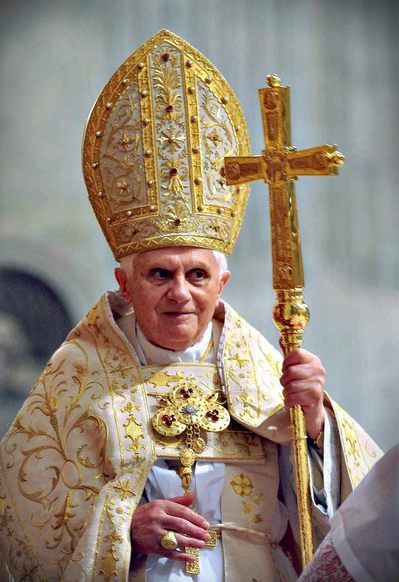
Showing posts with label Ratzinger. Show all posts

Friday, August 15, 2014

Il-pass li jmiss ...

https://fbexternal-a.akamaihd.net/safe_image.php?d=AQCx85Yu-xFmSjUI&url=http%3A%2F%2Fb.vimeocdn.com%2Fts%2F406%2F663%2F406663034_1280.jpg&jq=100
Ir-Rit Tridentin għandu futur f'Malta - iż-żerriegħa nibtet...
Għaddew ħafna xhur minn mindu Pro Tridentina (Malta) waqfet taħdem b'mod regolari. F'din il-fażi tranżitorja kien hemm min qata' qalbu u dabbar rasu 'l hemm. Hawn min huwa komdu kif inhu u ma jridx idardar l-għajn li jixrob minnha - hawn qed nirreferi għal min kuntent bil-pożizzjoni li għandu fil-Knisja (kemm lajċi kif ukoll saċerdoti). U hawn min ġenwinament jibża' minn xi riperkussjonijiet mill-awtoritajiet ekkleżjastiċi jekk imqar isemmi 'l-misħuta' Quddiesa bil-Latin. Aħjar tidgħi xi tnejn milli isemmiha ma' xi saċerdoti u isqfijiet.

Min qed jaħseb li mhawnx ċans li f'Malta jkun hawn Quddies bir-Rit Tridentin b'mod regolari iżda qed jgħarralu. Fil-kwiet il-ħidma baqgħet għaddejja u meta jkun il-waqt joħroġ il-frott. Iż-żerriegħa ssaqqiet sew.

Il-proċess ta' liberalizzazzjoni mibdi mill-Kardinal Ratzinger lura fl-1982, kien assolutament wieħed pastorali u prattiku. Minn hemm sar it-tqegħid għall-Quddiesa illum magħrufa bħala 'straordinarja' permezz ta' 'evoluzzjoni omoġenja'. U min jaf lil Ratzinger sew, kemm dawk li ħadmu miegħu fil-viċin (eż. l-Isqof Charles Scicluna) kif ukoll dawk li tagħhom qara r-rapporti dwar is-sitwazzjoni liturġika f'Malta, jafu kif jaħsibha. U jafu għalfejn kellu jsir xi tibdil fis-seminarju ta' Malta. Iżda mmorru lura għal meta kollox deher mitmum għall-Quddiesa Tridentina...

Iċ-ċirkulari Quattuor abhinc annos tat-3 t'Ottubru 1984: Il-Quddiesa tradizzjonali tista' tkun awtorizzata mill-Isqfijiet, iżda taħt ċerti regoli u mhux fil-knejjes parrokkjali;

Il-motu proprio Ecclesia Dei Adflicta tat-2 ta' Lulju, 1988: l-Isqfijiet huma mitluba li jagħtu permess biex iċ-ċelebrazzjoni tagħha (fit-teorija) tkun aktar wiesgħa u jkunu ġenerużi għat-talbiet fid-djoċesijiet rispettivi tagħhom;

L-erezzjoni tal-Fraternita' ta' San Jean-Marie Vianney f'Campos, il-Brażil f'Jannar 2002: għax il-Knisja rrikonoxxiet li l-Quddiesa Tridentina "tista' tkun l-uniku sors tal-ħajja Ewkaristika ta' komunità sħiħa";

Il-motu proprio Summorum Pontificum tas-7 ta' Lulju 2007: Id-deċiżjoni biex jiċċelebraw hija issa (fit-teorija) tal-kappillani għall-parroċċi tagħhom. Ġie ċċarat li l-Quddiesa Tridentina qatt ma ġiet abolita u ċelebrazzjoni tagħha hija dritt għas-saċerdoti kollha tal-rit Ruman mingħajr restrizzjonijiet.

Fi kliem il-Kardinal Cañizares Llovera - li miegħu l-Isqof Scicluna wkoll ħadem mill-qrib - l-iskop aħħari huwa li l-Quddiesa Straordinarja tiġi ċċelebrata fil-knejjes kollha.

Pro Tridentina (Malta) se tibqa' sswgwi u tfiehem kemm lil-lajċi u lill-awtoritajiet ekkleżjastiċi dwar l-importanza li l-Quddiesa Tridentina ssir parti ntegrali mill-ħajja liturġika f'Malta. Ejja ma jasalx dak iż-żmien fejn il-Knisja tistenbaħ meta jkun tard wisq u tiffaċċja xiżma minn xi Kattoliċi tradizzjonalisti li xebgħu minn din is-sitwazzjoni. Opportunitajiet għal liturġija reverenti jeżistu fi Knejjes oħra.  
 

Tuesday, October 9, 2012

The Church is in for a lot of welcome surprises


Like all Catholic faithful in Malta, Pro Tridentina (Malta) wishes all the best to Mgr Charles J. Scicluna, Auxiliary Bishop elect, in his new challenge in our Archdiocese. We trust that he will do an excellent job, like what he is doing in the Vatican.  

Soon after Cardinal Ratzinger's election as Pope Benedict XVI, Mgr Scicluna had said "The Church is in for a lot of welcome surprises". May similar welcome surprises happen in Malta.


Short biography (courtesy The Church in Malta)

Mgr Charles J. Scicluna was born of Emanuel and Maria Carmela née Falzon in Toronto, Canada, on 15 May 1959.  The Scicluna family moved to Qormi, Malta, in 1960 and to Lija, Malta, in 1976. Mgr Scicluna was educated at Saint Sebastian Primary School, Qormi, at the Saint Joseph Secondary Technical School, Paola, and at Saint Edward’s College, Cottonera.  He entered the Law Course at the University of Malta in 1976 and he graduated Doctor of Laws in 1984.  

After completing his Seminary studies and a Licentiate in Pastoral Theology at the Faculty of Theology, Tal-Virtù, he was ordained to the Roman Catholic priesthood by the Archbishop of Malta, Monsignor Joseph Mercieca, on 11 July 1986.  Monsignor Scicluna was sent to read Canon Law at the Pontifical Gregorian University in Rome and obtained the doctorate in Canon Law with specialization in Jurisprudence in 1991.  

After his Rome studies Mgr Scicluna worked on the Malta Metropolitan Tribunal as Defender of the Bond and was lecturer in Pastoral Theology and Canon Law at the University of Malta.  He served in the parishes of Attard, Saint Gregory’s Sliema and Iklin, Lija. He also served as Vice Rector at the Major Seminary between 1994 and 1995 when he was called to the Vatican to work on the Supreme Tribunal of the Apostolic Signatura as Substitute Promoter of Justice.  

In 1996 he was appointed Postulator for the cause of beatification and canonization of Dun Ġorġ Preca. In October 2002, Monsignor Scicluna was nominated Promoter of Justice at the Congregation for the Doctrine of the Faith detailed to investigate and prosecute the more grave crimes reserved to the exclusive competence of the Congregation. He  has also lectured widely on issues concerning child protection in the Church, visiting a number of local churches in Europe, Asia, Africa, the Americas, and Australia. Mgr Scicluna is a Visiting Lecturer in Penal Processes at the Pontifical Gregorian University (Rome) and helps with chaplaincy work at the Convent of the Nuns of Saint Bridget, Piazza Farnese, and at the Venerable English College in Rome.

Tuesday, January 31, 2012

Malta's next Cardinal

Fr. Prospero Grech OSA with Pope Benedict XVI (Photo by courtesy of the Order of Saint Augustine)

Before the Angelus Prayer offered on the Feast of the Epiphany, Pope Benedict XVI announced the creation of 22 new Cardinals. Among them was our own Fr Prospero Grech OSA, presently and for decades a member of the community of Collegio Santa Monica, Rome. Father Grech, age 86, a well-known and highly respected Scripture Scholar will become the second Maltese Cardinal.

Letter of the Augustinians' Prior General

Dear Brothers and Sisters:

It is with great joy that I send this communication, to share with you the news that the Holy Father, Pope Benedict XVI, announced today that our brother, Fr Prosper Grech, of the Province of Malta and long-time resident at the International College of St. Monica in Rome, has been chosen to become a Cardinal.

Today, January 6th, the Pope announced his decision to celebrate a Concistory on February 18th, with the intention of creating 22 new cardinals. Among the names of those chosen, is our brother Fr Grech. Fr Prosper, 86 years of age, entered the Order in Malta in 1943, and was ordained to the priesthood in 1950. He has served for many years in Rome, almost all of them as a member of the community at St. Monica’s. He is a well known professor of Sacred Scripture, and has been a professor at various universities in Rome, especially the Biblicum, but also the Lateran and Gregorian Universities. He is the co-founder and first President of our Patristic Institute, the Augustinianum. He has also collaborated with numerous dicasteries of the Holy See, especially the Congregation for the Doctrine of the Faith.

In his proclamation made today, the Holy Father announced with great joy the Concistory for creating new Cardinals, among whom he has chosen outstanding churchmen who are especially distinguished for their service to the Church. Our brother Fr Prosper Grech was one of those chosen.

For this we are deeply grateful to God and to our Holy Father Pope Benedict. We express our congratulations to Fr Grech and we rejoice in this recognition of his many years of service, especially in his dedication to the study and teaching of the Word of God.

Fr Robert F. Prevost OSA
Prior General

Episcopal Ordination

Fr Grech will be ordained bishop in the Co-Cathedral of Saint John, Valletta, Malta, on Wednesday, 8 February, 2012. His episcopal coat of arms is diagonally divided into two equal parts with the Maltese cross on a red background on one side and the coat of arms of the Order of St Augustine on a dark blue background on the other. The motto chosen is In te Domine speravi.

Concistory

The Concistory during which the future Fr Prospero will become Cardinal is to be held on the morning of Saturday, 18 February, in Saint Peter's Basilica. The following day the new Cardinals will concelebrate Mass with the Holy Father also in Saint Peter's.

Highlights from his Biography

Born 1925 in Birgu, Malta, Grech studied at the Lyceum and served as gunner of the University Home Guard during the Second World War.

Grech joined the Augustinian Order in 1943 and seven years later was ordained at San Giovanni Laterano in Rome. After graduating Doctor of Theology from the Gregorian University, Rome (1953), Grech conducted research in Semitic languages at Oxford (1957-58) and Cambridge (1958-59) Universities.

Fr Prospero Grech served as professor at the Augustine Institute, Rome and founded the Istituto Patristico Augostinianum, Rome in 1970. He is a member of the Societas Studiorum Novi Testamenti (SNTS) and member of the Pontifical Biblical Commission. He has lectured for over thirty years at the Pontifical Biblical Institute in Rome on hermeneutics.

Fr Grech was professor of Biblical Theology at the Lateran University, Rome, Counsellor to the Sacred Congregation for the Doctrine of Faith and Secretary of the Maltese Augustinian province. He was also nominated Apostolic Visitor for seminaries in India.

Fr Grech and the Popes

During the time of the conclave that elected Paul VI in 1963, just two hours before the Pope was elected, Cardinal Montini asked Fr Grech to hear his confession.

Fr Grech was a great personal friend of Cardinal Albino Luciani when the latter was still Patriarch of Venice. The cardinal used to take up residence at the Augustinian College in Rome whenever he was in the capital to attend meetings of the Italian Bishops’ Conference. Fr Grech used to celebrate Mass and have lunch together with Cardinal Luciani.

The very first letter Pope John Paul I wrote soon after he was elected in August 1978 was one of thanks to Fr Grech for the hospitality and friendship he had always received at St Monica’s Augustinian College.

Pope John Paul II occasionally invited Cardinal Ratzinger, who was then Secretary of the Congregation of the Faith, to lunch. Fr Grech would also be invited.

Political 'involvement'

Fr Grech was also involved in negotiations between the Malta Labour Party (MLP) and the Vatican when attempts were made to solve Malta’s politico-religious dispute of the 1960s. Dom Mintoff, then Labour leader, wanted to start discussions with the Vatican about pending issues and asked Fr Grech to intervene so that negotiations could start.

Fr Grech accepted the invitation and immediately informed the Vatican’s Secretariat of State about this request. He was asked to tell Mr Mintoff to put down in writing what the MLP leader was proposing. Subsequently Fr Grech met Mr Mintoff and returned to the Vatican with the proposals.

After examining them, the Secretariat of State told Fr Grech that the proposals could be a basis for discussion. He was then instructed to inform Malta's Archbishop Michael Gonzi what had happened so that negotiations could start. However, when Fr Grech informed the Archbishop in writing and explained what had happened, Gonzi was furious.

Mr Mintoff was no less infuriated when he learned of the Maltese bishops’ reactions to his plans which had been made public. Both the Archbishop and Mr Mintoff were less than grateful to Fr Grech. According to reliable sources Fr Grech’s involvement in the whole matter could have cost the prominent Biblical scholar his chance to be nominated auxiliary bishop of Malta.

On 13 December 2011, Fr Grech received the honour of Companion of the National Order of Merit by President George Abela, in the name of the government and people of Malta. This honour and especially his nomination to the College of Cardinals more than make up for the unfair treatment he received decades ago.


Thursday, February 10, 2011

Un motu proprio per il culto divino


di Andrea Tornielli


Sarà pubblicato nelle prossime settimane un documento di Benedetto XVI che riorganizza le competenze della Congregazione del culto divino affidandole il compito di promuovere una liturgia più fedele alle intenzioni originarie del Concilio Vaticano II, con meno spazi per i cambiamenti arbitrari e per il recupero di una dimensione di maggiore sacralità.


Il documento, che avrà la forma di un motu proprio, è frutto di una lunga gestazione – lo hanno rivisto dal Pontificio consiglio per l’interpretazione dei testi legislativi e gli uffici della Segreteria di Stato – ed è motivato principalmente dal trasferimento della competenza sulle cause matrimoniali alla Rota Romana. Si tratta delle cause cosiddette del «rato ma non consumato», cioè riguardanti il matrimonio avvenuto in chiesa ma non compiutosi per la mancata unione carnale dei due sposi. Sono circa cinquecento casi all’anno, e interessano soprattutto alcuni Paesi asiatici dove ancora esistono i matrimoni combinati con ragazzine in età molto giovane, ma anche i Paesi occidentali per quei casi di impotenza psicologica a compiere l’atto coniugale.

Perdendo questa sezione, che passerà alla Rota, la Congregazione del culto divino di fatto non si occuperà più dei sacramenti e manterrà soltanto la competenza in materia liturgica. Secondo alcune autorevoli indiscrezioni un passaggio del motu proprio di Benedetto XVI potrebbe citare esplicitamente quel «nuovo movimento liturgico» del quale ha parlato in tempi recenti il cardinale Antonio Cañizares Llovera, intervenendo durante il concistoro dello scorso novembre.

Al Giornale, in un’intervista pubblicata alla vigilia dell’ultimo Natale, Cañizares aveva detto: «La riforma liturgica è stata realizzata con molta fretta. C’erano ottime intenzioni e il desiderio di applicare il Vaticano II. Ma c’è stata precipitazione… Il rinnovamento liturgico è stato visto come una ricerca di laboratorio, frutto dell’immaginazione e della creatività, la parola magica di allora».


Il cardinale, che non si era sbilanciato nel parlare di «riforma della riforma», aveva aggiunto: «Quello che vedo assolutamente necessario e urgente, secondo ciò che desidera il Papa, è dar vita a un nuovo, chiaro e vigoroso movimento liturgico in tutta la Chiesa», per porre fine a «deformazioni arbitrarie» e al processo di «secolarizzazione che purtroppo colpisce pure all’interno della Chiesa».

È noto come Ratzinger abbia voluto introdurre nelle liturgie papali gesti significativi ed esemplari: la croce al centro dell’altare, la comunione in ginocchio, il canto gregoriano, lo spazio per il silenzio. Si sa quanto tenga alla bellezza nell’arte sacra e quando consideri importante promuovere l’adorazione eucaristica. La Congregazione del culto divino – che qualcuno vorrebbe anche ribattezzare della sacra liturgia o della divina liturgia – si dovrà quindi occupare di questo nuovo movimento liturgico, anche con l’inaugurazione di una nuova sezione del dicastero dedicata all’arte e alla musica sacra.

Monday, July 19, 2010

Letter of Cardinal Ratzinger to a renowned German Theologian in 2004

(Translated from the German language by George Mueller, Ph. D.)

On June 23, 2004, Cardinal Ratzinger wrote a letter in German to Herr Doctor Heinz-Lothar Barth, a reputed theological author and professor at the University of Bonn. This letter was in response to a letter Dr. Barth wrote to the Cardinal regarding the Traditional Latin Mass.

Very honored Doctor Barth!

Heartfelt thanks for your letter of April 6th, the response to which I only now find the time to make. You ask that I involve myself in the wider authorization of the old Roman Rite. You yourself already know that for my part, such a request does not fall on deaf ears; indeed, my involvement in this wish has, as it happens, become generally known.

However, whether the Holy See “will once again worldwide and without limit authorize” the old rite as you wish it and have heard through rumor may happen, cannot be simply said or entirely confirmed. One must always reckon with the fact that too many Catholics have been inoculated for years with an aversion to the traditional liturgy, which they disdainfully call “pre-conciliar” and likewise with considerable opposition on the part of many bishops against a general reauthorization [of the old rite].

The situation is different if one considers a limited re-authorization: indeed the demand for the old liturgy is also limited. I know that its value does not depend on demand, but the question about the number of interested priests and laity plays, nevertheless, a sure role in this [re-authorization]. Moreover, such a measure can be translated into action only step by step today, now a good thirty years after the introduction of the liturgy reform of Pope Paul VI: to act hastily would not be for the good.

I believe, however, that in the long run the Roman Church must again have a single Roman rite: the existence of two official rites in practice is for the bishops and priests quite hard to “manage.” The Roman rite of the future ought to be a single rite, celebrated in Latin or in the language of the country, but completely based on the tradition of the [old] handed-down rite; it could take in some new elements that have proven themselves, such as new feasts, some new prefaces in the Mass, a wider order of readings – more choices than before, but not too many – an “Oratio fidelium,” i.e., a fixed litany of prayers after the Oremus before the Offertory, where it earlier had its place.

If you, honored Doctor Barth, involve yourself in this manner in your request for the Liturgy, you will assuredly not stand alone, and you will prepare “public opinion in the Church” for eventual measures in favor of an expanded use of the earlier liturgical books. However, one ought to be cautious in awakening all too high, maximum expectations in the tradition-bound faithful.

I take the opportunity to thank you for your treasured involvement with regard to the liturgy of the Roman Church in your books and lectures, even though here and there I should wish for more love and understanding for the teaching authority of the Pope and bishops.

May the seed that you sow, grow up, and bear fruit for the renewed life of the Church, whose “source and summit,” indeed whose true heart is and must remain the liturgy.

Gladly do I bestow on you the blessing you ask and I remain with heartfelt greetings,

Yours,


Joseph Cardinal Ratzinger


Kumment: dan id-dokument mill-Kardinal Ratzinger jghinna nifhmu aktar il-hsieb ta' Papa Benedittu XVI fuq il-Liturgija.

Friday, July 2, 2010

Il parroco che ha abolito il Concilio

https://c2.staticflickr.com/6/5010/5265014078_af9f683003.jpgIl parroco che ha abolito il Concilio
Un sacerdote del casertano ripristina la vecchia Messa in latino.
Il vescovo gli chiede di andarsene.
Ratzinger gli scrive: «Ti capisco»


Articolo tratto da Il Giornale, 17 gennaio 2001, p. 19


La porta si apre su quella che ha tutta l’aria di essere una legnaia, un deposito oppure una vecchia cantina. E invece è la casa, anzi la canonica della chiesa parrocchiale di Fontanaradina, frazione di Sessa Aurunca, 170 abitanti e un pugno di vecchie abitazioni abbarbicate sui monti del casertano.

Don Louis Demornex, il parroco, è un gigante buono con la barba bianca e la talare nera, che porta i sandali anche d’inverno. Sessant’anni, figlio di montanari francesi, vive qui dal 1970, anno della sua ordinazione sacerdotale. Ha in cura d’anime anche le parrocchie di altre due frazioni, Corigliano e Aulpi, e si muove su e giù per la montagna alla guida di una Peugeot scassata le cui lamiere sembrano rimanere assemblate solo in virtù dello sguardo miracoloso della Madonnina di gesso piazzata sul cruscotto. «Quando sono entrato in questa casa - dice - il tetto era sfondato e mancavano le finestre. La chiamavo la mia Betlemme. Poi, grazie all’aiuto dei ragazzi della parrocchia, abbiamo fatto l’impianto elettrico e portato l’acqua corrente. Adesso la chiamo la mia Nazareth…».

Questo prete che vive davvero in povertà («non ho nulla, l’unica mia ricchezza è dentro al Tabernacolo»), dal 1° febbraio 2000, di punto in bianco, ha iniziato a celebrare le Messe domenicali nelle sue tre parrocchie secondo l’antico rito tridentino rimasto in vigore fino al Concilio Vaticano II. Messale di San Pio V, preghiere rigorosamente in latino, spalle ai fedeli, canti gregoriani. Padre Louis ha scritto tre lettere ai suoi fedeli, per chiarire la sua decisione. Ha spiegato che all’origine c’è la mancanza di rispetto verso l’Eucarestia che caratterizza, a suo dire, il nuovo rito: «Oggi i frammenti consacrati vengono profanati, le briciole cadono per terra e sono calpestate. E poi il sacerdote non si purifica più le mani, oppure se le lava, ma butta l’acqua… Tutto ciò fa pensare a una donna che butta il suo concepimento nelle immondizie. Chi fa così, o non crede più che ogni frammento sia Gesù Cristo intero, ed è quindi eretico. Oppure ci crede, e allora è sacrilego».

Don Demornex ha preso la sua clamorosa decisione anche per una questione «caratteriale»: «Non ce la faccio a dire Messa rivolto al popolo - dice - mi distraggo, non riesco a mantenere il raccoglimento. E poi il rito tridentino non è stato mai abolito: Giovanni Paolo II ha concesso un indulto, permettendolo. Nei giorni feriali, quando i fedeli si contano sulle dita di una mano, io lo usavo già da tempo. Ora ho cominciato a celebrare così anche la domenica».

Per tre mesi non accade nulla. Anche se nelle chiese di Fontanaradina, Corigliano e Aulpi l’orologio sembra essere tornato indietro di trent’anni, la frequenza alla Messa domenicale rimane alta. Qualche parrocchiano protesta, qualche altro va a Messa altrove. Alcuni, però, cominciano ad arrivare dai comuni limitrofi. Poi, lo scorso 6 maggio, un sabato, il vescovo di Sessa Aurunca, Antonio Napolitano, interviene. Com’era prevedibile. Fa scendere il corpulento sacerdote dalla montagna per consegnargli una lettera, nella quale lo accusa di svolgere la sua azione pastorale in «modo arretrato e arcaico». «Ho saputo - scrive il vescovo - che lei si discosta palesemente dalle disposizioni liturgiche vigenti» e celebra «l’Eucarestia voltando le spalle al popolo di Dio, contravvenendo alla Costituzione apostolica di Paolo VI con la quale si promulga il messale riformato a norma del Concilio». Conclusione: «La invito a rivedere il suo comportamento e magari anche l’inserimento nella diocesi di Sessa Aurunca… Altrimenti è libero di scegliere altre diocesi che meglio soddisfino le sue idee». Un chiaro invito a cambiare strada, oppure a fare le valigie. Nonostante la carenza di preti, la disciplina è disciplina.

Poche ore dopo averla ricevuta, don Demornex legge la lettera a tutti i suoi parrocchiani, durante le tre Messe celebrate domenica 7 maggio. «Vi chiedo scusa se vi ho scandalizzato - dice dal pulpito - se vi ho traviati, se sono stato un cattivo parroco. Me ne devo andare». La reazione dei fedeli è inaspettata e sorprendente: pianti, abbracci, suppliche di ritornare sulla decisione. I giovani, appena usciti dalla chiesa, saltano in macchina e iniziano una raccolta di firme in favore del parroco. In appena due ore ne trovano ben 400 (Corigliano fa 600 abitanti), mentre a Sessa Aurunca firmano in 800. «Prima che arrivasse don Louis - si legge nella lettera scritta a mano dai parrocchiani - c’era poca gente che andava a Messa, pochi frequentavano i sacramenti. Ora la partecipazione è massiccia, c’è un grande lavoro di catechesi, è stata ripristinata l’Azione cattolica, l’adorazione delle quarant’ore, le novene per i santi, tante devozioni considerate da molti dei passatempi per vecchiette che invece sono di aiuto al cammino di fede».

Nonostante l’affetto dei fedeli, l’«antiquato» padre Demornex è deciso a lasciare le sue tre parrocchie. Le manifestazioni del popolo lo sorprendono, ma non gli fanno cambiare idea: «Io ho sempre cercato di fare la volontà di Dio, non quella della gente. E il Vangelo insegna: la folla che oggi ti acclama con le palme domani può gridare “crocifiggilo”». Se ne va a Napoli, in casa di amici, e scrive il suo congedo al vescovo: «Ho commesso l’errore imperdonabile di farmi amare e stimare per motivi pre-conciliari». Ma i fedeli insistono, organizzano proteste davanti alla curia di Sessa Aurunca, chiedono udienza al vescovo. Monsignor Napolitano dice loro: «Io non l’ho mandato via». Così, dopo appena otto giorni di «esilio» e tante suppliche dei parrocchiani, il sacerdote ritorna. E continua, da allora, a celebrare indisturbato la Messa tridentina. «Ho educato i giovani a seguirla e lo fanno volentieri - spiega don Louis -. Per me l’importante non è il rito antico, ma il suo contenuto. Con la Messa di San Pio V era la Chiesa che celebrava in te. La nuova Messa, invece, non è mai esistita, perché ognuno la celebra a modo suo, con creatività, introducendo variazioni».

Negli occhi chiari del gigante con la tonaca c’è una grande serenità, nonostante la polmonite che lo affligge. Si commuove mentre fa il cicerone nella piccola chiesa, mostrando le reliquie di Santa Teresina del Bambin Gesù e di San Pio X che ornano l’altare. Ha lo sguardo di un bambino a cui hanno appena regalato tutti i giocattoli del mondo. «Da quando ho ricominciato a dire la vecchia Messa sono ringiovanito. Ora sono in attesa delle decisioni del mio vescovo. In marzo ci sarà la visita pastorale, poi vedremo. Forse dovrò lasciare la parrocchia… Ma, per favore, non dica che sono un seguace di monsignor Lefébvre, perché non è vero. Io non appartengo a un partito. Sono e voglio essere, per grazia di Dio, soltanto un cattolico».

Tra le carte che don Louis ha appoggiato sul tavolo della piccola cucina dai muri scrostati, c’è una missiva di solidarietà che arriva dal Vaticano. È del cardinale Joseph Ratzinger, il Prefetto della Congregazione per la Dottrina della Fede, che nella sua autobiografia (La mia vita, San Paolo editore, 1997) afferma: «Sono convinto che la crisi ecclesiale in cui oggi ci troviamo dipende in gran parte dal crollo della liturgia… La riforma liturgica ha prodotto danni estremamente gravi per la fede». Il parroco, che ora è seduto davanti a un piatto fumante di minestra di lenticchie appena scodellata per l’ospite e per sé, non vuol parlare di questa lettera. Poi, dopo aver resistito a lungo all’insistenza del cronista, ammette: «Sì, ho scritto al cardinale per raccontargli la mia storia e i motivi che mi hanno spinto a celebrare col vecchio messale. E lui mi ha risposto».

Il 15 luglio 2000, il principe della Chiesa custode dell’ortodossia cattolica ha risposto proprio a lui, al prete con i sandali che vive nella fredda e spoglia «Nazareth» di Fontanaradina. «La sua lettera mi ha colpito e mi ha commosso - si legge nella risposta di Ratzinger a don Demornex - Quello che lei dice sulla laicizzazione dei preti, sull’anarchia liturgica e sulle molteplici profanazioni dell’Eucarestia è purtroppo vero. Lei ha confidato il suo profondo disagio al vescovo: egli non l’ha compresa e l’ha invitata a lasciare la parrocchia. Dal punto di vista formale e giuridico, è un suo diritto». «Lei sa bene - conclude il cardinale - che io non posso consigliarla di ribellarsi… Stia sicuro che il Signore non ci impone mai il peso di una croce senza aiutarci a portarla. Io le prometto di portare il suo dolore nella mia preghiera davanti al Signore». Don Louis Demornex ha scoperto di avere un amico anche a Roma.

Andrea Tornielli

Godwin Xuereb, President, Pro Tridentina (Malta)'s comment: an old but still relevant article. This situation is still prevalent in many dioceses, notwithstanding that the motu proprio Summorum Pontificum was enacted nearly 3 years ago.

Sunday, March 7, 2010

Note storico-liturgiche sul rito dell'Eucaristia


http://upload.wikimedia.org/wikipedia/commons/thumb/a/ad/Athanasius_schneider_20091210.jpg/220px-Athanasius_schneider_20091210.jpg

Note storico-liturgiche sul rito dell'Eucaristia
"Come il lattante in braccio a chi lo nutre"


di Mons. Athanasius Schneider, Vescovo ausiliare di Karaganda, Kazachistan. 
L'articolo è stato pubblicato dall'Osservatore Romano il 9 gennaio 2008.

Giovanni Paolo II nella sua ultima enciclica, Ecclesia de Eucaristia, ha lasciato alla Chiesa un'ammonizione ardente che suona come un vero testamento: "Dobbiamo badare con ogni premura a non attenuare alcuna dimensione o esigenza dell'Eucaristia. Così ci dimostriamo veramente consapevoli della grandezza di questo dono (...) non c'è pericolo di esagerare nella cura di questo Mistero!" (n. 61). La consapevolezza della grandezza del mistero eucaristico si mostra in modo particolare nella maniera con cui è distribuito e ricevuto il Corpo del Signore.

 Consapevole della grandezza del momento della sacra Comunione, la Chiesa nella sua bimillenaria tradizione ha cercato di trovare un'espressione rituale che potesse testimoniare nel modo più perfetto possibile la sua fede, il suo amore e il suo rispetto. Questo si è verificato, quando nella scia d'uno sviluppo organico, a partire almeno dal sesto secolo, la Chiesa cominciò ad adottare la modalità di distribuire le sacre specie eucaristiche direttamente in bocca. Così testimoniano: la biografia di Papa Gregorio Magno e un'indicazione dello stesso Gregorio relativa a Papa Agapito (Dialoghi, III).

Il sinodo di Cordoba dell'anno 839 condannò la setta dei cosiddetti "casiani" a causa del loro rifiuto di ricevere la sacra Comunione direttamente in bocca. Poi il sinodo di Rouen nell'anno 878 ribadì la norma vigente della distribuzione del Corpo del Signore sulla lingua, minacciando i ministri sacri della sospensione dal loro ufficio, se avessero distribuito ai laici la sacra Comunione sulla mano.

In Occidente, il gesto di prostrarsi e inginocchiarsi prima di ricevere il corpo del Signore si osserva negli ambienti monastici già a partire dal sesto secolo, per esempio nei monasteri di san Colombano. Più tardi - nel decimo e nell'undicesimo secolo - questo gesto si è diffuso maggiormente. Alla fine dell'età patristica la prassi di ricevere la sacra Comunione direttamente in bocca diventa quindi una prassi ormai diffusa e quasi universale.

Questo sviluppo organico si può considerare come un frutto della spiritualità e della devozione eucaristica del tempo dei Padri della Chiesa.. Già nel primo millennio, a causa del carattere altamente sacro del Pane eucaristico, la Chiesa sia in Occidente si in Oriente in un ammirevole consenso e quasi istintivamente ha percepito l'urgenza di distribuire la sacra Comunione ai laici solamente in bocca. Il liturgista Josef Andreas Jungmann spiegava che, a causa della distribuzione della Comunione direttamente in bocca, si eliminarono varie preoccupazioni: quella che i fedeli debbano avere pulite le mani, la preoccupazione ancora più grave che nessun frammento del Pane consacrato si perda, la necessità di purificare la palma della mano dopo la ricezione del sacramento. La tovaglia e, più tardi, il piattino per la Comunione saranno l'espressione di accresciuta attenzione riguardo al sacramento eucaristico.

Papa Giovanni Paolo II così insegna nell'Ecclesia de Eucaristia: "Sull'onda di questo elevato senso del mistero si comprende come la fede della Chiesa nel mistero eucaristico si sia espressa nella storia non solo attraverso l'istanza di un interiore atteggiamento di devozione, ma anche attraverso una serie di espressioni esterne" (n.49). L'atteggiamento più consono a questo dono è l'atteggiamento della ricettività, l'atteggiamento dell'umiltà del centurione, l'atteggiamento di lasciarsi nutrire, appunto l'atteggiamento del bambino. La parola di Cristo, che ci invita ad accogliere il Regno di Dio come un bambino (Cfr. Luca 18,17), può trovare la sua illustrazione in modo assai suggestivo e bello anche nel gesto di ricevere il Pane eucaristico direttamente in bocca ed in ginocchio. Giovanni Paolo II metteva in evidenza la necessità di espressioni esterne di rispetto verso il pane eucaristico: "Se la logica del ‘convito' ispira familiarità, la Chiesa non ha mai ceduto alla tentazione di banalizzare questa ‘dimestichezza' col suo Sposo dimenticando che Egli è anche il suo Signore (...) Il convito eucaristico è davvero convito ‘sacro', in cui la semplicità dei segni nasconde l'abisso della santità di Dio. Il pane che è spezzato sui nostri altari (...) è pane degli angeli, al quale non ci si può accostare che con l'umiltà del centurione del Vangelo" (n.48).

L'atteggiamento del bambino è il più vero e profondo atteggiamento di un cristiano davanti al suo Salvatore, che lo nutre con il suo corpo e il suo sangue, secondo le seguenti commoventi espressioni di Clemente di Alessandria: "Il Lògos è tutto per il bambino: padre, madre, pedagogo, nutritore. ‘Mangiate, dice Lui, la Mia carne e bevete il Mio sangue!' (...) O incredibile mistero!". (Pedagogus, I, 42,3).

Un'altra considerazione biblica è fornita dal racconto della vocazione del profeta Ezechiele. Egli ricevette simbolicamente la parola di Dio direttamente in bocca: "Apri la bocca e mangia ciò che io ti do". Io guardai ed ecco, una mano tesa verso di me teneva un rotolo (...) Io aprii la bocca ed egli mi fece mangiare quel rotolo. Io lo mangiai e fu per la mia bocca dolce come il miele" (Ezechiele, 2, 8-9; 3, 2-3). Nella sacra Comunione riceviamo la Parola, fatta carne, fatta cibo per noi piccoli, per noi bambini. Quindi, quando ci accostiamo alla sacra Comunione, possiamo ricordarci di quel gesto del profeta Ezechiele. Cristo ci nutre veramente con il Suo corpo e sangue nella sacra Comunione e ciò è paragonato nell'età patristica all'allattamento materno, come mostrano queste parole di san Giovanni Crisostomo nelle sue omelie sul Vangelo di Giovanni: "Con questo mistero eucaristico Cristo si unisce ad ogni fedele, e quelli che ha generato li nutre da sé e non li affida ad un altro. Non vedete con quanto slancio i neonati accostano le loro labbra al petto della madre? Ebbene, anche noi accostiamoci con tale ardore a questa sacra mensa e al petto di questa bevanda spirituale; anzi, con un ardore maggiore di quello dei lattanti!" (82,5).

Il gesto più tipico dell'adorazione è quello biblico dell'inginocchiarsi, come lo hanno recepito e praticato i primi cristiani. Per Tertulliano, che visse tra il secondo e il terzo secolo, la più alta forma dell'orazione è l'atto dell'adorazione di Dio, che si deve manifestare anche nel gesto della genuflessione: "Pregano tutti gli angeli, prega ogni creatura, pregano il bestiame e le belve e piegano le ginocchia" (De Oratione, 29). Sant'Agostino avvertiva che noi pecchiamo, se non adoriamo il Corpo eucaristico del Signore, quando lo riceviamo: "Nessuno mangi quella carne, se prima non l'ha adorata. Pecchiamo se non l'adoriamo" (Enarrationes in Psalmos, 98, 9).

In un antico Ordo communionis della tradizione liturgica della Chiesa copta fu stabilito: "Tutti si prostrino a terra, piccoli e grandi e così cominci la distribuzione della Comunione".

Secondo le Catechesi mistagogiche, attribuite a san Cirillo di Gerusalemme, il fedele deve ricevere la Comunione con un gesto di adorazione e venerazione: "Non stendere le mani, ma in un gesto di adorazione e venerazione accostati al calice del sangue di Cristo" (5,22).

San Giovanni Crisostomo nelle omelie sulla lettera ai Corinzi esorta coloro che si accostano al corpo eucaristico del Signore a imitare i Magi dell'Oriente nello spirito e nel gesto dell'adorazione: "Accostiamoci dunque a Lui con fervore e con ardente carità. Questo corpo, benché si trovasse in una mangiatoia, lo adorano gli stessi Magi. Ora, quegli uomini, senza conoscenza della religione ed essendo barbari, adorano il Signore con grande timore e tremore. Ebbene, noi che siamo cittadini dei cieli, cerchiamo almeno di imitare questi barbari! Tu, a differenza dei Magi, non vedi semplicemente questo corpo, ma ne hai conosciuto tutta la sua forza e tutta la sua potenza salvifica. Sproniamo dunque noi stessi, tremiamo e mostriamo una pietà maggiore di quella dei Magi" (24,5).

Sullo stretto legame tra l'adorazione e la sacra Comunione Papa Benedetto XVI nell'esortazione apostolica post-sinodale Sacramentum caritatis ha scritto: "Ricevere l'Eucaristia significa porsi in atteggiamento di adorazione verso Colui che riceviamo" (n.66). Già da cardinale, Ratzinger sottolineava questo aspetto: "Cibarsene [dell'Eucaristia] (...) è un evento spirituale, che investe tutta la realtà umana. ‘Cibarsi' di essa significa adorarla. Per questo l'adorazione (...) neppure si pone accanto alla Comunione: la Comunione raggiunge la sua profondità solo quando è sostenuta e compresa dall'adorazione (Introduzione allo spirito della liturgia, Cinisello Balsamo, San Paolo, 2001, p.86).

Nel libro dell'Apocalisse, il libro della liturgia celeste, il gesto della prostrazione dei ventiquattro anziani davanti all'Agnello può essere il modello e il criterio di come la Chiesa in terra debba trattare l'Agnello di Dio quando i fedeli si avvicinano a lui nel sacramento dell'Eucaristia.

I Padri della Chiesa mostrarono una viva preoccupazione affinché non si perda nemmeno un minimo frammento del Pane eucaristico, come esortava san Cirillo di Gerusalemme in maniera suggestiva: "Sii vigilante affinché tu non perda niente del corpo del Signore. Se tu lasciassi cadere qualcosa, devi considerarlo come se tu avessi tagliato uno dei membri del tuo proprio corpo. Dimmi, ti prego, se qualcuno ti desse granelli d'oro, tu per caso non li terresti con la massima cautela e diligenza, intento a non perdere niente? Non dovresti tu curare con cautela e vigilanza ancora maggiore, affinché niente e nemmeno una briciola del corpo del Signore possa cadere a terra, perché è di gran lunga più prezioso dell'oro e delle gemme?" (Catechesi mistagogiche, 5,21).

Già Tertulliano testimoniava l'angoscia e il dolore della Chiesa perché non si perda nessun frammento: "Soffriamo angoscia perché nulla dal calice o del pane cada a terra" (De Corona, 3).

Sant'Efrem - quarto secolo - così insegnava: "Gesù ha riempito il pane di se stesso e di Spirito e lo ha chiamato il Suo corpo vivo. Ciò che adesso vi ho dato, diceva Gesù, non lo considerate pane, nemmeno calpestate i suoi frammenti. Il minimo frammento di questo pane può santificare milioni di uomini e basta per dare la vita a tutti quelli che lo mangiano" (Sermones in hebdomada sancta, 4,4).

Nella tradizione liturgica della Chiesa copta si trova la seguente avvertenza: "Non c'è nessuna differenza tra le parti maggiori o minori dell'Eucaristia, persino quelle minime che non si possono percepire con l'acutezza della vista; esse meritano la stessa venerazione e possiedono la stessa dignità come il pane intero" (Heinrich Denzinger, Ritus Orientalium, Wurzuburg, 1863, I, p.405).

In alcune liturgie orientali il Pane consacrato è designato con il nome "perla". Così nelle Collectiones canonum Copticae si dice: "Dio non voglia! Che nulla delle perle o dei frammenti consacrati aderisca alle dita o cada a terra!". L'estrema vigilanza a cura della Chiesa dei primi secoli affinché non si perdesse nessun frammento del Pane eucaristico era un fenomeno universalmente diffuso: Roma (cfr Ippolito, Traditio apostolica, 32), Africa del nord (cfr Tertulliano, De Corona, 3, 4), Gallia (cfr Cesario di Arles, Sermo, 78, 2), Egitto (cfr Girolamo, In Psalmos, 147, 14), Siria (Efrem, In hebdomada sanctam, 4, 4).

Nella Chiesa antica gli uomini prima di ricevere il pane consacrato dovevano lavarsi la palma della mano. Inoltre il fedele s'inclinava profondamente ricevendo il Corpo del Signore con la bocca direttamente dalla palma della mano destra e non dalla mano sinistra. La palma della mano serviva per così dire come patena o come corporale - specialmente per le donne. Così si legge in un sermone di Cesario di Arles (470-542): "Tutti gli uomini che desiderano comunicarsi, devono lavare le proprie mani. E tutte le donne devono portare un lino, sul quale ricevono il corpo di Cristo" (Sermo, 227, 5).

Di solito la palma della mano veniva purificata ossia lavata dopo la ricezione del pane eucaristico come è finora norma nella Comunione del clero nel rito bizantino.

Nei vecchi canoni della Chiesa caldea, persino al sacerdote celebrante era vietato di mettere il pane eucaristico nella propria bocca con le dita. Invece doveva prendere il corpo del Signore dalla palma della sua mano; come motivo era indicato che si trattava non di cibo comune, ma di cibo celeste: "Al sacerdote - si legge nel Canone di Ioannis Bar-Agbari - si ordina di ricevere la particella del pane consacrato direttamente dalla palma della sua mano. Non gli sia permesso di metterla con la mano nella bocca, ma deve prenderla con la bocca, poiché si tratta di un cibo celeste".

Nell'antica Chiesa siriaca il rito della distribuzione della Comunione era comparato con la scena della purificazione del profeta Isaia da parte di uno dei serafini. In uno dei suoi sermoni sant'Efrem lascia parlare Cristo con queste espressioni: "Il carbone portato santificò le labbra di Isaia. Sono Io, che, portato adesso a voi per mezzo del pane, vi ho santificato. Le molle che ha visto il profeta e con le quali fu preso il carbone dall'altare, erano la figura di Me nel grande sacramento. Isaia ha visto Me, così come voi vedete Me adesso stendendo la Mia mano destra e portando alle vostre bocche il pane vivo. Le molle sono la Mia mano destra. Io faccio le veci del serafino. Il carbone è il Mio corpo. Tutti voi siete Isaia" (Sermones in hebdomada sancta, 4, 5).

Nella liturgia di san Giacomo, prima di distribuire ai fedeli la sacra Comunione, il sacerdote recita questa preghiera: "il Signore ci benedica e ci renda degni di prendere con mani immacolate il carbone acceso, mettendolo nella bocca dei fedeli".

Se ogni celebrazione liturgica è azione sacra per eccellenza (cfr Sacrosanctum concilium, n.7), lo deve essere soprattutto il rito della sacra Comunione. Giovanni Paolo II insisteva sul fatto che, dinanzi alla cultura secolarizzata del tempo moderno, la Chiesa di oggi debba sentire uno speciale dovere riguardo alla sacralità dell'Eucaristia: "Bisogna ricordarlo sempre, e forse soprattutto nel nostro tempo, nel quale osserviamo una tendenza a cancellare la distinzione tra sacrum e profanum, data la generale diffusa tendenza - almeno in certi luoghi - alla dissacrazione di ogni cosa. In tale realtà la Chiesa ha il particolare dovere di assicurare e corroborare il sacrum dell'Eucaristia. Nella nostra società pluralistica, e spesso anche deliberatamente secolarizzata, la viva fede della comunità cristiana garantisce a questo sacrum il diritto di cittadinanza" (Dominicae cenae, 8).

In base all'esperienza fatta nei primi secoli, alla crescita organica nella comprensione teologica del mistero eucaristico e al conseguente sviluppo rituale, il modo di distribuire la Comunione sulla mano fu limitato alla fine dell'età patristica ad un gruppo qualificato, cioè al clero, come è finora nel caso dei riti orientali. Ai laici si cominciò pertanto a distribuire il pane eucaristico - intinto nel vino consacrato nei Riti orientali - direttamente in bocca. Sulla mano si distribuisce nei Riti orientali soltanto il pane non consacrato, il cosiddetto antidoron. Così si mostra in maniera evidente anche la differenza tra Pane eucaristico e pane semplicemente benedetto. La più frequente ammonizione dei Padri della Chiesa sull'atteggiamento da avere durante la sacra Comunione suonava così: cum amore ac timore.

Lo spirito autentico della devozione eucaristica dei Padri della Chiesa si sviluppò organicamente alla fine dell'antichità in tutta la Chiesa - Oriente e Occidente - nei corrispondenti gesti del modo di ricevere la sacra Comunione in bocca con la precedente prostrazione a terra - Oriente - o inginocchiati - Occidente. Non corrisponderebbe maggiormente all'intima realtà e verità del pane consacrato, se anche oggi il fedele per riceverlo si prostrasse a terra aprendo la bocca come il profeta che riceveva la parola di Dio (cfr Ezechiele, 2) e lasciandosi nutrire come un bambino - poiché la Comunione è un allattamento spirituale? Un tale gesto sarebbe anche un impressionante segno della professione di fede nella presenza reale di Dio in mezzo ai fedeli. Se sopraggiungesse qualche non credente e osservasse un tale atto di adorazione, forse anche lui "si prostrerebbe a terra e adorerebbe Dio, proclamando che veramente Dio è tra voi" (1 Corinzi, 14, 24-25).

Saturday, January 9, 2010

Papal liturgist sees need for 'reform of the reform'


January 07, 2010

Msgr. Guido Marini, the master of ceremonies for papal ceremonies, called for a liturgical “reform of the reform” in a January 6 address to a conference organized by the Confraternity of Catholic Clergy. Msgr. Marini explained that this movement should “move one more step ahead in understanding the authentic spirit of the liturgy.”

The Vatican’s chief liturgist said that a renewal of the liturgy must reflect “the uninterrupted tradition of the Church,” incorporating the suggestions of Vatican II into that tradition. The conciliar reforms, he insisted, must be understood as being in continuity with the traditions of previous centuries. “The only disposition which permits us to attain the authentic spirit of the liturgy,” he said, “is to regard both the present and the past liturgy of the Church as one patrimony in continuous development.”

Msgr. Marini lamented that the need for renewal is evident in the widespread abuses of the liturgical. He observed that “it is not difficult to realize how far distant some modes of conduct are from the authentic spirit of the liturgy.” He added: “For this, we priests are largely responsible.”

Citing the works of then-Cardinal Ratzinger, from before his election as Benedict XVI, the Italian cleric emphasized that the form of the liturgy is established by the whole Church, and should not be altered arbitrarily by an individual priest-celebrant. He decried the “despotic behavior” of priests who disregard liturgical rules, and emphasized that the liturgy “is not made available to us in order to be subjected to our personal interpretation; rather, the liturgy is made available so as to be fully at the disposal of all, yesterday just as today and also tomorrow.”

Msgr. Marini continued:

What casual folly it is indeed, to claim for ourselves the right to change in a subjective way the holy signs which time has sifted, through which the Church speaks about herself, her identity and her faith!

Offering a few reflections on means of renewing the sense of the sacred in the liturgy, the Vatican official spoke first about the traditional ad orientem posture, “a traditiona which goes back to the origins of Christianity.” He argued that when priest and congregation alike face toward the east, it is “a characteristic expression of the authentic spirit of the liturgy.” He went on:


In our time, the expression “celebrating facing the people” has entered our common vocabulary. If one’s intention in using this expression is to describe the location of the priest, who, due to the fact that today he often finds himself facing the congregation because of the placement of the altar, in this case such an expression is acceptable. Yet such an expression would be categorically unacceptable the moment it comes to express a theological proposition. Theologically speaking, the holy Mass, as a matter of fact, is always addressed to God through Christ our Lord, and it would be a grievous error to imagine that the principal orientation of the sacrificial action is the community.


Msgr. Marini said that every aspect of the liturgy should be designed to encourage adoration. He pointed out that Pope Benedict has begun the practice of having the faithful, at papal liturgies, receive Communion kneeling, on the tongue, as a way to “render visible the proper attitude of adoration before the greatness of the mystery of the Eucharistic presence of our Lord.” While he wholeheartedly endorsed the call for active participation in the liturgy, the papal liturgist said that the participation of the laity would not be “truthfully active if it did not lead to adoration of the mystery of salvation in Christ Jesus, who for our sake died and is risen.”

Saturday, December 5, 2009

Latin Mass Appeal

November 29, 2009

By KENNETH J. WOLFE
Washington

http://communio.stblogs.org/assets_c/2013/04/Benedict%20XVI,%20pope%20emer-thumb-400x582-14202.jpg
Pope Benedict XVI
WALKING into church 40 years ago on this first Sunday of Advent, many Roman Catholics might have wondered where they were. The priest not only spoke English rather than Latin, but he faced the congregation instead of the tabernacle; laymen took on duties previously reserved for priests; folk music filled the air. The great changes of Vatican II had hit home.

All this was a radical break from the traditional Latin Mass, codified in the 16th century at the Council of Trent. For centuries, that Mass served as a structured sacrifice with directives, called “rubrics,” that were not optional. This is how it is done, said the book. As recently as 1947, Pope Pius XII had issued an encyclical on liturgy that scoffed at modernization; he said that the idea of changes to the traditional Latin Mass “pained” him “grievously.”

Paradoxically, however, it was Pius himself who was largely responsible for the momentous changes of 1969. It was he who appointed the chief architect of the new Mass, Annibale Bugnini, to the Vatican’s liturgical commission in 1948.

Bugnini was born in 1912 and ordained a Vincentian priest in 1936. Though Bugnini had barely a decade of parish work, Pius XII made him secretary to the Commission for Liturgical Reform. In the 1950s, Bugnini led a major revision of the liturgies of Holy Week. As a result, on Good Friday of 1955, congregations for the first time joined the priest in reciting the Pater Noster, and the priest faced the congregation for some of the liturgy.

The next pope, John XXIII, named Bugnini secretary to the Preparatory Commission for the Liturgy of Vatican II, in which position he worked with Catholic clergymen and, surprisingly, some Protestant ministers on liturgical reforms. In 1962 he wrote what would eventually become the Constitution on the Sacred Liturgy, the document that gave the form of the new Mass.

Many of Bugnini’s reforms were aimed at appeasing non-Catholics, and changes emulating Protestant services were made, including placing altars to face the people instead of a sacrifice toward the liturgical east. As he put it, “We must strip from our ... Catholic liturgy everything which can be the shadow of a stumbling block for our separated brethren, that is, for the Protestants.” (Paradoxically, the Anglicans who will join the Catholic Church as a result of the current pope’s outreach will use a liturgy that often features the priest facing in the same direction as the congregation.)

How was Bugnini able to make such sweeping changes? In part because none of the popes he served were liturgists. Bugnini changed so many things that John’s successor, Paul VI, sometimes did not know the latest directives. The pope once questioned the vestments set out for him by his staff, saying they were the wrong color, only to be told he had eliminated the week-long celebration of Pentecost and could not wear the corresponding red garments for Mass. The pope’s master of ceremonies then witnessed Paul VI break down in tears.

Bugnini fell from grace in the 1970s. Rumors spread in the Italian press that he was a Freemason, which if true would have merited excommunication. The Vatican never denied the claims, and in 1976 Bugnini, by then an archbishop, was exiled to a ceremonial post in Iran. He died, largely forgotten, in 1982.

But his legacy lived on. Pope John Paul II continued the liberalizations of Mass, allowing females to serve in place of altar boys and to permit unordained men and women to distribute communion in the hands of standing recipients. Even conservative organizations like Opus Dei adopted the liberal liturgical reforms.

But Bugnini may have finally met his match in Benedict XVI, a noted liturgist himself who is no fan of the past 40 years of change. Chanting Latin, wearing antique vestments and distributing communion only on the tongues (rather than into the hands) of kneeling Catholics, Benedict has slowly reversed the innovations of his predecessors. And the Latin Mass is back, at least on a limited basis, in places like Arlington, Va., where one in five parishes offer the old liturgy.

Benedict understands that his younger priests and seminarians — most born after Vatican II — are helping lead a counterrevolution. They value the beauty of the solemn high Mass and its accompanying chant, incense and ceremony. Priests in cassocks and sisters in habits are again common; traditionalist societies like the Institute of Christ the King are expanding.

At the beginning of this decade, Benedict (then Cardinal Joseph Ratzinger) wrote: “The turning of the priest toward the people has turned the community into a self-enclosed circle. In its outward form, it no longer opens out on what lies ahead and above, but is closed in on itself.” He was right: 40 years of the new Mass have brought chaos and banality into the most visible and outward sign of the church. Benedict XVI wants a return to order and meaning. So, it seems, does the next generation of Catholics.

Kenneth J. Wolfe writes frequently for traditionalist Roman Catholic publications.

Tuesday, September 1, 2009

Bishop of Tulsa Abandons "Mass Facing the People"


Bishop Slattery on Mass Ad Orientem

By John Vennari


The September 2009 issue of Eastern Oklahoma Catholic featured a brief article by Bishop Edward J. Slattery, Ordinary of the Diocese of Tulsa, Oklahoma. The Bishop explains why he has ceased the practice of Mass facing the people, and now celebrates Mass facing the altar (ad orientem).


Though the article does not specify whether the Bishop will celebrate Old Latin Mass or the Novus Ordo ad orientem, it is said Bishop Slattery is well disposed toward the Tridentine Mass. The fact that a United States Bishop displays a clear understanding of why Mass should be celebrated ad orientem is one of the few rays of hope in the Church in America. His words deserve to be widely known.

Bishop Slattery opens by explaining the Mass as "Christ's sacrifice under the sacramental signs of bread and wine", and goes on to explain that the people share in this offering, which is done through the priest.

"From ancient times, the position of the priest and the people reflected this understanding of the Mass," writes Bishop Slattery, "since the people prayed, standing or kneeling, in the place that visibly corresponded to Our Lord's Body, while the priest at the altar stood at the head as the Head, We formed the whole Christ – Head and members – both sacramentally by Baptism and visibly by our position and posture. Just as importantly, everyone – celebrant and congregation – faced the same direction, since they were united with Christ in offering to the Father Christ's unique, unrepeatable and acceptable sacrifice."

He points out that when we study the most ancient liturgical practices of the Church, "we find that the priest and the people faced in the same direction, toward the east, in the expectation that when Christ returns, He will return `from the East'. At Mass, the Church keeps vigil, waiting for that return. This single position is called ad orientem, which simply means `toward the East'."

He then speaks of the multiple advantages of Mass ad orientem:

The Bishop says, "Having the priest and people celebrate Mass ad orientem was the liturgical norm for nearly 18 centuries. There must have been solid reasons for the Church to have held on to this posture for so long. And there were! First of all, the Catholic liturgy has always maintained a marvelous adherence to the Apostolic Tradition. We see the Mass, indeed the whole liturgical expression of the Church's life, as something which we have received from the Apostles and which we, in turn, are expected to hand on intact. (1 Corinthians 11:23)."

Secondly, the Bishop continues, "the Church held on to this single eastward position because of the sublime way it reveals the nature of the Mass. Even someone unfamiliar with the Mass who reflected upon the celebrant and the faithful being oriented in the same direction would recognize that the priest stands at the head of the people, sharing in one and the same action, which was – he would note with a moment's longer reflection – an act of worship."

He then makes the point: "In the last 40 years, however, this shared orientation was lost; now the priest and the people have become accustomed to facing in opposite directions. The priest faces the people while the people face the priest, even though the Eucharistic Prayer is directed to the Father and not to the people."

Bishop Slattery never refers to Mass facing the people as some sort of recovery of an ancient tradition, but clearly speaks of it as an "innovation" that took place after Vatican II – an innovation with negative consequences.

The introduction of this novelty, he says, was "partly to help the people understand the liturgical action of the Mass by allowing them to see what was going on, and partly as an accommodation to contemporary culture where people who exercise authority are expected to face directly the people they serve, like a teacher sitting behind her desk."

He then sums up in three quick points the negative consequences of this innovation: "First of all, it was a serious rupture with the Church's ancient tradition. Secondly, it can give the appearance that the priest and the people were engaged in a conversation about God, rather than the worship of God. Thirdly, it places an inordinate importance on the personality of the celebrant by placing him on a kind of liturgical stage."

The Bishop goes on to note that Pope Benedict, even as Cardinal Ratzinger, urged a recovery of more authentic Catholic worship based on the ancient liturgical practice, "For that reason," says Bishop Slattery, "I have restored the venerable ad orientem position when I celebrate Mass at the Cathedral. This change ought not to be misconstrued as the Bishop `turning his back on the faithful,' as if I am being inconsiderate or hostile. Such an interpretation misses the point that, by facing in the same direction, the posture of the celebrant and the congregation make explicit the fact that we journey together to God."

We may hope the Bishop's words and example help to lead not simply to a "reform of the reform" of the Novus Ordo, but ultimately to greater numbers of priests abandoning the New Rite, and celebrating exclusively the Latin Tridentine Mass. May more priests and prelates come to realize what Cardinal Ottaviani recognized, and what he wrote to Pope Paul VI on September 25, 1969: "The Novus Ordo Missae … represents, both as a whole and in its details, a striking departure from the Catholic theology of the Mass as it was formulated in Session 22 of the Council of Trent."

Godwin Xuereb, President, Pro Tridentina (Malta)'s comment: A very interesting article, although I am not totally in favour of what the author stated in the last paragraph. It is interesting to note that in Malta too, some priests are celebrating Mass ad orientem.