Showing posts with label Holy See. Show all posts

Sunday, February 12, 2023

FIUV Appeal concerning the Traditional Mass


Appeal for prayers and penances for the Liberty of the Traditional Mass in Lent

From Una Voce International and others

Una Voce International and other organisations, groups and individuals concerned with the Traditional Latin Mass would like to appeal to all Catholics of good will to offer prayers and penances during the season of Lent, particularly for the intention: the liberty of the Traditional Mass.

We do not know how credible rumours of further documents from the Holy See on this subject may be, but the rumours themselves point to a situation of doubt, conflict, and apprehension, which is severely harmful to the mission of the Church. We appeal to our Lord, through His Blessed Mother, to restore to all Catholics the right and opportunity to worship according to the Church’s own venerable liturgical traditions, in perfect unity with the Holy Father and the bishops of the whole Church.

Sunday, December 26, 2021

EXCLUSIVE: Some details about Pope Francis' visit to Malta

Archbishop Scicluna writes Pope Francis tribute for Time Magazine's 100  Most Influential People edition 

This Blog is pleased to announce that some details of Pope Francis' visit to Malta next year are being made available below to our readers. It is however important to stress that although a draft programme has been made available to us, it is our belief that such details are best left to the Church and Government to publish when they deem appropriate

Our source in the Vatican confirmed that the dates - although preferable to the Holy See to coincide with the feast of St. Paul's Shipwreck in Malta - depend to a large extent on the general elections due to be held in Malta in 2022. 

It is the wish of the current Pontiff to visit churches that were not visited in past Papal visits to Malta by John Paul II and Benedict XVI.

However, the choices being currently considered, namely those of the churches of Fgura (Madonna tal-Karmnu) and Naxxar (Santwarju Ġesù Ħniena Divina - San Pawl tat-Tarġa) seem to be problematic from a logistics point of view.  Still, according to our source, the Pope wants to visit churches that architecturally reflect Vatican Council II and Mercy. 

Also, the current pandemic seems to preclude large mass gatherings. Therefore, Open Mass in Floriana is currently being excluded. However, consideration is being given to Ta' Qali National Stadium, due to seating possibilities.

For the rest, the visit to Gozo is still to be confirmed although Cardinal Mario Grech is pushing hard for it to be included. A migrants centre is also included in the visit.

Saturday, October 16, 2021

R.I.P. to pro-life Catholic British M.P. murdered by an Islamist


Murdered British Pro-Life Catholic Politician David Amess Remembered for Building Bridges With the Holy See

Sir David Amess was always 'working on issues to strengthen ties,’ says former British ambassador to the Holy See Francis Campbell.

(T-L) David Amess with Pope Francis in 2015. (T-R) Sir David Amess on the far left next to Lord Alton with St. Teresa of Calcutta 1988. (B-L) Meeting with Cardinal Burke in 2015.  (B-R) Sir David Amess meeting Benedict during the first visit of the All Party Parliamentary Group on the Holy See, March 2006.
(T-L) David Amess with Pope Francis in 2015. (T-R) Sir David Amess on the far left next to Lord Alton with St. Teresa of Calcutta 1988. (B-L) Meeting with Cardinal Burke in 2015. (B-R) Sir David Amess meeting Benedict during the first visit of the All Party Parliamentary Group on the Holy See, March 2006. (photo: Courtesy photos / www.davidamess.co.uk/Right to Life UK/APPG)

VATICAN CITY — Sir David Amess, who was tragically killed on Friday in a knife attack in England, was a committed pro-life British politician whose death has also shocked many in Rome where he is well remembered for his timely work to improve U.K.-Holy See relations. 

The 69-year-old devout Catholic father of five and one of Britain’s longest-serving parliamentarians made frequent visits to the Vatican as founder and chairman of the All-Party Parliamentary Group on the Holy See. 

The group, which he created in 2006 at a time when the Foreign and Commonwealth Office planned to cut back and possibly even close its embassy to the Holy See, is made up of politicians of different faiths and backgrounds. It was the first such parliamentary group in the world and continues to this day.

The group is especially credited with helping to pave the way for Pope Benedict XVI’s state visit to Britain in 2010, and in particular Benedict’s historic address to both Houses of Parliament in Westminster Hall. It then helped secure a return visit of British government ministers to the Vatican the following year.

Cardinal Vincent Nichols of Westminster recalled this in his tribute on Friday, saying the British Conservative politician fostered “this mutually respectful relationship” between the U.K. and the Holy See through meetings with Cardinal Pietro Parolin, the Vatican Secretary of State, and other Catholic leaders. 

“His contribution,” the cardinal said, “is both esteemed and will be sorely missed.” 

Francis Campbell, who worked closely with Amess as Britain’s ambassador to the Holy See from 2005 to 2011, told the Register that “he did so much to help build ties and one of his proudest moments was to see Pope Benedict.” He added that Amess was “a great builder of relationships across parliament and was so supportive of [Benedict XVI’s] visit.” 

“David was such a kind and generous person who gave so much,” Campbell said. “He was so jovial and engaged, always building bridges and working on issues to strengthen ties. His loss will be greatly felt.” 

Defender of Life and the Persecuted

Meeting him in Rome in 2007, Amess told me he was a “born optimist” and that he remained positive that legislation in favor of human embryo research and abortion could be defeated. He believed this despite proponents greatly outnumbering the opposition and the fact that Gordon Brown, no friend to the pro-life cause, had just become Prime Minister. 

In that interview, Amess revealed his pro-life conviction and determination to defend the voiceless in politics, lamenting how there had been “less and less interest in terms of the sanctity of life.” 

“From my point of view, I cannot see why anyone comes into parliament unless they recognize that life is all-important,” Amess said. “We, as parliamentarians, have our own concepts on the way we wish to create an environment in which people live, but life itself should be everything that motivates us.”

He went on to say that he remained “puzzled why a number of parliamentarians still cannot accept that life is sacred and that it’s up to the ‘mother of all parliaments’ to protect life in law.” 

Catherine Robinson, spokesperson for Right To Life UK, said Amess was a “passionate and dedicated patron of our charity” and “a pro-life champion” (see his pro-life voting record here). 

“Since he was elected in 1983, he always, where possible, used his position as an MP to stand up for the vulnerable, including championing initiatives to introduce more protections for unborn babies and more support for women facing crisis pregnancies,” Robinson said. 

He also voted against assisted suicide, telling fellow parliamentarians in a 2015 debate on the subject: “We all came into politics to help improve people’s lives. I, along with all colleagues, want to assist people to live, so I urge the House to reject this bill.”

Amess’ commitment to religious liberty and his defense of persecuted Christians were also remembered. Fiona Bruce, Prime Minister Boris Johnson’s special envoy for religious freedom, said he “was always faithfully pro-life and faithfully pro family. A dear man with a humble manner and a gentle humor which built friendships across the House. The phrase ‘will be sorely missed’ can be overused, but not with reference to David.”

“His death is an attack against parliamentary democracy in this country but more importantly, is a devastating blow to his wife and children and all who knew and respected him and his achievements,” he said. 

‘Indescribably Sad’

The Catholic pro-life peer Lord David Alton, a longstanding friend and parliamentary colleague of Amess, said he heard the news “with profound sorrow” and recalled that just a few weeks earlier, they shared a platform at the launch of Amess’ book Ayes & Ears documenting his political career spanning nearly 40 years. 

“Typically of David, the proceeds of the book were dedicated to three charities: Endometriosis UK, Prost8 and the Leigh-based Music Man Project,” he said. 

“Notwithstanding all the good in the world, we still have the capacity to do truly evil things,” Lord Alton added. “This horrific attack has not only robbed David of his life, but its reverberations will have devastating consequences for his family and loved ones. My thoughts are with Julia and their children. May he now rest in peace.”

Another close parliamentary friend and colleague, Ann Widdecombe, told the Register: “David was a faithful servant of the Lord and a huge source of inspiration to so many colleagues.” A godmother to one of Amess’ children, Widdecombe added: “He will be achingly missed.”

Sir Christian Sweeting, a friend of Amess within the Conservative Party, told the Register, “David was always smiling, he was full of kindness, humor and unstinting in his compassion for others, especially the disadvantaged and the voiceless. 

“It’s indescribably sad that he should fall victim to such a misguided and brutal act. He will be remembered as a great Parliamentarian and as a tremendous humanitarian. My deepest sympathies and prayers are with his family and those who loved and knew him.”  

Original source: https://www.ncregister.com/news/murdered-british-pro-life-catholic-politician-david-amess-remembered-for-building-bridges-with-the-holy-see 

Farewell fellow pro-life and animal rights champion! 

Tuesday, May 22, 2018

In memoriam: Cardinal Dario Castrillon Hoyos

See the source image

 
It is with sadness that we announce the death of Cardinal Dario Castrillón Hoyos, Prefect Emeritus of the Congregation for the Clergy, who died on 18 May 2018.  The Cardinal was a personal friend of former Pro Tridentina (Malta), Godwin Xuereb. The two had also met in 2011 and discussed the then situation of the traditional liturgy in Malta.
 
Below is a ZENIT translation of the telegram sent by Pope Francis.
 
H.E. Lord Cardinal Angelo Sodano
Dean of the College of Cardinals
Vatican City
 
I learnt the news of the demise of dear Cardinal Dario Castrillon Hoyos, and I wish to express my sentiments of condolence to the College of Cardinals, to the relatives and to those who esteemed the late Cardinal, remembering with a grateful spirit his generous service to the Church, especially his precious service given to the Holy See, particularly as Prefect of the Congregation for the Clergy and President of the Ecclesia Dei Pontifical Commission, and I raise fervent intercessory prayers to the Lord so that, through the intercession of the Virgin Mary, He will receive him in eternal joy and peace, and I send the Apostolic Blessing to all those who share the grief over the death of such a meritorious servant of the Gospel.
 
Franciscus PP.
 
© Libreria Editrice Vatican


Thursday, November 26, 2015

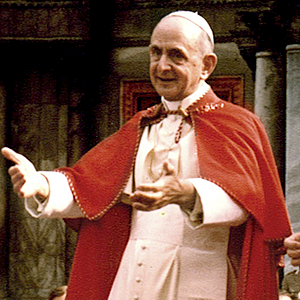
Blessed Paul VI's address on the Novus Ordo Missae


https://www.ccwatershed.org/media/photologue/photos/cache/463-liturgical-Paul-VI_preview.png


The below is an interesting address by Blessed Paul VI given 46 years ago. Given on the eve of the introduction of the Novus Ordo Missae, the concerns and arguments expressed by the Pope are still relevant half a century later (emphasis ours). And some of his words were not heeded, especially as far as Sacrosanctum Concilium is concerned.


Changes in Mass for Greater Apostolate
Address to a General Audience, 26 November 1969

Our Dear Sons and Daughters:

1. We ask you to turn your minds once more to the liturgical innovation of the new rite of the Mass. This new rite will be introduced into our celebration of the holy Sacrifice starting from Sunday next which is the first of Advent, 30 November [in Italy].

2. A new rite of the Mass: a change in a venerable tradition that has gone on for centuries. This is something that affects our hereditary religious patrimony, which seemed to enjoy the privilege of being untouchable and settled. It seemed to bring the prayer of our forefathers and our saints to our lips and to give us the comfort of feeling faithful to our spiritual past, which we kept alive to pass it on to the generations ahead.

3. It is at such a moment as this that we get a better understanding of the value of historical tradition and the communion of the saints. This change will affect the ceremonies of the Mass. We shall become aware, perhaps with some feeling of annoyance, that the ceremonies at the altar are no longer being carried out with the same words and gestures to which we were accustomed—perhaps so much accustomed that we no longer took any notice of them. This change also touches the faithful. It is intended to interest each one of those present, to draw them out of their customary personal devotions or their usual torpor.

4. We must prepare for this many-sided inconvenience. It is the kind of upset caused by every novelty that breaks in on our habits. We shall notice that pious persons are disturbed most, because they have their own respectable way of hearing Mass, and they will feel shaken out of their usual thoughts and obliged to follow those of others. Even priests may feel some annoyance in this respect. 

5. So what is to be done on this special and historical occasion? First of all, we must prepare ourselves. This novelty is no small thing. We should not let ourselves be surprised by the nature, or even the nuisance, of its exterior forms. As intelligent persons and conscientious faithful we should find out as much as we can about this innovation. It will not be hard to do so, because of the many fine efforts being made by the Church and by publishers. As We said on another occasion, we shall do well to take into account the motives for this grave change. The first is obedience to the Council. That obedience now implies obedience to the Bishops, who interpret the Council's prescription and put them into practice. 

6. This first reason is not simply canonical—relating to an external precept. It is connected with the charism of the liturgical act. In other words, it is linked with the power and efficacy of the Church's prayer, the most authoritative utterance of which comes from the Bishop. This is also true of priests, who help the Bishop in his ministry, and like him act in persona Christi (cf. St. Ign., ad Eph. I, V). It is Christ's will, it is the breath of the Holy Spirit which calls the Church to make this change. A prophetic moment is occurring in the mystical body of Christ, which is the Church. This moment is shaking the Church, arousing it, obliging it to renew the mysterious art of its prayer.

7. The other reason for the reform is this renewal of prayer. It is aimed at associating the assembly of the faithful more closely and more effectively with the official rite, that of the Word and that of the Eucharistic Sacrifice, that constitutes the Mass. For the faithful are also invested with the "royal priesthood"; that is, they are qualified to have supernatural conversation with God.

8. It is here that the greatest newness is going to be noticed, the newness of language. No longer Latin, but the spoken language will be the principal language of the Mass. The introduction of the vernacular will certainly be a great sacrifice for those who know the beauty, the power and the expressive sacrality of Latin. We are parting with the speech of the Christian centuries; we are becoming like profane intruders in the literary preserve of sacred utterance. We will lose a great part of that stupendous and incomparable artistic and spiritual thing, the Gregorian chant. 

9. We have reason indeed for regret, reason almost for bewilderment. What can we put in the place of that language of the angels? We are giving up something of priceless worth. But why? What is more precious than these loftiest of our Church's values?

10. The answer will seem banal, prosaic. Yet it is a good answer, because it is human, because it is apostolic.

11. Understanding of prayer is worth more than the silken garments in which it is royally dressed. Participation by the people is worth more—particularly participation by modern people, so fond of plain language which is easily understood and converted into everyday speech. 

12. If the divine Latin language kept us apart from the children, from youth, from the world of labor and of affairs, if it were a dark screen, not a clear window, would it be right for us fishers of souls to maintain it as the exclusive language of prayer and religious intercourse? What did St. Paul have to say about that? Read chapter 14 of the first letter to the Corinthians: "In Church I would rather speak five words with my mind, in order to instruct others, than ten thousand words in a tongue" (I Corinthians 14:19).

13. St. Augustine seems to be commenting on this when he says, "Have no fear of teachers, so long as all are instructed" (P.L. 38, 228, Serm. 37; cf. also Serm. 229, p. 1371). But, in any case, the new rite of the Mass provides that the faithful "should be able to sing together, in Latin, at least the parts of the Ordinary of the Mass, especially the Creed and the Lord's Prayer, the Our Father" (Sacrosanctum Concilium n. 19).

14. But, let us bear this well in mind, for our counsel and our comfort: the Latin language will not thereby disappear. It will continue to be the noble language of the Holy See's official acts; it will remain as the means of teaching in ecclesiastical studies and as the key to the patrimony of our religious, historical and human culture. If possible, it will reflourish in splendor. 

15. Finally, if we look at the matter properly we shall see that the fundamental outline of the Mass is still the traditional one, not only theologically but also spiritually. Indeed, if the rite is carried out as it ought to be, the spiritual aspect will be found to have greater richness. The greater simplicity of the ceremonies, the variety and abundance of scriptural texts, the joint acts of the ministers, the silences which will mark various deeper moments in the rite, will all help to bring this out. 

16. But two indispensable requirements above all will make that richness clear: a profound participation by every single one present, and an outpouring of spirit in community charity. These requirements will help to make the Mass more than ever a school of spiritual depth and a peaceful but demanding school of Christian sociology. The soul's relationship with Christ and with the brethren thus attains new and vital intensity. Christ, the victim and the priest, renews and offers up his redeeming sacrifice through the ministry of the Church in the symbolic rite of his last supper. He leaves us his body and blood under the appearances of bread and wine, for our personal and spiritual nourishment, for our fusion in the unity of his redeeming love and his immortal life.

17. But there is still a practical difficulty, which the excellence of the sacred renders not a little important. How can we celebrate this new rite when we have not yet got a complete missal, and there are still so many uncertainties about what to do?

18. To conclude, it will be helpful to read to you some directions from the competent office, namely the Sacred Congregation for Divine Worship. Here they are: "As regards the obligation of the rite:

1) For the Latin text: Priests who celebrate in Latin, in private or also in public, in cases provided for by the legislation, may use either the Roman Missal or the new rite until 28 November 1971. If they use the Roman Missal, they may nevertheless make use of the three new anaphoras and the Roman Canon, having regard to the provisions respecting the last text (omission of some saints, conclusions, etc.). They may moreover recite the readings and the prayer of the faithful in the vernacular. If they use the new rite, they must follow the official text, with the concessions as regards the vernacular indicated above.

2) For the vernacular text. In Italy, all those who celebrate in the presence of the people from 30 November next, must use the Rito della Messa published by the Italian Episcopal Conference or by another National Conference. On feast days readings shall be taken: either from the Lectionary published by the Italian Center for Liturgical Action, or from the Roman Missal for feast days, as in use heretofore. On ferial days the ferial Lectionary published three years ago shall continue to be used. No problem arises for those who celebrate in private, because they must celebrate in Latin. If a priest celebrates in the vernacular by special indult, as regards the texts, he shall follow what was said above for the Mass with the people; but for the rite he shall follow the Ordo published by the Italian Episcopal Conference.

19. In every case, and at all times, let us remember that "the Mass is a Mystery to be lived in a death of Love. Its divine reality surpasses all words. . . It is the Action par excellence, the very act of our Redemption, in the Memorial which makes it present" (Zundel).


With Our Apostolic Benediction. 
(L'Osservatore Romano, Weekly Edition in English 4 December 1969)

Wednesday, August 1, 2012

Goodbye ...


https://blogger.googleusercontent.com/img/b/R29vZ2xl/AVvXsEgcXO4EcnDhbEUI9y2WwBGNF1pi_pQwlTgu6rdKY9Re7ib924r7w-p-NcOyhNtBq6A4y0geMR6h1ChrDx6VDwkNaJFcNR7u82qlUUI_MvxHQ1yDXGW-luwhYsRxmwbBs1iKDfx8Nh5sOrg/s1600/LatinMass.gif 

The past weeks I tried, with the help of some other dedicated people, to somehow revive the group Pro Tridentina (Malta) as I was told that it was not functioning at all. Some attempts have been made - including reactivating this Blog and the Facebook group -  but regrettably I found no tangible effort to really set the ball running.

On the eve of the fifth anniversary of the founding of Pro Tridentina (Malta), the time has come to turn over a new page. I still believe in the aims of this group but armchair critics and Masses organised against the letter of Summorum Pontificum and Universae Ecclesiae will lead to nowhere.

Another problem is the fact that many people, including priests, like to have their own little niche, celebrate Tridentine Mass for the selected few, and refuse outright to co-operate or communicate with Pro Tridentina (Malta) - these things are simply not on and I outright refuse to be part of this division.

If, and I stress if, a well functioning committee is one day set up, then I might join once more. In the meantime, I continue my work in a project initiated by the Holy See that is giving me great satisfaction.

This being my last message, I would like to thank those who genuinely helped and ... Goodbye.

Godwin Xuereb

Friday, July 20, 2012

Communique concerning Priestly Society of St. Pius X


https://mundabor.files.wordpress.com/2012/04/sspx-bishops.jpg
The four SSPX Bishops


Vatican City, 19 July 2012 (VIS) - Early this afternoon, the Holy See Press Office released the following English-language communique concerning the declaration which emerged from the General Chapter of the Priestly Society of St. Pius X.


"The recently concluded General Chapter of the Priestly Society of St. Pius X has addressed a declaration regarding the possibility of a canonical normalisation in the relationship of the Society and the Holy See. While it has been made public, the declaration remains primarily an internal document for study and discussion among the members of the Society."

"The Holy See has taken note of this declaration, but awaits the forthcoming official communication of the Priestly Society as their dialogue with the Pontifical Commission Ecclesia Dei continues".

Friday, July 6, 2012

Tradition? To hell with it! Part Two


Is divorce a sin? No, the Tridentine Mass is...
One could have thought in the previous article that Fr. Martin Cilia's M.S.S.P. 'love' of tradition interview was a once in a lifetime occurrence. Or that the media had manipulated his words. Unfortunately this is not the case. The same priest, when the divorce referendum was such a hot topic in Malta last year, thought that the Lenten preach he delivered on Malta's Radju Marija should target the Tridentine Mass - the cause of all evils in these sunny islands it seems.


Hey, you're not looking at us!
He had said - on that blessed 13 April 2011 - that it is an insult for the people when the priest turns his back to the people as is done in the Latin Mass. Apart from the abysmal lack of knowledge of why the priest faces the tabernacle and not the people in the Latin Mass, Fr. Cilia then said that the Maltese have difficulty in understanding Mass in Maltese, let alone the one in Latin!

So, this priest considers the Maltese as being an ignorant people and therefore we have to believe all that he says. And obviously he is not an idiot... but my logic says that if the Maltese are ignorant and the priest shouting from the microphone on Radju Marija is Maltese then .... he must be an idiot too!
I was a Russian Altar boy not a Santa Claus.

In fact, thanks to Fr. Cilia I learnt that Karl Marx was a Russian who was an altar boy and afterwards he turned against the Catholic Church. I must throw away all the books that say that Marx was a German.

It is not usual of me to be sarcastic but today I cannot help it. The worst part is yet to come though.

As President of Pro Tridentina (Malta) at the time, I had written to the Director of Radju Marija, the M.S.S.P. Motherhouse and the Maltese Curia seeking an explanation for this.

It goes without saying that no one bothered to answer, chi tace acconsente as the Italian saying goes.

Thankfully, the Holy See's Pontifical Commission Ecclesia Dei (PCED) takes things more seriously as the Maltese Curia's postman surely knows...

Monday, March 19, 2012

New website from the CDF


The Congregation for the Doctrine of the Faith has opened a new domain: www.doctrinafidei.va within the official website of the Holy See. This development should facilitate the consultation of its documents in particular for those who are engaged in theological and pastoral work.

There is a general list of all the texts organised chronologically, and three subgroups of these texts, divided into:

  • doctrinal,
  • disciplinary, and
  • sacramental documents.

Another section includes information on the Congregation's series Documenti e Studi, which are individual printed volumes presenting a major document of the Congregation together with commentaries by noted theologians. There is also a description of the volumes containing the proceedings of various symposia organised by the Congregation in recent years, as well as speeches and other contributions by cardinal prefects.

The documents of the Congregation which have been published are those since the time of the Second Vatican Council.

Saturday, March 17, 2012

Fracture between the Holy See and the SSPX to continue?

Negotiations between Cardinal William Levada, the head of the Congregation for the Doctrine of Faith and President of the Pontifical Commission Ecclesia Dei (PCED) and Bishop Bernard Fellay, superior of the SSPX have led to nowhere.

After seven years of numerous meetings and discussions, the Vatican has rejected the SSPX's position as "insufficient". The Vatican said that the position of the SSPX “is not enough to overcome the doctrinal problems that are the basis of the fracture between the Holy See and the Society of Saint Pius X".

Last September, the PCED had delivered the SSPX with a Doctrinal preamble in which it indicated what was needed in order to overcome the difficulties with the Catholic Church. In January 2012, the SSPX proposed some amendments to the Vatican, which were then looked over by the Congregation for the Doctrine of Faith and allegedly by Pope Benedict XVI too.

The PCED has given a final deadline of one month for a definitive response by the SSPX.

Friday, August 12, 2011

Some fallacies...


The third article in the series about the Tridentine Mass deals with some fallacies that I encounter related to Latin and the Tridentine Mass:


a) Latin is a universal dead language now. Latin is called dead for it does not change such as all the modern languages do, that is why the Roman Catholic Church still uses it. Latin is far from extinct, it provides the true form and root for understanding many legal and medical terms. It is also one of the official languages of the Holy See. And yes, you do not need to know Latin to appreciate this form of the Mass. There are Missals available in Latin with translation into other languages. And even if these are not available, do all the opera goers (to mention one classic example - pun intended) necessarily understand each and every language used in the preformances?


b) The Tridentine Mass is a cause of division among the faithful. This is the preferred argument used by some of the clergy in Malta who are vehemently opposed to this Mass. And yet they fail to acknowledge -or ignore the fact - that other than the Latin Mass there are many valid liturgical rites in the Catholic Church such as the Byzantine, Alexandrian, Syriac, Armenian, Maronite, and Chaldean. I will not attempt here to go into related issues like the fact that Baroque churches in Valletta - originally built for Tridentine Masses - are being used by the Orthodox and the Copts, but are 'not allowed' for Tridentine Masses.


c) Too much symbolism in the Tridentine Mass. This argument is used by some “who make the case for the Novus Ordo Missae” in the sense that this form is closer to the early Christian Mass. But then they do not document or explain what these arguments are. Indeed, studies show that the Last Supper had the sacrificial order of a Jewish Passover where each act had a deep symbolism beyond any language. This ritualistic form itself expressed a sacredness that is lacking in modern “social celebrations.” Also, they fail to mention the rich tradition of papal documents such as St. Pius V Quo Primum stating the reasons for the decree of the liturgical Latin Missal in 1570.


The way I see it: in the Tridentine Mass it is clear that along with the Eucharistic thanksgiving the priest is making a sacrificial offering to God and asking for His forgiveness and divine blessings; there is an intrinsic sense of sacredness in which the soul seeks its Divine Maker. The parts of the mass are clearly marked and depict a specific form in its words, the priest and altar positions; also, the rite is specific in the particular use of candles, Gregorian hymns, incense, communion rail and bells which serve to call and elevate all the senses to a heightened state of adoration into the eternal realm. The triple repetition of many prayers call for the triune God, Father, Son and Holy Ghost and help to bring back the memory and attention of the faithful.


In all of these acts that include the physical senses, the emotions, the will and the reason I find a complete participation of being, which purpose is the surrender in charity to God. It is a sense of recollection in which each person is apart from the world to find communion with God in union with the faithful -and from which love of God springs the love of neighbour.