Showing posts with label Saint Augustine. Show all posts

Saturday, October 26, 2024

On the Number of Sins Beyond Which God Pardons No More


by St. Alphonsus de Liguori


"Thou shalt not tempt the Lord thy God" - Matt., 4:7

In this day's Gospel we read that having gone into the desert, Jesus Christ permitted the Devil to set Him on the pinnacle of the temple and say to Him: "If Thou be the Son of God, cast thyself down"; for the angels shall preserve Thee from all injury. But the Lord answered that in the Sacred Scriptures it is written: Thou shalt not tempt the Lord thy God. The sinner who abandons himself to sin without striving to resist temptations, or without at least asking God's help to conquer them, and hopes that the Lord will one day draw him from the precipice, tempts God to work miracles, or rather to show to him an extraordinary mercy not extended to the generality of Christians.

God, as the Apostle says, "will have all men to be saved" (1 Tim. 2:4); but He also wishes us all to labour for our own salvation, at least by adopting the means of overcoming our enemies, and of obeying Him when He calls us to repentance. Sinners hear the calls of God, but they forget them, and continue to offend Him. But God does not forget them. He numbers the graces which He dispenses, as well as the sins which (we) commit. Hence, when the time which He has fixed arrives, God deprives us of His graces, and begins to inflict chastisement. I intend to show in this discourse that when sins reach a certain number, God pardons no more. Be attentive.

St. Basil, St. Jerome, St. John Chrysostom, St. Augustine and other fathers, teach, that as God according to the words of Scripture, "Thou hast ordered all things in measure, and number, and weight" (Wis. 11:21) has fixed for each person the number of the days of his life, and the degrees of health and talent which He will give him, so He has also determined for each the number of sins which He will pardon; and when this number is completed, He will pardon no more.

"The Lord hath sent me to heal the contrite of heart" (Isa. 61:1) God is ready to heal those who sincerely wish to amend their lives, but cannot take pity on the obstinate sinner. The Lord pardons sins, but He cannot pardon those who are determined to offend Him. Nor can we demand from god a reason why He pardons one a hundred sins, and takes others out of life and sends them to Hell, after three or four sins. By His Prophet Amos, God has said: "For three crimes of Damascus, and for four, I will not convert it" (1:3). In this we must adore the judgments of God, and say with the Apostle: "O the depth of the riches, of the wisdom, and of the knowledge of God! How incomprehensible are His judgments" (Rom. 11:33). He who receives pardon, says St. Augustine, is pardoned through the pure mercy of God; and they who are chastised, are justly punished. 

How many has God sent to Hell for the first offense? St. Gregory relates, that a child of five years, who had arrived at the use of reason, for having uttered a blasphemy, was seized by the Devil and carried to Hell. The divine Mother revealed to that great servant of God, Benedicta of Florence, that a boy of twelve years was damned after the first sin. Another boy of eight years died after his first sin, and was lost. You say: I am young; there are many who have committed more sins than I have. But is God on that account obliged to wait for your repentance if you offend Him? In the Gospel of St. Matthew (21:19), we read that the Saviour cursed a fig tree the first time He saw it without fruit. "May no fruit grow on thee henceforward forever. An immediately the fig tree withered away." You must, then tremble at the thought of committing a single mortal sin, particularly if you have already been guilty of mortal sins.

"Be not without fear about sin forgiven, and add not sin to sin" (Eccl. 5:5). Say not then, O sinner: "As God has forgiven me other sins, so He will pardon me this one if I commit it." Say not this; for, if to the sin which has been forgiven you add another, you have reason to fear that this new sin shall be united to your former guilt, and that thus the number will be completed, and that you shall be abandoned. Behold how the Scripture unfolds this truth more clearly in another place. "The Lord patiently expecteth, that when the day of judgment shall come, He may punish them in the fullness of sins" (II. Mac. 6:14). God waits with patience until a certain number of sins is committed but, when the measure of guilt is filled up, He waits no longer, but chastises the sinner. "Thou hast sealed up my offenses as it were in a bag" (Job 14:17). Sinners multiply their sins without keeping any account of them; but God numbers them, that, when the harvest is ripe, that is, when the number of sins is completed, He may take vengeance on them. "Put ye in the sickles, for the harvest is ripe" (Joel 3:13).

Of this there are many examples in the Scriptures. Speaking of the Hebrews, the Lord in one place says: "All the men that have tempted Me now ten times. . . .shall not see the land" (Num. 14:22, 23). In another place, He says, that He restrained His vengeance against the Amorrhites, because the number of their sins was not completed. "For as yet the iniquities of the Amorrhites are not at the full" (Gen. 15:16). We have again the example of Saul who, after having disobeyed God a second time, was abandoned. He entreated Samuel to interpose before the Lord in his behalf. "Bear, I beseech thee, my sin, and return with me, that I may adore the Lord" (I Kings 15:25). But, knowing that God had abandoned Saul, Samuel answered: "I will not return with thee, because thou hast rejected the word of the Lord, and the Lord hath rejected thee," etc. (5:26). Saul, you have abandoned God, and He has abandoned you. 

We have another example in Balthassar, who, after having profaned the vessels of the Temple, saw a hand writing on the wall, Mane, Thecel, Phares. Daniel was requested to expound the meaning of these words. In explaining the word Thecel, he said to the king: "Thou art weighed in the balance, and art found wanting" (Dan. 5:27). By this explanation, he gave the king to understand that the weight of his sins in the balance of divine justice, had made the scale descend. "The same night Balthassar, the Chaldean king, was killed" (Dan. 5:30). Oh! how many sinners have met with a similar fate! Continuing to offend God till their sins amounted to a certain number, they have been struck dead and sent to Hell! "They spend their days in wealth, and in a moment they go down to Hell" (Job 21:13). Tremble, brethren, lest if you commit another mortal sin, God should cast you into Hell.

If God chastised sinners the moment they insult Him, we should not see Him so much despised. But, because He does not instantly punish their transgressions, and because through mercy He restrains His anger and waits for their return, they are encouraged to continue to offend Him. "For, because sentence is not speedily pronounced against the evil, the children of men commit evil without any fear" (Eccles. 8:11). But it is necessary to be persuaded, that though God bears with us, He does not wait, nor bear with us forever. Expecting, as on former occasions, to escape from the snares of the Philistines, Samson continued to allow himself to be deluded by Delilah. "I will go out as I did before, and shake myself" (Judges 16:20). But "the Lord departed from him." Samson was at length taken by his enemies, and lost his life. The Lord warns you not to say: I have committed so many sins, and God has not chastised me. "Say not: I have sinned, and what harm hath befallen me; for the Most High is a patient rewarder" (Eccl. 5:4). God has patience for a certain term, after which He punishes the first and last sins. And the greater has been His patience, the more severe His vengeance.

Hence, according to St. Chrysostom, God is more to be feared when He bears with sinners, than when He instantly punishes their sin. And why? Because, says St. Gregory, they to whom God has shown most mercy shall, if they do not cease to offend Him, be chastised with the greatest rigor. The saint adds that God often punishes such sinners with a sudden death, and does not allow them time for repentance. And the greater the light which God gives to certain sinners for their correction, the greater is their blindness and obstinacy in sin. "For it had been better for them not to have known the way of justice, than, after they had known it, to turn back" (II Pet. 2:21). Miserable the sinners, who, after having been enlightened, return to the vomit. St. Paul says, that it is morally impossible for them to be again converted. "For it is impossible for those who were once illuminated-have tasted also the Heavenly gifts... and are fallen away, to be renewed again to penance" (Heb. 6:4, 6).

Listen, then, O sinner, to the admonition of the Lord: "My son, hast thou sinned? Do so no more, but for thy former sins pray that they may be forgiven thee" (Eccl. 21:1). Son, add not sins to those which you have already committed, but be careful to pray for the pardon of your past transgressions; otherwise, if you commit another mortal sin, the gates of divine mercy may be closed against you, and your soul may be lost forever. When then, beloved brethren, the devil tempts you again to yield to sin, say to yourself: If God pardons me no more, what shall become of me for all eternity? Should the Devil in reply, say: fear not, God is merciful; answer him by saying: What certainty or what probability have I that, if I return again to sin, God will show me mercy or grant me pardon? Behold the threat of the Lord against all who despise His calls: "Because I have called and you refused,.....I also will laugh in your destruction, and will mock when that shall come to you which you feared" (Prov. 1:24, 26). Mark the words "I also"; they mean that, as you have mocked the Lord by betraying Him again after your confession and promises of amendment, so He will mock you at the hour of death. I will laugh and will mock. But, "God is not mocked" (Gal. 6:7). "As a dog," says the Wise Man, "that returneth to his vomit, so is the fool that repeateth his folly" (Prov. 26:11). Bl. Denis the Carthusian gives an excellent exposition of this text. He says that, as a dog that eats what he has just vomited, is an object of disgust and abomination, so the sinner who returns to the sins which he has detested and confessed, becomes hateful in the sight of God.

O folly of sinners! If you purchase a house, you spare no pains to get all the securities necessary to guard against the loss of your money; if you take medicine, you are careful to assure yourself that it cannot injure you; if you pass over a river, you cautiously avoid all danger of falling into it: and for a transitory enjoyment, for the gratification of revenge, for a beastly pleasure, which lasts but a moment, you risk your eternal salvation, saying: I will go to confession after I commit this sin. And when, I ask, are you to go to confession? You say: On tomorrow. But who promises you tomorrow? Who assures you that you shall have time for confession, and that God will not deprive you of life as He has deprived so many others, in the act of sin? "Diem tenes" says St. Augustine, "qui horam non tenes." You cannot be certain of living for another hour, and you say: I will go to confession tomorrow. Listen to the words of St. Gregory: "He who has promised pardon to penitents, has not promised tomorrow to sinners" (Hom. 12 in Evan). God has promised pardon to all who repent; but He has not promised to wait until tomorrow for those who insult Him. Perhaps God will give you time for repentance, perhaps He will not. But, should He not give it, what shall become of your soul? In the meantime, for the sake of a miserable pleasure, you lose the grace of God and expose yourself to the danger of being lost forever.

Would you, for such transient enjoyments, risk your money, your honour, your possessions, your liberty, and your life? No, you would not. How then does it happen that, for a miserable gratification, you lose your soul, Heaven, and God? Tell me: do you believe that Heaven, Hell, eternity, are truths of faith? Do you believe that, if you die in sin, you are lost forever? Oh! what temerity, what folly is it, to condemn yourself voluntarily to an eternity of torments with the hope of afterwards reversing the sentence of your condemnation! "Nemo," says St. Augustine, "sub spe salutis vult aegrotare." No one can be found so foolish as to take poison with the hope of preventing its deadly effects by adopting the ordinary remedies. And you will condemn yourself to Hell, saying that you expect to be afterwards preserved from it. O folly! which, in conformity with the divine threats, has brought, and brings every day, so many to Hell. "Thou hast trusted in thy wickedness, and evil shall come upon thee, and thou shalt not know the rising thereof" (Isa. 47:10, 11). You have sinned, trusting rashly in the divine mercy: the punishment of your guilt shall fall suddenly upon you, and you shall not know from whence it comes. What do you say? What resolution do you make? If, after this sermon, you do not firmly resolve to give yourself to God, I weep over you and regard you as lost.

Tuesday, July 20, 2021

Cardinal Mueller on the New TLM Restrictions

Pope Francis celebrates Mass ad orientem for the feast of the Baptism of the Lord in 2016

The pope’s intention with his motu proprio, Traditionis Custodes, is to secure or restore the unity of the Church. The proposed means for this is the total unification of the Roman Rite in the form of the Missal of Paul VI (including its subsequent variations). Therefore, the celebration of Mass in the Extraordinary Form of the Roman Rite, as introduced by Pope Benedict XVI with Summorum pontificum (2007) on the basis of the Missal that existed from Pius V (1570) to John XXIII (1962), has been drastically restricted. The clear intent is to condemn the Extraordinary Form to extinction in the long run. 

In his Letter to the Bishops of the Whole World, which accompanies the motu proprio, Pope Francis tries to explain the motives that have caused him, as the bearer of the supreme authority of the Church, to limit the liturgy in the extraordinary form. Beyond the presentation of his subjective reactions, however, a stringent and logically comprehensible theological argumentation would also have been appropriate. For papal authority does not consist in superficially demanding from the faithful mere obedience, i.e., a formal submission of the will, but, much more essentially, in enabling the faithful also to be convinced with consent of the mind. As St. Paul, courteous towards his often quite unruly Corinthians, said, “in the church I would rather speak five words with my mind, so as to instruct others also, than ten thousand words in tongues.” (1 Cor 14:19) This dichotomy between good intention and poor execution always arises where the objections of competent employees are perceived as an obstruction of their superiors’ intentions, and which are, therefore, not even offered. 

As welcome as the references to Vatican II may be, care must be taken to ensure that the Council’s statements are used precisely and in context. The quotation from St. Augustine about membership in the Church “according to the body” and “according to the heart” (Lumen Gentium 14) refers to the full Church membership of the Catholic faith. It consists in the visible incorporation into the body of Christ (creedal, sacramental, ecclesiastical-hierarchical communion) as well as in the union of the heart, i.e. in the Holy Spirit. What this means, however, is not obedience to the pope and the bishops in the discipline of the sacraments, but sanctifying grace, which fully involves us in the invisible Church as communion with the Triune God. 

For the unity in the confession of the revealed faith and the celebration of the mysteries of grace in the seven sacraments by no means require sterile uniformity in the external liturgical form, as if the Church were like one of the international hotel chains with their homogenous design. The unity of believers with one another is rooted in unity in God through faith, hope, and love and has nothing to do with uniformity in appearance, the lockstep of a military formation, or the groupthink of the big-tech age. Even after the Council of Trent, there always was a certain diversity (musical, celebratory, regional) in the liturgical organization of Masses. The intention of Pope Pius V was not to suppress the variety of rites, but rather to curb the abuses that had led to a devastating lack of understanding among the Protestant Reformers regarding the substance of the sacrifice of the Mass (its Sacrificial character and Real Presence). 

In the Missal of Paul VI, ritualistic (rubricist) homogenization is broken up, precisely in order to overcome a mechanical execution in favour of an inner and outer active participation of all believers in their respective languages and cultures. The unity of the Latin rite, however, should be preserved through the same basic liturgical structure and the precise orientation of the translations to the Latin original. The Roman Church must not pass on its responsibility for unity in cult to the Bishops’ Conferences. Rome must oversee translation of the normative texts of the Missal of Paul VI, and even of the biblical texts, that might obscure the contents of the faith. Presumptions that one may “improve” the verba domini (e.g. pro multis – “for many” – at the consecration, the et ne nos inducas in tentationem – “and lead us not into temptation” – in the Our Father), contradict the truth of the faith and the unity of the Church much more than celebrating Mass according to the Missal of John XXIII. 

The key to a Catholic understanding of the liturgy lies in the insight that the substance of the sacraments is given to the Church as a visible sign and means of the invisible grace by virtue of divine law, but that it is up to the Apostolic See and, in accordance with the law, to the bishops to order the external form of the liturgy (insofar as it has not already existed since apostolic times). (Sacrosanctum Concilium, 22 § 1) The provisions of Traditionis Custodes are of a disciplinary, not dogmatic nature and can be modified again by any future pope. Naturally, the pope, in his concern for the unity of the Church in the revealed faith, is to be fully supported when the celebration of Holy Mass according to the Missal of 1962 is an expression of resistance to the authority of Vatican II, which is to say, when the doctrine of the faith and the Church’s ethics are relativized or even denied in the liturgical and pastoral order. 

In Traditionis Custodes, the pope rightly insists on the unconditional recognition of Vatican II. Nobody can call himself a Catholic who either wants to go back behind Vatican II (or any other council recognized by the pope) as the time of the “true” Church or wants to leave that Church behind as an intermediate step towards a “new Church.” One may measure Pope Francis’ will to return to unity the deplored so-called “traditionalists” (i.e., those opposed to the Missal of Paul VI) against the degree of his determination to put an end to the innumerable “progressivist” abuses of the liturgy (renewed in accordance with Vatican II) that are tantamount to blasphemy. The paganization of the Catholic liturgy – which is in its essence nothing other than the worship of the One and Triune God – through the mythologization of nature, the idolatry of environment and climate, as well as the Pachamama spectacle, were rather counterproductive for the restoration and renewal of a dignified and orthodox liturgy reflective of the fulness of the Catholic faith. 

Nobody can turn a blind eye to the fact that even those priests and laypeople who celebrate Mass according to the order of the Missal of St. Paul VI are now being widely decried as traditionalist. The teachings of Vatican II on the uniqueness of redemption in Christ, the full realization of the Church of Christ in the Catholic Church, the inner essence of the Catholic liturgy as adoration of God and mediation of grace, Revelation and its presence in Scripture and Apostolic Tradition, the infallibility of the magisterium, the primacy of the pope, the sacramentality of the Church, the dignity of the priesthood, the holiness and indissolubility of marriage – all these are being heretically denied in open contradiction to Vatican II by a majority of German bishops and lay functionaries (even if disguised under pastoral phrases). And despite all the apparent enthusiasm they express for Pope Francis, they are flatly denying the authority conferred on him by Christ as the successor of Peter. 

The Congregation for the Doctrine of the Faith’s document about the impossibility of legitimizing same-sex and extramarital sexual contacts through a blessing is ridiculed by German (and not only German) bishops, priests, and theologians as merely the opinion of under-qualified curial officials. Here we have a threat to the unity of the Church in revealed faith, reminiscent of the size of the Protestant secession from Rome in the sixteenth century. Given the disproportion between the relatively modest response to the massive attacks on the unity of the church in the German “Synodal Way” (as well as in other pseudo-reforms) and the harsh disciplining of the old ritual minority, the image of the misguided fire brigade comes to mind, which – instead of saving the blazing house – instead first saves the small barn next to it. Without the slightest empathy, one ignores the religious feelings of the (often young) participants in the Masses according to the Missal John XXIII. (1962) Instead of appreciating the smell of the sheep, the shepherd here hits them hard with his crook. 

It also seems simply unjust to abolish celebrations of the “old” rite just because it attracts some problematic people: abusus non tollit usum. What deserves special attention in Traditionis Custodes is the use of the axiom lex orandi-lex credendi (“Rule of prayer – rule of faith”). This phrase appears first in the anti-Pelagian Indiculus (“Against superstitions and paganism”) which spoke about “the sacraments of priestly prayers, handed down by the apostles to be celebrated uniformly all over the world and in the entire Catholic Church, so that the rule of prayer is the rule of faith.” (Denzinger Hünermann, Enchiridion symbolorum 3) This refers to the substance of the sacraments (in signs and words) but not the liturgical rite, of which there were several (with different variants) in the patristic era. 

One cannot simply declare the latest missal to be the only valid norm of the Catholic faith without distinguishing between the “part that is unchangeable by virtue of divine institution and the parts that are subject to change.” (Sacrosanctum Concilium 21). The changing liturgical rites do not represent a different faith, but rather testify to the one and the same Apostolic Faith of the Church in its different expressions. The pope’s letter confirms that he allows the celebration according to the older form under certain conditions. He rightly points to the centrality of the Roman canon in the more recent Missal as the heart of the Roman rite. This guarantees the crucial continuity of the Roman liturgy in its essence, organic development, and inner unity. To be sure, one expects the lovers of the ancient liturgy to recognize the renewed liturgy; just as the followers of the Paul VI Missal also have to confess that the Mass according to the Missal of John XXIII is a true and valid Catholic liturgy, that is, it contains the substance of the Eucharist instituted by Christ and, therefore, there is and can only be “the one Mass of all times.” 

A little more knowledge of Catholic dogmatics and the history of the liturgy could counteract the unfortunate formation of opposing parties and also save the bishops from the temptation to act in an authoritarian, loveless, and narrow-minded manner against the supporters of the “old” Mass. The bishops are appointed as shepherds by the Holy Spirit: “Keep watch over yourselves and all the flock of which the Holy Spirit has made you overseers. Be shepherds of the church of God, which he bought with his own blood.” (Acts 20, 28) They are not merely representatives of a central office – with opportunities for advancement. The good shepherd can be recognized by the fact that he worries more about the salvation of souls than recommending himself to a higher authority by subservient “good behaviour.” (1 Peter 5, 1-4) 

If the law of non-contradiction still applies, one cannot logically castigate careerism in the Church and at the same time promote careerists. Let us hope that the Congregations for Religious and for Divine Worship, with their new authority, do not become inebriated by power and think they have to wage a campaign of destruction against the communities of the old rite – in the foolish belief that by doing so they are rendering a service to the Church and promoting Vatican II. If Traditionis Custodes is to serve the unity of the church, that can only mean a unity in faith, which enables us to “come to the perfect knowledge of the Son of God,” which is to say unity in truth and love. (cf. Eph 4, 12-15). 

Translated from the German by Robert Royal with Msgr. Hans Feichtinger. Original article appeared on "The Catholic Thing".

Tuesday, December 31, 2019

Meditation of Cardinal Prospero Grech OSA to Cardinals Gathered in Conclave

Image result for prospero grech bendict xvi


It's a sad end to the year 2019, with the death of Cardinal Prospero Grech OSA that was announced yesterday. Some years ago, this Blog had posted an article about this eminent son of Malta. Today, we post his meditation to the Cardinals delivered before the election of Francis as Pope. As far as we know, this is the first time that this meditation is being published on a Maltese website. We thank the former President of Pro Tridentina (Malta), Godwin Xuereb, who corresponded with the late Cardinal,who found this meditation for this Blog. This meditation remains valid, perhaps even more, than when it was delivered to the Cardinals.


Meditation of Cardinal Prospero Grech OSA to Cardinals Gathered in Conclave

Sunday, November 26, 2017

Another Augustinian blunder...


Following what was an apparent liturgical abuse by the Augustinians in Valletta (although this Blog received a clarification from the parish priest) we thought that - perhaps - the Augustinians in Malta were traditional when compared to other orders.

Alas, we were wrong. A reader sent us this blasphemous video which shows models dressed as "colourful nuns" dancing and messing inside a church and a convent.

It transpires that this video was shot in the Augustinian Church and convent in Rabat, Malta. The musical group itself thanked  "The Augustinan Cloister" (sic. - whoever they may be).

It seems therefore that the Church in Malta is indulging more and more in a consumeristic way of life, as we outlined earlier this year.
Pseudo-dancing nuns used in a Maltese musical video by the band The Travellers.

Wednesday, January 13, 2016

Clarification from the parish priest of St. Augustine, Valletta


A reader sent us a clarification from Fr Deo Debono OSA, parish priest of Saint Augustine, Valletta regarding the previous article Liturgical abuses in Valletta.


Fr Debono stressed that what was stated is incorrect and that the only time that such a situation occurs is when Mass is celebrated by a 90 year old friar. For obvious reasons, this friar would need assistance. 

It is pertinent to note that in liturgical matters, this parish has implemented a number of measures, including that:

  • following a 20-year absence, on the occasion of Christmas, the main altar - as well as the lateral ones - were decorated according to the rubrics;
  • once a month, Holy Mass is celebrated ad orientem;
  • for festivities the Crucifix was placed in the centre, surrounded by the candlesticks.
Pro Tridentina (Malta) would like to commend Fr Debono for the above. They are definitely steps in the right direction. This Blog in the past commented on how the late Fr Alberto Borg OSA, a friar in the same parish had implemented the Second Vatican Council. This shows that what was posted earlier was because of genuine concerns.

Would Fr Debono be in favour of having Mass in the Extraordinary Form celebrated in his parish? If in the affirmative, he can contact us and we can discuss further.


Liturgical abuses in Valletta

St. Augustine Church, Valletta
In normal circumstances Bishops, priests and deacons distribute Holy Communion in virtue of their office as ordinary ministers of the Body and Blood of the Lord. 

The only exception should be when the size of the congregation or the incapacity of the bishop, priest, or deacon requires it, the celebrant may be assisted by other bishops, priests, or deacons. If such ordinary ministers of Holy Communion are not present:

 "the priest may call upon extraordinary ministers to assist him, i.e., duly instituted acolytes or even other faithful who have been deputed for this purpose. In case of necessity, the priest may also depute suitable faithful for this single occasion (General Instruction of the Roman Missal, GIRM 162)."

Alas, the parish of St. Augustine in Valletta is abusing this norm. It is happening quite often that during morning Mass, when the congregation is composed of a handful of people (20 at most), after the priest has concluded his own Communion, he distributes Communion to the extraordinary minister, and then hands the sacred vessels to him for distribution of Holy Communion to the people.

This is clearly an abuse - the priest is still relatively young and walks unaided.

Church authorities, kindly note. Perhaps such a practice has reduced attendance to this Mass which up to 3 years ago had a congregation of around 60.

Thursday, November 26, 2015

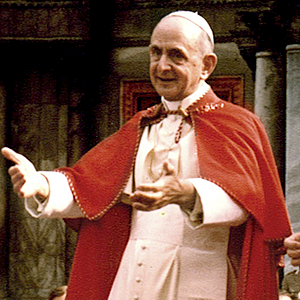
Blessed Paul VI's address on the Novus Ordo Missae


https://www.ccwatershed.org/media/photologue/photos/cache/463-liturgical-Paul-VI_preview.png


The below is an interesting address by Blessed Paul VI given 46 years ago. Given on the eve of the introduction of the Novus Ordo Missae, the concerns and arguments expressed by the Pope are still relevant half a century later (emphasis ours). And some of his words were not heeded, especially as far as Sacrosanctum Concilium is concerned.


Changes in Mass for Greater Apostolate
Address to a General Audience, 26 November 1969

Our Dear Sons and Daughters:

1. We ask you to turn your minds once more to the liturgical innovation of the new rite of the Mass. This new rite will be introduced into our celebration of the holy Sacrifice starting from Sunday next which is the first of Advent, 30 November [in Italy].

2. A new rite of the Mass: a change in a venerable tradition that has gone on for centuries. This is something that affects our hereditary religious patrimony, which seemed to enjoy the privilege of being untouchable and settled. It seemed to bring the prayer of our forefathers and our saints to our lips and to give us the comfort of feeling faithful to our spiritual past, which we kept alive to pass it on to the generations ahead.

3. It is at such a moment as this that we get a better understanding of the value of historical tradition and the communion of the saints. This change will affect the ceremonies of the Mass. We shall become aware, perhaps with some feeling of annoyance, that the ceremonies at the altar are no longer being carried out with the same words and gestures to which we were accustomed—perhaps so much accustomed that we no longer took any notice of them. This change also touches the faithful. It is intended to interest each one of those present, to draw them out of their customary personal devotions or their usual torpor.

4. We must prepare for this many-sided inconvenience. It is the kind of upset caused by every novelty that breaks in on our habits. We shall notice that pious persons are disturbed most, because they have their own respectable way of hearing Mass, and they will feel shaken out of their usual thoughts and obliged to follow those of others. Even priests may feel some annoyance in this respect. 

5. So what is to be done on this special and historical occasion? First of all, we must prepare ourselves. This novelty is no small thing. We should not let ourselves be surprised by the nature, or even the nuisance, of its exterior forms. As intelligent persons and conscientious faithful we should find out as much as we can about this innovation. It will not be hard to do so, because of the many fine efforts being made by the Church and by publishers. As We said on another occasion, we shall do well to take into account the motives for this grave change. The first is obedience to the Council. That obedience now implies obedience to the Bishops, who interpret the Council's prescription and put them into practice. 

6. This first reason is not simply canonical—relating to an external precept. It is connected with the charism of the liturgical act. In other words, it is linked with the power and efficacy of the Church's prayer, the most authoritative utterance of which comes from the Bishop. This is also true of priests, who help the Bishop in his ministry, and like him act in persona Christi (cf. St. Ign., ad Eph. I, V). It is Christ's will, it is the breath of the Holy Spirit which calls the Church to make this change. A prophetic moment is occurring in the mystical body of Christ, which is the Church. This moment is shaking the Church, arousing it, obliging it to renew the mysterious art of its prayer.

7. The other reason for the reform is this renewal of prayer. It is aimed at associating the assembly of the faithful more closely and more effectively with the official rite, that of the Word and that of the Eucharistic Sacrifice, that constitutes the Mass. For the faithful are also invested with the "royal priesthood"; that is, they are qualified to have supernatural conversation with God.

8. It is here that the greatest newness is going to be noticed, the newness of language. No longer Latin, but the spoken language will be the principal language of the Mass. The introduction of the vernacular will certainly be a great sacrifice for those who know the beauty, the power and the expressive sacrality of Latin. We are parting with the speech of the Christian centuries; we are becoming like profane intruders in the literary preserve of sacred utterance. We will lose a great part of that stupendous and incomparable artistic and spiritual thing, the Gregorian chant. 

9. We have reason indeed for regret, reason almost for bewilderment. What can we put in the place of that language of the angels? We are giving up something of priceless worth. But why? What is more precious than these loftiest of our Church's values?

10. The answer will seem banal, prosaic. Yet it is a good answer, because it is human, because it is apostolic.

11. Understanding of prayer is worth more than the silken garments in which it is royally dressed. Participation by the people is worth more—particularly participation by modern people, so fond of plain language which is easily understood and converted into everyday speech. 

12. If the divine Latin language kept us apart from the children, from youth, from the world of labor and of affairs, if it were a dark screen, not a clear window, would it be right for us fishers of souls to maintain it as the exclusive language of prayer and religious intercourse? What did St. Paul have to say about that? Read chapter 14 of the first letter to the Corinthians: "In Church I would rather speak five words with my mind, in order to instruct others, than ten thousand words in a tongue" (I Corinthians 14:19).

13. St. Augustine seems to be commenting on this when he says, "Have no fear of teachers, so long as all are instructed" (P.L. 38, 228, Serm. 37; cf. also Serm. 229, p. 1371). But, in any case, the new rite of the Mass provides that the faithful "should be able to sing together, in Latin, at least the parts of the Ordinary of the Mass, especially the Creed and the Lord's Prayer, the Our Father" (Sacrosanctum Concilium n. 19).

14. But, let us bear this well in mind, for our counsel and our comfort: the Latin language will not thereby disappear. It will continue to be the noble language of the Holy See's official acts; it will remain as the means of teaching in ecclesiastical studies and as the key to the patrimony of our religious, historical and human culture. If possible, it will reflourish in splendor. 

15. Finally, if we look at the matter properly we shall see that the fundamental outline of the Mass is still the traditional one, not only theologically but also spiritually. Indeed, if the rite is carried out as it ought to be, the spiritual aspect will be found to have greater richness. The greater simplicity of the ceremonies, the variety and abundance of scriptural texts, the joint acts of the ministers, the silences which will mark various deeper moments in the rite, will all help to bring this out. 

16. But two indispensable requirements above all will make that richness clear: a profound participation by every single one present, and an outpouring of spirit in community charity. These requirements will help to make the Mass more than ever a school of spiritual depth and a peaceful but demanding school of Christian sociology. The soul's relationship with Christ and with the brethren thus attains new and vital intensity. Christ, the victim and the priest, renews and offers up his redeeming sacrifice through the ministry of the Church in the symbolic rite of his last supper. He leaves us his body and blood under the appearances of bread and wine, for our personal and spiritual nourishment, for our fusion in the unity of his redeeming love and his immortal life.

17. But there is still a practical difficulty, which the excellence of the sacred renders not a little important. How can we celebrate this new rite when we have not yet got a complete missal, and there are still so many uncertainties about what to do?

18. To conclude, it will be helpful to read to you some directions from the competent office, namely the Sacred Congregation for Divine Worship. Here they are: "As regards the obligation of the rite:

1) For the Latin text: Priests who celebrate in Latin, in private or also in public, in cases provided for by the legislation, may use either the Roman Missal or the new rite until 28 November 1971. If they use the Roman Missal, they may nevertheless make use of the three new anaphoras and the Roman Canon, having regard to the provisions respecting the last text (omission of some saints, conclusions, etc.). They may moreover recite the readings and the prayer of the faithful in the vernacular. If they use the new rite, they must follow the official text, with the concessions as regards the vernacular indicated above.

2) For the vernacular text. In Italy, all those who celebrate in the presence of the people from 30 November next, must use the Rito della Messa published by the Italian Episcopal Conference or by another National Conference. On feast days readings shall be taken: either from the Lectionary published by the Italian Center for Liturgical Action, or from the Roman Missal for feast days, as in use heretofore. On ferial days the ferial Lectionary published three years ago shall continue to be used. No problem arises for those who celebrate in private, because they must celebrate in Latin. If a priest celebrates in the vernacular by special indult, as regards the texts, he shall follow what was said above for the Mass with the people; but for the rite he shall follow the Ordo published by the Italian Episcopal Conference.

19. In every case, and at all times, let us remember that "the Mass is a Mystery to be lived in a death of Love. Its divine reality surpasses all words. . . It is the Action par excellence, the very act of our Redemption, in the Memorial which makes it present" (Zundel).


With Our Apostolic Benediction. 
(L'Osservatore Romano, Weekly Edition in English 4 December 1969)