November 29, 2009
By KENNETH J. WOLFE
Washington
 |
| Pope Benedict XVI |
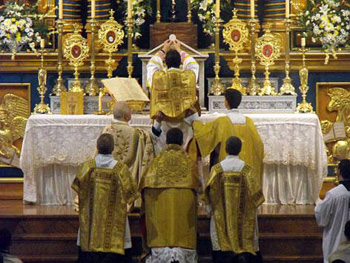
WALKING into church 40 years ago on this first Sunday of Advent, many Roman Catholics might have wondered where they were. The priest not only spoke English rather than Latin, but he faced the congregation instead of the tabernacle; laymen took on duties previously reserved for priests; folk music filled the air. The great changes of Vatican II had hit home.
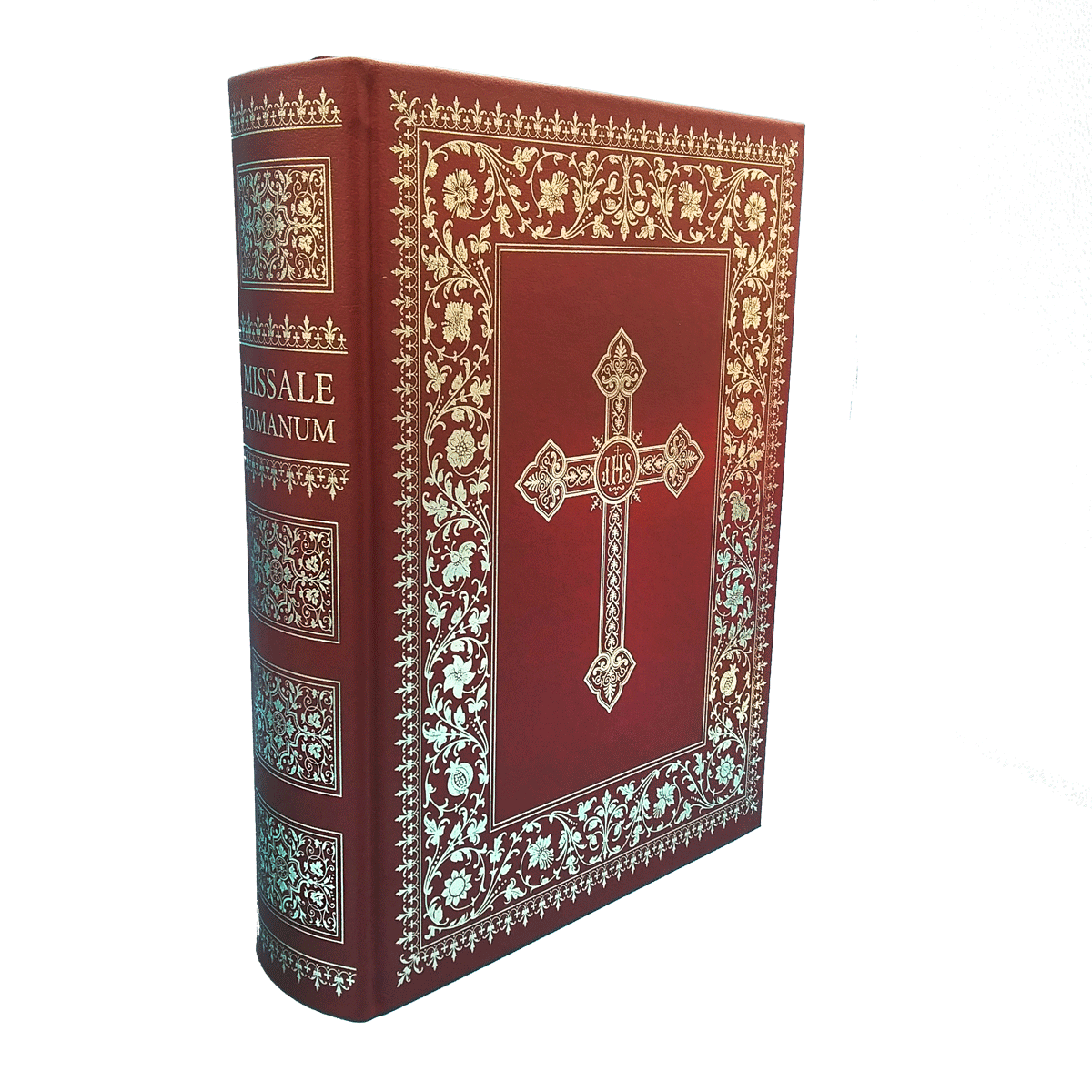
All this was a radical break from the traditional Latin Mass, codified in the 16th century at the Council of Trent. For centuries, that Mass served as a structured sacrifice with directives, called “rubrics,” that were not optional. This is how it is done, said the book. As recently as 1947, Pope Pius XII had issued an
encyclical on liturgy that scoffed at modernization; he said that the idea of changes to the traditional Latin Mass “pained” him “grievously.”
Paradoxically, however, it was Pius himself who was largely responsible for the momentous changes of 1969. It was he who appointed the chief architect of the new Mass, Annibale Bugnini, to the Vatican’s liturgical commission in 1948.
Bugnini was born in 1912 and ordained a Vincentian priest in 1936. Though Bugnini had barely a decade of parish work, Pius XII made him secretary to the Commission for Liturgical Reform. In the 1950s, Bugnini led a major revision of the liturgies of Holy Week. As a result, on Good Friday of 1955, congregations for the first time joined the priest in reciting the Pater Noster, and the priest faced the congregation for some of the liturgy.
The next pope, John XXIII, named Bugnini secretary to the Preparatory Commission for the Liturgy of Vatican II, in which position he worked with Catholic clergymen and, surprisingly, some Protestant ministers on liturgical reforms. In 1962 he wrote what would eventually become the Constitution on the Sacred Liturgy, the document that gave the form of the new Mass.
Many of Bugnini’s reforms were aimed at appeasing non-Catholics, and changes emulating Protestant services were made, including placing altars to face the people instead of a sacrifice toward the liturgical east. As he put it, “We must strip from our ... Catholic liturgy everything which can be the shadow of a stumbling block for our separated brethren, that is, for the Protestants.” (Paradoxically, the Anglicans who will join the Catholic Church as a result of the current pope’s outreach will use a liturgy that often features the priest facing in the same direction as the congregation.)
How was Bugnini able to make such sweeping changes? In part because none of the popes he served were liturgists. Bugnini changed so many things that John’s successor, Paul VI, sometimes did not know the latest directives. The pope once questioned the vestments set out for him by his staff, saying they were the wrong color, only to be told he had eliminated the week-long celebration of Pentecost and could not wear the corresponding red garments for Mass. The pope’s master of ceremonies then witnessed Paul VI break down in tears.
Bugnini fell from grace in the 1970s. Rumors spread in the Italian press that he was a Freemason, which if true would have merited excommunication. The Vatican never denied the claims, and in 1976 Bugnini, by then an archbishop, was exiled to a ceremonial post in Iran. He died, largely forgotten, in 1982.
But his legacy lived on. Pope John Paul II continued the liberalizations of Mass, allowing females to serve in place of altar boys and to permit unordained men and women to distribute communion in the hands of standing recipients. Even conservative organizations like Opus Dei adopted the liberal liturgical reforms.
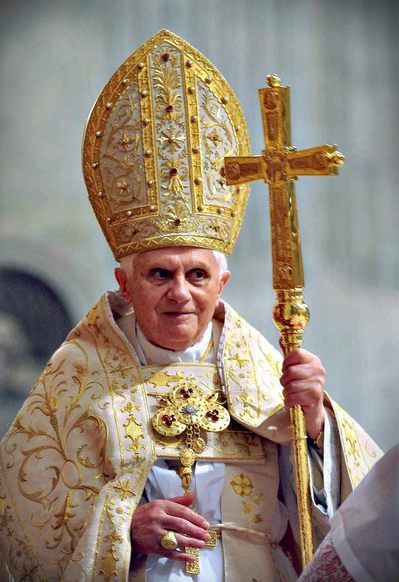
But Bugnini may have finally met his match in Benedict XVI, a noted liturgist himself who is no fan of the past 40 years of change. Chanting Latin, wearing antique vestments and distributing communion only on the tongues (rather than into the hands) of kneeling Catholics, Benedict has slowly reversed the innovations of his predecessors. And the Latin Mass is back, at least on a limited basis, in places like Arlington, Va., where one in five parishes offer the old liturgy.
Benedict understands that his younger priests and seminarians — most born after Vatican II — are helping lead a counterrevolution. They value the beauty of the solemn high Mass and its accompanying chant, incense and ceremony. Priests in cassocks and sisters in habits are again common; traditionalist societies like the Institute of Christ the King are expanding.
At the beginning of this decade, Benedict (then Cardinal Joseph Ratzinger) wrote: “The turning of the priest toward the people has turned the community into a self-enclosed circle. In its outward form, it no longer opens out on what lies ahead and above, but is closed in on itself.” He was right: 40 years of the new Mass have brought chaos and banality into the most visible and outward sign of the church. Benedict XVI wants a return to order and meaning. So, it seems, does the next generation of Catholics.
Kenneth J. Wolfe writes frequently for traditionalist Roman Catholic publications.