Friday, May 1, 2020

Recent important developments concerning the traditional Latin Mass (2)

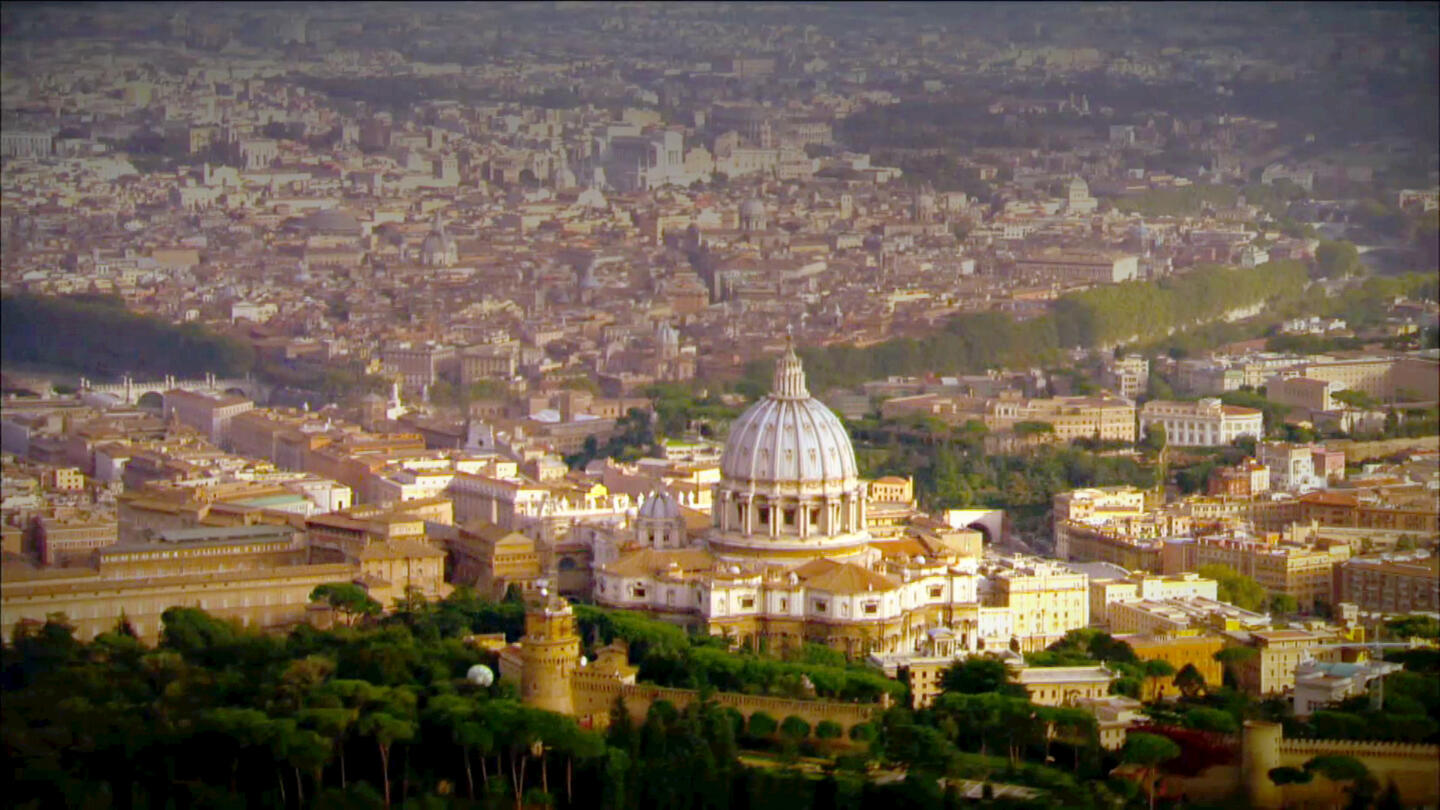
10 Things You May Not Know About the Vatican - HISTORY

Press Release: CDF Decrees on new Prefaces and Saints for the Extraordinary Form - From the President and Officers of the FIUV

26th March 2020

Yesterday the Congregation for the Doctrine of the Faith (CDF), now exercising the functions of the Pontifical Commission Ecclesia Dei, has issued two decrees, one on Prefaces to be added to the 1962 Missal (Quo Magis), and the other on the possibility of saints, canonised since 1962 to have Masses celebrated in their honour (Cum Sanctissima). (English summary here.)

The Federation was consulted on both issues, and we would like to thank the CDF for taking the views of our members into account in developing these decrees.

The Federation welcomes in particular the possibility of making a liturgical commemoration of saints canonised since 1962, without excessive disruption to the Sanctoral Calendar as it has come down to us. We wish, however, to issue some notes of caution.


On Prefaces, we note that the Note presenting the decree explains that while three of the seven newly permitted Prefaces are of the ‘Neo-Gallican’ tradition (of 18th century French origin), the other four are Prefaces used in the Ordinary Form, though not composed from scratch for the reformed Mass: ‘their central section(s), known as the “embolism”, appear in ancient liturgical sources’.

This implies that these ancient Prefaces have been adapted for use in the Ordinary Form, a process which makes them conform less, rather than more, with the spirit of the Extraordinary Form. If the value of these Prefaces lies in their antiquity, it is not clear what is to be gained by their being used in the Extraordinary Form in a redaction designed to make them conform to the themes and preferences of the Ordinary Form.

Further, we would like to appeal to priests celebrating the Extraordinary Form to bear in mind the great antiquity, theological importance, and centrality to the ancient Roman liturgical tradition, of the Preface of Trinity Sunday, and the Common Preface, whose use would become less frequent if the newly optional Prefaces were systematically employed. These two Prefaces have been of such centrality to the celebration of ancient Mass up to this point, that to downgrade them to mere options among others would be to make a fundamental change in the balance of texts and theological ideas which the Missal presents to the Faithful over the course of the year.

On the Saints, we note the list of saints celebrated as 3rd Class feasts, whose celebration remains obligatory. We recognise that in order to make possible the celebration of the new saints room must somehow be made for them, and we endorse the method proposed. We have reservations, however, about the composition of this list.

We note with particular dismay that the only male lay saints on the list are SS Cosmas and Damian: this seems an omission in need of correction, particularly as the excluded category include men central to the development of their countries: St Louis of France, St Stephen of Hungary, St Henry the Emperor of Germany, St Edward the Confessor of England, and St Wenceslas of Bohemia, outstanding examples of the vocation of the laity to ‘to penetrate and perfect the temporal order with the spirit of the Gospel’.[1]

Also completely absent are female founders of religious orders, such as St Angela Merici, St Juliana of Falconieri, and St Jane Francis de Chantal.

Although we are pleased to see two widows on the list—St Monica and St Francis of Rome— it would seem in general that non-clerical vocations, of the active or the religious life, which are richly represented in the ancient sanctoral calendar, have been set aside as of marginal importance.

Another category poorly represented on the list are Doctors of the Church. Some of the highest importance have been excluded: St Isidore, St John Damascene, St Bede, and St Irenaeus.

The imbalance represented by the list of obligatory saints appears to have been inherited from the list of non-optional Memorials found in the sanctoral cycle of the Ordinary Form, which it closely resembles. The lack of interest in the lay vocation and in the Doctors of the Church shown by the reformers of the 1960s should not be allowed to distort the presentation of the Church’s great patrimony of saints in celebrations of the Extraordinary Form today.

In choosing when to avail themselves of the option to celebrate newly canonised saints, we would like to appeal to priests celebrating the Extraordinary Form to consider carefully the balance of the categories of the saints, the importance of maintaining the connection to the distant past represented by the most ancient saints, and the value of the Marian devotional feasts also now rendered optional, such as Our Lady of Lourdes and the Presentation of Mary.

As an indication of feasts which we regard as particularly worthy of continued celebration, we give the following, non-exhaustive, list.

14/01   St Hilary
10/02   St Scholastica
11/02   Apparition of the Blessed Virgin Mary (of Lourdes)
17/03   St Patrick
18/03   St Cyril of Jerusalem
27/03   St John Damascene
4/04     St Isidore
27/05   St Bede
3/07     St Irenaeus
15/07   St Henry, Emperor
25/08   St Louis, King
30/08   St Rose of Lima
2/09     St Stephen, King
28/09   St Wenceslas, Duke and Martyr
8/10     St Bridget, Widow
13/10   St Edward, King
24/10   St Rafael the Archangel
15/11   St Albert the Great
21/11   Presentation of the Blessed Virgin Mary
25/11   St Catherine of Alexandria


[1] Second Vatican Council Decree on the Apostolate of the Laity Apostolicam actuositatem 5

Recent important developments concerning the traditional Latin Mass (1)


We will start the first part of these articles with the latest developments concerning the Tridentine Mass.

Pope Francis has now taken a major new step concerning the Extraordinary Form of the Roman Mass and the motu proprio Summorum pontificum issued by Benedict XVI. Pope Francis has sent two letters to all the Bishops of the world pertaining to Summorum Pontificum to ask a number of questions. The bishops are directed to respond to the questionnaire of the Congregation for the Doctrine of Faith by 31 July 2020. 

The worrying issue is related to the fact that many bishops are hostile to the traditional Latin Mass. Therefore their responses are expected to be almost universally hostile to the Tridentine Mass. If one looks at the Maltese dioceses, the situation is that the Tridentine Mass is only allowed in one small church in Malta every Sunday. This has meant that other priests in Malta are de facto prohibited from celebrating the Tridentine Mass in public. Even though in some occasions more than 100 persons attended Tridentine Masses organised by Pro Tridentina (Malta) when a fully functioning committee was in place. In Gozo, the situation is even worse, because the Tridentine Mass is not allowed at all!

This could provide a pretext for the Pope to come to the conclusion that the Extraordinary Form of the Roman Mass has not been widely or well received and that, therefore, Summorum Pontificum and its permissions will be abolished.

Such a development may come into effect this Advent or the Advent of 2021. Presumably the Tridentine Mass will revert to the status given to it in 1984 and 1988 by  Saint Pope John Paul II. 

Having said that, it's the opinion of this Blog that the provisions of Summorum Pontificum will be retained as the second and third parts will show.


Wednesday, April 15, 2020

Traditional Catholicism and Covid-19


Guidelines on how to practice your faith during the coronavirus pandemic:

1. Practice the habit of trying to elicit Perfect Contrition and of partaking in Spiritual Communion until you have the opportunity to receive the true Sacrament of Penance.

2. Say the Rosary together with your family.

3. Read spiritual works.

4. Study the Propers of the Roman Missal.

Unless there are important notifications this Blog will remain inactive till daily life returns to normal.


Wednesday, February 5, 2020

The Correspondence between Benedict XVI & Cardinal Sarah


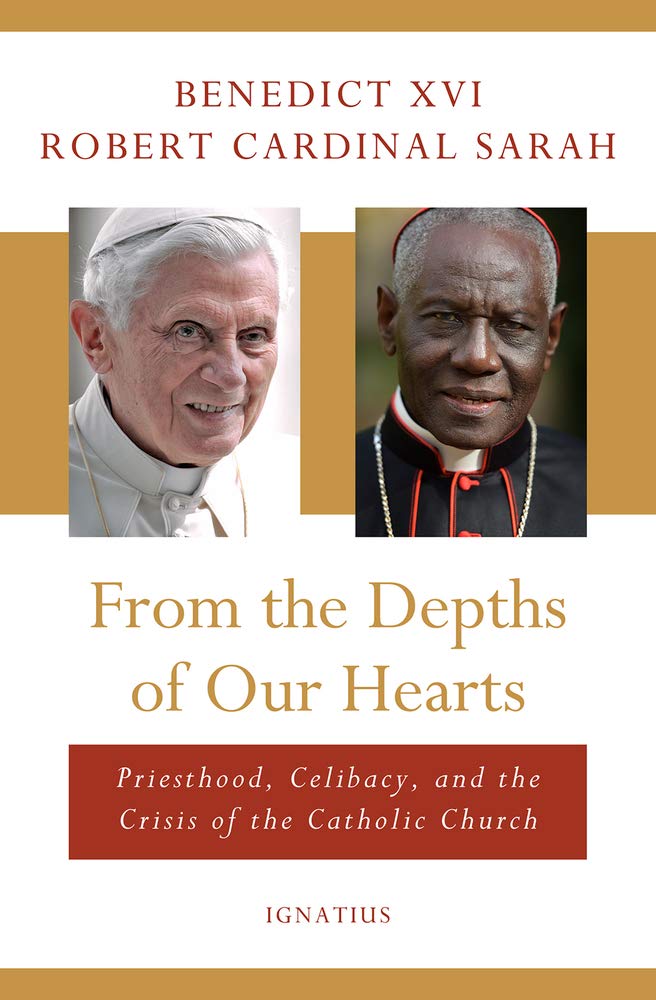
Now that last month's conflicting stories about the genesis of Pope Emeritus Benedict XVI and Cardinal Robert Sarah’s new book on priestly celibacy have calmed down (to a certain extent), it seems the right time to publish the correspondence from Pope Emeritus Benedict XVI to Cardinal Sarah. We leave our readers to reach their own conclusions. We however dismiss that this book opposes the millennial Church teachings, that Benedict XVI has no right to express his views, that the Pope Emeritus was “manipulated,” and that Cardinal Sarah has shown contempt for married priests in the Eastern Rite. 
 

Statement by His Eminence Cardinal Robert Sarah
 
14 January 2020
 
Last 5 September, after a visit to the monastery Mater Ecclesiae where Benedict XVI lives, I wrote to the Pope Emeritus to ask him if it was possible for him to compose a text on the Catholic priesthood, with special attention to celibacy. I explained to him that I myself had begun a reflection in prayer. I added: “I imagine that you will think that your reflections might not be opportune because of the polemics they might provoke in the media, but I am convinced that the whole Church needs this gift, which could be published at Christmas or at the beginning of the year 2020.”
 
On 20 September, the Pope Emeritus thanked me by writing to me that he too, on his part, even before receiving my letter, had begun to write a text on this subject, but that his strength no longer allowed him to edit a theological text. However, my letter had encouraged him to resume this long work. He added that he would transmit it to me when the translation into Italian was completed. 
 
On 12 October, during the synod of bishops on the Amazon, the Pope emeritus gave me a long text in a confidential envelope, the fruit of his work over the past months. Seeing the extent of this writing, both in substance and in form, I immediately thought that it would not be possible to propose it to a newspaper or magazine, given its volume and quality. So, I immediately proposed to the Pope Emeritus the publication of a book that would be an immense good for the Church, integrating his own text into mine. After various exchanges in view of the development of the book, on 19 November, I finally sent a manuscript, the cover, a common introduction and conclusion, the text of Benedict XVI and my own text. On 25 November, the Pope Emeritus expressed his great satisfaction with the texts written in common, and he added the following: “For my part, I agree that the text should be published in the form you have foreseen.”
 
On 3 December, I went to the Mater Ecclesiae Monastery to thank the Pope Emeritus once again for placing his trust in me. I explained to him that our book would be printed during the Christmas holidays, that it would be published on Wednesday 15 January, and that I would come to bring it to him at the beginning of January on my return from a trip to my native country. 
 
The polemic that has sought to smear me for several hours now, by insinuating that Benedict XVI was not informed of the publication of the book ‘From the Depths of our Hearts’ is deeply abject. I sincerely forgive all those who slander me or who want to oppose me to Pope Francis. My attachment to Benedict XVI remains intact and my filial obeisance to Pope Francis remains absolute.

LETTERS FROM BENEDICT XVI TO CARDINAL ROBERT SARAH
 
Benedict XVI
Pope emeritus
                                                                                                Vatican City
                                                                                                20 September 2019
 
To His Eminence the Most Rev. 
Cardinal Robert SARAH
Prefect of the Congregation for Divine Worship
and the Discipline of the Sacraments
00120   Vatican City
 
Your Eminence, 
 
Thank you for your letter of September 5 and for your prayers for the priesthood in these difficult times!
 
Prior to your letter, I had already begun to write down some reflections on the priesthood. But in writing I always felt that my forces no longer allow me to edit a theological text. 
 
Then your letter came with the unexpected question of a text on the priesthood, with particular attention to celibacy. So, I resumed by work and will pass on to you the text, once it is translated from German into Italian. I leave it to you [to determine] if these notes, whose insufficiency I feel strongly, can be of any use.
 
Following your question, I impart my apostolic blessing to you, to your collaborators, and to all your loved ones.
                                                                                                Yours in the Lord,
                                                                                                Benedict XVI
 
***
 
            Vatican City
                                                                                                12 October 2019
 
To His Eminence the Most Rev. 
Cardinal Robert SARAH
Prefect of the Congregation forDivine Worship
and the Discipline of the Sacraments
00120   Vatican City
 
Your Eminence, 
 
Finally, I may pass on my Thoughts on the Priesthood. I shall leave it to you if you find any use in my poor thoughts. 
 
I greet you cordially, thankful for your service to the Holy Church. 
 
                                                                                                Yours in the Lord,
                                                                                                Benedict XVI
 
***
 
Benedict XVI
Pope emeritus
                                                                                                Vatican City
                                                                                                25 November 2019
 
To His Eminence the Most Rev. 
Cardinal Robert SARAH
Prefect of the Congregation for Divine Worship
and the Discipline of the Sacraments
00120   Vatican City
 
Your Eminence, 
 
With all my heart I would like to say thank you for the text added to my contribution and for all the work you have done. It touched me deeply that you understood my last intentions: I had actually written 7 pages clarifying the methodology of my text and I am truly happy to say that you were able to say the essential in half a page. So, I do not see a need to send you the 7 pages, since you have expressed the essentials in half a page. 
 
For my part, the text can be published in the form that you have foreseen. 
 
I am happy to see you before your departure for your homeland and to express my best wishes for your double jubilee. 
 
Thank you also for the three volumes of your dialogue with Monsieur Diat!
 
 
In communion of prayer, 
                                                                                                Yours in the Lord,
                                                                                                Benedict XVI

Wednesday, January 15, 2020

Quotes to reflect upon (22)

Albert Drexel


“The future looks dark for you. Your interior struggle for true perception and the way to take in the confusion is known to me. And so I shall enlighten you. My faithful son Marcel (Archbishop Lefebvre), who suffers a great deal for the faith, is going on the right path. He is like a light and pillar of truth, which many ordained priests of mine are betraying. Faith is greater than obedience. Therefore it is my will that the work of theological education for priests continues in the spirit and will of my son Marcel, for the salvation and great help of my one and true Church.
 
“The spirit of the world has infiltrated the Church, and the Spirit of God has abandoned many hearts who were called to proclaim His Spirit. They talk about other things and lose themselves in the tricks and snares of Satan. And thus they corrupt the people and even the children ( . . . ) This spirit has penetrated the ecclesiastics and monasteries and convents, because the monks and nuns have lost and deserted the spirit of the Founders of their Orders. They have become a scandal for the people and the world. They have lost not only love towards My most holy Mother, but also reverence towards My sacramental presence. Instead the monks preach about things of the world, of luxury, of a life of pleasure, and the nuns do not talk about the holy angels, and many not even about the most holy Virgin and Mother Mary. Still, places do exist of quiet and of prayer, special shrines in which Mary, My Mother and the Mother of grace, is honoured.”
 
The quote above refers to the message of 5 March 1976, from Our Lord. From 1922, Jesus appeared with a message on every First Friday of the month to Fr. Albert Drexel (1889–1977), a prestigious professor of philology from the Vorarlberg in Austria and a devout Catholic priest. WARNING: No Catholic is obliged to believe that these are the words of Our Lord Himself.

Tuesday, December 31, 2019

Meditation of Cardinal Prospero Grech OSA to Cardinals Gathered in Conclave

Image result for prospero grech bendict xvi


It's a sad end to the year 2019, with the death of Cardinal Prospero Grech OSA that was announced yesterday. Some years ago, this Blog had posted an article about this eminent son of Malta. Today, we post his meditation to the Cardinals delivered before the election of Francis as Pope. As far as we know, this is the first time that this meditation is being published on a Maltese website. We thank the former President of Pro Tridentina (Malta), Godwin Xuereb, who corresponded with the late Cardinal,who found this meditation for this Blog. This meditation remains valid, perhaps even more, than when it was delivered to the Cardinals.


Meditation of Cardinal Prospero Grech OSA to Cardinals Gathered in Conclave

Monday, December 9, 2019

Rorate Caeli - so Pro Tridentina (Malta) was correct after all!

Image result for all saints day

Cardinal Robert Sarah's retirement as Prefect of the Congregation for Divine Worship has been postponed. This has been interpreted by sources close to this Blog as implying that next month the first in a series of  liturgical changes that this Blog had mentioned more than 2 years ago will start being implemented.
 
Seven Saints will be added to the Tridentine Mass of 1962. The typical practice is to add new saints to the calendar and then incorporate them into the next edition of the Missal. This practice implies that a new version of the 1962 Missal is coming soon, with possibly additional changes. 
 
Rorate Coeli has given credit to this news to an Italian website Messa in Latino. We are happy that they have given positive feedback to this Italian website. However, lest we forget, when we had published the afore-mentioned breaking news, which was widely reported, Rorate Coeli tried to denigrate this Blog as this and this articles amply show.
 
A year after, we published another article showing that the changes had been merely postponed. All of the above shows that this Blog disseminates facts and not fiction. Maybe, in due course, Rorate Coeli will acknowledge that this Blog was right after all. 

Wednesday, November 27, 2019

Quotes to reflect upon (21)

Image result for sspx

“A final consideration concerns those faithful who for various reasons choose to attend churches officiated by priests of the Fraternity of St Pius X. This Jubilee Year of Mercy excludes no one. From various quarters, several Brother Bishops have told me of their good faith and sacramental practice, combined however with an uneasy situation from the pastoral standpoint. I trust that in the near future solutions may be found to recover full communion with the priests and superiors of the Fraternity. In the meantime, motivated by the need to respond to the good of these faithful, through my own disposition, I establish that those who during the Holy Year of Mercy approach these priests of the Fraternity of St Pius X to celebrate the Sacrament of Reconciliation shall validly and licitly receive the absolution of their sins."

Pope Francis' letter on the Extraordinary Jubilee of Mercy, Vatican City, 1 September 2015

Monday, November 25, 2019

Quotes to reflect upon (20)


We hold fast, with all our heart and with all our soul, to Catholic Rome, Guardian of the Catholic Faith and of the traditions necessary to preserve this faith, to Eternal Rome, Mistress of wisdom and truth.
We refuse, on the other hand, and have always refused to follow the Rome of neo-Modernist and neo-Protestant tendencies which were clearly evident in the Second Vatican Council and, after the Council, in all the reforms which issued from it.
All these reforms, indeed, have contributed and are still contributing to the destruction of the Church, to the ruin of the priesthood, to the abolition of the Sacrifice of the Mass and of the sacraments, to the disappearance of religious life, to a naturalist and Teilhardian teaching in universities, seminaries and catechists; a teaching derived from Liberalism and Protestantism, many times condemned by the solemn Magisterium of the Church.
No authority, not even the highest in the hierarchy, can force us to abandon or diminish our Catholic Faith, so clearly expressed and professed by the Church’s Magisterium for nineteen centuries.
“But though we,” says St. Paul, “or an angel from heaven preach a gospel to you besides that which we have preached to you, let him be anathema” (Gal. 1:8).
Is it not this that the Holy Father is repeating to us today? And if we can discern a certain contradiction in his words and deeds, as well as in those of the dicasteries, well we choose what was always taught and we turn a deaf ear to the novelties destroying the Church.
It is impossible to modify profoundly the lex orandi without modifying the lex credendi. To the Novus Ordo Missae correspond a new catechism, a new priesthood, new seminaries, a charismatic Pentecostal Church—all things opposed to orthodoxy and the perennial teaching of the Church.
This Reformation, born of Liberalism and Modernism, is poisoned through and through; it derives from heresy and ends in heresy, even if all its acts are not formally heretical. It is therefore impossible for any conscientious and faithful Catholic to espouse this Reformation or to submit to it in any way whatsoever.
The only attitude of faithfulness to the Church and Catholic doctrine, in view of our salvation, is a categorical refusal to accept this Reformation.
That is why, without any spirit of rebellion, bitterness or resentment, we pursue our work of forming priests, with the timeless Magisterium as our guide. We are persuaded that we can render no greater service to the Holy Catholic Church, to the Sovereign Pontiff and to posterity.
That is why we hold fast to all that has been believed and practiced in the faith, morals, liturgy, teaching of the catechism, formation of the priest and institution of the Church, by the Church of all time; to all these things as codified in those books which saw day before the Modernist influence of the Council. This we shall do until such time that the true light of Tradition dissipates the darkness obscuring the sky of Eternal Rome.
By doing this, with the grace of God and the help of the Blessed Virgin Mary, and that of St. Joseph and St. Pius X, we are assured of remaining faithful to the Roman Catholic Church and to all the successors of Peter, and of being the fideles dispensatores mysteriorum Domini Nostri Jesu Christi in Spiritu Sancto. Amen.
Archbishop Marcel Lefebvre
21 November, 1974
Ecône, Switzerland

Thursday, November 14, 2019

Padre Pio: on spirituality, Vatican II and the Novus Ordo Missae


By Fr. Jean, OFMcap and printed originally in the May 1999 issue of The Angelus magazine.

Padre Pio (May 25, 1887-September 23, 1968) was beatified on May 2, 1999, by Pope John Paul II. He is the only priest known to have received the full stigmata. He never celebrated the Novus Ordo Missae.

The final year of this dying, decaying century will see the beatification of Padre Pio, the holy monk whom God sent as a sign for our age. For, while everyone wants to make us believe in a new "charismatic" Church, strangely we do not find there any wonderworking saints like the ones we meet throughout the Church’s history starting with Pentecost. Padre Pio seems to close the procession of their number, doing so magnificently, being the only priest to have borne the stigmata of our Lord Jesus Christ.

Much has been written about Padre Pio—more than 600 works, it seems—and the authors always stress the extraordinary side of his life: not only his particular charisms (reading souls, healing, raising people from the dead, bilocating, ecstasies, exuding perfume, prophesying, etc.), but also the incredible sufferings which he endured from his earliest childhood, the persecutions undergone from some churchmen and even brothers in religion, as well as his two great charitable works: the founding of the House of Suffering, and prayer groups.

In short, they present him to us as a "saint" more to be admired than imitated, so that, ultimately, we miss the most interesting lessons to be learned from this life, and the practical applications that could transform our own. We shall try, therefore, however imperfectly, to set forth a few of these lessons, hoping that we shall all be able to profit from them, and that the Padre, from high heaven, will himself succor us, as he has promised to all those who would like to become his "spiritual children."

At the dawn of this life totally sacrificed to God and to souls, there is to be found a pious, poor and numerous family, where the abnegation of each member softens and transforms the harsh realities of daily life. Here we see confirmed the saying of Bishop de Segur that it is in families where the spirit of sacrifice is lacking that vocations are most at risk. Baptized the day after his birth—a grace for which he was grateful all his life—Padre Pio was christened Francesco, presage of his Franciscan vocation, which was to be discovered on the occasion of a visit from a Capuchin monk begging food for the convent. Even so, his vocation was not decided without struggle:
"I felt two forces clashing within me, tearing my heart: the world wanted me for itself, and God called me to a new life.  It would be impossible to describe this martyrdom. The mere memory of the battle that took place within me freezes the very blood in my veins..."
He was not yet 16 years old when he entered the novitiate. Above the door of the cloister, as a welcome, he read the sign: "Do penance or perish." The daily rule of life included very many prayers, enough work, and little reading, being restricted especially to the study of the Rule and the Constitutions.

Brother Pio made himself conspicuous by the abundance of the tears he shed during the morning period of mental prayer, which in Capuchin houses is consecrated to the meditation of the Passion; tears so abundant that it was necessary to spread a towel in front of him on the floor of the choir. As with St. Francis, it was to this loving and compassionate contemplation of Jesus crucified that he was to owe the grace to receive later on the painful stigmata in his body. Even so, as he confided to his spiritual director, Fr. Agostino: "In comparison to what I suffer in my flesh, the spiritual combats that I endure are much worse."
 

Atoning for sinners: interior trials

It would seem that God expects the just to expiate in a special way, by means of temptation, the public sins of their contemporaries. At a time when psychoanalysis, with its knack for explaining away guilt and sin, was gaining sway, Padre Pio—like the little Theresa—had to undergo an almost unbearable crisis of scruples, which tormented him for three long years. Then after the storm came the night, a night of the soul which lasted for dozens of years, with only occasional glimmers of light:
"I live in a perpetual night... I find myself troubled by everything, and I do not know if I act well or ill. I can see that it is not a scruple: but the doubt I feel about whether or not I am pleasing the Lord crushes me. And this anxiety recurs to me everywhere: at the altar, in the confessional, everywhere!"
It is with the thought of his mystical experiences in mind that his maxims should be meditated:
"Love is more beautiful in the company of fear, because it is in this way that it becomes stronger. The more one loves God, the less one feels it!"
St. Theresa of the Child Jesus opposed to the proud rationalism of her day the little way of spiritual childhood, but she also expiated it by terrible temptations against faith. Her cry, "I will believe!" is well known. Padre Pio also experience violent and prolonged temptations against faith, as his letters to Fr. Agostino testify:
"Blasphemies cross my mind incessantly, and even more so false ideas, ideas of infidelity and unbelief. I feel my soul transfixed at every instant of my life, it kills me... My faith is upheld only by a constant effort of my will against every kind of human persuasion. My faith is only the fruit of the continual efforts that I exact of myself. And all of this, Father, is not something that happens a few times a day, but it is continuous... Father, how difficult it is to believe!"
What precious lessons for us, should we, for example, be surprised at finding ourselves tempted to such a degree.
 

Spiritual director

Padre Pio overcame these terrible trials by following what had been taught him in the novitiate: perseverance in prayer, mortification of the senses, unshakable fidelity to the demands of one’s duty of state, and, finally, perfect obedience to the priest in charge of his soul. His painfully acquired experience allowed him to draw to himself souls desirous of perfection, and to be demanding.

To the souls he directed, he gave a five-point rule: weekly confession, daily communion and spiritual reading, examination of conscience each evening and mental prayer twice a day. As for the recitation of the rosary, it is so necessary it goes without saying....
"Confession is the soul’s bath. You must go at least once a week. I do not want souls to stay away from confession more than a week. Even a clean and unoccupied room gathers dust; return after a week and you will see that it needs dusting again!"
To those who declare themselves unworthy to receive Holy Communion, he answers:
"It is quite true, we are not worthy of such a gift. However, to approach the Blessed Sacrament in a state of mortal sin is one thing, and to be unworthy, quite another. All of us are unworthy, but it is He who invites us. It is He who desires it. Let us humble ourselves and receive Him with a heart contrite and full of love."
To another, who told him that the daily examination of conscience seemed useless, since his conscience showed him clearly at each action whether it was good or bad, he replied:
"That is true enough. But every experienced merchant in this world not only keeps track throughout the day of whether he has lost or gained on each sale. In the evening, he does the bookkeeping for the day to determine what he should do on the morrow. It follows that it is indispensable to make a rigorous examination of conscience, brief but lucid, every night. The harm that comes to souls from the lack of reading holy books makes me shudder... What power spiritual reading has to lead to a change of course, and to make even worldly people enter into the way of perfection."
When Padre Pio was condemned to not exercise any ministry, he spent his free time, not in reading newspapers—"the Devil’s gospel"—but in reading books of doctrine, history and spirituality. Despite this, he would still say: "One looks for God in books, but finds Him in prayer."
His counsels for mental prayer are simple:
"If you do not succeed in meditating well, do not give up doing your duty. If the distractions are numerous, do not be discouraged; do the meditation of patience, and you will still profit. Decide upon the length of your meditation, and do not leave your place before finishing, even if you have to be crucified... Why do you worry so much because you do not know how to meditate as you would like? Meditation is a means to attaining God, but it is not a goal in itself. Meditation aims at the love of God and neighbor. Love God with all your soul without reserve, and love your neighbor as yourself, and you will have accomplished half of your meditation."
The same holds for assisting at the Holy Sacrifice of the Mass: it is more concerned with making acts (of contrition, faith, love...) than with intellectual reflections or considerations. To someone asking whether it is necessary to follow the Mass in a missal, Padre Pio answered that only the priest needs a missal. According to him, the best way to attend the Holy Sacrifice is by uniting oneself to the Virgin of Sorrows at the foot of the cross, in compassion and love. It is only in paradise, he assures his interlocutor, that we will learn of all the benefits that we received by assisting at Holy Mass.

Padre Pio, who was so affable and pleasant in his relations with people, could become severe and inflexible when the honor of God was at stake, especially in church.
"The whispering of the faithful would be authoritatively cut off by the Father, who would openly glare at anyone who failed to maintain a prayerful posture... If someone remained standing, even if it was because there were no places left in the pews, he would peremptorily invite him to kneel in order to participate worthily in the Holy Sacrifice of the Mass."
Not even an inattentive choirboy would be spared: "My child, if you want to go to Hell, you don’t need my signature."

The post-war fashions fell under the same censure:
"Padre Pio, seated in his open confessional, all year round would ascertain that the women and girls who confessed to him were wearing skirts not too short. He would even cause tears to be shed when someone who had been waiting in line for hours would be turned away because of an offending hemline... Then some kind souls would step forward and offer help. In a corner, they would unsew the hem, or else lend the penitent a coat. Finally, sometimes the Father would allow the humiliated penitent to go to confession."
One day his spiritual director reproached him for his harsh conduct. He replied: "I could obey you, but each time it is Jesus who tells me how I am to deal with people." His severe manner, then, was inspired from above, uniquely for the honor of God and the salvation of souls.
"Women who satisfy their vanity in their dress can never put on the life of Jesus Christ; moreover they even lose the ornaments of their soul as soon as this idol enters into their heart."
And let no one reproach him for lack of charity:
"I beg you not to criticize me by invoking charity, because the greatest charity is to deliver souls held fast by Satan in order to win them over to Christ."


Padre Pio and the Novus Ordo Missae

He was a model of respect and submission towards his religious and ecclesiastical superiors, especially during the time when he was persecuted. Nonetheless, he could not remain silent over a deviation that was baneful to the Church. Even before the end of the Council, in February 1965, someone announced to him that soon he would have to celebrate the Mass according to a new rite, ad experimentum, in the vernacular, which had been devised by a conciliar liturgical commission in order to respond to the aspirations of modern man. Immediately, even before seeing the text, he wrote to Paul VI to ask him to be dispensed from the liturgical experiment, and to be able to continue to celebrate the Mass of St. Pius V. When Cardinal Bacci came to see him in order to bring the authorization, Padre Pio let a complaint escape in the presence of the pope’s messenger: "For pity sake, end the Council quickly."

The same year, during the conciliar euphoria that was promising a new springtime to the Church, he confided to one of his spiritual sons: "In this time of darkness, let us pray. Let us do penance for the elect"; and especially for the one who has to be their shepherd here below: All his life, he immolated himself for the reigning pope, whose photograph was among the rare images that decorated his cell.
 

Renewal of religious life?

There are other scenes from his life that are full of meaning, for example, his reactions to the aggiornamento the religious orders concocted in the wake of Vatican II. (The citations here are taken from a book bearing an imprimatur):
"In 1966, the Father General [of the Franciscans] came to Rome prior to the special Chapter on the Constitutions in order to ask Padre Pio for his prayers and benedictions. He met Padre Pio in the cloister. 'Padre, I came to recommend to your prayers the special chapter for the new Constitutions...' He had scarcely gotten the words 'special Chapter'... 'new Constitutions' out of his mouth when Padre Pio made a violent gesture and cried out: 'That is all nothing but destructive nonsense.' 'But Padre, after all, there is the younger generation to take into account... the youth evolve after their own fashion... there are new demands...' 'The only thing missing is mind and heart, that’s all, understanding and love.' Then he proceeded to his cell, did a half-turn, and pointed his finger, saying: 'We must not denature ourselves, we must not denature ourselves! At the Lord’s judgment, St. Francis will not recognize us as his sons!'"
A year later, the same scene was repeated for the aggiornamento of the Capuchins:
"One day, some confreres were discussing with the Father Definiteur General [The counselor or adviser to the general or provincial of a religious order—Ed.] the problems in the Order, when Padre Pio, taking a shocked attitude, cried out, with a distant look in his eye: 'What in the world are you up to in Rome? What are you scheming? You even want to change the Rule of St. Francis! ' The Definiteur replied: 'Padre, changes are being proposed because the youth don’t want to have anything to do with the tonsure, the habit, bare feet....
'Chase them out! Chase them out! What can you be saying? Is it they who are doing St. Francis a favor by taking the habit and following his way of life, or rather, isn’t it St. Francis who is offering them a great gift?'"
If we consider that Padre Pio was a veritable alter Christus, that his entire person, body and soul, was as perfectly conformed as possible to that of Jesus Christ, his stark refusal to accept the Novus Ordo and the aggiornamento should be for us a lesson to learn. It is also noteworthy that the good Lord desired to recall His faithful servant just before they were implacably imposed on the Church and the Capuchin Order. Noteworthy, too, is the fact that Katarina Tangari, one of Padre Pio’s most privileged spiritual daughters, so admirably supported the [SSPX] priests of Econe until her death, one year after the episcopal consecrations of 1988. [as was Don Francesco Putti, founder of the Disciples of the Cenacle and the international publication, SiSiNoNo].
 

Final lesson: Fatima

Padre Pio was even less obliging towards the prevailing social and political order, or rather, disorder (in 1966): "the confusion of ideas and the reign of thieves." He prophesied that the Communists would come to power, "by surprise, without firing a shot... It will happen overnight."

This should not surprise us, since the requests of Our Lady of Fatima have not been listened to. He even told Bishop Piccinelli, that the red flag will fly over the Vatican, "but that will pass." Here again, his conclusion rejoins that of the Queen of Prophets: "But in the end, my Immaculate Heart will triumph." The means by which this prophesy will come to pass, we know: by the divine power; but it must be prompted by the two great powers in man’s hands: prayer and penance. This is the lesson which our Lady wanted to remind us of at the beginning of this century: God wants to save the world by devotion to the Immaculate Heart of Mary, and there is no problem, material or spiritual, national or international, that cannot be solved by the holy rosary and our sacrifices.

This is also the last lesson that Padre Pio wanted to leave us by his example, and especially by his "prayer groups," which he established throughout the world. "He was never without a rosary, there was even one under his pillow. During the day he recited several dozens of rosaries." A few hours before he died, as those around him urged him to speak a few more words, all he could say was: "Love the Blessed Virgin and make her loved. Always say the rosary!"

The imminent elevation of Venerable Padre Pio is certainly going to arouse in many souls both curiosity and admiration. We could take advantage of the opportunity to remind them of these few lessons, if indeed we know how to put them into practice ourselves, in the merciful love of the Most Holy Hearts of Jesus and Mary.


Tuesday, November 12, 2019

New FIUV Council 2019-2021

Image result for fiuv

During the XXIV statutory General Assembly of the FIUV held in Rome on Saturday 26th October, the following were elected:

President: Felipe Alanís Suárez (Una Voce México)

Honorary President: Jacques Dhaussy (Una Voce France)

Vice Presidents: Patrick Banken (Una Voce France) and Jack Oostveen (Ecclesia Dei Delft, The Netherlands)

Secretary: Joseph Shaw (Latin Mass Society, England and Wales)

Treasurer: Monika Rheinschmitt (Pro Missa Tridentina, Germany)

Councillors: David Reid (Una Voce Canada), Oleg-Michael Martynov (Una Voce Russia), Jarosław Syrkiewicz (Una Voce Polonia), Jaime Alcalde (Una Voce Chile), Eduardo Colon (Una Voce Puerto Rico), Fabio Marino (Una Voce Italia), João Silveira (UV Portugal) and Prof Ricardo Turini (Una Voce Italy).


Pro Tridentina (Malta) wishes the new Council all the best for its work during the coming 2 years.