
Monday, October 10, 2016


Tuesday, August 30, 2016

Monday, August 8, 2016
A sustained attack in Malta on those in favour of the Tridentine Mass - 2
 |
| A smashed statue of Jesus (not in Malta) |
Another contribution from the Sunday Times of Malta, dated 31 July 2016.
Fr John Caruana, Birkirkara
New and old in the Church
In his article ‘Thank you; but no thank you’ (The Sunday Times of Malta, July 17), which discussed the curious position of a Vatican prelate, Fr Joe Borg wrote that “our local brand of Tridentine conservatives, fuelled by several priests who were ordained during the past 15 years or so, were thrilled to no end”.
What is old, what is new in religion? What is progressive, conservative? If Fr Borg’s comment is valid, how come younger priests are giving the impression that they are conservative or antiquated, and the elderly priests more progressive or more modern? Admittedly these phrases – antiquated, modern – doctrinally mean very little, but they could have relative pastoral importance.
At 75 I am adamant not to distance myself from the young in general and more so from younger priests, and not to fall into the trap of the so-called ‘generation gap’. It would be stupid of us elderly in the Church to disdain any suggestion coming from the young, and equally stupid of the younger priests and laity – but especially the priests – to fall into the same trap.
I am in the 50th year of my priesthood. It is opportune to point out that the reforms that came about in the post-Vatican II Church, such as introducing the local language in the liturgy, were brought about by the old of today!
Other reforms simplified liturgical vestments: parish priests put away their munzetta (mozzetta) and the monsignors used the mitre more sparingly.
Great strides forward were taken in the administration of Church finances, including in Malta, leaving behind traces of feudalism and emphasising the fact that the Church is not after money for its own sake. Priests’ salaries reflect the fact that priestly life is essentially a mission, not a profession.
The missionary spirit was revamped by Vatican II. Most of today’s missionaries are among the elderly who are fortunately passing on a praiseworthy example to the young.
Above all, the magisterium accepted the principle of ‘development of doctrine’ meaning that not all teaching is ‘dogmatic’ in nature.
Pope Francis, who was incidentally chosen by elderly cardinals, is helping the Church, through the celebration of Synods, not to forget the irreversible path traced by Vatican II.
Let us pray that the fear expressed by Fr Borg, that a closed Tridentine mentality is “fuelled by several priests who were ordained during the past 15 years or so” abates, following in the footsteps of Pope Francis whose pontificate is epitomising the best of Vatican II.
After all, one is justified in asking, what is old, what is new in the practice of religion?
One thing is certain: fundamentalism kills the Spirit.
Monday, August 1, 2016
A sustained attack in Malta on those in favour of the Tridentine Mass - 1
 |
| Fr Joe Borg regularly writes against traditional Catholics. |
The below letter, dated 17 July 2016, published in the Sunday Times of Malta, is the latest in a sustained attack on those Catholics faithful who like the Tridentine Rite. Seems that this priest (who is a member of the Facebook Group of Pro Tridentina Malta) has never heard of what the contemporary Popes said about the Tridentine Mass. And by contemporary we mean Popes who were very much involved in the Second Vatican Council and who implemented the reforms ensuing from it.
To facilitate matters, he might want to refer to the following documents, among others:
- Veterum Sapientia - On the Promotion of the Study of Latin, issued by Pope Saint John XXIII in 1962;
- Constitution on the Sacred Liturgy Sacrosanctum Concilium, promulgated by Blessed Pope Paul VI in 1963;
- Protocol N. 1897/71 issued by Archbishop Annibale Bugnini in 1971;
- Quattuor Abhinc Annos, issued by the Office of the Congregation for Divine Worship, in 1984;
- Motu Proprio Ecclesia Dei, promulgated by Pope Saint John Paul II in 1988;
- Motu Proprio Summorum Pontificum, promulgated by Pope Benedict XVI and the accompanying letter addressed to all bishops;
- Motu Proprio Latina Lingua, establishing the Pontifical Academy for Latin, promulgated by Pope Benedict XVI.
The text of the letter by Fr Joe Borg follows (emphasis ours):
Thank
you; but no thank you
Those of you who during the past 15 days devoted your time to watching
football, or lazing by the sea or cursing the English for Brexit, would have
probably missed the stirring of the ecclesiastical pot as a result of the
address given by Cardinal Robert Sarah during the opening of the Sacra Liturgia
conference in London on July 5.
Sarah exhorted priests to start celebrating Mass facing the east while
giving their backs to the congregation. Sarah is not an average Joe. As head of
the Vatican’s Congregation for Divine Worship and the Discipline of the
Sacraments, his comments carry weight. More so since a couple of weeks earlier
he took the same position during an interview with the French magazine Famille
Chrétienne.
Social networks provided the battleground between those who were
exultant or in shock at the proposal made by such an authoritative darling of
the conservative wing of the Church. Our local brand of Tridentine
conservatives, fuelled by several priests who were ordained during the past 15
years or so, were thrilled to no end.
Like conservatives overseas they form a motley bunch more than a
monolithic block. Undoubtedly there are some moderate conservatives who have a
right to their views and with whom one can dialogue. Others share the views of
the extreme right, which consider the post-Vatican II Mass as ‘a protestant
rite’. Sarah fell foul even with these ultra-traditionalists, so much so that
the website askaCatholic describes Sarah as “a weak and incompetent neo-con
hero”.
The practice of orienting both the liturgy – and Church buildings –
toward the east is a very old tradition in the Catholic Church. It is still the
norm for Orthodox Christianity and Eastern Catholic churches. John of Damascus
wrote about it as far back as the seventh century. It is based on Matthew
24,27: “The coming of the Son of Man will be like lightning striking in the
east. And flashing far into the west.” This practice also means that the priest
celebrates Mass with his back to the people.
Sarah believes that if this practice becomes mainstream (instead of the
exception it now is) the Church will be putting God back at the centre of the
Church’s liturgical life. He quoted the “lament of God” proclaimed by the
prophet Jeremiah: “The people have turned their backs on me.” “Let us turn
again towards the Lord!” he said.
I have no doubt that Cardinal Sarah has taken this position because he
sincerely believes that it is for the good of the Church. However, he is
intelligent enough to know that his use of this scriptural quote is, at best,
very unfortunate, as it has nothing to do with the direction of one’s gaze or
the position of one’s back while celebrating Mass.
Sarah exhorted priests to start celebrating Mass facing the East while
giving their backs to the congregation.
Looking towards the east (as he suggests) or the west or in any other
direction will not in itself help people experience the beauty of the love that
is celebrated during Mass, which is the community’s sacrificial meal par
excellance. The Church’s celebration of the earthly liturgy will not give
participants a better foretaste of the heavenly liturgy just by looking towards
the east and by having the celebrant give his back to the congregation.
When congregation and celebrant face each other their communication and
bonding is definitively much better. This bonding will then help them
experience the presence of Christ that is guaranteed whenever people are
gathered in his name. The presence of he who is the way to the Father will then
help the community understand that “the liturgy is not about us but about God”
(to quote Benedict XVI). There is absolutely no need to revert to yesteryear’s
symbols to live this perennial reality.
Luckily, the Vatican immediately quashed all rumours that Sarah was
flying Pope Francis’s kite. Many got this impression as Sarah himself had twice
mentioned during his London address that he had the full support of Pope
Francis in his quest to “reform the reform”.
Fr Federico Lombardi SJ, the Vatican spokesperson, said that the Pope
met Cardinal Sarah two days after the London speech, making it clear that the
“ordinary” form of celebrating the Mass is the one promulgated after the Second
Vatican Council. He added that the “extraordinary” form, while accepted under
the means expressed by Benedict XVI, should not become the norm.
Francis practices what he preaches about the possibility of celebrating
Mass ad orientem in extraordinary and exceptional circumstances. Since his
election, he has celebrated this rite at least once a year, for the annual
tradition of the Pope baptising the newborns of Vatican employees in the
Sistine Chapel.
Lombardi added that the General Instruction of the Roman Missal states
that the altar should be built in such a way “that Mass can be celebrated at it
facing the people, which is desirable wherever possible”.
Lombardi also said that “it is better to avoid using the expression ‘the
reform of the reform’ (as Sarah did in his London speech), given that this has
sometimes been the source of misunderstanding”.
Those using the expression form a spectrum ranging from those who would
reasonably like to tweak certain exaggerations that some unfortunately indulge
in, to those eager to throw the clock backwards, thus deforming the reform.
Pope Francis is of a different opinion. Last year he celebrated the 50th
anniversary of the first Mass offered in Italian. In his homily he said that:
“Let us thank the Lord for what he has done in His Church in these 50
years of liturgical reform… It was truly a courageous gesture for the Church to
draw near to the people of God, so that they are able to understand well what
they are doing."
“It is not possible to go backwards,” he said. “Always forward! Those
who go backward are mistaken.”
My final comment to the good cardinal and to the local enthusiasts of
the deforming the reform movement: thanks, but no thanks.
Tuesday, July 26, 2016
Litanija ta` Riparazzjoni lil Ġesu` Sagramentat

Litanija ta` Riparazzjoni lil Ġesu` Sagramentat
Mulej, ħniena
· Kristu, ħniena,
· Mulej, ħniena,
· Kristu, ismagħna,
· Kristu, ilqa' t-talb tagħna.
· Missier Etern, Alla, ħenn għalina.
· Iben, Alla, li fdejt id-dinja, ħenn għalina.
· Spirtu s-Santu, Alla, ħenn għalina.
· Trinita Mqaddsa, Alla wieħed, ħenn għalina.
· Ostja Mqaddsa, offerta għas-saħħa tal-bnedmin, ħenn għalina.
· Ostja Mqaddsa, umiljata fuq l-Altar minna u għalina, ħenn għalina.
· Ostja Mqaddsa, offiża mill-ħżiena, ħenn għalina.
· Ostja Mqaddsa, miġġielda mill-eretiċi u minn dawk li ma jemmnux fik, ħenn għalina.
· Ostja Mqaddsa, imżebilħa mid-dgħajfa, ħenn għalina.
· Ostja Mqaddsa, ħobż tal-anġli mogħti lil min ma jixraqlux, ħenn għalina.
· Ostja Mqaddsa, ittraskurata u abbandunata fil-knejjes, ħenn għalina.
· Alla, kun ħanin magħna, u aħfrilna.
· Alla, kun għalina ta' għajnuna, u ismagħna.
· Għad-disprezzi bla qies lejn is-Sagrament hekk tal-għaġeb, aħna npattulek, Mulej!
· Għat-tqarbin ħażin, aħna npattulek, Mulej!
· Għall-Quddies sagrileġġ, aħna npattulek, Mulej!
· Għan-nuqqas ta' qima tal-insara, aħna npattulek, Mulej!
· Għan-nuqqas ta' ġieħ fil-knejjes Tiegħek, aħna npattulek, Mulej!
· Għas-serq tal-Pissidi Mqaddsa, aħna npattulek, Mulej!
· Għad-dagħa ta' sikwit tal-ħżiena, aħna npattulek, Mulej!
· Għall-wiri ta' films ħżiena li joffendu s-sentimenti ta' pajjiż nisrani, aħna npattulek, Mulej!
· Għall-ebusija u kefrija tal-eretiċi, aħna npattulek, Mulej!
· Għal Ġesu’ Kristu ppersegwitat fil-Vigarju Tiegħu f'din l-art, aħna npattulek, Mulej!
· Għal Ġesu’ Kristu ppersegwitat fl-Isqfijiet Tiegħu, aħna npattulek, Mulej!
· Għal Ġesu’ Kristu ppersegwitat fis-saċerdoti Tiegħu, aħna npattulek, Mulej!
· Għal Ġesu’ Kristu diżoronat mill-ġurnali ħżiena, aħna npattulek, Mulej!
· Għad-diskors ħażin li jingħad fil-knejjes Tiegħek min-nies bla għaqal, aħna npattulek, Mulej!
· Għall-profanaturi tal-knejjes, li jagħmluhom post ta' skandlu, aħna npattulek, Mulej!
· Mulej kattar fl-insara kollha r-rispett lejn l-Adorabbli Sagrament tal-Altar,
Ismagħna, nitolbuk, Mulej!
· Mulej, ikxef is-Sagrament tal-imħabba Tieghek lill-eretiċi,
Ismagħna, nitolbuk, Mulej!
· Mulej, ixħet fuqna l-offiżi ta' dawk li jiddisprezzawk,
Ismagħna, nitolbuk, Mulej!
· Mulej, ilqa' t-tpattija tagħna magħmula bi spirtu ta' umilta’,
Ismagħna, nitolbuk, Mulej!
· Mulej, agħmel li togħġbok dejjem l-adorazzjoni tagħna,
Ismagħna, nitolbuk, Mulej!
· Ostja Pura, ismagħna.
· Ostja Mqaddsa, ismagħna.
· Ostja Immakulata, ismagħna.
Ħaruf ta' Alla, li tneħħi d-dnubiet tad-dinja, aħfrilna, nitolbuk, Mulej.
Ħaruf ta' Alla, li tneħħi d-dnubiet tad-dinja, ismagħna, nitolbuk, Mulej.
Ħaruf ta' Alla, li tneħħi d-dnubiet tad-dinja, ħenn għalina.
O Sinjur tagħna Ġesu’ Kristu, f'ġieħ l-Omm Tiegħek Marija jkollok ħniena minna, ilqa' dawn l-atti ta' riparazzjoni, u bierek l-ulied tal-Omm Tiegħek. Ammen.
Inħeġġeġ lil kulħadd biex titolbu din il-litanija wara li smajna b`serqa sagrilega tas-Santissimu Sagrament minn Kunvent fil-Belt Valletta. Wasal il-mument li t-tqarbin jibda isir fil-ħalq biss biex nevitaw aktar riskji.
Sunday, July 24, 2016
Tridentine Mass today in Birkirkara
 Sunday Mass will be celebrated in the Extraordinary Form of the Roman Rite this afternoon.
Venue: St. Paul's Chapel
Time: 18:30
Celebrant: Canon Nicholas Doublet
Wednesday, July 6, 2016
Photo of the Tridentine Mass in Birkirkara

In the previous post, we had advertised this Mass.
A reader sent us this photo, from Facebook showing the Mass held at St. Paul's Chapel.
Between 50 - 60 people, including many young ones, attended this celebration.
It was a great success, bearing also in mind that a heavy downpour had just occurred.
We look forward to more Masses.
Special thanks to Canon Nicholas Doublet, who was the person behind this Mass and who also delivered a wonderful homily.
Thursday, June 16, 2016
Tridentine Mass in Birkirkara

Service at this mass will be offered by members of the Priestly Fraternity of the Opera Familia Christi, from the Archdiocese of Ferrara-Comacchio.
Wednesday, May 25, 2016
EXCLUSIVE: Tridentine Mass to be celebrated in Malta every Sunday!

Sources close to this Blog have confirmed that this year a petition reached the Congregation for the Doctrine of the Faith, asking for Tridentine Mass to start being held regularly in Malta.
The Pontifical Commission Ecclesia Dei (PCED) has replied and is liaising with the Archdiocese of Malta to establish the Tridentine Mass on a permanent basis in Malta. The emphasis is that Mass will be celebrated every Sunday.
A parish in the South of Malta has already been identified.
We will keep you updated when further details reach us.
Tuesday, May 24, 2016
Il-Knisja fi kliem Dun Rene' Camilleri

“Dawn, jiddispjaċini ngħid, qed isibu r-riħ fil-qala b'din it-tip ta' Knisja antikwata li lkoll konna ħsibna li mietet. Għadu kemm kellna numru ta’ qassisin żgħar ħafna li saru kanonċi. Dawn huma affarijiet barra minn żmienhom għalkollox u l-Arċisqof ma jistax jippromovi din it-tip ta' Knisja. Ngħid 'ma jistax' mhux għax jien għandi xi dritt nindaħallu kif imexxi, imma għaliex ir-responsabbiltà tiegħu lejn il-Knisja u lejn dan il-pajjiż żgur titlob prijoritajiet oħra.”
“Pjuttost bħalissa rridu nxammru biex nissettjaw prijoritajiet pastorali li l-Knisja jagħmluha iktar dik li qed joħlom Franġisku.”
“Ma niflaħx iżjed nara Knisja li fiha qisni kkundannat biex inkun dejjem fl-oppożizzjoni. Dan mhux qed ngħidu għalija biss. Meta sena ilu saret il-kritika li saret għan-nuqqas ta’ tmexxija li kellna fil-Knisja, żgur li ħlomna u xtaqna xi ħaġa differenti. Għadni qed nistenna biex niddeċiedi morniex għall-aħjar, għax s'issa mhemm l-ebda sinjal."

Saturday, April 16, 2016
Adultery: A Breakdown of the Personal Covenant
With all the hype surrounding Pope Francis' Apostolic Exhortation Amoris laetitia, let us keep in mind the following by Pope Saint John Paul II:

1.
In the Sermon on the Mount Christ said: "Think not that I have come to
abolish the Law and the prophets; I have come not to abolish them but to
fulfill them" (Mt 5:17). In order to understand clearly what such a
fulfillment consists of, he then passes on to each single commandment.
He also refers to the one which says: "You shall not commit adultery."
Our previous meditation aimed at showing in what way the correct content
of this commandment, desired by God, was obscured by the numerous
compromises in the particular legislation of Israel. The prophets point
out such content in a very true way. In their teachings they often
denounce the abandonment of the true God-Yahweh by the people, comparing
it to adultery.
Hosea,
not only with words, but (as it seems) also in his behavior, is anxious
to reveal to us(1), that the people's betrayal is similar to that in
marriage, or rather, even more, to adultery practiced as prostitution:
"Go, take to yourself a wife of harlotry, and have children of harlotry,
for the land commits great harlotry by forsaking the Lord" (Hos 1:2).
The prophet heeds this command within himself and accepts it as coming
from God-Yahweh: "The Lord said to me, 'Go again, love a woman who is
beloved of a paramour and is an adulteress'" (Hos 3:1). Although Israel
may be so unfaithful with regard to its God, like the wife who "went
after her lovers and forgot me" (Hos 2:13), Yahweh never ceases to
search for his spouse. He does not tire of waiting for her conversion
and her return, confirming this attitude with the words and actions of
the prophet: "In that day, says the Lord, you will call me, 'My
Husband,' and no longer will you call me, 'My Ba'al.... I will betroth
you to me forever; I will betroth you to me in righteousness and in
justice, in steadfast love and mercy. I will betroth you to me in
faithfulness, and you shall know the Lord" (Hos 2:16, 19-20). This
fervent call to conversion of the unfaithful wife-consort goes hand in
hand with the following threat: "That she put away harlotry from her
face, and her adultery from between her breasts, lest I strip her naked
and make her as in the day she was born" (Hos 2:4-5).
2.
The unfaithful Israel-spouse was reminded of this image of the
humiliating nudity of birth, by the prophet Ezekiel, and even within a
wider sphere.(2) "...but you were cast out on the open field, for you
were abhorred, on the day that you were born. And when I passed by you,
and saw you weltering in your blood, I said to you in your blood, "Live,
and grow like a plant in the field." And you grew and became tall and
arrived at full maidenhood. Your breasts were formed, and your hair had
grown, yet you were naked and bare. When I passed by you again and
looked upon you, behold, you were at the age for love, and I spread my
skirt over you, and covered your nakedness. I plighted my troth to you
and entered into a covenant with you, says the Lord God, and you became
mine.... And I put a ring on your nose, and earrings in your ears, and a
beautiful crown upon your head. Thus you were decked with gold and
silver, and your raiment was of fine linen, and silk and embroidered
cloth.... And your renown went forth among the nations because of your
beauty, for it was perfect through the splendor which I had bestowed
upon you.... But you trusted in your beauty, and played the harlot
because of your renown, and lavished your harlotries on any passerby....
How lovesick is your heart, says the Lord God, seeing you did all these
things, the deeds of a brazen harlot, making your lofty place in every
square. Yet you were not like a harlot, because you scorned hire.
Adulterous wife, who receives strangers instead of her husband" (Ez
16:5-8, 12-15, 30-32).
3.
The quotation is rather long. However, the text is so important that it
was necessary to bring it up again. It expresses the analogy between
adultery and idolatry in an especially strong and exhaustive way. The
similarity between the two parts of the analogy consists in the covenant
accompanied by love. Out of love, God-Yahweh settles the covenant with
Israel—which is not worthy of it—and for him Israel becomes as a most
affectionate, attentive, and generous spouse-consort is towards his own
wife. In exchange for this love, which ever since the dawning of history
accompanies the chosen people, Yahweh-Spouse receives numerous
betrayals: "haughtiness"—here we have the cult of idols, in which
"adultery" is committed by Israel-spouse. In the analysis we are
carrying out here, the essential thing is the concept of adultery, as
put forth by Ezekiel. However, it can be said that the situation as a
whole, in which this concept is included (in the analogical sphere), is
not typical. Here it is not so much a question of the mutual choice made
by the husband and wife, which is born from mutual love, but of the
choice of the wife (which was already made at the moment of her birth).
This choice derives from the love of the husband, a love which on the
part of the husband himself is an act of pure mercy. This choice is
outlined in the following way. It corresponds to that part of the
analogy which defines the covenant of Yahweh with Israel. But on the
other hand, it corresponds to a lesser degree to the second part of it,
which defines the nature of marriage. Certainly, the mentality of that
time was not very sensitive to this reality—according to the Israelites,
marriage was rather the result of a unilateral choice, often made by
the parents—nevertheless, such a situation seldom forms part of our
mentality.
4.
Apart from this detail, we can note that the texts of the prophets have
a different meaning of adultery from that given by the legislative
tradition. Adultery is a sin because it constitutes the breakdown of the
personal covenant between the man and the woman. In the legislative
texts, the violation of and the right of ownership is pointed out,
primarily the right of ownership of the man in regard to that woman who
was his legal wife, one of many. In the text of the prophets, the
background of real and legalized polygamy does not alter the ethical
meaning of adultery. In many texts monogamy appears as the only correct
analogy of monotheism as understood in the categories of the covenant,
that is, of faithfulness and confidence toward the one true God-Yahweh,
the Spouse of Israel. Adultery is the antithesis of that nuptial
relationship. It is the antinomy of marriage (even as an institution)
inasmuch as the monogamous marriage accomplishes within itself the
interpersonal alliance of the man and the woman. It achieves the
alliance born from love and received by both parties, precisely as
marriage (and, as such, is recognized by society). This type of covenant
between two people constitutes the foundation of that union when
"man...cleaves to his wife and they become one flesh" (Gn 2:24). In the
above-mentioned context, one can say that such bodily union is their
"right" (bilateral). But above all, it is the regular sign of the
communion of the two people, a union formed between the man and the
woman in the capacity of husband and wife. Adultery committed by either
one of them is not only the violation of this right, which is exclusive
to the other marriage partner, but at the same time it is a radical
falsification of this sign. It seems that in the pronouncements of the
prophets, this aspect of adultery is expressed in a sufficiently clear
manner.
5.
Adultery is a falsification of that sign which does not have its
"legality" so much as its simple interior truth in marriage—that is, in
the cohabitation of the man and the woman who have become a married
couple—then, in a certain sense, we refer again to the basic statements
made previously, considering them essential and important for the
theology of the body, from both an ethical and anthropological point of
view. Adultery is a "sin of the body." The whole tradition of the Old
Testament bears witness to it, and Christ confirms it. The comparative
analysis of his words in the Sermon on the Mount (Mt 5:27-28), like the
several relevant enunciations contained in the Gospels and in other
parts of the New Testament, allows us to establish the exact reason for
the sinfulness of adultery. It is obvious that we determine the reason
for sinfulness, or rather for moral evil, basing ourselves on the
principle of contraposition, in regard to that moral goodness which is
faithfulness in marriage. That goodness can be adequately achieved only
in the exclusive relationship of both parties (that is, in the marriage
relationship between a man and a woman). Such a relationship needs
precisely nuptial love. As we have already pointed out, the
interpersonal structure of this love is governed by the interior
"normativity" of the communion of the two people concerned. Precisely
this gives a fundamental significance to the covenant (either in the
relationship of man-woman, or, analogously, in the relationship of
Yahweh-Israel). One can judge on the basis of the contraposition of the
marriage pact as it is understood, with adultery, its sinfulness, and
the moral evil contained in it.
6.
All this must be kept in mind when we say that adultery is a sin of the
body. The body is considered here in the conceptual bond with the words
of Genesis 2:24. This speaks of the man and the woman, who, as husband
and wife, unite so closely as to form "one body only." Adultery
indicates an act through which a man and a woman, who are not husband
and wife, unite as "one body only" (that is, those who are not husband
and wife in a monogamous sense, as was originally established, rather
than in the legal casuistic sense of the Old Testament). The sin of the
body can be identified only in regard to the relationship between the
people concerned. One can speak of moral good and evil according to
whether in this relationship there is a true "union of the body" and
whether or not it has the character of the truthful sign. In this case,
we can therefore judge adultery as a sin, according to the objective
content of the act.
This
is the content which Christ had in mind when, in the Sermon on the
Mount, he reminded us: "You have understood that it was said: 'You shall
not commit adultery.'" However Christ did not dwell on such an aspect
of the problem.
Notes
1) Cf. Hos 1-3
2) Cf. Ez 16:5-8, 12-15, 30-32
Source: L'Osservatore Romano
Sunday, March 6, 2016
Quotes to reflect upon (12)

"If I could only make the faithful sing the Kyrie, the Gloria, the Credo, the Sanctus and the Agnus Dei ... that would be to me the finest triumph sacred music could have, for it is in really taking part in the liturgy that the faithful will preserve their devotion. I would take the Tantum Ergo, the Te Deum, and the Litanies sung by the people over any piece of polyphony."
Giuseppe Cardinal Sarto (later Pope Saint Pius X), Letter to Msgr. Callegari, 1897
Saturday, February 13, 2016
Limited offer: DVDs on the Tridentine Mass
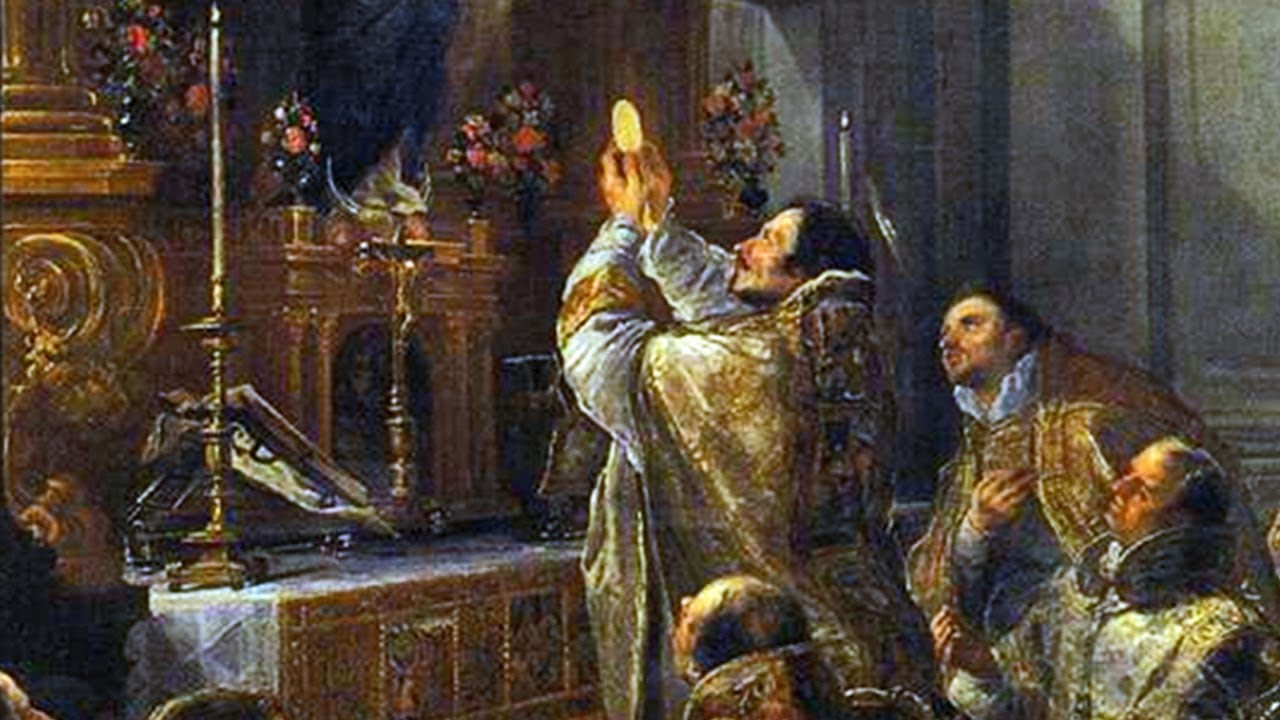
Pro Tridentina (Malta) has obtained, thanks to a regular visitor to the island (based in Rome), some DVDs of the 'Easter Sunday 1940 Solemn Sung High Mass celebrated in Illinois and commented on by Archbishop Fulton Sheen'. It also includes the Rubrics of the Tridentine Mass - celebrated in Dublin (Eire) by Fr. Joseph Vallauri in 1991. Fr Vallauri himself and another traditional Catholic priest have blessed these DVDs.
These DVDs will be distributed FREE OF CHARGE to anyone who is seriously interested in the Tridentine Mass, on a first-come, first-served basis. Anyone who would like to order a copy is kindly requested to send an e-mail at pro.tridentina.malta@gmail.com .
Subscribe to:
Posts (Atom)