Sunday, October 8, 2017

Breaking News: Massive liturgical changes expected in 2018!


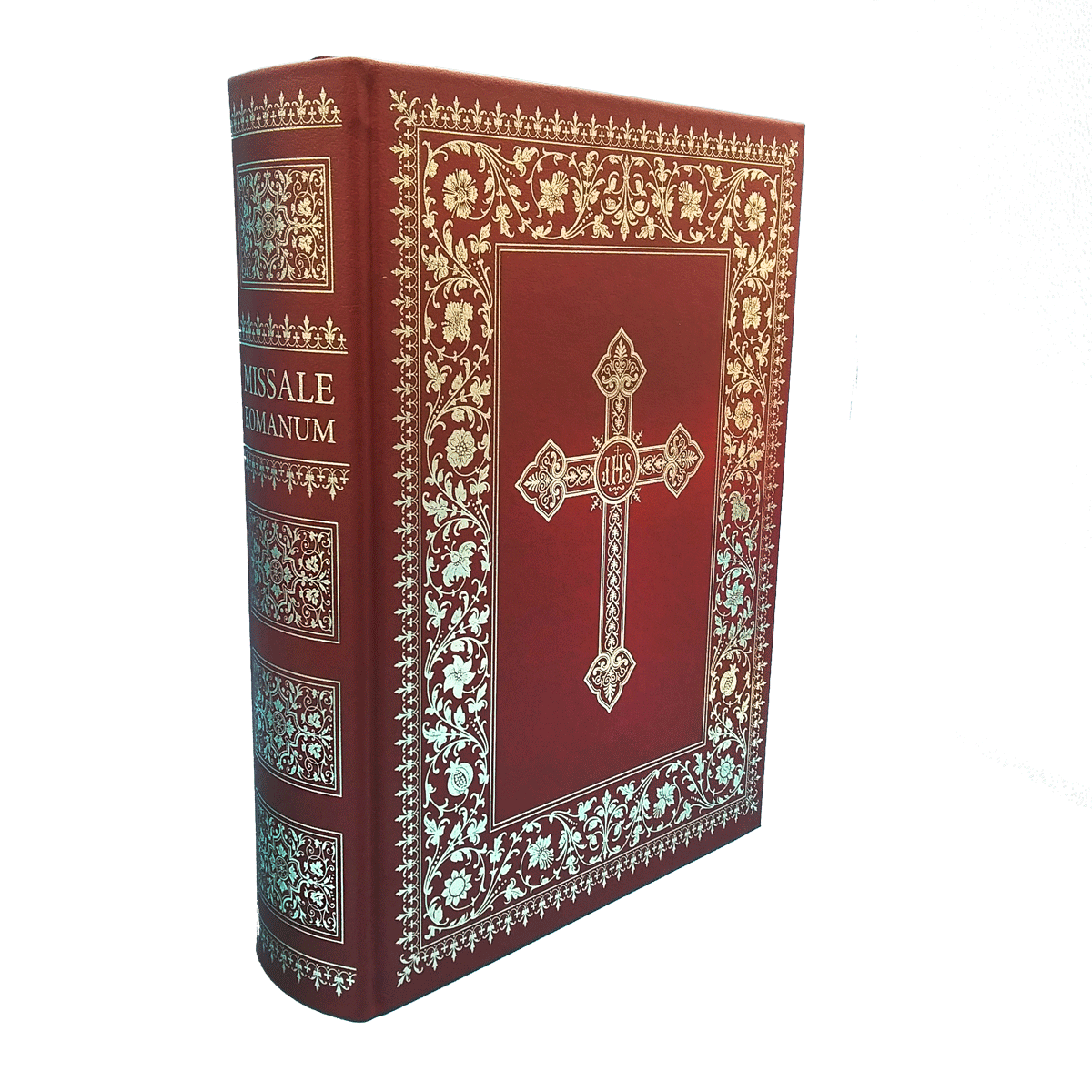
Reliable sources close to the Holy See have indicated that sometime in the second half of 2018, the Novus Ordo Lectionary and Calendar are to be imposed upon the Extraordinary Form of the Roman Mass. 

The new Roman Missal will become available on the First Sunday of Advent 2018 but the Vatican will allow a two-year period to phase it in. These changes are expected to be much more drastic than what was envisaged in Universae Ecclesiae that states:
25. New saints and certain of the new prefaces can and ought to be inserted into the 1962 Missal, according to provisions which will be indicated subsequently. (emphasis ours)
The Vatican approved societies and institutes, such as the Fraternity of Saint Peter and the Institute of Christ the King, will likely apply for exemptions, but all requests are expected to be turned down. The only exception seems to be the SSPX, which might be granted a temporary exemption, to ensure that an agreement is reached between the SSPX and Rome.  However, if the exemption granted will be of a temporary nature, more SSPX priests are expected to join the so-called Resistance (formerly known as SSPX-SO) under Bishop Richard Williamson and more will go independent. This would make the traditional Catholic movement more fragmented than ever before.


Thursday, October 5, 2017

What went wrong in the traditional Catholic movement in Malta (Part 5)


Immediately after Pro Tridentina (Malta) was founded, its archivist
Anthony Mangion, nearly secured the possibility to have the Oratory of the Congregation of the Onorati in Valletta available to the organisation for the regular celebration of the Tridentine Mass. At this stage, it is useful to give some information about this place.
 
The Oratory annexed to the Church of the Jesuits belongs to the Congregation of the Onorati founded in 1600 by the Knights of St John. The chapel is dedicated to the Blessed Virgin Mary and the relics of St. Onorata are kept under the Main Altar. This present oratory was built at the expense of the Congregation in 1658 and replaces a previous one.
 
The Servant of God Fr. Giuseppe De Piro (1877 - 1933), founder of the once traditional Catholic M.S.S.P. (to see how much it has deviated, refer to this and this article) was once a member of the Congregazione degli Onorati.
 
Back to present times, there was opposition to this idea from the local church authorities, although it never became clear whether the then Archbishop of Malta, Paul Cremona, was himself against this initiative.
 
Unfortunately, nowadays the oratory is being used most of the year as a warehouse, as can be seen in the photos above. The first test for the Catholic Church in Malta to show its filial obedience to Pope Benedict XVI's Summorum Pontificum failed miserably.

Thursday, September 21, 2017

Leo Darroch's FIUV History: Una Voce

Image result for leo darroch

Note: The author is a great friend of Malta and he assisted Pro Tridentina (Malta) a lot during his FIUV Presidency.

Here is a unique contribution to modern Catholic literature. Leo Darroch presents in chronological order a factual history, fully referenced, of the work of the Foederatio Internationalis Una Voce, a movement of lay people formed after the sudden and insensitive enforcement of Novus Ordo Missae. It is the first fully documented account of the decades-long struggle for the preservation of the traditional rite of the Mass in the face of unrelenting opposition from the bishops of the Church.
The Right Honourable Lord Gill (Patron of the Latin Mass Society)

With his masterly present work, Leo Darroch, the former President of the FIUV, has given to the present and the future generations of Catholics a valuable documentation of the glorious history of the noble battle of intrepid lay faithful, who were committed to the restoration of the perennial liturgical sense of the Church. It was the battle of good sons and daughters for the honour and beauty of their mother, the Church. May the present book receive a wide diffusion and contribute in its readers a deeper appreciation of the perennial liturgical treasure of the Church, which is the classical Roman Rite.

Rt Rev. Athanasius Schneider, Auxiliary Bishop of the Archdiocese of Saint Mary in Astana

A renaissance will come: asceticism and adoration as the mainspring of direct total dedication to Christ will return. Confraternities of priests, vowed to celibacy and to an intense life of prayer and meditation will be formed. Religious will regroup themselves into houses of ‘strict observance’. A new form of ‘Liturgical Movement’ will come into being, led by young priests and attracting mainly young people… It is vitally important that these new priests and religious, these new young people
with ardent hearts, should find—if only in a corner of the rambling mansion of the Church—the treasure of a truly sacred liturgy still glowing softly in the night.

Dr Eric de Saventhem, Founding President of the International Federation Una Voce, speaking in New York in June 1970 at the first General Assembly of Una Voce in the United States.

Leo Darroch joined the Latin Mass Society in the 1970s, was elected to the Committee in 1986 and served for more than 25 years. He was deputy Chairman to Chris Inman for a few years in the 1990s, during which time he converted the old style LMS bulletins - which were A4 typed sheets - into the magazine format we now have and was the Editor until November 2000.

He was elected to the Council of the FIUV in 1999. He was appointed FIUV Secretary in 2001 under the presidency of Michael Davies, and served as President from 2007–2013. The book can be bought here.

Wednesday, September 20, 2017

New FIUV Council 2017 - 2019

Image result for vatican
 
Last week, in Rome, the Foederatio Internationalis Una Voce (FIUV) elected (or re-elects) the Council. Here is the full list of Officers and Council members of the FIUV for the next two years.

President: Felipe Alanís Suárez  (Una Voce México)

President d'Honneur: Jacques Dhaussy (Una Voce France)

Vice Presidents: Patrick Banken (Una Voce France) and Jack Oostveen (Ecclesia Dei Delft, The Netherlands)

Secretary: Joseph Shaw (Latin Mass Society, England and Wales)
Treasurer: Monika Rheinschmitt (Pro Missa Tridentina, Germany)

Councillors:
Oleg-Michael Martynov (Una Voce Russia)
Jarosław Syrkiewicz (Una Voce Polonia)
Derik Castillo (Una Voce México)
Andris Amolins (Una Voce Latvija)
Eduardo Colón (Una Voce Puerto Rico)
Fabio Marino (Una Voce Italia)
Egons Morales Piña (Una Voce Casablanca, Chile)
 
Once again, Pro Tridentina (Malta) was not in a position to attend or nominate a candidate for the Council. Unfortunately, the current situation in the organisation does not help. There was one Maltese FIUV Councillor, former Pro Tridentina (Malta) President Godwin Xuereb, who served between November 2009 - January 2012 and December 2012 - October 2015. In 2013 the same Councillor was also Assistant Treasurer of the FIUV.

Friday, September 15, 2017

Latin Mass fans celebrate 10-year anniversary without pope

Cardinals Gerhard Ludwig Mueller, left, and Robert Saraha ttend a conference on the Latin Mass at the Pontifical University of St. Thomas Aquinas in Rome, Thursday, Sept. 14, 2017. (AP Photo/Gregorio Borgia)
Cardinals Gerhard Ludwig Mueller, left, and Robert Sarah attend a conference on the Latin Mass in Rome.
VATICAN CITY — Sep 14, 2017, 12:27 PM ET
 
Fans of the old Latin Mass descended on Rome on Thursday for their annual pilgrimage, facing indifference to their cause, if not outright resistance, from none other than Pope Francis.
 
Ten years after Pope Benedict XVI passed a law allowing greater use of the Latin Mass, Francis seems to be doing everything possible to roll it back or simply pretend it never happened.
 
In recent weeks, he has affirmed with "magisterial authority" that the reforms of the 1960s allowing for Mass to be celebrated in the vernacular rather than Latin were "irreversible." Last week he gave local bishops conferences authority to oversee those translations, rather than the Vatican.
 
The moves underscored that the age-old liturgy wars in the Catholic Church are very much alive and provide a microcosm view of the battle lines that have been drawn between conservative, traditionalist Catholics and Francis ever since he declined to wear the traditional, ermine-trimmed red mozzetta cape for his first public appearance as pontiff in 2013.
 
The indifference seems reciprocal.
 
At a conference Thursday marking the 10th anniversary of Benedict's decree liberalizing use of the Latin Mass, the meeting organizer, the Rev. Vincenzo Nuara, didn't even mention Francis in his opening remarks. The current pope was mentioned in passing by the second speaker, and ignored entirely by the third.
 
The front-row participants honoring retired pope Benedict and his 2007 decree were also telling: Cardinal Raymond Burke, a leading critic of the current pope whom Francis removed as the Vatican's supreme court judge in 2014; Cardinal Gerhard Mueller, recently axed by Francis as the Vatican's doctrine chief, and Cardinal Robert Sarah, appointed by Francis as head of the Vatican's liturgy office but effectively sidelined by his deputy.
 
In fact, it was Sarah's deputy, Archbishop Arthur Roche, who signed the explanatory note to Francis' new law allowing bishops conferences, rather than Sarah's office, to have final say on Mass translations.
 
Francis' new law is a "pretty clear course correction from Pope Benedict's line," said the Rev. Anthony Ruff, associate professor of theology at St. John's University in Minnesota and moderator of the progressive liturgical blog, Pray Tell.
 
Despite the sense of belonging to a previous era, the conference was nevertheless upbeat about the future of the Latin Mass even under a pope who has openly questioned why any young person would seek out the old rite and disparaged traditionalists as rigid and insecure navel-gazers.
 
Monsignor Guido Pozzo, in charge of negotiations with breakaway traditionalist groups, said more Latin Masses are celebrated each Sunday in some countries: France has seen a doubling in the number of weekly Latin Masses, to 221 from 104, in the past 10 years. The U.S. has seen a similar increase over the same period, from 230 in 2007 to 480 today.
 
"The old liturgy must not be interpreted as a threat to the unity of church, but rather a gift," he said. He called for it to continue to be spread "without ideological interference from any part."
 
The program for the 10-year anniversary pilgrimage began with chanted hymn at the start of the conference and ended with vespers Thursday evening celebrated by Benedict's longtime secretary, Monsignor Georg Gaenswein. Also on tap were a religious procession through the streets of Rome and multiple Masses. Conspicuously absent from the four-day program was an audience with Francis.
The current pope, though, let his thoughts known during a recent speech to an Italian liturgical society. He said there was no need to rethink the decisions that led to the liturgy reforms from the Second Vatican Council, the 1962-65 meetings that modernized the Catholic Church.
 
"We can affirm with security and magisterial authority that the liturgical reforms are irreversible," he said in one of his longest and most articulate speeches to date on the liturgy. It made no mention, in either the text or the footnotes, of Benedict's liturgical decree on the Latin Mass.
 
Nuara, the conference organizer, denied sensing any resistance to traditionalists from Francis, saying in an interview that the current pope "is a respectful man, so he recognizes all the good that the old liturgy has given the church."
 
"We are also absolutely respectful of Pope Francis," he added.
 
Timothy O'Malley, director of the University of Notre Dame's Center for Liturgy, said Francis' main beef with Latin Mass afficionados is with those "who see that this form of the liturgy must win at the expense of" the Mass in the vernacular.
 
But he said he saw no indication that Francis would do away with Benedict's decree liberalizing use of the old rite, known by its Latin name Summorum Pontificum.
 
"He'll continue to rail against those who think the (vernacular) Mass is invalid, but I don't see him taking away Summorum Pontificum," he said.
Wednesday, September 13, 2017

The rupture has occurred - Francis vs Benedict XVI (and St. John Paul II)

Image result for st peter's square winter
 
Just a few weeks after Pope Francis announced that the liturgical reform of the Second Vatican Council was “irreversible", he made a widespread change to the ways, and words, in which Roman Catholics worship by amending Vatican law to give national bishop conferences greater authority in translating liturgical language.
 
By his action, Francis goes much further than the reforms of the Second Vatican Council had ever envisaged and erased some of the actions of his predecessors, Benedict XVI and John Paul II. With the motu proprio Magnum Principium, Pope Francis has altered a key 2001 instruction by Saint John Paul II (Liturgiam Authenticam), instructing that translations from Latin needed to be “in the most exact manner, without omissions or additions in terms of their content.” 
 
That same year, the Vatican established Vox Clara, a committee to scrutinize English-language translations of the texts and prayers included in the Roman Missal. The committee advocated a close fidelity to the Latin. All this goes against the “reform of the reform” movement, which ultimately had advocates at the top of  the Catholic Church during John Paul II and Benedict XVI.
          
The amendment is a significant development in a liturgical schism that has split Catholics across the world and was evident at the highest echelons of the church, especially in recent times. In our opinion, this is an attempt to undermine Benedict XVI's Summorum Pontificum, practically when we are supposed to celebrate its tenth anniversary.
 
Pope Francis, in fact, has recalled that the Second Vatican Council entrusted bishops with the “weighty task of introducing the vernacular language into the liturgy.” He added that “in order that the renewal of the whole liturgical life might continue, it seemed opportune that some principles handed on since the time of the council should be more clearly reaffirmed and put into practice.”
 
Unfortunately, under this pontificate, we have seen the undermining of Cardinal Sarah. Last year, Cardinal Sarah called for priests to celebrate Mass ad orientem, but Francis promptly issued an unusual public rebuke. And in April of this year, Cardinal Sarah sent a letter honouring Benedict XVI’s support of the Latin Mass, asserting that “modern liturgy” had caused devastation and schism. Benedict XVI wrote that “the liturgy is in good hands,” in an afterward to a book the cardinal wrote this year.
 
Alas, Francis argued that “vernacular languages themselves, often only in a progressive manner, would be able to become liturgical languages, standing out in a not dissimilar way to liturgical Latin for their elegance of style and the profundity of their concepts with the aim of nourishing the faith.”

Monday, September 11, 2017

A sustained attack in Malta on those in favour of the Tridentine Mass - 3

Another contribution from the Sunday Times of Malta dated 3 September 2017.      

The eleventh hour


Liturgical worship is not a rite to carry out but a source of life and of light for our journey of faith.
The Holy Father’s address at the Italian National Liturgical Week not only gives us food for thought but also food for action. He made it plain that this was not a period of doom for the Liturgy during which superficial events have happened, but an essential period of time. He stressed that just as it will not be possible to forget Vatican Council II, so will the liturgical reform that resulted from it be remembered. I am sure that these words were less than beautiful to some ears around the world, not excluding Malta and Gozo. How pertinent were his words that “when a need is noticed, even if the solution isn’t immediate, there is the need to start to move”.

When I was an altar boy, Canon Delia used to speak to us about the encyclical Mediator Dei; so did our teachers in secondary school. And they were right. My seminary years were concomitant with Vatican II. So was our enthusiasm for its teaching, which included the constitution Sacro Sanctum Concilium. There are those who do not even hold Vatican II as sanctum, much less its constitution. Other Vatican II documents are criticised either because many did not read them from front to back, or cannot internalise them because they go against their instinct or values.

The reform of the Liturgy responded to the real needs and hope of a renewal in the Church, the need of vibrant Liturgy. As St John XXIII said at the inaugural speech of Vatican II, the Church is not a museum. In my view, rather than museum it is a workshop, were a craftsman learns old skills and adapts them to his or her contemporary needs.
 
 
Can we reinvent the wheel or say it is useless? Of course not. But the use we make of the wheel today is vastly greater and very different from the way its inventor used it. Do we use the same language? Is the Latin of Cicero the same Latin of later periods? Is the koine the Greek language that Herodotus or Aristophanes used?

Pope Francis said that what Vatican II wanted from the liturgical reform was a living Liturgy expressing in a renewed way, the perennial vitality of the Church at prayer, being eager “so that the faithful do not assist as strangers and silent spectators to this mystery of faith, but, understanding well through rites and prayers, participate in the sacred action knowingly, piously, actively” (SC, 48).

He also quoted Blessed Paul VI in explaining the announced reform: “It’s good to warn how it is proper for the authority of the Church to desire, to promote, to arouse this new way of praying, thus giving greater increment to her spiritual mission […]; and we must not hesitate to make ourselves first of all disciples and then supporters of the school of prayer, which is about to begin.”[8]

Vatican II was a reform according to the principle of respect of the healthy tradition and of legitimate progress. Paul VI insisted that the practical application, guided by the episcopal conferences, in the respective countries, still prevail, because it is not enough to reform the liturgical books to renew the mentality. The Pope had made it clear: “The moment has now come to let go of the tendencies towards division, equally pernicious in one way or another, and to implement integrally in their just, inspiring criteria, the reform approved by us, in the implementation of the Council’s votes.”

Pope Francis said that “the Liturgy is life, not an idea to understand. In fact, it leads to living an initiating experience, which is transformative in the way of thinking and behaving, not to enrich one’s baggage of ideas on God”. He added that liturgical worship “is not, first of all, a doctrine to understand or a rite to carry out; it is also this, of course, but in another way it is essentially different: it is a source of life and of light for our journey of faith”.

Even if it is the 11th hour, let us wake up to theology and contemporary living!

Fr Joe Inguanez, a sociologist, is executive director of Discern.

Friday, September 8, 2017

What went wrong in the traditional Catholic movement in Malta (Part 4)


As soon as Pro Tridentina (Malta) was officially launched, problems started to appear. The original founders had decided to assist any person, or group of persons, who were attracted to the Tridentine Mass. Unfortunately, this meant that some persons, of extremist ideas, attended the Tridentine Masses that were either organised by Pro Tridentina (Malta) itself or were given publicity by the same organisation.

What type of extremist ideas are we talking about? They can be grouped into three:

Sedevacantism: the theological position of those traditional Catholics who most certainly believe in the papacy, papal infallibility and the primacy of the Roman Pontiff, and yet do not recognize the post-Vatican II popes as legitimate successors of Peter in the primacy. In other words, they do not recognize him as a true pope. The word sedevacantism is a compound of two Latin words which together mean “the Chair is vacant.”  The sedevacantist position is founded on the Catholic doctrines of the infallibility and the indefectibility of the Church and on the theological opinion of the great Doctor of the Church, St. Robert Bellarmine. A main exponent of this position distributed literature during some Tridentine Masses and also said that Benedict XVI was a satanist.

Conclavism: the claim to election as pope by a group acting or purporting to act in the stead of (i.e., under an assumption of the authority ordinarily vested in) the established College of Cardinals. This claim is usually associated with sedevacantism, that the present holder of the title of pope is a heretic and therefore not truly pope, as a result of which the faithful remnant of the Catholic Church has the right to elect a true pope. At least two people are known to be supporters of one of these 'popes', based in the United States of America. One of them was an altar server.

Devotio Moderna: among those who think themselves traditional Catholic, a tendency to replace the Holy Sacrifice of the Mass, and certainly the Divine Office, by "private devotions," such as an excessive attachment to Fatima or Medjugorje, Borġ in-Nadur or other apparitions. These misguided people talk far more about side issues  than about the centrality of God in the Person of Our Lord Jesus Christ, after Who our very religion takes its name. It has brought about in some Catholics the heretical notion that privately reciting the Rosary is more important than assisting at the Holy Mass or at the Hours of the Divine Office. 

Notwithstanding that none of the founders or committee members of Pro Tridentina (Malta), belonged to any of the above positions, having people associated with the organisation has damaged the same organisation. 

Unfortunately, these people are still known to gather regularly wherever Tridentine Masses in Malta are held. The Apostolate of Saint Paul Malta (ASPM) which is a Catholic community in Malta that is doing sterling service in Birkirkara, has lately attracted these extremists. One hopes that, this time round, history will not repeat itself.


Friday, August 25, 2017

The Church of the Poor?

Elderly people eating at the Parish Church of Mġarr, Malta dedicated to Saint Mary. Source: Facebook

This month a
 photo was circulated on Facebook, in which a large amount of older people are seen eating and drinking in the Church.

Mġarr Parish Priest Monsignor Kalcidon Vassallo, defends this abuse by saying that each year a Mass for the sick and the elderly takes place and the Sacrament of Anointing of the Sick is also administered.

After Mass, this abomination takes place. Quoting Pope Francis, the parish priest said:


"Our C
hurch of the poor and the priests have the smell of the sheep."

Church of the Poor? Nope, alas, Poor Church is more emblematic in this case.

Thursday, August 17, 2017

An opportunity not to be missed!

No automatic alt text available.Above you will find a poster with the calendar of Tridentine Masses to be held next week around Malta.

This is an occasion not to be missed and it could serve as a showcase to many Maltese yet to be acquainted with this venerable Rite.

Pro Tridentina (Malta) would like to congratulate the main organisers of the event, i.e. Rev. Marc Andrè Camilleri and Canon Nicholas Doublet.

Thursday, July 13, 2017

What went wrong in the traditional Catholic movement in Malta (Part 3)


In order to better understand the problems being faced by the REAL traditional Catholics, it is pertinent to post the following article by a foreigner, S. Armaticus, who was in Malta some time ago.
 
"As I was taking in the sheer beauty of the mass while setting
during the Offertorium, my mind wandered to another mass which I attended a week and a half earlier, the High Mass (O.F. – TLM is still “banned” in Malta) offered at the Co-Cathedral of St. John in Valletta, Malta. That choir and organist were likewise spectacular. Yet the O.F. mass, even though it was partially in Latin was very disappointing. There were only about three of us who actually knelt during the Canon. How very sad. And excuse the digression.

The sadness was caused by the thought of how much has been lost through the senseless submission to the new springtime of that “spirit of Vatican II”. Yet the joy presented itself in the cognizance of the OBJECTIVE REALITY of the situation, a REALITY that as of this writing, a Catholic like yours truly can find himself in a two different venues, several thousand miles apart, and yet encounter the timeless phenomenon which is the Catholic mass (regardless of whether it is a proper mass or the OF) and offered in a proper Catholic musical setting.
 
Summa summarum, it would appear as if the worst just might be behind us.
 
Or, to use an old advertisement jingle from the 1960’s,…

we’ve come a long way baby!

And finally before I go to the re-post, please keep the Church in Malta in your prayers. The Maltese N.O. church is dying, but the hierarchy there continues to exist in a state of denial. Only with our prayers and fasting can we help turn that situation around. With the  help of our prayers, I have no doubt that the Holy Spirit will restore all things in Christ on Malta.
 
St. Michael Archangel, ora pro nobis!
 
Archbishop Lefebvre, ora pro nobis!
 
In te, Domine, speravi: non confundar in aeternum"
 
Below are some of the comments that were posted under the original article:
 
 
Is the TLM really banned in Malta? Is that even possible after Summorum Pontificum?

S. Armaticus said:    


Dear TS:
As you see, the word “banned” is in quotation marks.
There is a huge problem in Malta because the hierarchy refuses to allow the TLM to be offered on a regular basis, even though Summorum Pontificum is THE LAW OF THE UNIVERSAL CHURCH.
 
For more information on this matter, please follow Una Voce’s Malta site Pro Tridentina at the following link: http://pro-tridentina-malta.blogspot.com.mt/p/avvizi-dwar-quddies-tridentin.html.
 
If you go to the link, you will notice that there are no TLM’s scheduled. Supposedly a TLM was offered last year on the Feast of Our Lady of Mt. Carmel at St. Theresa Church in Cospicua. But I have not been able to confirm whether this is in fact the case. The last sighting of a TLM on the Pro Tridentina website was also on the same feast day, in 2011. But that TLM was canceled at the last minute.
 
There are credible reports that TLM’s have been offered on Malta since SP. Yet these are mostly a well kept secret.
 
So the long and short of the matter is that the TLM is “banned” on Malta.
 
B/t/w thanks for your question.
S.A.

Sunday, July 9, 2017

What went wrong in the traditional Catholic movement in Malta (Part 2)

Image result for curia malta
The Curia offices in Malta (photo: Times of Malta)
After the first part of this series (other articles will follow, though not necessarily in a chronological order), this Blog was informed of more worrying trends in the traditional Catholic movement in Malta.

Apparently, at the Vatican they received a copy of a letter from a resident in Malta in which a number of priests and laity distanced themselves from the Pro Tridentina (Malta) movement. So, thanks to these Brutus tactics, the Archdiocese of Malta is moving cautiously before granting TLM in other localities.

This is also implied in the website of the Apostolate of Saint Paul Malta (ASPM) which says: "In the Archdiocese of Malta, the Church of St. Paul’s has been entrusted with the promotion and the celebration of the liturgy according to the Extraordinary Form of the Roman rite, also known as The Traditional Latin Mass."

So, don't expect any other regular Tridentine Masses to be held elsewhere in the country.

Tuesday, June 27, 2017

The Consumeristic Catholic Church in Malta


The Maltese Catholic Church in the twenty-first century has in many ways absorbed the consumeristic mentality that is so prevalent in our culture. A case in point is what will happen this evening in Floriana. The Saint Publius Parish Church will be illuminated for a lewd event, known as the Isle of MTV. Photos above and below show this event, with the illuminated church in the background, from past events.

Allegedly, the Floriana Parish is being paid every year an undisclosed sum of money from the event organisers so that the Church façade is lit up. This money is said to be used for much needed restoration works to the building. According to The Malta Independent, tonight's event is expected to host 50,000 people, be followed in 20 countries, and attract the attention of millions (alas not for good reasons). By tomorrow morning, the side of the church will be littered and would have served its other purposes, namely as a public toilet and, even worse, as a good opportunity for intimacy of the Amoris Laetitia type.
 
Whatever the reasons for accepting money, it is clear that nowadays this parish, with the tacit approval of the Church authorities, approaches worship as if it were selling a product and the attendee were the consumer. Since the product is up for sale, the church must show that its product is more entertaining than anything else the world has to offer. Therefore, churchy gimmicks are the name of the game. Whatever keeps people coming back for more takes first priority and becomes the controlling principle for all things church-related. If the church doesn’t sell itself, then it will be out of business.
 
Such an approach makes man the centre and treats the church like a business. In contrast, the aim of well meaning traditional Catholic groups is to draw church-goers and church leaders back to Scripture. In doing so, we must recover the ordinary means of grace that God uses to equip the saints and transform us into the image of Christ.